
A protection package that looks impressive on a specification sheet can become a costly operational problem if it is built for the wrong threat, the wrong route, or the wrong vehicle. To choose armored vehicle protection correctly, buyers must start with the real security requirement, then balance it against payload, passenger capacity, serviceability, and cross border delivery conditions.
For private buyers, corporate fleets, government contractors, and security procurement teams, the goal is not to buy the highest possible armor level. The goal is to source an export ready vehicle that delivers appropriate protection without compromising daily usability or long term operating cost.
Start With the Threat, Not the Vehicle
The first decision is defining what the vehicle needs to withstand. Armoring is engineered around specific ballistic and blast risks, not around general ideas of safety. A vehicle intended for executive transport in an urban environment may need protection from handgun fire and attempted forced entry. A convoy vehicle operating in a higher risk area may require rifle rated protection, reinforced floors, run flat mobility, and enhanced fuel protection.
A practical threat assessment should account for the weapons likely to be encountered, the frequency and length of journeys, road conditions, passenger profile, and whether the vehicle will operate alone or with support. It should also consider likely attack angles. Side glass protection may be critical in congested traffic, while underbody protection becomes more relevant where explosive hazards are a realistic concern.
Avoid specifying armor based solely on a country label or broad regional risk rating. Security conditions can vary significantly between cities, travel corridors, and operating schedules. A qualified security advisor or procurement team should translate operational exposure into a measurable protection requirement before vehicle selection begins.
Choose Armored Vehicle Protection by Rating
Ballistic protection should be stated against a recognized test standard, with a clear description of what is covered. Buyers may encounter certifications based on standards such as VPAM, EN 1063, NIJ, CEN, or local testing protocols. These standards do not always use directly interchangeable rating systems, so a label such as “Level 4” is not enough on its own.
Ask the supplier which threats the vehicle is rated to defeat, including projectile type, caliber, velocity, and testing angle. Confirm whether the rating applies to the full passenger cell or only selected components. Glass, doors, roof, firewall, floor, pillars, and rear compartment should be treated as an integrated protection system.
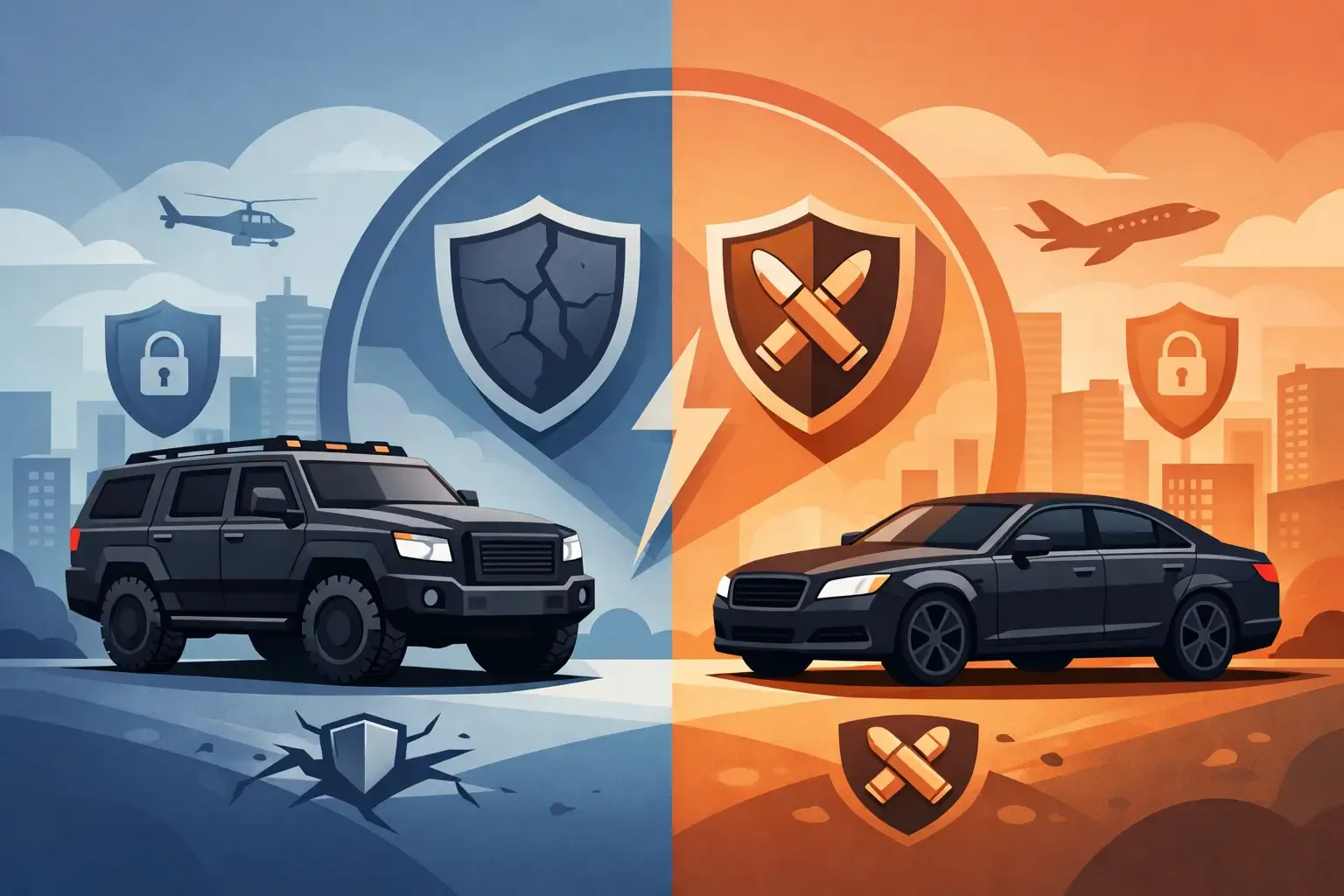
Lower protection levels generally add less weight and preserve more of the original vehicle’s performance. They can be suitable for discreet executive use and lower risk assignments. Higher protection levels may address rifle threats, but they also increase weight, affect handling, reduce fuel economy, and place greater demands on brakes, suspension, tires, and drivetrain components.
The correct specification is therefore a risk to mobility decision. Over armoring can reduce usefulness. Under armoring can create false confidence.
Evaluate the Base Vehicle Before Conversion
Not every SUV, sedan, or commercial platform is equally suitable for armoring. The base vehicle must have enough structural capacity, power, suspension potential, and braking capability to carry the finished armored weight safely. It also needs a reliable parts and service network in the destination market.
Large SUVs are common armored platforms because they offer passenger space, ground clearance, and strong chassis architecture. Premium sedans can provide lower visibility and a more discreet profile for executive transport. Pickups and commercial vehicles may be better suited to security teams, cash logistics, remote operations, or protected equipment transport.
Electric and hybrid platforms require additional evaluation. Their low mounted battery packs, high voltage systems, cooling arrangements, and weight distribution can make conversion more complex. An electrified armored vehicle may be viable when engineered for the platform, but buyers should verify how added weight affects range, charging access, thermal management, and local repair capability. A conventional powertrain may remain the more practical option for remote operating regions where charging infrastructure and specialized service are limited.
Before purchase, request the vehicle’s expected gross vehicle weight rating, curb weight after conversion, remaining payload, and axle load distribution. These figures determine whether the vehicle can safely carry passengers, luggage, communications equipment, and protective accessories without exceeding its approved limits.
Look Beyond Ballistic Panels and Glass
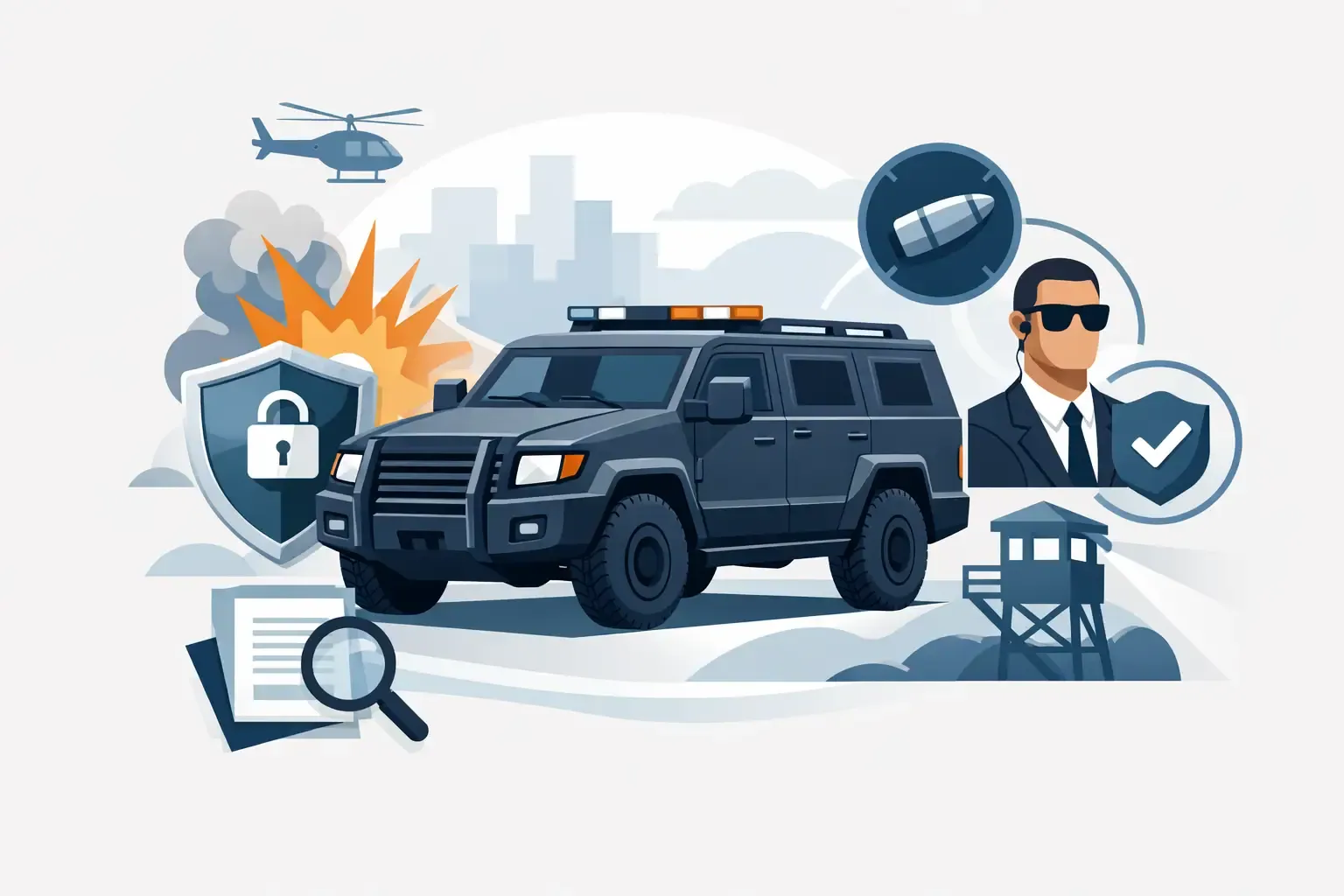
Effective protection is more than ballistic steel and multilayer glass. The vehicle must remain mobile and controllable after an incident. That requires the armor package to work with upgraded mechanical systems and carefully selected defensive features.
Run flat inserts are among the most practical additions because they allow limited travel after tire damage. Their usefulness depends on the specified distance, speed limitation, tire size, road surface, and expected vehicle load. Upgraded brakes, reinforced suspension, heavy duty wheels, and revised cooling systems are equally important, particularly in hot climates or stop and go urban traffic.
Other options should be selected based on mission need rather than added as standard extras. These can include protected fuel tanks, fire suppression systems, intercoms, emergency lighting, secure communications provisions, sirens, camera systems, and reinforced bumpers. Each addition affects weight, electrical load, visibility, and import requirements.
Discretion also matters. A visibly armored vehicle can be an appropriate deterrent for some assignments, but it may draw unwanted attention in others. A low profile exterior can support executive travel and private use, provided the vehicle still meets the required security standard.
Verify Build Quality and Documentation
An armored vehicle is a specialized engineered product, not simply a standard vehicle with added materials. Quality of installation affects safety, reliability, water sealing, door operation, window performance, and the durability of the finished vehicle under daily use.
Buyers should request a detailed build specification showing the protection standard, areas of coverage, glass thickness, armor materials, vehicle weight, payload, and installed accessories. Documentation should also identify the conversion provider, chassis number, production date, and available warranty terms.
Pre shipment inspection is especially valuable for international purchases. It should confirm the vehicle identity, mileage, condition, completed armoring scope, accessory operation, and export documentation. A visual inspection alone is not enough. Doors must close correctly under their additional weight, windows must operate as specified, warning systems should function, and the vehicle should show no unresolved fault codes or signs of poor finishing.
For fleet procurementconsistency matters as much as individual unit quality. A standardized specification simplifies driver training, spare parts planning, maintenance, and future replacement orders.
Plan for Export, Registration, and Service
A vehicle can be correctly armored and still be unsuitable for a destination market if its documentation, weight, or equipment does not meet local rules. Import duties, registration standards, vehicle age rules, steering configuration, emissions requirements, and armored vehicle permits vary by country. Some jurisdictions also control the import of ballistic materials, communications equipment, or emergency signaling devices.
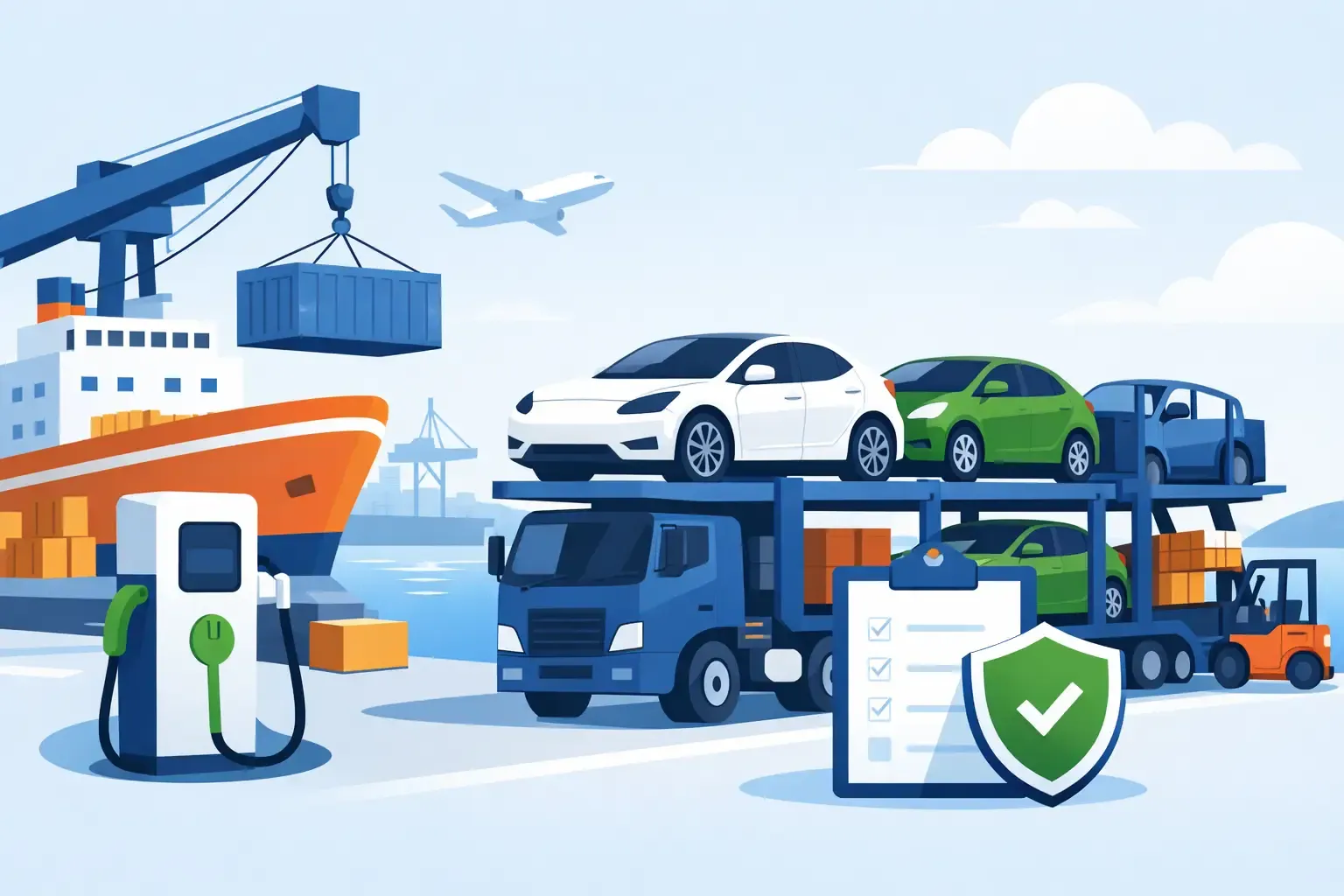
Confirm these conditions before finalizing the order. The shipping method must also match the vehicle’s dimensions, value, and delivery timeline. Container shipping may provide additional protection for certain high value units, while roll on/roll off shipping can be efficient for eligible vehicles and routes. Insurance, port handling, inland delivery, and customs clearance should be planned as part of the vehicle purchase, not treated as separate afterthoughts.
Long term support deserves equal attention. Ask where routine maintenance will be completed, how replacement glass and run flat components will be sourced, and whether the destination market has technicians familiar with the platform. An armored vehicle that cannot be serviced promptly can become unavailable at the moment it is needed most.
Match the Specification to the Mission
The strongest procurement decisions connect the security requirement to a defined operating plan. An executive SUV used for airport transfers has different needs than a protected pickup assigned to remote industrial sites. A family vehicle requires a practical entry height, manageable doors, climate control, and sufficient luggage capacity. A security fleet may prioritize standardized parts, rear seat communications, and quick turnaround between shifts.
Automotion Global supports buyers who need export ready vehicle sourcing, inspection coordination, and worldwide delivery planning. For specialized armored procurementclear requirements at the inquiry stage help identify available platforms and prevent delays caused by unsuitable specifications.
Before approving a vehicle, review the final configuration as if it were already in service: who will drive it, where it will travel, what it will carry, how it will be maintained, and what must happen if it is attacked. The right armored vehicle is the one that protects its occupants while remaining ready to move, operate, and deliver value on every assignment.