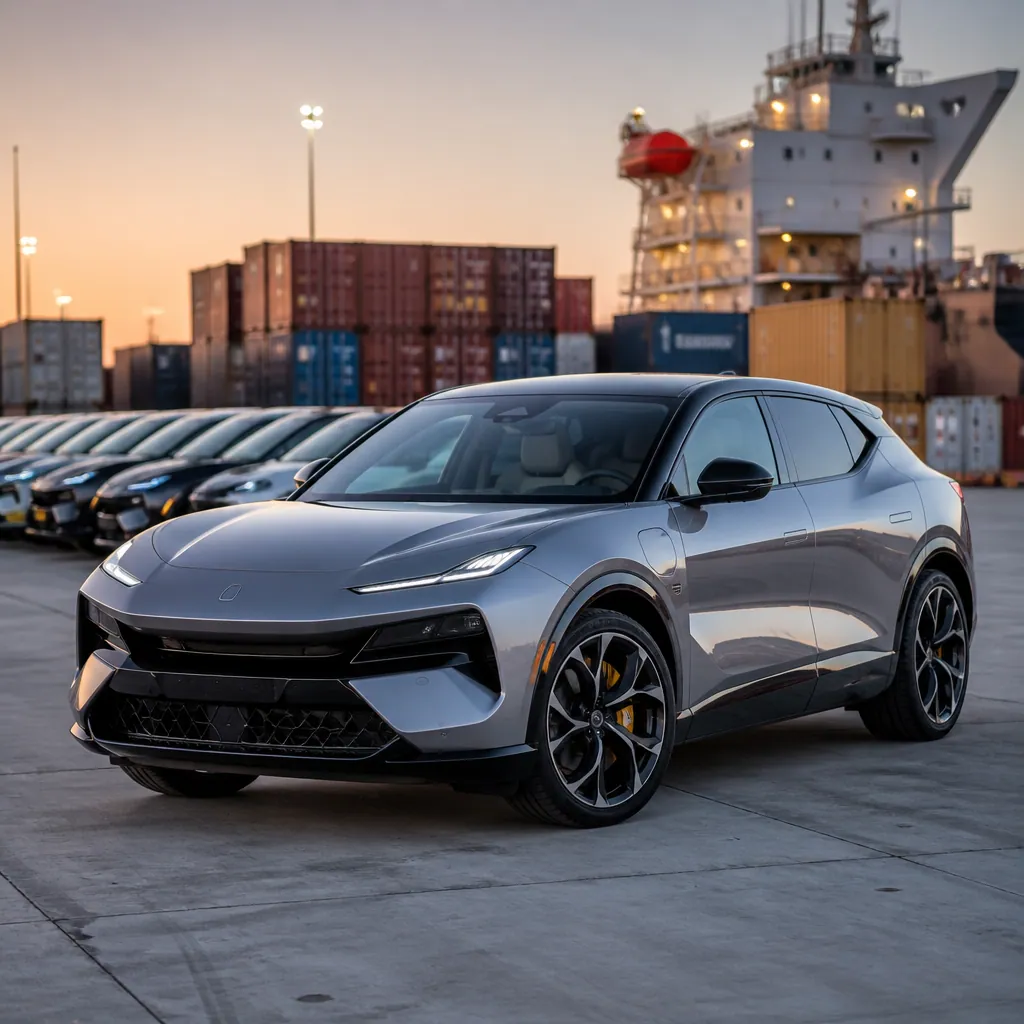


A long range ev review should begin well before the published mileage figure. For an international buyer, an EV’s stated range is only one part of the purchase decision. Charging compatibility, battery condition, climate, software access, shipping procedures, and local service capability all affect whether a vehicle will perform as expected after delivery.
For private buyers, fleet operators, and resellers, the strongest long range EV is not automatically the model with the largest laboratory rating. It is the vehicle that delivers dependable operating range in its destination market, can be charged without difficulty, and arrives with a clear inspection and export record.
Long Range EV Review: Start With Usable Range
Manufacturers generally publish range figures under EPA, WLTP, CLTC, or other regional test cycles. These figures are useful for comparing vehicles tested under the same standard, but they should not be treated as a fixed promise. EPA estimates are usually more conservative than WLTP figures, while CLTC ratings can appear significantly higher than what many drivers see in mixed real world use.
Usable range depends on speed, weather, terrain, cargo, tires, and driving habits. Highway use at sustained speeds consumes more energy than urban driving. Cold conditions can reduce both battery efficiency and regenerative braking performance, while air conditioning in very hot markets also draws meaningful energy. A fully loaded electric SUV or commercial EV will not return the same results as a lightly loaded vehicle driven in mild conditions.
A practical assessment starts with the buyer’s daily operating requirement. If a vehicle must reliably cover 220 miles between charging opportunities, selecting an EV advertised at exactly 220 miles is not a sound procurement decision. A reserve is needed for weather, detours, battery aging, and charging availability. For regular intercity operation, many buyers should target a vehicle with enough realistic range to retain 20% to 30% battery capacity at the end of a typical route.
Battery size matters, but usable capacity matters more. Some models protect a portion of the battery at the top and bottom of the charge window, meaning the gross pack capacity is not the same as the energy available to drive. Efficiency is equally important. An EV with a smaller usable pack and lower energy consumption can be more practical than a heavier model with a larger battery and higher consumption.
Charging Speed Is Part of Long Range Ownership
Long range is valuable only when the vehicle can recover that range efficiently. Buyers should review both AC and DC charging specifications. AC charging determines convenience at home, offices, depots, and overnight fleet locations. DC fast charging determines how practical the vehicle is on long routes.
The key figure is not simply the maximum advertised charging rate. Charging curves matter. Some EVs can briefly reach a high peak rate but slow sharply after the battery reaches 40% or 50%. Others maintain stronger charging performance deeper into the session. For road travel, the time needed to charge from approximately 10% to 80% is usually more relevant than a headline peak kilowatt number.
Connector standards require careful attention in export transactions. CCS1, CCS2, NACS, CHAdeMO, GB/T, and regional AC plug configurations are not interchangeable without considering adapters, communication protocols, charging network support, and local regulations. An EV that is highly capable in its original market may be inconvenient in its destination country if compatible public and private charging is limited.
For fleet procurement, charging infrastructure should be assessed before vehicle arrival. Determine how many vehicles will charge at the same time, the available electrical capacity at the site, expected overnight dwell time, and whether route schedules require daytime fast charging. The correct vehicle choice and the correct charging plan should be made together.
Battery Health and Vehicle History Deserve Close Review
For used and pre owned EVs, battery health is central to value. State of health indicates how much usable capacity remains compared with the battery’s original condition. A lower figure does not automatically make a vehicle unsuitable, but it should influence expected range, price, and future operating plans.
Buyers should request clear vehicle information covering mileage, build year, service history where available, charging history indicators where available, battery diagnostic results, warning messages, and accident or repair records. A pre shipment inspection provides another layer of control by confirming the vehicle’s physical condition, charging operation, tires, braking system, interior equipment, and visible exterior condition before export.
Battery degradation is not determined by mileage alone. High exposure to extreme heat, frequent high power charging, extended storage at very high or very low charge levels, and heavy commercial duty can affect battery condition. At the same time, a well maintained EV with higher mileage may be a stronger purchase than a lightly driven vehicle that has spent long periods improperly stored.
New EV buyers should also examine the battery warranty terms. Coverage periods, mileage limits, minimum capacity guarantees, transferability, and geographic validity vary by manufacturer and market. A warranty valid in the vehicle’s original sales region may not be fully supported after export. This does not remove the value of the vehicle, but it should be understood before purchase rather than discovered after delivery.
Features That Affect Real World Range
Long range models often carry larger batteries, but the most usable vehicles combine capacity with efficient design. Aerodynamics, wheel size, tire compound, vehicle weight, heat pump availability, and battery thermal management can make a noticeable difference.
Larger wheels may improve appearance and handling response, but they can reduce range and increase replacement costs. For buyers prioritizing fleet efficiency or long distance travel, standard or mid size wheels may be the better commercial choice. A heat pump can be especially valuable in colder climates because it reduces the energy required for cabin heating.
Battery thermal management also deserves attention. Liquid cooled systems generally offer better protection during repeated fast charging and hot weather use than simpler systems, although the full design and software calibration matter. This becomes more relevant for vehicles operating in high temperature markets, mountainous areas, or intensive commercial cycles.
Software can influence range planning, charging behavior, and ownership convenience. Confirm that the infotainment language, navigation, mobile app functions, over the air updates, and connected services can operate in the destination market. A premium EV with restricted software features may still be usable, but buyers should price it accordingly and avoid assumptions about future activation.
Export Readiness Changes the Buying Decision
An export ready EV requires more than a clean appearance and a competitive FOB price. Documentation, compliance, safe battery transport procedures, port handling, and destination clearance all need to align. Certain shipping lines and ports have specific requirements for electric vehicles, including battery state of charge limits, vehicle condition declarations, and restrictions on damaged or non operational units.
Before confirming an order, verify the vehicle identification details, title or ownership documents export eligibilitycharging port type, steering configuration, speedometer units, and destination market requirements. Buyers should also consider whether replacement parts, diagnostic support, and qualified repair facilities are accessible locally.
For commercial buyers, parts planning can prevent downtime. Keeping commonly required items such as charge port components, tires, suspension parts, cabin filters, and approved diagnostic access arrangements may be more valuable than choosing the lowest initial purchase price. Long range capability supports revenue only when the vehicle remains operational.
Automotion Global supports international buyers with export ready sourcing, pre shipment inspection, and worldwide delivery coordination, helping align vehicle selection with the operational requirements of the destination market.
The Right Long Range EV Depends on the Route
A long distance private buyer may prioritize efficient highway performance, fast DC charging, and a strong driver assistance package. A city fleet may obtain better results from a more affordable EV with moderate range, reliable overnight AC charging, and lower tire costs. A reseller may place greater value on a model with established local charging compatibility, recognizable market demand, and straightforward service support.
The strongest procurement decision comes from matching the vehicle to the duty cycle, not from purchasing the largest battery available. Confirm the real route, the charging plan, the battery condition, and the export requirements before committing. That approach turns a published range figure into a vehicle that is ready to perform after it reaches its destination.