
Battery electric inventory moves quickly across international markets. Buyers looking to buy electric cars for export are usually not comparing trim colors for weeks. They are checking stock availability, documentation, shipping timing, charging compatibility, and whether the vehicle can realistically clear import procedures in the destination market.
That is the real difference between purchasing an EV locally and purchasing one for international delivery. The vehicle itself matters, but export readiness matters just as much.
If the model is not properly documented, if battery handling requirements are misunderstood, or if the unit does not align with destination market regulations, an attractive purchase price can quickly turn into delays, storage fees, or customs complications.
Why buyers choose to buy electric cars for export
International EV demand is no longer limited to early adopters. Private buyers want access to newer technology, lower operating costs, and modern mobility platforms. Dealers and automotive resellers want inventory that is unavailable or overpriced locally. Fleet operators are introducing electric vehicles to reduce operating costs, support sustainability goals, or improve urban efficiency.
The motivation may differ, but the operational requirement is the same: the export process must support the commercial objective rather than slow it down.
A reseller may prioritize fast turn inventory with broad retail demand. A business buyer may focus more heavily on charging compatibility, serviceability, and predictable delivery timing. A private buyer may simply want a specific EV configuration that is difficult to source locally.
That is why experienced importers tend to look beyond headline pricing. They verify whether the vehicle is actually in stock, whether it is authorized for export, whether inspection can be completed before shipment, and whether the shipping route makes practical sense for the destination country.
What matters before you buy electric cars for export
The first issue is stock reality. Many buyers waste time on EVs that appear available online but are not genuinely ready for allocation or export.
Export purchasing works best when inventory status is confirmed, specifications are verified, and the supplier can support the transaction with the necessary documentation.
The second issue is destination compliance. This is where EV transactions often become more complex than traditional combustion vehicles. Buyers must confirm not only battery range and trim level, but also local registration rules, charging standards, import restrictions, labeling requirements, and any homologation procedures tied to vehicle origin or category.
The third issue is battery logistics. Electric vehicles are not transported exactly like gasoline vehicles. Lithium battery handling, shipping line acceptance, port procedures, and documentation requirements can all influence freight planning and shipping timelines.
Then there is total landed cost. FOB pricing is useful, but it is only one part of the decision. Freight, customs duties, taxes, marine insurance, inland transport, homologation, destination handling, and registration costs all affect the final economics of the transaction.
A buyer focused only on purchase price can easily choose the more expensive deal overall.
Evaluating EV export stock with a commercial mindset
A serious EV export transaction starts with verification.
Buyers should request the exact model year, VIN or chassis details where appropriate, battery specification, odometer status, and inspection confirmation before proceeding.
If the unit is listed as new, the export documentation should match the supplier records precisely. If it is pre owned, the condition report should be detailed enough to support financing, resale planning, or operational deployment after arrival.
Battery range claims also require context. Published figures can differ significantly from real world performance depending on driving style, climate, terrain, and load conditions.
For buyers operating in hotter climates or regions with less developed charging networks, charging speed, thermal management, warranty support, and charging infrastructure may matter more than headline range numbers alone.
Fleet and resale buyers should also think carefully about trim strategy. Highly customized vehicles may look attractive online but can become more difficult to resell or support locally. In many cases, standardized configurations with stronger parts availability and broader retail appeal perform better commercially.
Documents and checks that reduce export risk
In cross border automotive trade, delays are often caused by incomplete paperwork rather than by the vehicle itself.
Before shipment begins, buyers should confirm the availability of core export documents, ownership or commercial authority records where required, and inspection procedures.
A clean transaction usually depends on accurate invoices, export declarations, shipping records, inspection reports, and title documentation where applicable.
Depending on the destination market, additional certifications may also be required for battery handling, customs clearance, conformity verification, or registration approval.
Pre shipment inspection is particularly important for EVs. It confirms physical condition, charging accessories, software functionality, visible battery system status, and transport readiness before loading takes place.
Professional exporters integrate this process into their workflow rather than treating it as an optional step.
Shipping electric vehicles across borders
Shipping method depends on route structure, cargo volume, destination infrastructure, protection requirements, and budget.
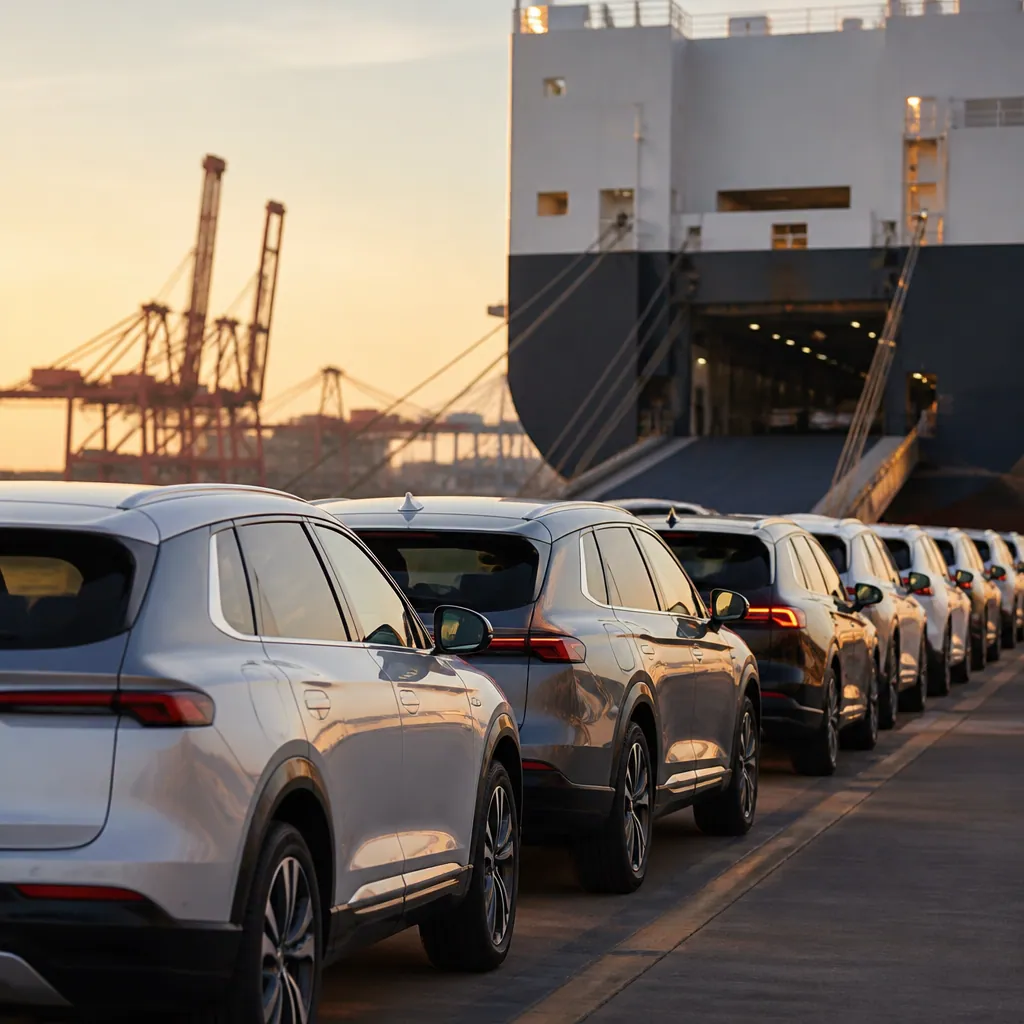
Some buyers prefer container shipping because it offers greater cargo control and additional protection during transit. Others choose roll on/roll off shipping when established routes and vehicle type make it more efficient.
Neither method is automatically superior. The correct solution depends on the vehicle, destination environment, and operational priorities.
For EV shipments, handling discipline matters. Battery charge levels may need to comply with transport rules. Carrier acceptance policies can vary. Documentation should be finalized before cargo reaches the terminal, not afterward.
When these steps are managed correctly, EV export shipping becomes relatively straightforward. When they are ignored, missed sailings, storage costs, and operational delays become expensive very quickly.
Buyers should also think beyond the ocean shipment itself. Inland transport, customs coordination, and final delivery all affect the actual delivery timeline and total landed efficiency.
Common mistakes buyers make when purchasing EVs for export
One common mistake is purchasing based only on model popularity. A vehicle may perform extremely well globally while still being a poor fit for a specific destination market because of charging limitations, aftersales gaps, or regulatory issues.
Another mistake is underestimating documentation timing. Buyers sometimes assume that once payment is completed, the vehicle can move immediately. In reality, inspection scheduling, export release, customs filing, and vessel booking all require coordination.
A third mistake is ignoring after arrival reality. Buyers should already understand who will support registration, charging installation, software setup, servicing, and warranty coordination before the vehicle ships.
There is also a pricing mistake that appears frequently in international automotive trade: comparing offers that do not include the same scope of service. One quote may include inspections and export handling while another covers vehicle cost only.
The cheaper quote is not always the better transaction.
Choosing the right export partner
When buyers purchase electric cars for export, supplier capability becomes part of the product itself.
Buyers need more than access to listings. They need verified sourcing, responsive communication, inspection support, realistic delivery coordination, and visibility into what is actually available and ready to move.
A capable export partner should be able to confirm inventory quickly, explain the transaction process clearly, support pre shipment verification, and coordinate global delivery while accounting for battery related handling requirements.
For high value EV purchases, operational clarity is not an extra service. It is part of risk management.
This is where companies such as Automotion Global operate effectively, not as traditional local dealers, but as export focused sourcing and fulfillment partners structured around available inventory, inspections, logistics coordination, and cross border execution.
Electric vehicle exports continue growing because buyers want better access, newer technology, and faster procurement across international markets.
The buyers who perform best are usually the ones who treat the transaction as both a vehicle purchase and a logistics operation.
When inventory is verified, paperwork is aligned, and shipping routes are planned correctly, the vehicle has a much better chance of arriving exactly as expected.