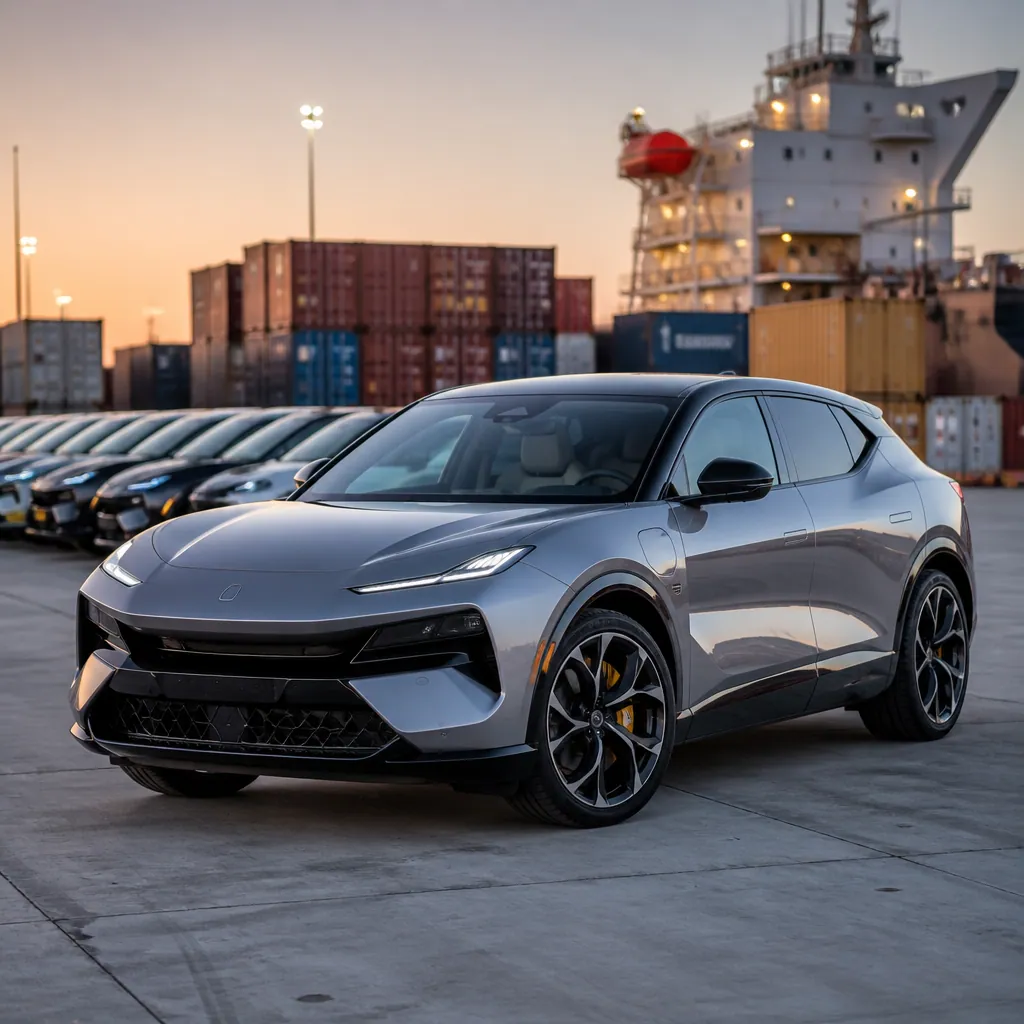


A crossover can look like the right electric vehicle on a specification sheet and still become the wrong purchase once it reaches its destination market. Rated range, charging port standards, software language, local service access, and shipping documentation can matter as much as acceleration or a large center screen. This electric crossover review is built for buyers who need a vehicle that performs as a daily asset and arrives ready for import, registration, and practical use.
Electric crossovers now cover a wide range of requirements. Compact models suit urban buyers and resale focused traders. Mid size vehicles offer the strongest balance of passenger room, cargo space, and battery capacity. Larger three row crossovers can serve family transport, executive use, and premium fleet operations. The correct choice depends on duty cycle, destination infrastructure, and the buyer’s tolerance for operating complexity.
What Defines a Strong Electric Crossover?
The crossover format has become a leading EV category because it solves several practical problems at once. It provides a higher seating position than a sedan, easier access for passengers, usable cargo capacity, and ground clearance that better suits inconsistent road surfaces. For international procurement, those advantages have direct commercial value.
A strong electric crossover should not be judged by one headline number. A 300-mile rated range is useful, but its real world value changes with climate, highway speed, payload, tire selection, air conditioning use, and terrain. Buyers in hot regions should pay close attention to thermal management. Buyers in colder climates should account for the reduction in available range and charging speed that can occur when battery temperatures fall.
Battery chemistry also deserves attention. Lithium iron phosphate, commonly called LFP, is often attractive for high cycle fleet use because of its durability and charging behavior. Nickel manganese cobalt battery packs can offer higher energy density, which may support longer range or lower vehicle weight. Neither option is automatically better. The right choice is the one that supports the expected operating pattern and the available charging network.
Range figures require context
Published range figures may use different test cycles. A vehicle rated under one regional cycle cannot be compared directly with a vehicle rated under another without adjustment. For procurement planning, use the official figure as a starting point, then apply a conservative operating allowance.
For example, a buyer planning frequent highway trips, high ambient temperatures, or full passenger loads should not structure daily operations around the maximum published range. A practical reserve protects schedules, reduces driver anxiety, and leaves capacity for detours or charging station downtime.
Charging compatibility is a purchasing requirement
Charging is not an accessory decision. It is a vehicle selection decision. Before confirming an order, buyers should verify the AC and DC charging standards supported by the vehicle, the maximum DC charging rate, the local connector format, and whether suitable public or depot charging is available.
A fast charge claim can be misleading if the local network does not support the vehicle’s connector or power profile. Likewise, a crossover with moderate DC charging performance may be the better fleet choice if it matches dependable charging infrastructure at the destination. Home and workplace AC charging should also be reviewed, especially where vehicles will return to a fixed base overnight.
Electric Crossover Review: Space, Comfort, and Work Use
The most effective electric crossover is not necessarily the largest one. It is the one that uses its space efficiently for the job. Compact crossovers are easier to park, often consume less energy, and can be well suited to city based delivery, sales teams, and individual owners. Mid size models are generally the most flexible choice for international buyers because they can accommodate families, airport transfers, executive transport, and mixed business use without the size penalty of a full size SUV.
Cargo capacity should be reviewed with rear seats in use, not only with the seats folded. For fleet and commercial buyers, floor shape, tailgate opening height, rear suspension behavior under load, and availability of a spare tire or repair kit can affect daily productivity. A front trunk can add useful secure storage, but it should not replace a realistic assessment of rear cargo space.
Cabin quality matters differently across markets. A large touchscreen may be attractive, but physical climate controls, clear driver displays, durable seating materials, and easy rear seat entry frequently have more value in repeated daily use. For chauffeur, executive, or premium resale applications, rear seat comfort, USB charging, ventilation, and acoustic insulation may justify a higher trim level.
Driver assistance systems require the same practical review. Features such as adaptive cruise control, lane centering support, camera systems, and parking sensors can improve usability. However, their effectiveness may vary by road markings, local traffic conditions, map coverage, and software availability. Treat these systems as assistance features, not as a substitute for trained drivers or local compliance review.
The Export Readiness Check Before You Buy
A vehicle can be available in stock yet remain unsuitable for a destination market. Import rules can affect vehicle age, steering configuration, lighting standards, charging equipment, safety labeling, and registration eligibility. This is particularly relevant when sourcing models built for markets different from the final country of use.
Before purchasing an EV crossover for exportconfirm the vehicle identification number, production year, specification market, and available certification documents. Review the charging connector and confirm whether an adapter is accepted, practical, and legal in the destination market. Buyers should also establish whether local workshops can access diagnostic tools, replacement parts, and software support.
For commercial orders, the review should extend to transport planning. Battery electric vehicles require appropriate handling throughout inland movement, port processing, and ocean freight. State of charge requirements, carrier acceptance rules, and shipping paperwork should be coordinated before delivery to port. Avoid treating logistics as an afterthought after a vehicle has been selected.
Pre shipment inspection adds an important control point. The inspection should confirm the vehicle’s condition, battery charging status, keys, accessories, charging cable, wheel condition, interior equipment, and documentation. For new vehicles, it also helps verify that the delivered unit matches the agreed specification. For used or demonstration inventory, inspection becomes even more important because condition can influence resale value and downstream maintenance costs.
Total Cost Matters More Than FOB Price
An attractive FOB price is only one part of the transaction. The delivered cost of an electric crossover can include freight, marine insurance, port charges duties, taxeshomologation work, local registration, charger installation, and potential adaptation costs. A vehicle with a lower purchase price may become less competitive if it requires difficult parts sourcing or lacks dependable local charging support.
Fleet buyers should model operating cost over the intended ownership period. Electricity pricing, expected mileage, maintenance intervals, tire wear, battery warranty coverage, and residual value all affect the result. Electric crossovers typically reduce routine powertrain maintenance because they do not require oil changes or many conventional engine components. That does not mean maintenance disappears. Suspension parts, brakes, tires, cooling systems, cabin filters, and electronics still require planning.
Residual value can be especially market dependent. In locations with strong EV charging growth and clear incentives, demand may support resale. In markets where charging access is limited or buyers are unfamiliar with imported EV specifications, a proven plug in hybrid or extended range vehicle may provide a more practical transition option. The best solution depends on the operating environment, not on a single propulsion trend.
Which Buyer Should Choose Which Type?
An urban individual buyer or local reseller may prioritize compact dimensions, efficient energy use, and straightforward AC charging. A family buyer will likely place more value on rear seat space, luggage capacity, safety equipment, and dependable highway range. Fleet operators should focus on repeatable charging, warranty terms, service access, and total cost per mile. Premium transport providers may place cabin refinement, ride quality, and rear passenger comfort above maximum range.
For buyers working across borders, the ideal vehicle is one with a specification that can be clearly verified before shipment. It should have a charging setup that matches the destination, documentation that supports import processing, and an inspection process that confirms condition before the vehicle leaves the supply market. Automotion Global supports this approach by combining export ready vehicle access with sourcing, inspection, and worldwide shipping coordination.
A Better Way to Make the Final Decision
Do not select an electric crossover solely because it is popular in its source market. Create a short list based on your destination country’s import rules, charging availability, daily mileage, passenger and cargo needs, and intended ownership period. Then compare the shortlisted vehicles on delivered cost and operational fit, not just advertised range.
The right electric crossover should arrive with fewer unanswered questions than the alternatives. When specification, charging, inspection, and logistics are aligned before shipment, the vehicle becomes more than an attractive inventory unit. It becomes a reliable asset ready to work where you need it.