Most buyers approaching the armored vehicles China export market for the first time walk in with the wrong assumptions. They expect the process to mirror a standard vehicle import, with the only difference being thicker doors. It is not. Armored and ballistic protected vehicles sit at the intersection of automotive regulation, dual use export control law, and destination country import restrictions. Get any one of those three wrong and you are looking at shipments held in port, vehicles seized at customs, or licensing violations that can end a commercial relationship permanently. This guide covers every major decision point, from choosing the right protection level to getting the paperwork right, written specifically for vehicle dealers, fleet operators, and importers sourcing from China.
Quick Takeaways
| Key Insight | Explanation |
|---|---|
| Armored vehicles may require dual use export licenses from China | Since December 2024, China’s updated dual use export control regulations require exporters to apply for licenses from the Ministry of Commerce (MOFCOM) for goods that have both civilian and military potential, which can include certain armored vehicles. |
| Protection level drives every downstream decision | The BR rating (BR4 through BR7 under EN 1063) you select determines weight, engine requirements, legal classification at the destination port, and import permit category. Choose it before you choose a model. |
| Factory built armoring and post production conversion are not equivalent | Factory built armored vehicles carry manufacturer certification; conversion vehicles require independent ballistic testing certificates that must be accepted by the destination country’s customs authority. |
| Many Middle East and African markets require end user certificates | An end user certificate (EUC) specifying the buyer, stated use, and final destination is commonly required by Chinese exporters and destination customs to satisfy both Chinese export control law and local import regulations. |
| Buy armored car from China as a new factory unit, not a used import | Used armored vehicles complicate ballistic certification, attract higher scrutiny at customs, and often carry unknown structural modifications. New units with full factory documentation are substantially easier to clear. |
| Chinese armored SUV platforms are increasingly export competitive | Models from manufacturers such as BAIC are already deployed in security and fleet roles across Africa, providing a track record that simplifies supplier due diligence for importers. |
| Spare parts and aftersales planning is non negotiable | Armored vehicles use reinforced suspension, run flat tire systems, and specialized glazing. Without a confirmed spare parts supply chain at the destination, total cost of ownership rises sharply and operational readiness falls. |
What Counts as an Armored Vehicle Under Chinese Export Law
The first thing a buyer needs to establish is whether the vehicle they want to import is classified as a standard passenger vehicle with some protective features, or as a dual use or controlled item under Chinese export law. This is not a philosophical distinction. It determines which documentation is required, whether a MOFCOM export license is necessary, and how long the process will take.
China’s updated Regulations on Export Control of Dual Use Items, which came into force in December 2024, define dual use goods as those that can serve both civilian and military purposes. Depending on the ballistic protection rating, armor material, and intended end user, an armored vehicle may fall inside or outside the controlled category. A standard executive protection sedan built for corporate VIP transport at BR4 level is treated very differently from a vehicle built to BR6 or BR7 with opaque armor panels and military spec run flat systems.
In practice, the classification question must be resolved before the purchase order is placed, not after. Work with your exporter to get a written determination of the vehicle’s classification under the current Chinese control list. If the vehicle requires a MOFCOM license, build at minimum six to eight weeks of lead time into your procurement schedule for the licensing process alone.
Pro tip: Request a formal HS code classification for the vehicle in writing from your Chinese supplier before confirming the order. The HS code assigned by the exporter directly affects how Chinese customs processes the shipment and how the destination country’s customs authority categorizes it on arrival. Mismatches between the declared HS code and the physical specification of the vehicle are one of the most common causes of clearance delays.
Protection Levels Explained: BR Standards and What They Mean for Your Order
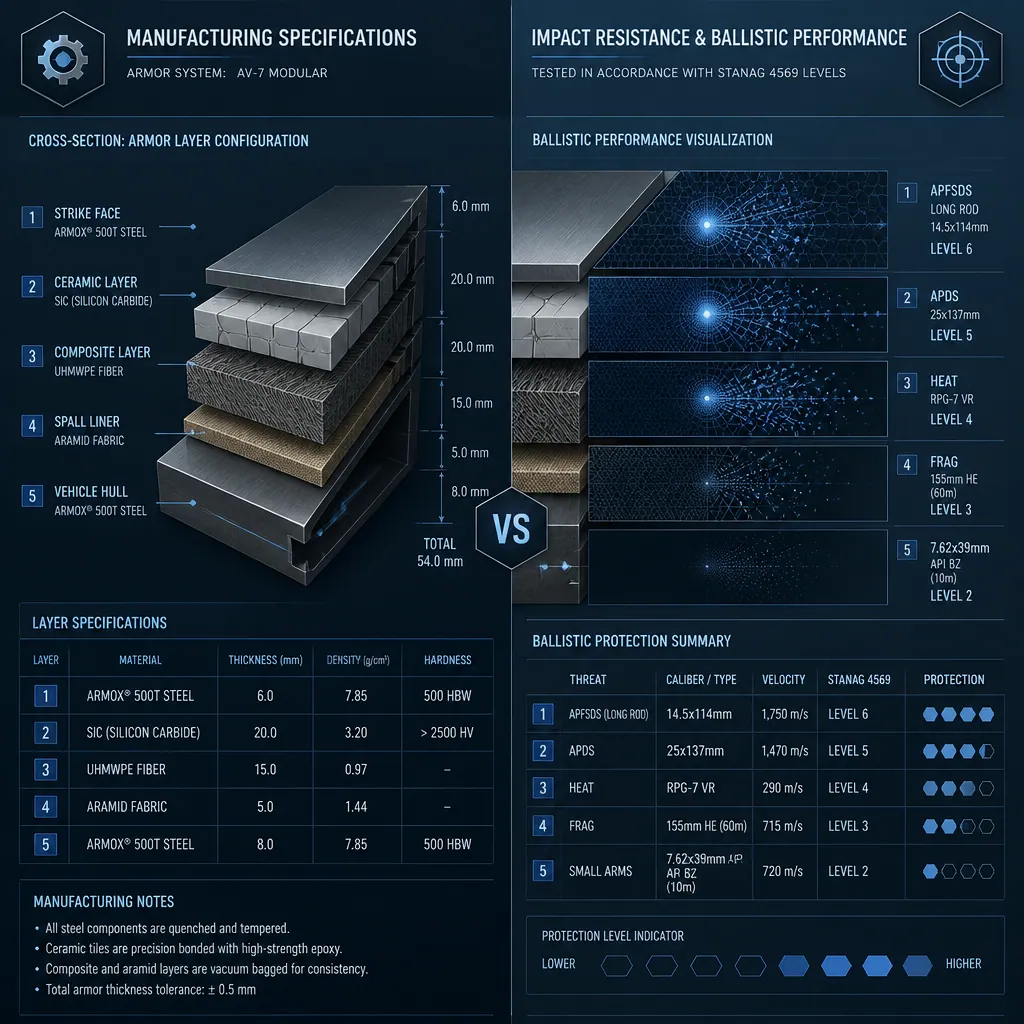
The EN 1063 standard, published by the European Committee for Standardization, is the dominant ballistic classification framework used for civilian and diplomatic armored vehicles across Europe, the Middle East, and large parts of Africa and Asia. It rates protection from BR1 through BR7, with each level corresponding to a specific class of firearm and projectile. Understanding where your operational requirement sits on this scale is the starting point for every other decision.
BR4 and BR5: The Civilian and Corporate Standard
BR4 protection stops handguns including 9mm Luger, .357 Magnum, and .44 Remington Magnum rounds. BR5 adds protection against assault rifle rounds, specifically 7.62mm projectiles from weapons such as the AK-47. For most corporate fleet operators, high value cargo transport, and executive protection applications, the BR4-to-BR5 range provides a practical balance between security and the weight penalty that heavier armor imposes on the vehicle platform.
Weight matters operationally. Each step up in protection level adds meaningful mass to the vehicle. A BR5-rated SUV may weigh significantly more than its unarmored equivalent, which directly affects fuel consumption, payload capacity, and braking distance. When sourcing a Chinese armored SUV for fleet deployment, confirm that the base platform’s powertrain and suspension are rated or upgraded to handle the additional armor weight before the order is placed.
BR6 and BR7: High Threat and Government Applications
BR6 provides protection against high powered rifle rounds, including 7.62x51mm NATO. BR7 is the highest civilian rated armor level and is capable of stopping armor piercing projectiles. Vehicles in this category are typically procured by government agencies, law enforcement, and military adjacent organizations rather than private commercial operators. They attract a higher level of export scrutiny in China and import scrutiny at the destination, and they require specific import permits in most jurisdictions.
The protection level you specify determines the vehicle’s legal identity in most importing countries. A BR4 executive sedan and a BR7 government transport are processed through entirely different regulatory channels, even if they look similar on the outside.
Chinese Armored SUV Manufacturers Worth Knowing
China’s domestic automotive industry has matured significantly over the past decade, and several manufacturers now produce purpose built or conversion ready platforms that are genuinely export competitive. The most relevant for commercial buyers are those with existing export track records and established dealer or distributor networks in target markets.
BAIC is among the most documented in export markets. The BAIC BJ80, a mid size luxury SUV, has been deployed in security and official fleet roles across multiple African markets, and BAIC has made substantial investment in African assembly and distribution infrastructure. This matters for buyers: a platform with local assembly presence typically has better parts availability and service support than one being introduced to a market for the first time.
Beyond marque specific armored models, a significant portion of the buy armored car from China market is served by post production uparmoring. A standard civilian SUV platform, such as those from major Chinese manufacturers, is purchased new, then sent to a certified armoring facility where ballistic steel panels, bullet resistant glazing, and run flat systems are installed. The resulting vehicle is exported with both the original manufacturer’s documentation and the armoring company’s ballistic certification. This approach offers more flexibility in model and specification choice but requires careful due diligence on the armoring facility’s certifications and testing methodology.
Pro tip: When evaluating an uparmored vehicle from China, ask for the ballistic test report from an independent, accredited testing laboratory, not just the armoring company’s own internal certification. Destination customs authorities in the Gulf and in several African markets require independent test documentation to classify the vehicle correctly and issue the appropriate import permit.
Destination Country Import Rules: Middle East and Africa
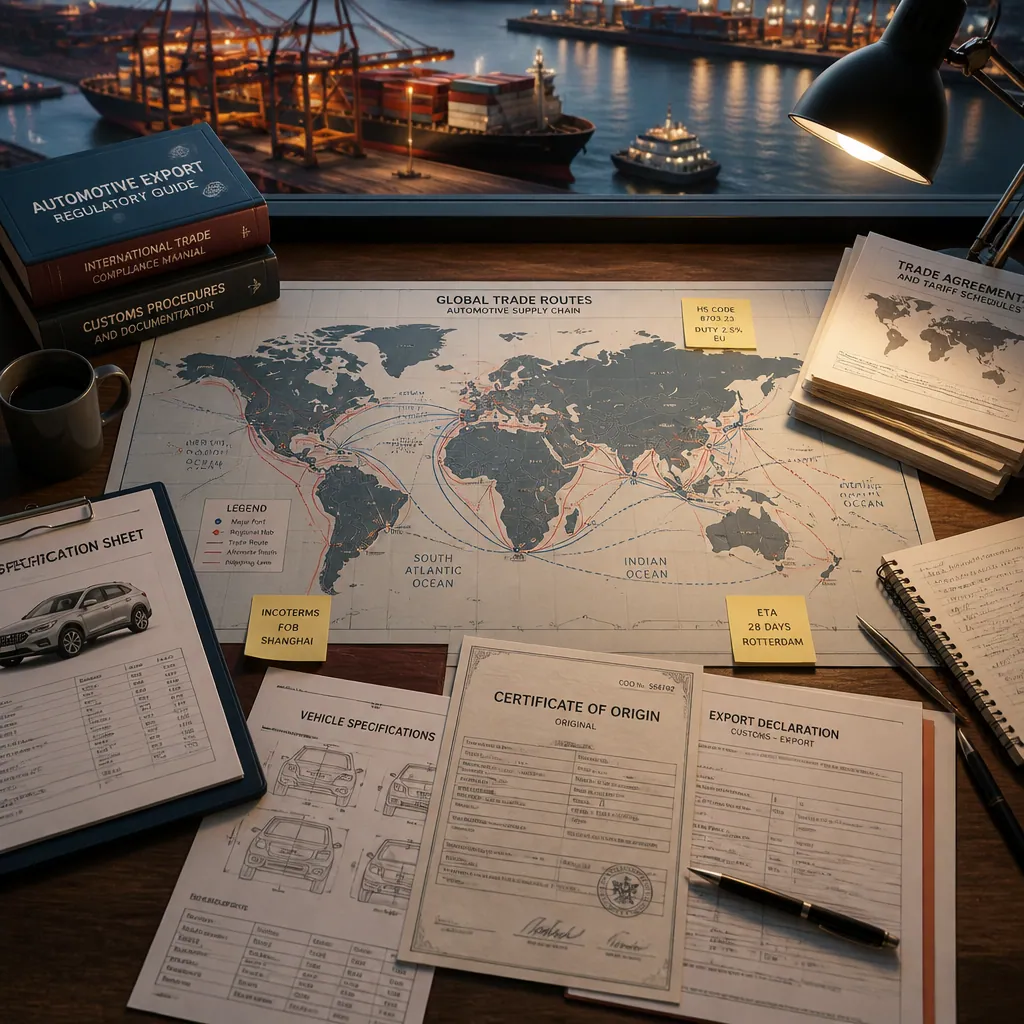
There is no single import rule for armored vehicles. Every destination market has its own framework, and the requirements can differ significantly not just between regions but between individual countries. Buyers who assume that clearing customs in one Gulf state automatically tells them what to expect in another are regularly surprised.
Gulf and Middle East Markets
Many Gulf Cooperation Council (GCC) markets permit the import of civilian grade armored vehicles for private and corporate use, but typically require pre import approval from the relevant ministry, often the Ministry of Interior or an equivalent security authority. The application requires documentation of the vehicle’s specification, including the ballistic protection rating, the identity of the end user, and the stated purpose of use. Processing times vary by country. Build this into your procurement timeline and do not assume approval is automatic.
Run flat tire systems, which are standard equipment on most properly armored vehicles, may also require separate type approval in some markets if the tire specification deviates from the vehicle’s original type approval documentation. This is a detail that catches buyers who purchase fully specified armored units and then discover a component needs re homologation at the destination.
Sub Saharan Africa and North Africa
African markets present significant variation. Some markets, particularly those with established Chinese automotive import infrastructure, have relatively streamlined processes for armored vehicle imports. Others apply categorical restrictions based on protection level or end user type. In general, vehicles rated BR6 and above are treated as restricted or controlled goods in most African jurisdictions and require government level import authorization.
End user certificates are almost universally required at the Chinese export stage for armored vehicles going to African destinations, and many African customs authorities will ask to see the Chinese export license as part of their own clearance process. Maintaining a complete documentation chain from Chinese export through to destination clearance is not optional. It is the difference between a vehicle that arrives and one that sits.
Documentation and Compliance Checklist for Armored Vehicle Imports
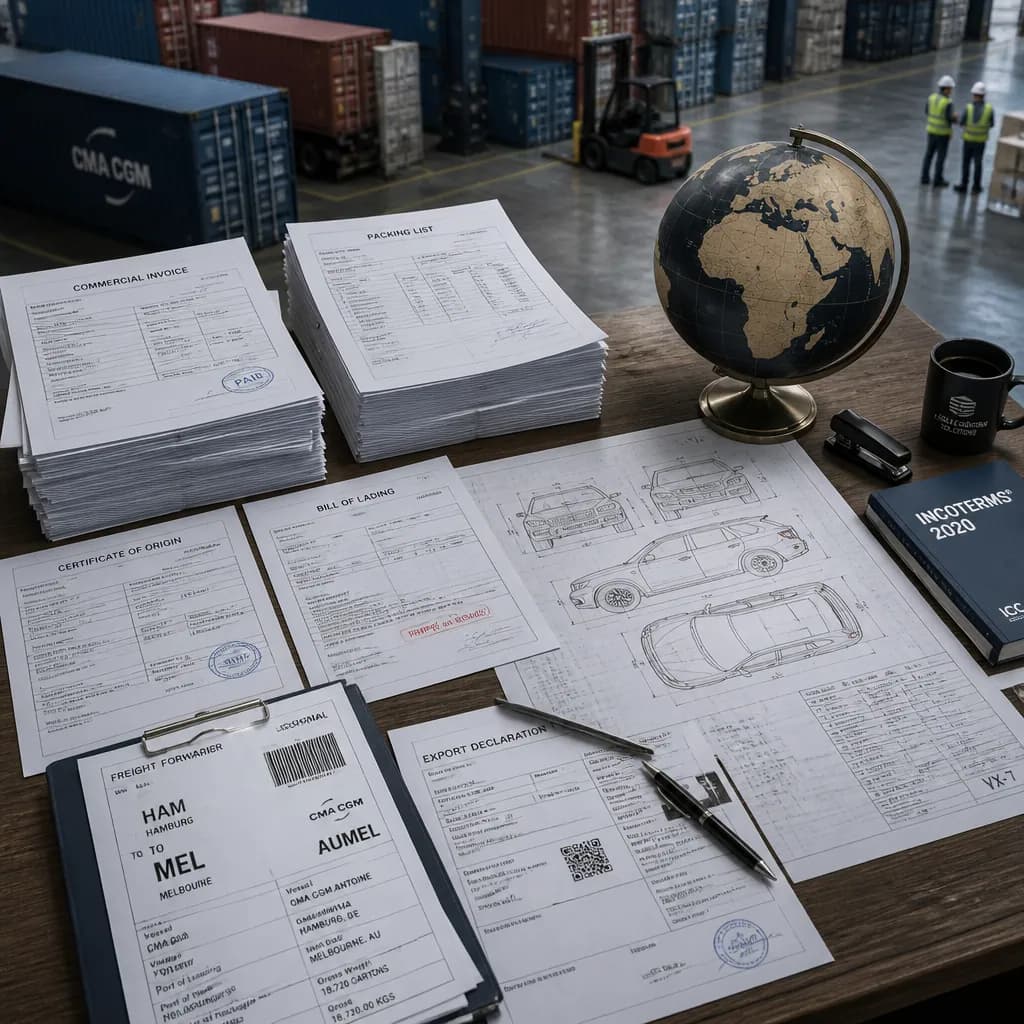
The documentation requirement for an armored vehicle export from China is more extensive than for a standard passenger vehicle. The list below reflects what a competent export operation should be preparing as a baseline. Additional documents may be required depending on the specific vehicle, protection level, and destination market.
- Vehicle purchase invoice specifying make, model, VIN, protection level, and armoring specification.
- Chinese export license from MOFCOM if the vehicle is classified as a dual use item under the current control list.
- End user certificate (EUC) signed by the ultimate buyer, specifying the stated purpose and confirming the vehicle will not be re transferred without authorization.
- Ballistic protection certificate from the armoring manufacturer, and ideally from an independent accredited testing laboratory.
- Certificate of origin confirming Chinese manufacture for customs tariff classification at the destination.
- Bill of lading with accurate goods description, weight, and dimensions reflecting the armored specification (not the base vehicle spec).
- Packing list including any separately shipped components such as spare ballistic glass panels or run flat inserts.
- Destination import permit or pre approvalwhere required by the importing country’s security or transport authority.
A common mistake is shipping an armored vehicle on documentation that describes the base, unarmored platform. The weight discrepancy alone can trigger a customs inspection. More seriously, failing to declare the armoring specification is treated as a misdeclaration in most jurisdictions, which creates legal exposure for both the exporter and the importer.
Armoring Approach Comparison: Factory Built vs. Conversion vs. Third Party Uparmoring
When sourcing armored vehicles from China, buyers typically encounter three distinct approaches to how the armoring has been applied. Each has a different implication for certification, pricing, lead time, and customs classification.
| Approach | Key Characteristics | Best Suited For |
|---|---|---|
| Factory Built Armored Vehicles | Armoring integrated during original manufacture. Comes with full manufacturer type approval and ballistic certification. Higher unit cost. Fewer model options. Most straightforward for customs classification. | Government and law enforcement procurement, buyers in markets with strict type approval requirements. |
| Certified In Country Conversion | Base vehicle is purchased new and sent to a China based certified armoring facility before export. Requires independent ballistic testing certificate alongside the base vehicle documentation. More model flexibility. | Corporate fleet operators and security companies wanting specific models not available factory armored. |
| Third Party Uparmoring at Destination | Vehicle is imported as a standard new unit and armored at a facility in the destination country. Simplifies Chinese export process. Depends on availability and quality of armoring services locally. | Markets with established local armoring industries and where local type approval is easier to obtain post armoring. |
For most buyers sourcing through a professional export partner, the certified in country conversion approach offers the best balance of model choice, documentation integrity, and overall cost. Factory built armored vehicles from China are available but the range is narrower, and lead times can be longer if units are not in stock.
Total Cost of Importing an Armored Vehicle From China
Buyers who approach armored vehicle procurement by looking at the base vehicle price alone consistently underestimate the total landed cost. The gap between ex factory price and the vehicle arriving operational at the destination is wider for armored vehicles than for any other vehicle category in the export market.
The main cost components beyond the vehicle itself include: the armoring conversion (which typically represents a substantial portion of total vehicle cost at higher protection levels), export licensing fees if a MOFCOM license is required, independent ballistic testing and certification, international freight (armored vehicles are heavy, which increases freight cost on a per unit basis compared to standard vehicles), marine insurance (which must reflect the armored vehicle’s actual declared value, not the base platform value), destination import duty, destination import permit fees, and any type approval or homologation costs required at the destination.
Aftersales costs are also meaningfully different from standard vehicles. Ballistic glass is a consumable. It does not self repair after an impact event and must be replaced from a specialist supply chain. Run flat tire inserts have service intervals and must be sourced from compatible suppliers. Building a confirmed spare parts and maintenance plan into the procurement is not an afterthought. For fleet operators deploying multiple armored units, it is a core part of the business case.
Pro tip: When budgeting for an armored vehicle import from China, add a minimum contingency of 15 to 20% above your calculated landed cost estimate. Armored vehicle imports involve more moving parts, more regulatory touch points, and more potential for unexpected costs than any other vehicle type. Experienced buyers plan for this; first time importers who do not plan for it are frequently caught short at the destination port.
Frequently Asked Questions
Can a private company or individual buy an armored vehicle from China?
Yes, private companies and individuals can purchase civilian grade armored vehicles from China, particularly those built for executive protection, corporate security, and VIP transport. The practical requirements depend on the protection level specified and the destination country’s import rules. Lower rated civilian vehicles (BR4-BR5) are generally accessible to private buyers through commercial channels, while higher rated vehicles (BR6-BR7) attract more regulatory scrutiny at both the Chinese export stage and the destination import stage. Working with an experienced export partner who understands both sides of the process is essential.
What is the difference between BR4 and BR6 protection, and does it affect my import process?
BR4 protection stops handguns and is the standard for most corporate and executive armored vehicles. BR6 provides protection against high powered rifle rounds including 7.62x51mm NATO. The difference is significant from an import perspective because many jurisdictions treat BR6 and above as restricted goods, requiring government level import permits and more detailed end user declarations. The protection level also affects the vehicle’s weight, which has direct implications for shipping costs and destination homologation requirements.
Does China require an export license for armored vehicles?
It depends on the vehicle’s specification and how it is classified under China’s dual use export control framework. Since December 2024, China has applied updated regulations for dual use items that require exporters to obtain a license from the Ministry of Commerce when the goods are listed on the controlled items list or subject to temporary control. Armored vehicles, depending on their ballistic rating, armor materials, and intended end user, may fall within this framework. The exporter should provide a formal classification determination before the order is confirmed.
What documentation does the destination customs authority typically require for an armored vehicle from China?
At minimum, expect to provide a detailed vehicle invoice specifying the armoring specification and protection level, a certificate of origin, a bill of lading reflecting the actual weight of the armored vehicle, the ballistic protection certificate, and in many markets a destination import permit or pre authorization from the relevant security or transport authority. If a Chinese export license was required, a copy is typically needed at the destination as well. End user certificates are standard practice and are expected by customs authorities in most Middle East and African markets.
Are Chinese armored SUVs reliable enough for fleet deployment in high demand environments?
Several Chinese armored platforms have been in operational use in security and government fleet roles across African and Middle Eastern markets for a number of years, with BAIC being among the most documented examples. The reliability question has two components: the base vehicle platform and the armoring quality. For the base platform, Chinese manufacturers have made significant advances in engineering quality, and models intended for export markets are increasingly built to competitive international standards. For the armoring, the quality depends entirely on the armoring facility used. An independently certified armoring conversion on a solid base platform is a viable fleet option. An uncertified or poorly executed conversion is a liability regardless of the base vehicle’s quality.
How long does it typically take to import an armored vehicle from China to Africa or the Middle East?
Lead time varies considerably depending on whether the vehicle is in stock or needs to be built and armored, whether a MOFCOM export license is required, and how long destination import pre approval takes. A realistic minimum for a well organized import of an in stock armored vehicle is eight to twelve weeks from order confirmation to delivery at the destination port. If armoring conversion is required, or if export licensing is needed, add further time. Buyers who need vehicles for a specific operational date should work backward from that date and confirm the full timeline with their export partner before placing the order.
If you are sourcing armored vehicles from China for the first time, or expanding an existing fleet program, we would like to hear about the specific challenges you have encountered. Share your experience or questions in the comments below, and our team will respond directly.
References
- China’s new dual use export control regulations effective December 2024
- Analysis of China’s civil military dual use export licensing requirements
- Understanding EN 1063 armor protection levels for civilian armored vehicles
- Overview of armored vehicles available for civilian and commercial export from China
- EN 1063 ballistic standard for bullet resistant glazing and armored vehicle classification