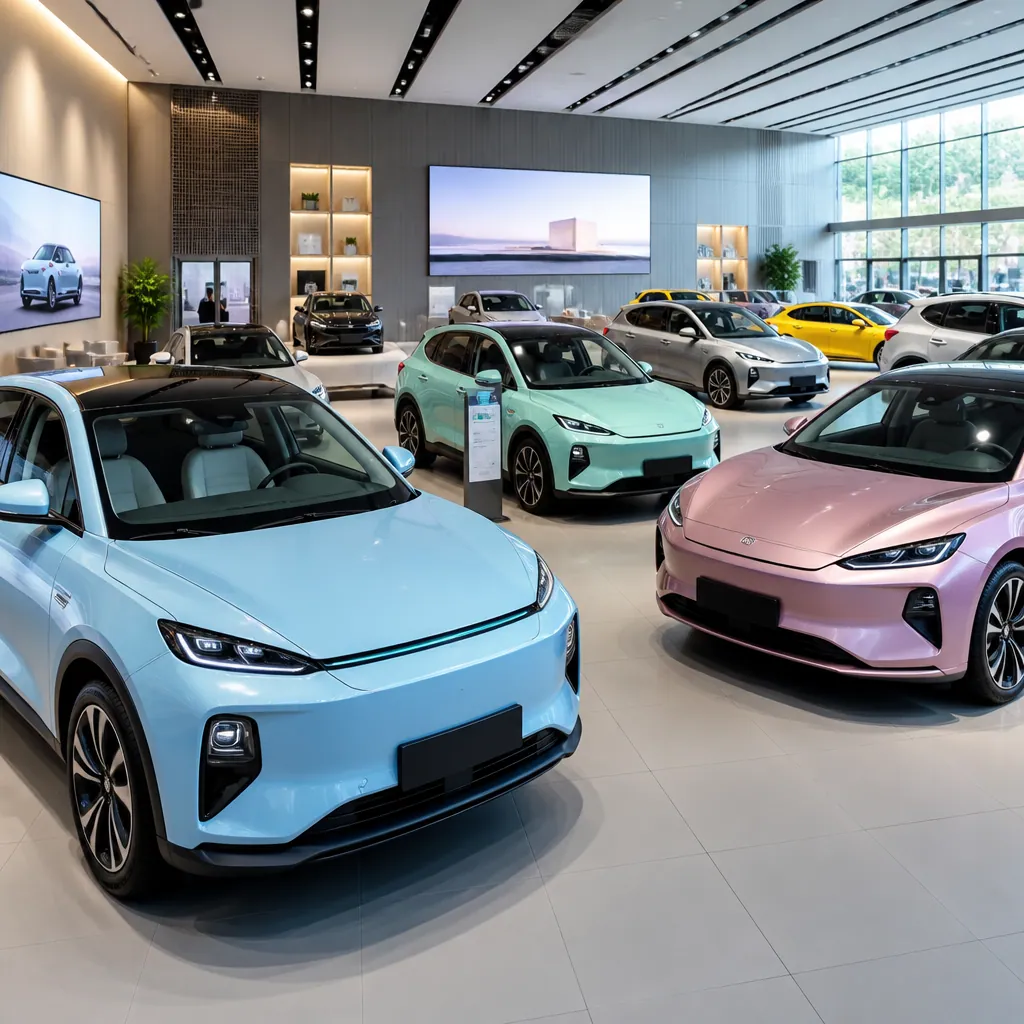
If you are a vehicle dealer or fleet operator new to sourcing from China, the sheer number of brands on offer is one of the first things that will stop you cold. A single Chinese automaker can operate four, five, or six sub brands across completely different price points and vehicle categories. Getting the brand landscape wrong at the start means landing the wrong vehicle for your market, dealing with a supplier who cannot actually export, or missing the model that your end customers actually want. This Chinese car brands guide cuts through the noise with a market by market view of who the major players are, what they actually sell, and which brands have the export infrastructure to support international dealers reliably.
Quick Takeaways
| Key Insight | Explanation |
|---|---|
| Chinese automakers operate as brand groups, not single brands | Geely, Chery, SAIC, and GWM each control multiple sub brands targeting different price points and vehicle types. Sourcing from a group means access to a wider portfolio than the headline brand suggests. |
| Chery has led Chinese vehicle exports for over two decades | Chery retained the top export position for the 23rd consecutive year in 2025. It operates across 80-plus countries and is particularly strong in the Middle East, Africa, and South America. |
| BYD’s export growth is the fastest among major brands | BYD exported over 1 million vehicles in 2025 for the first time, with international sales covering more than 120 countries. It is the name to know for EV and PHEV fleet sourcing. |
| SAIC’s MG brand is one of the most internationally recognised Chinese made marques | MG carries British heritage branding and is sold in markets where a Chinese origin badge would face resistance. It is a practical entry point for dealers in image sensitive markets. |
| GWM dominates the SUV and pickup segment for export | Great Wall Motor brands, especially Haval and the GWM Pickup, have strong traction in the Middle East and Africa. GWM’s Middle East exports surged 127% in 2025. |
| Not every Chinese brand has functional export infrastructure | Newer EV-native brands often sell heavily in China but have limited RHD availability, spare parts networks, or export documentation support outside select markets. Verify before committing. |
| Homologation requirements vary sharply by destination market | Type approval, emissions standards, and safety certification differ between GCC countries, African markets, and Southeast Asia. Confirm compliance for each target market before finalising a brand choice. |
Why Brand Structure Matters Before You Source
Most newcomers to China origin vehicle sourcing approach it the same way they would approach sourcing from a single brand manufacturer in Europe or Japan. That mental model breaks quickly. Chinese automotive groups are brand portfoliosnot single marques, and the vehicle you want may sit under a sub brand that has a different export team, different minimum order terms, and different compliance documentation than the group’s flagship nameplate.
A common mistake is contacting a group level entity and assuming that any model from any sub brand is readily available for export. In practice, certain sub brands are built primarily for the domestic market, have no right hand drive production line, and carry no CE or GCC type approval. The export ready variants are often a subset of the full catalogue, and knowing which brands have done the compliance work for your target region is the single most valuable piece of information you can hold going into a sourcing conversation.
Understanding the brand landscape also protects you from over relying on a single supplier relationship. China’s automotive sector is large enough that if one group’s lead time or pricing does not work for your order, a competing group with a comparable model almost certainly exists. That only becomes useful knowledge if you know which groups operate in the same vehicle category.

The Major Chinese Automaker Groups and Their Sub Brands
The following groups represent the backbone of China’s vehicle export industry. Each has a distinct market positioning, and each controls sub brands that may be more relevant to your specific vehicle category than the parent name alone suggests.
Chery Group: The Export Volume Leader
Chery started exporting vehicles in 2001, ahead of every other Chinese manufacturer, and has held the top export position every year since 2003. In 2024, Chery exported roughly 1.14 million vehicles, and that figure continued growing in 2025. For a dealer new to the Chinese market, Chery’s depth of international logistics experience is a practical advantage: the company understands how to move vehicles across borders, handle documentation, and manage spare parts pipelines in markets where infrastructure is imperfect.
Chery’s brand structure is worth mapping carefully. The core Chery brand covers mainstream SUVs, with the Tiggo series being its strongest export line. Jetour is a Chery sub brand established in 2018 that focuses on adventure and family SUVs, and it has built significant traction across the Middle East, Africa, South America, and Southeast Asia. Omoda and Jaecoo are the group’s newer, design forward sub brands targeting younger buyers. Exeed positions itself at the premium end, and iCar is the group’s EV-focused nameplate. For most international dealers sourcing for emerging markets, Jetour and the core Chery Tiggo range are the practical starting point.
SAIC Motor: The State Owned Giant with Recognisable Sub Brands
SAIC is China’s largest state owned automotive group by sales volume. Its value to international dealers lies in its sub brands rather than the SAIC name itself. MG is the most export relevant SAIC brand: it carries British heritage branding, is available in both petrol and electric versions, and is sold across markets where a purely Chinese origin badge would face consumer hesitation. Maxus is SAIC’s van and light commercial vehicle brand, well suited to fleet operators who need LCVs alongside passenger cars. Roewe handles the mainstream Chinese domestic market, while IM Motors is the group’s premium EV offering. In 2024, SAIC exported approximately 929,000 vehicles, making it the second largest Chinese vehicle exporter by volume.
Geely Holding Group: The Private Sector Powerhouse
Geely is China’s largest private automaker by both revenue and global footprint, and its brand portfolio is the most complex of any group you will encounter. At the volume end sits the core Geely Auto brand. Moving up in price Lynk and Co targets younger premium buyers. Zeekr is the group’s dedicated premium electric vehicle marque, with models like the 001 and 007 that compete on specification with European EVs. Geely also owns Volvo Cars, Lotus, and Polestar, though those brands operate largely independently and are not the focus for emerging market sourcing. The Galaxy sub brand handles NEV models at the mainstream price point. Geely exported around 532,000 vehicles in 2024, and total group sales, including Volvo, exceeded 4 million units in 2025.
Great Wall Motor (GWM): The SUV and Pickup Specialist
Great Wall Motor built its name on SUVs and pickups, and that focus has translated into strong export performance in exactly the markets Automotion Global serves. In the Middle East, GWM’s exports surged 127% in 2025, driven by demand for the Haval SUV range and the GWM Pickup. The group’s brand structure is clean and easy to navigate: Haval covers mainstream and mid range SUVs Tank covers body on frame off road and luxury off road SUVs Ora focuses on compact electric vehicles, and Wey handles the premium hybrid segment. The GWM Pickup is sold under the GWM name directly. For dealers in African or Middle Eastern markets where road conditions demand genuine off road capability, Tank and Haval deserve serious attention.
Changan Automobile: Consistent Export Growth
Changan is a state owned group that has posted consistent export growth, shipping approximately 536,000 vehicles internationally in 2024, a year on year increase of nearly 50%. Changan’s mainstream vehicles offer solid value positioning. The group also has a dedicated EV brand called Deepal and a premium sub brand called Avatrdeveloped in partnership with CATL and Huawei. For dealers who want a broad ICE and EV catalogue from a single relationship, Changan’s export infrastructure is maturing fast.
BAIC Group and JAC Motors: Volume Players Worth Knowing
BAIC exported around 274,000 vehicles in 2024 and JAC approximately 249,000, making both meaningful players even if they sit below the top five. JAC has a long history supplying fleet and commercial vehicle buyers, and its tie up with Volkswagen for EV development has raised its profile. BAIC’s Beijing brand covers mainstream passenger cars, while its Arcfox sub brand targets the premium EV segment. Neither group has the export maturity of Chery or SAIC, but both are viable sourcing options for buyers who have done the due diligence on their specific market’s approval requirements.
EV and PHEV Brands Built for International Markets
The new energy vehicle segment is where the Chinese market is moving fastest, and it is where the gap between domestic only brands and export ready brands is widest. Several brands are well positioned for international dealer programmes. Others are phenomenally popular inside China but have almost no export ready infrastructure outside a handful of select markets.
BYD: The Brand That Has Crossed the Threshold
BYD is the world’s largest new energy vehicle manufacturer by volume. What makes BYD different from most competitors is vertical integration: the company produces its own battery cells using its LFP Blade Battery technology, its own electric motors, and its own semiconductor chips. This insulates BYD supply chains from the component shortages that have disrupted other brands, which matters to international dealers who need reliable delivery timelines. BYD’s export catalogue covers passenger EVs and PHEVs across multiple price points. The group’s sub brands include Denza for premium buyers Yangwang for the ultra premium and off road segment, and Fang Cheng Bao for lifestyle off road vehicles. BYD now sells vehicles in more than 120 countries and regions, and its international dealer network is growing rapidly. For a fleet operator looking to transition to electric vehicles, BYD is the most straightforward starting point in the Chinese market.
Brands With Strong Domestic Profiles but Limited Export Readiness
NIO, Li Auto, and Xiaomi Auto are three names that will appear in any conversation about Chinese EVs. All three are significant domestically. Li Auto in particular has built a strong business around extended range electric vehicles. However, for an international dealer sourcing for the Middle East or African markets, these brands currently offer limited export support, patchy right hand drive availability, and no established spare parts infrastructure in most target regions. They are worth monitoring, but they are not the right sourcing choice for a dealer who needs to support customers reliably from day one.
The brands that have earned export credibility have done so through years of investment in compliance, spare parts logistics, and after sales support outside China. That infrastructure does not appear overnight, and for a dealer, it is as important as the product itself.
Pro tip: When evaluating a new Chinese brand for your market, ask specifically whether the model you want has received type approval in your target country, whether right hand drive variants are in production, and whether the brand has an appointed distributor or regional parts depot already in place. If the answer to any of those three questions is no, treat the brand as an 18-to-24-month away opportunity rather than an immediate sourcing option.
Brand Comparison by Export Readiness and Market Fit
The table below compares three of the most commonly sourced Chinese automotive groups across the dimensions that matter most to an international dealer or fleet operator. These are practical distinctions based on the groups’ current international presence, not theoretical capability.
| Dimension | Chery Group (incl. Jetour, Omoda) | BYD (incl. Denza) | Great Wall Motor (Haval, Tank, Ora) |
|---|---|---|---|
| Export volume rank (2024) | 1st among Chinese brands, 1.14M units | 6th in 2024 (433K), rising to 1M-plus in 2025 | 5th in 2024, 453K units |
| Best vehicle categories for export | Mainstream SUVs, family SUVs, crossovers | Pure EVs, PHEVs, passenger cars | Body on frame SUVs, off road, pickups, compact EVs |
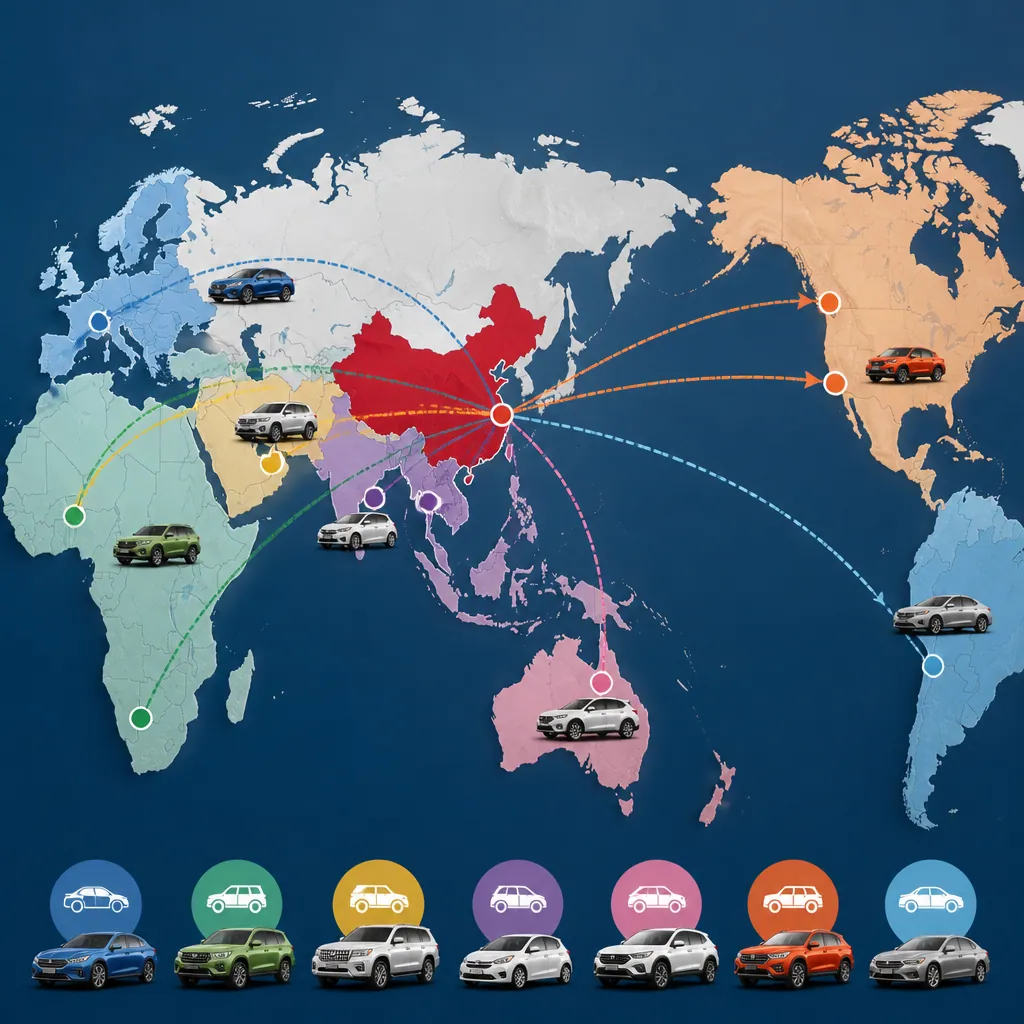
| Target markets (strongest) | Middle East, Africa, South America, Southeast Asia, Russia | Southeast Asia, Europe, Middle East, Latin America | Middle East, Africa, Australia, South America |
| RHD availability | Available across core models | Available for key models in select markets | Available on Haval and Tank for RHD markets |
| After sales and parts maturity | High: 80-plus countries, established network | Growing fast: 120-plus countries, expanding | Strong in core markets, developing elsewhere |
| Ideal for | Dealers wanting volume, model variety, and a proven export partner | Fleet operators and EV-focused dealers | Dealers in markets with high SUV and off road demand |
What New Dealers Get Wrong About Chinese Brands
Several misunderstandings show up repeatedly among dealers sourcing from China for the first time. Getting these right early saves significant time and avoids costly commitments.
Assuming the Most Famous Domestic Brand Is the Best Export Option
Brand recognition inside China does not translate to export readiness. Some of China’s most talked about domestic brands have built their entire business around left hand drive, Chinese specification vehicles with software and infotainment systems in Mandarin only. The brands that dominate Chinese auto show coverage are not always the ones that have done the engineering and compliance work to support vehicles in GCC-specification, African road conditions, or ASEAN markets.
Treating a Group Name as a Single Product Line
When you say you want to source from “Geely” or “Chery,” that tells a supplier very little. You need to specify the sub brand, the model series, the powertrain variant (petrol, hybrid, EV), and the specification level. Each of those choices may involve a different production line, a different factory, and different documentation. Getting specific from the first conversation is not pedantry; it is the difference between receiving a quotation that actually reflects what you need and receiving a generic price list that wastes everyone’s time.
Ignoring After Sales Infrastructure Until It Becomes a Problem
A dealer who sells Chinese vehicles without a spare parts plan is building a customer service problem that will arrive approximately 12 to 24 months after the first delivery. Warranty claims, consumable parts, and accident repair all require a supply chain. Before you commit to a brand, confirm that either the manufacturer or your sourcing partner has a regional parts depot, a defined parts order process, and a technical support contact who can assist your in market mechanics. Brands with 20-plus years of export history are generally further ahead on this than brands that entered the export market in the last three years.
Pro tip: Request a sample parts availability list for the specific model you intend to stock before signing any supply agreement. If your sourcing partner cannot produce that list, or if it shows long lead times on high wear items like brake pads, filters, and belts, factor that into your after sales planning before the vehicles arrive.
Sourcing and Documentation Essentials for Dealers
Once you have identified the right brand and model, the sourcing process involves a set of documentation and logistics steps that every international dealer needs to understand. These are not bureaucratic formalities: they are the conditions under which vehicles can legally enter your target market and be registered by end customers.
Type Approval and Homologation by Market
Type approval is the formal certification that a vehicle meets the safety and emissions standards of a specific country or region. Requirements differ substantially between the GCC countries, individual African markets, and Southeast Asian countries. A vehicle that is certified for Saudi Arabia may need additional documentation for Kenya or Indonesia. Some Chinese brands have invested in GCC-wide homologation, making distribution across the Gulf straightforward. Others have focused on European standards, which may or may not translate to your target market. Always confirm the approval status of the specific model and specification you intend to import before placing an order.
Export Documentation from the Chinese Manufacturer Side
Standard export documentation from a Chinese vehicle supplier includes the commercial invoice, packing list, bill of lading, certificate of origin, and the manufacturer’s certificate of conformity. Some markets additionally require a pre shipment inspection certificate. The certificate of origin matters for tariff purposes: China has bilateral trade agreements with some markets that reduce import duties, and confirming eligibility before shipment can materially affect your landed cost calculation. A complete documentation package from a properly organised supplier should be available before the vessel departs, not assembled after it arrives at the destination port.
Working With a Trusted Export Partner
For dealers who are new to the China sourcing process, working through an experienced vehicle export partner is the most reliable way to avoid the documentation, logistics, and supplier verification errors that cost time and money. A good export partner handles supplier coordination, pre shipment inspection, export documentation preparation, customs support on the China side, and freight coordination. Critically, they also give you access to verified, legitimate suppliers for the specific brands and models you need, rather than leaving you to navigate an unfamiliar supplier landscape alone. Automotion Global provides exactly this end to end support for dealers and fleet operators sourcing from China, from the initial vehicle identification through to after sales parts assistance once the vehicles are in market.
Frequently Asked Questions
Which Chinese car brand is the largest vehicle exporter by volume?
Chery has held the top position among Chinese vehicle exporters for more than two decades, retaining that ranking for the 23rd consecutive year in 2025. In 2024, Chery exported approximately 1.14 million vehicles, with its Tiggo SUV series and the Jetour sub brand being its strongest export products. Chery operates across more than 80 countries, with particularly strong market presence in the Middle East, Africa, and South America.
Is BYD a good choice for fleet operators looking to electrify their vehicle mix?
BYD is the most credible choice for international fleet operators transitioning to electric or plug in hybrid vehicles. The brand is the world’s largest NEV manufacturer by volume, produces its own batteries and drivetrains, and has established export sales in more than 120 countries. Its PHEV range is especially relevant for markets where charging infrastructure is still developing, as extended range and plug in hybrid models offer flexibility that pure EVs cannot yet provide in those environments.
What is the difference between Haval, Tank, and Ora within the GWM group?
All three are sub brands of Great Wall Motor but serve distinct segments. Haval is GWM’s mainstream SUV brand, covering a range of family and urban SUVs at competitive price points. Tank is the group’s body on frame and premium off road brand, producing vehicles that genuinely compete with established off road nameplates. Ora is GWM’s dedicated compact electric vehicle brand, targeting urban drivers who want an affordable EV. For most dealers in the Middle East and Africa, Haval and Tank are the most immediately relevant, while Ora suits markets with urban EV demand.
How do I know if a Chinese vehicle model has type approval for my target market?
The fastest way is to ask the supplier or your export partner for the specific certificate of conformity or type approval certificate for the model and specification you are considering. For GCC markets, look for GCC-specification variants with the relevant type approval documentation. For African markets, requirements vary by country, so you will often need to check with the local vehicle standards authority or a homologation specialist. Never assume that a vehicle certified in one country automatically qualifies in another, even within the same region.
Can a dealer source from multiple Chinese brand groups through a single export partner?
Yes, and for most international dealers this is the most practical approach. Working through a single export partner with established relationships across multiple brand groups means you can build a diverse vehicle portfolio, including SUVs from one group, EVs from another, and commercial vehicles from a third, without maintaining separate supplier relationships in China. It also simplifies documentation, logistics coordination, and quality inspection. Automotion Global works with suppliers across the major Chinese automotive groups and can coordinate multi brand sourcing programmes for dealers who need variety without the complexity of managing China side relationships independently.
Are new Chinese EV brands like NIO or Xiaomi Auto worth considering for international dealerships?
Not as an immediate sourcing priority for most markets. Both brands are significant domestically in China and produce genuinely capable vehicles. However, as of 2026, neither has built the international spare parts infrastructure, right hand drive availability, or regional type approval coverage that a dealer needs to support customers reliably outside China. For dealers in markets across the Middle East, Africa, and most of Asia, the more established export focused brands from Chery, SAIC, BYD, Geely, and GWM are the right first choices. NIO and Xiaomi Auto are worth revisiting as their export programmes mature.
What is the minimum order quantity when sourcing Chinese vehicles for export?
Minimum order quantities vary by brand group, model, and the structure of your sourcing arrangement. Some manufacturer export divisions require a minimum of a full container load, typically five to six vehicles depending on size. Others will accommodate smaller initial orders for dealers who are entering a new market and need to demonstrate demand before committing to volume. Working through an export partner with existing supplier relationships often gives access to more flexible terms than approaching a manufacturer directly as an unknown buyer.
If you are working through the brand landscape for the first time or evaluating which Chinese vehicle groups best fit your specific market, we would be glad to hear what questions are coming up in your sourcing research.
We would love your feedback and any insights you would share with others. What perspective would you add?
References
- 2025 global automaker sales rankings with Chinese brand performance data
- Top 10 Chinese car brands from an export dealer perspective: ownership, sub brands, and export maturity
- Complete list of Chinese car manufacturers and brands with production data for 2026
- Overview of Chinese passenger vehicle export performance by brand and region in 2025
- Chinese automotive market and export analysis covering full year 2025 data