Finding the right vehicle at the right price from China should be straightforward. But for dealers, fleet operators, and importers who have tried it without specialist support, the process is anything but. Supplier verification, factory direct pricing, export documentation, customs compliance, and international shipping all sit between a buyer’s order and a vehicle on the ground. Vehicle sourcing China at scale requires a structured operation, not a one time transaction. Automotion Global was built specifically for this: a direct, transparent, end to end sourcing model that connects international buyers to verified Chinese manufacturers without the confusion of middlemen stacking fees along the way.
Quick Takeaways
| Key Insight | Explanation |
|---|---|
| China exported over 7 million vehicles in 2025 | China’s vehicle export volume surged 21.1% year on year in 2025, making it the world’s largest vehicle exporting nation and a serious sourcing opportunity for international buyers. |
| Direct manufacturer access removes margin layers | Sourcing from manufacturers rather than trading companies eliminates reseller markups, giving dealers and fleet operators more competitive landed costs. |
| Pre shipment inspection is non negotiable | Every vehicle should be independently inspected in China before it leaves the factory. Skipping this step is the single most common cause of post arrival disputes. |
| The Middle East and Africa are priority growth markets | Chinese brands are gaining significant market share across the Middle East and Africa, meaning local dealers in these regions who source early benefit from first mover pricing advantages. |
| Export documentation is a process, not paperwork | A complete export file includes commercial invoice, packing list, bill of lading, certificate of origin, and destination specific compliance certificates. Missing one document delays clearance. |
| EV and PHEV exports are growing fastest | China’s EV exports grew 19% in the first five months of 2025 alone, driven by brands like BYD, Chery, and MG. Fleet operators sourcing now are ahead of rising demand curves in target markets. |
| Long term supplier relationships outperform one off sourcing | Buyers who establish ongoing sourcing relationships secure consistent pricing, priority allocation during tight supply periods, and faster lead times than those who transact sporadically. |
Why China Vehicle Exports Matter Right Now
The scale of what China now produces and exports in the automotive sector is not a trend. It is a structural shift. China produced and sold over 31 million vehicles in 2024, according to the China Association of Automobile Manufacturers. In 2025, vehicle exports reached 7.098 million units, representing a 21.1% year on year increase. To put that in context: roughly one in every five vehicles crossing an international border in 2025 originated in China.
For dealers and importers operating in the Middle East and Africa, the timing is especially relevant. The Middle East and Russia have surpassed North America and Europe as volume destinations for Chinese automotive exports. Chinese brands are capturing meaningful market share in these regions, driven by competitive pricing and increasingly capable product ranges spanning passenger cars, SUVs, electric vehicles, and commercial vehicles.
The opportunity is real. The challenge is accessing it correctly. Sourcing directly from Chinese manufacturers requires knowledge of how factories work, how export compliance functions in China, and how to coordinate international logistics without accumulating costly errors. That is precisely what a dedicated China auto sourcing agent does, and what Automotion Global is built to deliver.
The businesses that will dominate vehicle retail in emerging markets over the next decade are the ones building direct supply relationships with Chinese manufacturers right now, not waiting until demand forces their hand.
How Automotion Global Sources Directly From Manufacturers
Most international buyers attempting vehicle sourcing in China on their own hit the same wall: the supplier landscape is vast, factory credentials are difficult to verify remotely, and the gap between a quoted price and an actual landed cost is wide enough to destroy a business case. Automotion Global operates within an established supplier and partner network across China, built through ongoing commercial relationships with automotive manufacturers, not sourced through a directory.
Supplier Verification and Manufacturer Access
Not every entity presenting itself as a manufacturer in China is one. Many trading companies operate as intermediaries, purchasing from factories and adding margin without declaring it. Automotion Global’s sourcing process begins with confirmed manufacturer access: working with suppliers whose factory credentials, export licensing, and production capacity have been established through direct engagement, not through third party listings.
This matters most for buyers ordering multiple units or building a recurring import program. When you are sourcing a fleet of commercial vehicles or placing repeat orders for passenger cars, the price consistency and allocation reliability that come from a direct manufacturer relationship are not a nice to have. They are the foundation of a workable business model.
Transparent Pricing From the Factory Gate
One of the practical failures of informal China auto sourcing is the opacity of pricing. A buyer receives a quote, agrees to it, and then discovers that freight, insurance, local port fees, or “handling charges” have been layered on top at each step. Automotion Global structures pricing from the manufacturer outward, with a clear breakdown of what the buyer is paying for at every stage: factory price, domestic transport to port, export inspection, documentation, freight, and destination port handling.
Pro tip: When evaluating any vehicle sourcing quote from China, always ask for the full cost breakdown from the factory gate to the destination port. A quote that only shows an FOB price without itemising domestic costs is incomplete and may be hiding fees that appear later.
The Vehicle Export Process, Step by Step
Understanding how the export process works is not just useful background. For dealers and fleet operators, it is the difference between managing your supply chain and being managed by it. The full process from order confirmation to delivery in the destination market covers several distinct stages, each with its own documentation and coordination requirements.
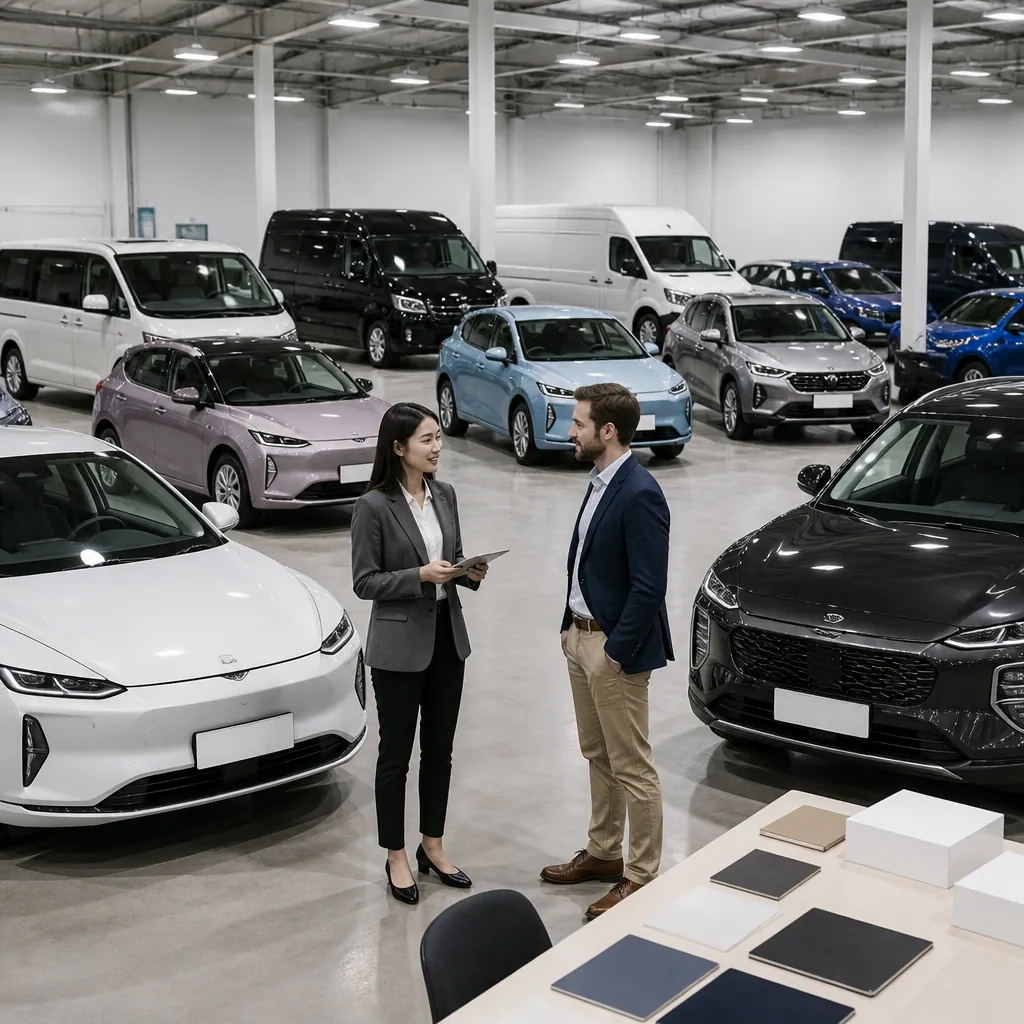
Step 1: Vehicle Selection and Order Confirmation
The process begins with matching the buyer’s specification to available factory configurations. This includes model, variant, drivetrain, colour, trim level, and any market specific requirements such as right hand versus left hand drive or specific safety certifications. For large orders, factory scheduling and production allocation need to be confirmed at this stage, not assumed.
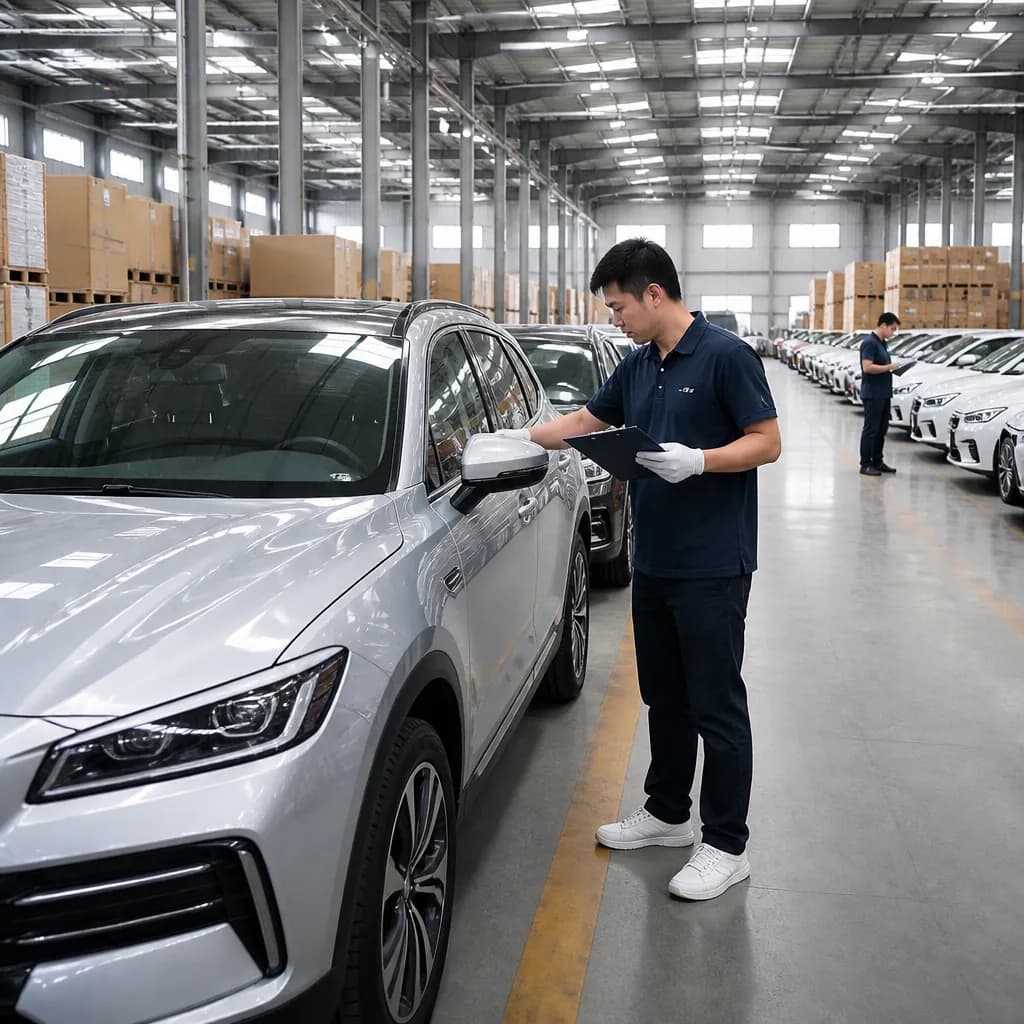
Step 2: Pre Shipment Inspection
Before any vehicle is loaded for export, it must be inspected. This inspection verifies that the vehicle matches the confirmed specification, documents its condition at the time of loading, and confirms it meets the relevant export requirements. Skipping inspection because it adds time or cost is a decision that consistently results in disputes after arrival. Damaged vehicles, incorrect specifications, or missing components are far more costly to resolve from the destination end than to catch in China before loading.
A thorough inspection process covers manufacturer compliance verification, VIN confirmation, mechanical and cosmetic condition assessment, and photographic documentation that becomes part of the export file.
Step 3: Export Documentation
China’s vehicle export documentation requirements are specific. The core documents for most international shipments include the commercial invoice, packing list, bill of lading, certificate of origin, and any destination specific certificates such as roadworthiness or homologation documents required in the receiving market. Some markets additionally require third party inspection certificates or specific customs classifications by drivetrain type.
Pro tip: Confirm the import documentation requirements of your destination country before the vehicle leaves China. Getting documentation corrected or reissued after the vehicle has sailed extends clearance timelines significantly and can trigger demurrage costs at the destination port.
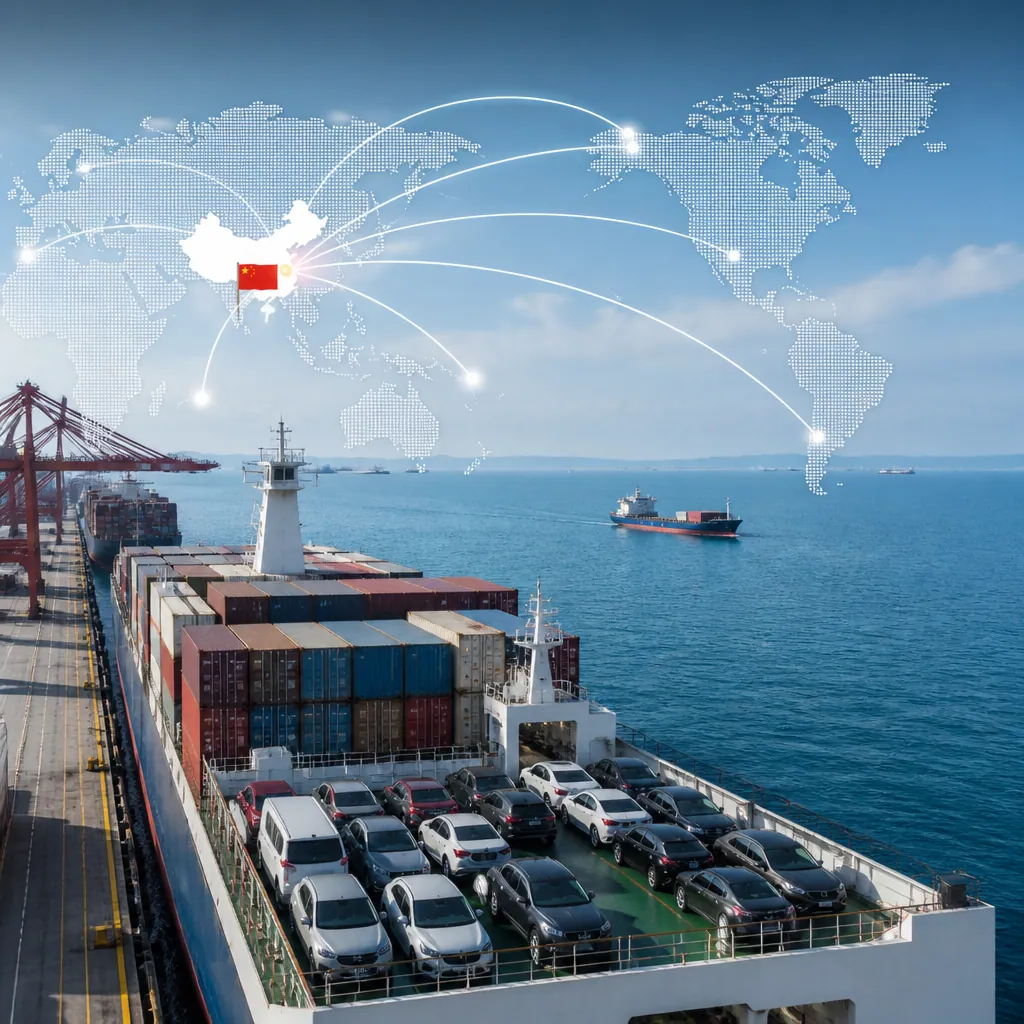
Step 4: International Shipping and Logistics Coordination
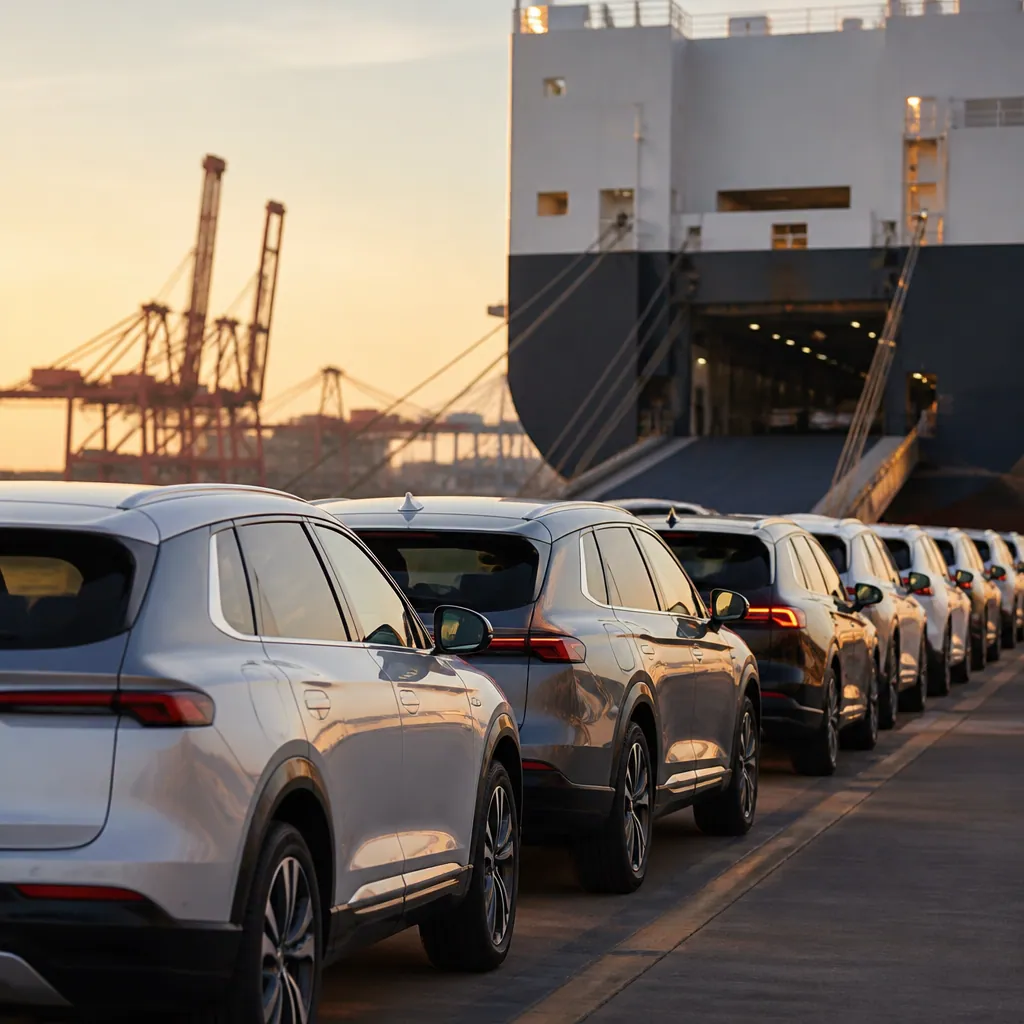
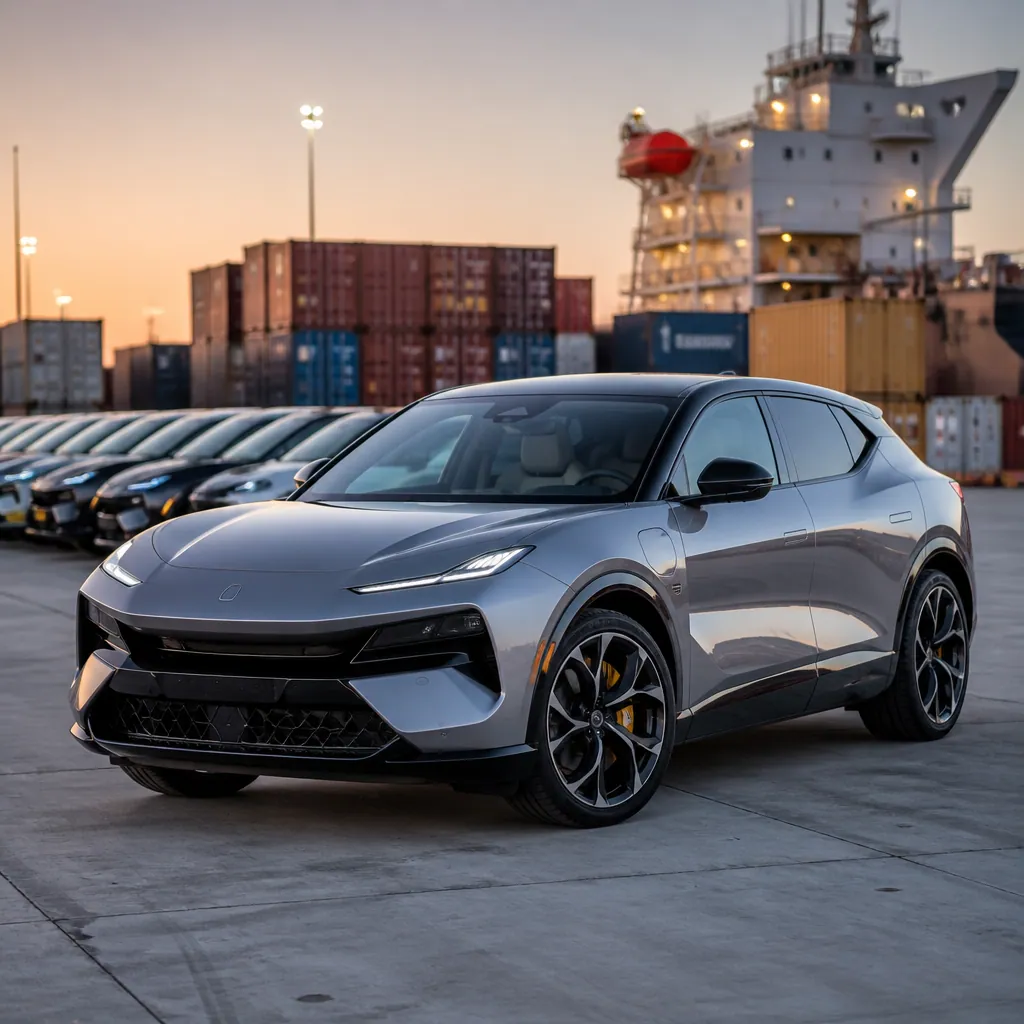
Vehicle shipping from China uses Roll on/Roll off (RoRo) vessels or container shipping, depending on the volume, destination, and vehicle type. RoRo is generally more cost effective for standard passenger vehicles at scale, while container shipping is often used for single units, high value vehicles, or routes where RoRo services are limited. The choice of shipping method, port of loading, and routing all affect both cost and transit time.
Step 5: Destination Customs and Aftersales Support
Customs clearance in the destination market requires accurate tariff classification, correct declared values, and all supporting documentation in order. Automotion Global supports buyers through this process, including coordination on spare parts supply and aftersales assistance once vehicles are in market. This ongoing support is what distinguishes a genuine export partner from a one transaction freight forwarder.
Sourcing Approaches Compared
Buyers entering the China vehicle sourcing space encounter three distinct models. Understanding what each delivers and where each falls short is essential before committing to a supply relationship.
| Sourcing Approach | How It Works | Key Limitation |
|---|---|---|
| Direct factory purchase (no agent) | Buyer contacts manufacturers directly, negotiates pricing, and manages all logistics, documentation, and customs independently. | Requires deep local knowledge, Chinese language capability, and in country presence for inspection and logistics coordination. High risk for buyers without established China operations. |
| Trading company | A China based intermediary purchases vehicles from factories and resells to international buyers, handling some logistics. | Additional margin layer between manufacturer and buyer. Pricing is less transparent. Trading companies may not have direct factory relationships and cannot always guarantee allocation or specification consistency. |
| Specialist export sourcing partner (such as Automotion Global) | An established export partner with direct manufacturer access coordinates sourcing, inspection, documentation, shipping, and aftersales support as a complete managed service. | Requires selecting a partner with verified supplier relationships and genuine end to end capability, not just brokering contacts. The quality of service varies significantly across providers in this space. |
For most international dealers, fleet operators, and distributors, the specialist export partner model delivers the best combination of price access and operational reliability, provided the partner has genuine manufacturer relationships rather than a network of sub brokers.
What Vehicle Types Can Be Sourced From China
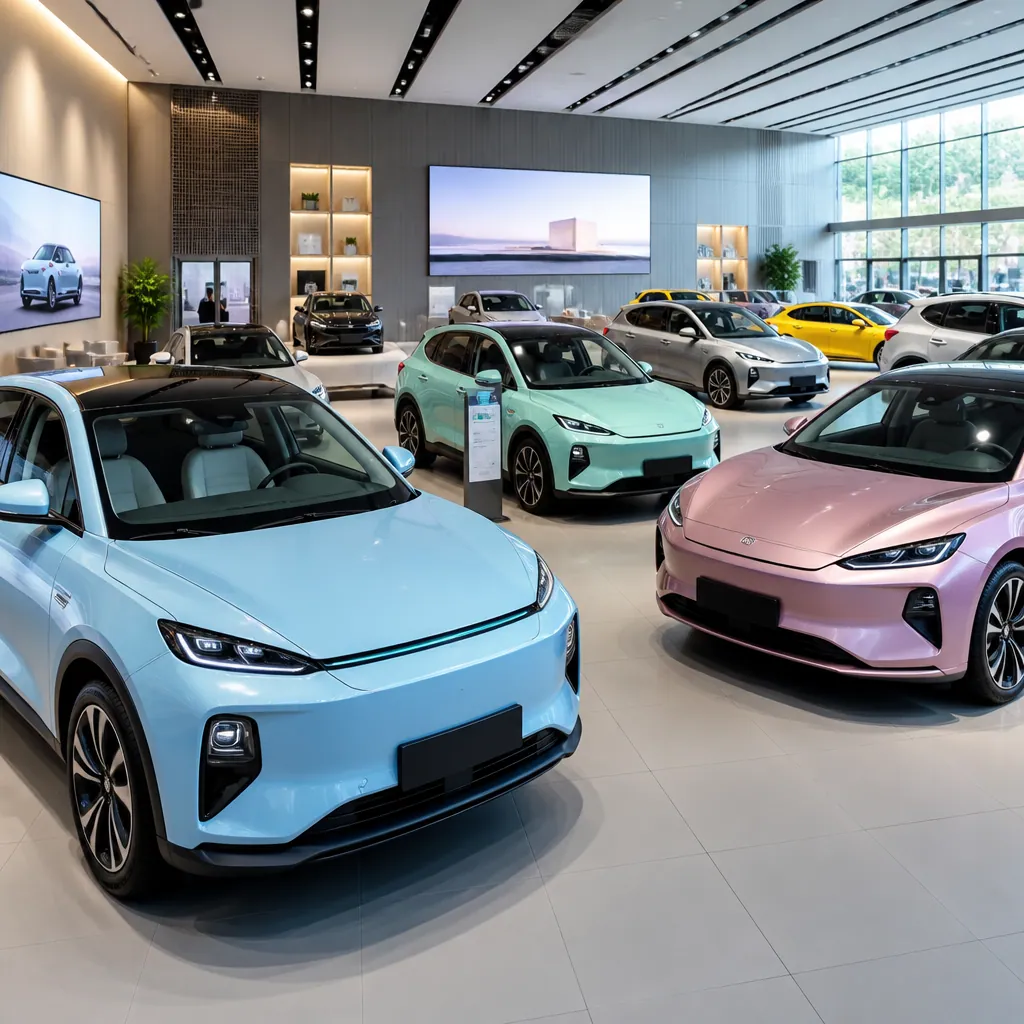
China’s automotive manufacturing base covers every major vehicle category. Automotion Global sources across the full range: passenger cars, electric vehicles (EVs), plug in hybrids (PHEVs), SUVs, commercial vehicles, vans, and fleet vehicles. The brands available include established names with strong export records, among them BYD, Chery, Geely, Changan, GWM, MG, BAIC, JAC, and Dongfeng, each with different strengths by segment and destination market.
Electric Vehicles and PHEVs
China’s EV export growth is running well ahead of overall export growth. EV exports grew 19% in the first five months of 2025 alone, led by BYD, MG, and Geely brands. For fleet operators in markets where fuel cost is a driver of total cost of ownership, or where governments are offering EV incentives, sourcing from China now provides access to a competitive range of electric models at price points that European and Japanese manufacturers have not matched.
PHEVs are particularly relevant for markets where charging infrastructure is still developing. Chinese manufacturers have invested heavily in PHEV technology and offer configurations well suited to long range use in markets across the Middle East and Africa.
Commercial Vehicles and Fleet Orders
Commercial vehicles represent one of the strongest value propositions in China vehicle sourcing. Light commercial vehicles, vans, and medium duty trucks from Chinese manufacturers offer competitive factory pricing with specification options that international buyers can customise, including load capacity, body configurations, and powertrain choices. Fleet operators purchasing at volume gain additional pricing advantages that are not available on single unit purchases.
For businesses building a fleet from scratch or replacing aging stock across a regional operation, sourcing from China through an established partner is often the most cost effective route available. The key is getting specification, inspection, and documentation right from the first order, so that repeat orders can be processed efficiently.
Common Mistakes in China Auto Sourcing
Experience in this market makes the common failure points easy to identify. These are the mistakes that cost buyers time, money, and in some cases, entire shipments.
Relying on Photos and Online Listings Alone
International buyers who attempt to source vehicles based on catalogue images and online specifications without independent inspection are taking a risk that experienced importers do not take. Vehicle condition at the time of inspection in China may not match what was advertised. Discrepancies in trim level, colour, or configuration are caught at inspection. Post shipment disputes are slow, expensive, and rarely fully resolved in the buyer’s favour.
Treating Every Supplier as a Manufacturer
A common mistake is accepting “manufacturer” status claims at face value. Many entities presenting direct factory pricing in the China auto space are trading companies or sub brokers. The practical test is whether the supplier can provide documentary evidence of their production or franchise relationship, allow factory inspection, and offer consistent allocation. Suppliers who resist these checks should be avoided.
Ignoring Destination Market Compliance Requirements
Vehicle homologation and import approval requirements vary significantly by destination market. A vehicle that is correctly built and documented for China’s domestic market or for general export may require additional certification for specific countries. This includes emissions standards, lighting specifications, safety certification schemes, and regulatory type approvals. These requirements must be confirmed before an order is placed, not after the vehicle has been shipped.
Pro tip: Build a destination market compliance checklist before your first order from a new country. Include import duty rates, required certifications, prohibited specifications, and local labelling requirements. Reuse and update this checklist for every subsequent order to the same market.
Underestimating Total Landed Cost
The factory price of a vehicle in China is the starting point of the cost calculation, not the total. Domestic inland transport, export inspection fees, port handling in China, ocean freight, marine insurance, destination port handling, customs duty, and import taxes all accumulate. Buyers who plan based on the FOB price alone and calculate margin against it consistently find that landed cost exceeds projections. Build the full cost model before committing to a sourcing price.
If you have experience sourcing vehicles from China, or questions about how the process works for your specific market and vehicle category, share your thoughts below.
Frequently Asked Questions
What does vehicle sourcing from China actually involve?
Vehicle sourcing from China involves identifying the right manufacturer or supplier for the required vehicle type, confirming specification and pricing, arranging pre shipment inspection, managing export documentation, coordinating international shipping, and supporting customs clearance at the destination. For international buyers without in country experience, each of these steps carries risk if handled without specialist knowledge.
Why work with a China auto sourcing agent rather than buying directly from the factory?
Working directly with a factory in China requires Chinese language capability, verified supplier contacts, in country presence for inspections, and expertise across export compliance and logistics. A qualified sourcing agent with direct manufacturer relationships delivers factory level pricing while managing the operational complexity that most international buyers are not equipped to handle on their own. The key is ensuring the agent has genuine manufacturer access, not just a sub broker network.
Which Chinese vehicle brands are available for export?
A wide range of established brands are available for export from China, including BYD, Chery, Geely, Changan, GWM (Great Wall Motors), MG, BAIC, JAC, and Dongfeng, among others. Brand selection should be guided by the specific vehicle category, destination market requirements, and aftersales parts availability in the receiving country. Automotion Global sources across this full range and can advise on the most suitable options by market.
How long does it take to source and receive a vehicle from China?
Lead times depend on the vehicle type, factory production schedule, port of loading, destination port, and shipping route. For in stock vehicles with completed documentation, ocean transit to Middle East and East African ports typically ranges from two to six weeks from the loading port, with additional time required for customs clearance at destination. Vehicles requiring factory production from scratch will have longer lead times. Planning orders well in advance of selling season is strongly recommended.
What documents are needed to import a vehicle from China?
The standard export documentation package includes a commercial invoice, packing list, bill of lading, and certificate of origin. Additional documents may be required depending on the destination market, including homologation certificates, third party inspection reports, and customs specific declarations. Destination market requirements should be confirmed in advance, as missing documentation is the most common cause of customs clearance delays.
Can Automotion Global handle fleet orders and commercial vehicles?
Yes. Automotion Global sources passenger cars, EVs, PHEVs, SUVs, commercial vehicles, vans, and fleet vehicles. Fleet and commercial vehicle orders benefit from volume pricing, and Automotion Global supports the full process from specification and sourcing through to shipping, documentation, and aftersales parts supply, making it suitable for businesses building or expanding fleet operations across the Middle East, Africa, and Asia.
How does Automotion Global ensure the quality of vehicles before export?
Vehicle inspection is a structured part of the sourcing process, not an optional add on. Before any vehicle is shipped, it is inspected to verify that it matches the confirmed specification, document its condition, and confirm export eligibility. This inspection provides the buyer with a documented record of the vehicle’s condition at the point of loading, which is essential for any post arrival claims and for maintaining quality standards across repeated orders.
References
- Chinese vehicle export volume and market data for 2025 from Automotive Logistics Media
- China’s 2025 vehicle export statistics and year on year growth figures from China’s State Council Information Office
- China EV export growth data for 2025 including leading brands by volume from Car News China
- AlixPartners report on the Middle East as a key growth market for Chinese automotive exports
- Overview of the China car export process including documentation and inspection steps