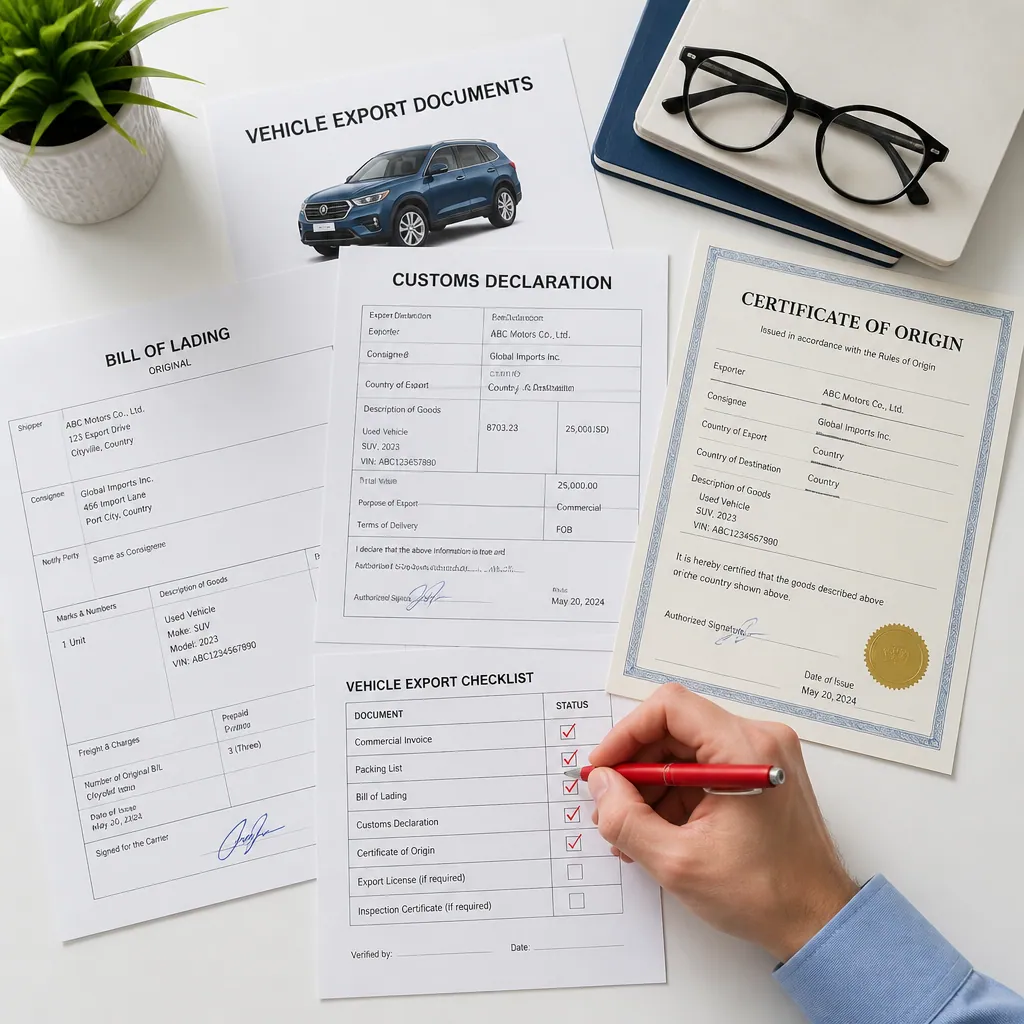
One missing document can hold a shipment at port for weeks. When you are buying brand new vehicles from China and shipping them to the Middle East, Africa, or any other overseas market, the paperwork is not a formality you sort out at the end. It is the foundation that every step of the transaction rests on. Importers who underestimate vehicle export documentation China requirements routinely face customs delays, demurrage charges, and in the worst cases, rejected shipments. This guide walks through every document you need, what each one actually does, and where the most common mistakes happen.
Quick Takeaways
| Key Insight | Explanation |
|---|---|
| The Export Customs Declaration is the starting point | No vehicle leaves China without this filing. It must be submitted electronically by a licensed customs broker and must include the correct HS code, VIN, and declared value. |
| The Certificate of Origin triggers tariff preferences | Issued by CCPIT or an authorized Chamber of Commerce, this document can reduce import duties at the destination under applicable trade agreements. Wrong or missing, it costs you real money. |
| Bill of Lading controls ownership | The original Bill of Lading is the title document for the cargo at sea. Without it, the consignee cannot release the vehicles at the destination port. |
| EVs require dangerous goods documentation | Battery powered vehicles are classified as UN 3556 for sea freight. Carriers require a UN 38.3 test summary, MSDS, and dangerous goods declaration before accepting the booking. |
| Document consistency is non negotiable | The VIN, declared value, consignee name, and HS code must match exactly across the commercial invoice, packing list, Bill of Lading, and customs declaration. Any mismatch triggers an audit. |
| Destination country documents are separate from China export documents | Many buyers assume the China side paperwork is all they need. Destination countries often require additional certificates, homologation approvals, or pre shipment inspection reports. |
| Some vehicle types need a special export license | Electric vehicles, certain commercial vehicles, and high value models may require additional export licensing from Chinese authorities beyond standard trade documents. |
Why Documentation Is the Riskiest Part of China Vehicle Exports
Vehicle export from China is heavily regulated on both sides of the transaction. Chinese customs authorities scrutinize export declarations, and destination customs authorities scrutinize import filings. A mismatch between them, even a minor one like an inconsistent weight figure or a misclassified HS code, can trigger an audit, a hold, or a penalty at either end.
The risk is higher for vehicles than for most other goods because vehicles carry a VIN, an engine number, and a chassis number that customs systems cross reference. A generic freight forwarder who handles textiles and electronics all week will not necessarily know that the VIN on the invoice must exactly match the VIN stamped on the chassis, or that the declared value must align with the manufacturer’s invoice rather than any discounted price agreed separately.
In practice, most delays in vehicle exports from China trace back to one of three causes: an error in the customs declaration, a missing or inconsistent document in the set, or a destination country requirement that was not identified early enough in the process. None of these are unavoidable. They are planning failures.
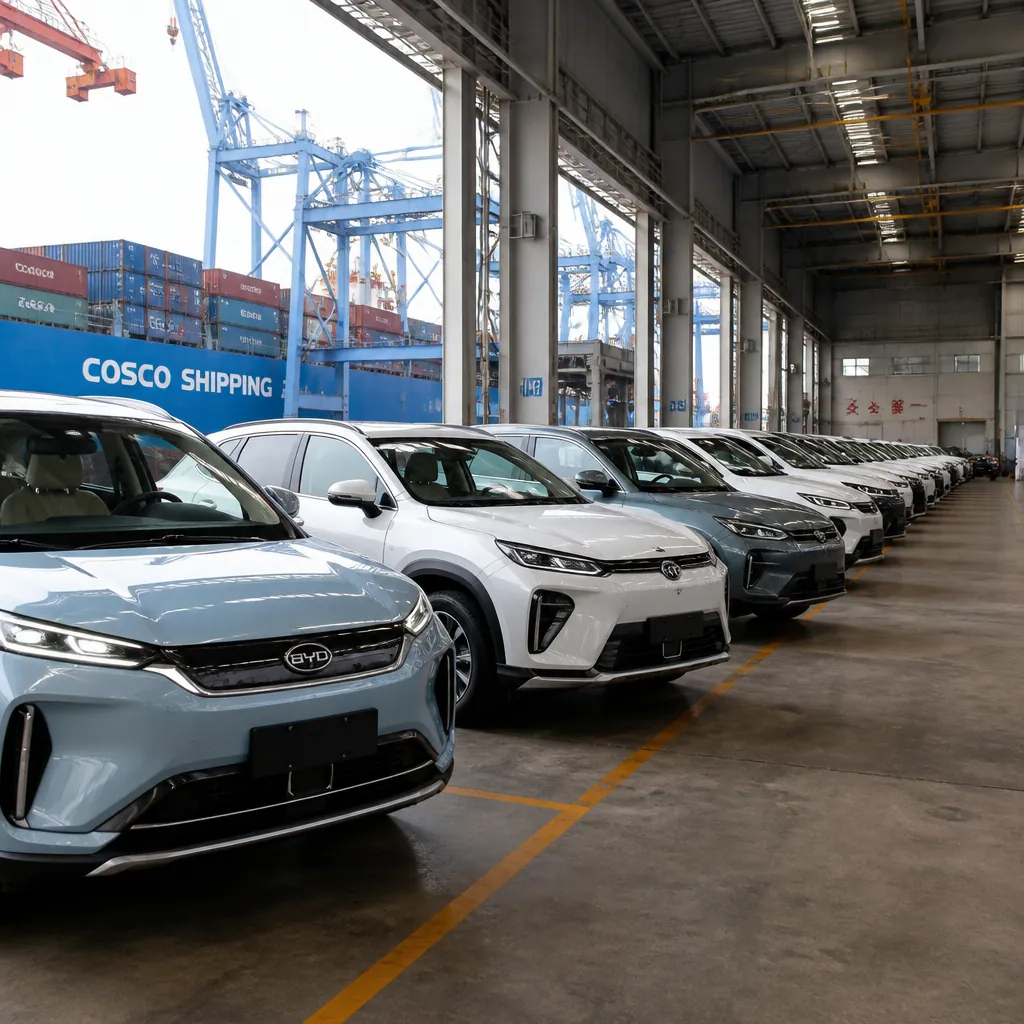
The Core Export Documents Explained One by One
China Customs Export Declaration (出口报关单)
This is the foundational filing. Before any vehicle can leave China, an export declaration must be submitted electronically to Chinese Customs through the national e-Customs platform. It includes the exporter’s registration details, the consignee information, a full product classification using the correct HS code, the declared value, the VIN, and the port of departure.
The filing is typically handled by a licensed customs broker or freight forwarder in China. The critical points to verify are the HS code and the declared value. For passenger vehicles, the HS heading is 87.03. For commercial vehicles, buses, or EVs, the classification shifts depending on the type, and an incorrect classification can mean applying the wrong duty rate at the destination and triggering a mismatch with the destination customs authority’s own classification.
Pro tip: Confirm the HS code with your customs broker before the declaration is filed, not after. Reclassifying a shipment once it is on the water is costly and time consuming.
Commercial Invoice
The commercial invoice is the primary transaction document. It must state the seller’s and buyer’s full legal names and addresses, the vehicle description including make, model, year, VIN, and engine number, the quantity, the unit price, the total value, the currency, the Incoterms, and the payment terms.
A common mistake is issuing a commercial invoice that reflects a negotiated price that differs from the manufacturer’s factory invoice. Customs authorities at the destination compare both documents. Discrepancies flag the shipment for customs value investigation, which delays clearance and can result in additional duties being assessed on the higher figure.
Packing List
For a standard passenger vehicle, the packing list is straightforward: vehicle make, model, VIN, engine number, gross weight, net weight, dimensions, and the shipping method (RoRo or container). For commercial vehicles or fleet shipments with multiple units, each vehicle must be listed separately with its own VIN and weight data.
The packing list must agree with both the commercial invoice and the Bill of Lading. Weight discrepancies between the packing list and the shipping line’s cargo manifest are one of the most frequent triggers for customs queries at the destination port.
Bill of Lading (B/L)
The Bill of Lading is issued by the shipping line after the vehicles are loaded. It is simultaneously a receipt for the cargo, a contract of carriage, and the document of title. The original B/L is what the consignee surrenders at the destination port to take possession of the vehicles.
For fleet buyers and distributors handling multiple shipments, it is worth understanding the difference between a straight B/L and a negotiable (or “to order”) B/L. A negotiable B/L can be endorsed and transferred, which matters when the buyer is financing the shipment through a letter of credit. A straight B/L names the consignee directly and cannot be transferred.
Pro tip: Make sure the consignee name on the Bill of Lading matches the importer’s official business registration at the destination. Any mismatch between these two can prevent the importer from legally releasing the cargo at port.
Certificate of Origin (Form A or CCPIT Certificate)
The Certificate of Origin (C/O) certifies that the vehicles were manufactured in China. It is issued by the China Council for the Promotion of International Trade (CCPIT) or by an authorized local Chamber of Commerce. The type of C/O required depends on the destination country and the applicable trade agreement.
For buyers in markets covered by preferential trade agreements with China, presenting the correct form of C/O at the destination can significantly reduce import duties. For markets without such agreements, a standard C/O is still typically required as a customs document to confirm country of manufacture.
Every field on the C/O must cross reference exactly with the commercial invoice. The invoice number printed on the C/O, the HS code, the quantity, and the declared value must all match. A C/O with any inconsistency will be rejected by destination customs and must be reissued, which takes time.
Manufacturer’s Certificate of Origin (MCO) or Manufacturer’s Statement of Origin (MSO)
Distinct from the trade C/O issued by CCPIT, the MCO or MSO is issued directly by the vehicle manufacturer. It certifies the origin and specifications of the specific vehicle and is often required by importing countries as proof that the vehicle is genuinely new and factory produced. Some markets, particularly in Africa, require both the CCPIT C/O and the manufacturer’s MCO as separate documents.
Export License (where applicable)
Most standard passenger vehicles can be exported under general trade without a special export license. However, electric vehicles, plug in hybrids, certain commercial vehicles, and models that incorporate technologies subject to export controls may require an additional export license from the relevant Chinese government authority. The rules on this are subject to change, and it is one area where working with an experienced export partner adds real value. Trying to navigate export licensing as a first time buyer is genuinely risky.
Documents Specific to Electric Vehicles and PHEVs
Exporting EVs and PHEVs from China involves an additional documentation layer that does not apply to conventional vehicles. The lithium ion battery systems fitted to these vehicles are classified as dangerous goods under international transport regulations, and carriers will not accept EV shipments without the correct dangerous goods paperwork in place.
UN 38.3 Test Summary
The UN 38.3 standard is the international test protocol that certifies lithium batteries are safe for transport. The manufacturer must provide a UN 38.3 test summary that is specific to the battery model fitted in the vehicle being exported. Carriers routinely reject EV bookings when the test summary is absent, outdated, or covers a different battery variant than the one actually installed. If a manufacturer cannot provide a current summary, obtaining one takes a minimum of several weeks.
Material Safety Data Sheet (MSDS)
The MSDS for the battery system must be provided in English and must describe the battery chemistry, hazard classifications, safe handling instructions, and emergency response procedures. This document is required by the carrier’s dangerous goods acceptance team before any booking is confirmed.
Dangerous Goods Declaration
For battery powered vehicles shipped by sea, the UN classification is UN 3556 (vehicles powered by lithium ion batteries). The dangerous goods declaration must be completed in the correct IMO format, stating the UN number, proper shipping name, packing group, and the number of vehicles being shipped. The booking approval process for UN 3556 shipments is typically longer than for standard cargo, and freight forwarders who specialize in dangerous goods have established processing channels with major carriers that make a material difference to lead times.
Battery State of Charge Compliance
Chinese standards and major shipping lines require that the battery charge level does not exceed a specified threshold, generally around 30 to 65 percent, at the time of loading. The supplier must confirm the state of charge in writing before handover. This is a practical point that gets missed when a vehicle is collected from a factory fully charged and driven to the port without checking the battery level.
For electric vehicles, the documentation requirements are not an extension of standard car export paperwork. They are a separate compliance process that starts with the battery and runs parallel to all the standard commercial and customs documents. Treat them as a checklist within a checklist.
Destination Country Import Documents
The China side export documents only get the vehicles out of China. Getting them cleared and registered at the destination is a separate documentation process, and the requirements vary significantly by country.
Import Customs Declaration (Destination Country)
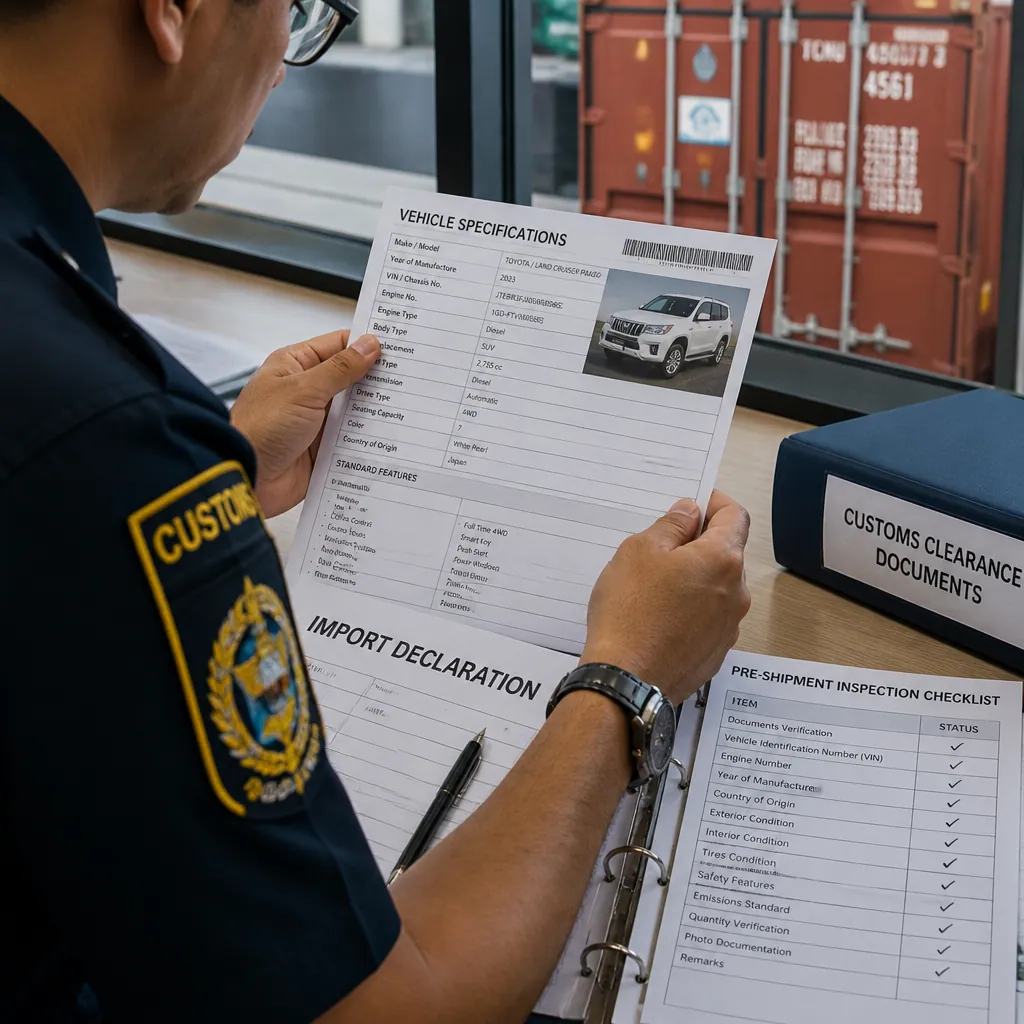
The destination country customs authority requires its own import declaration, based on the commercial invoice, packing list, Bill of Lading, and C/O that the exporter has provided. The import broker at the destination uses these documents to classify the vehicle, assess applicable duties and taxes, and process the entry.
Certificate of Conformity (CoC)
Many importing countries require a Certificate of Conformity confirming that the vehicle meets the technical and safety standards applicable in that market. For some markets, Chinese type approval certificates are accepted directly. For others, additional testing or local homologation is required. This is one of the most market specific requirements in vehicle imports, and it needs to be confirmed before ordering, not after the vehicles are at sea.
Pre Export Verification of Conformity (PVoC)
Several African markets, including Kenya and Tanzania, require that vehicles undergo a pre shipment inspection and obtain a PVoC certificate before they leave China. The Tanzania National Bureau of Standards, for example, requires that vehicles covered under its program carry a Certificate of Conformity issued before export. Buyers importing into PVoC requiring markets who do not arrange this inspection in China will find their shipment cannot be cleared at the destination port.
Vehicle Registration Documents
Once cleared through customs, the buyer typically needs the original commercial invoice, the MSO or MCO, and in some markets the C/O to register the vehicle with the local transport authority. These requirements are country specific but failing to bring the right originals from China is a persistent problem for first time importers.
Document Comparison: DIY vs. Freight Forwarder vs. Full Service Supplier
Buyers managing their first China vehicle import often underestimate how many of these documents require coordination with multiple parties in China. The table below compares three approaches to managing the documentation process.
| Approach | Documents Managed For You | Key Risk |
|---|---|---|
| DIY (buyer manages independently) | Buyer sources all documents from manufacturer and logistics parties; no coordination support | High risk of document inconsistencies, missing manufacturer issued certificates, incorrect HS codes, and failed dangerous goods filings for EVs |
| China freight forwarder only | Export customs declaration, Bill of Lading, basic packing list coordination | Forwarder is logistics focused, not vehicle specialist. May not flag missing CoC, MSO, or PVoC requirements for specific destination markets |
| Full service vehicle export supplier (such as Automotion Global) | Complete document set: export declaration, commercial invoice, packing list, C/O, Bill of Lading, MSO, pre shipment inspection, EV dangerous goods documentation, and destination country document guidance | Lowest risk. Supplier coordinates all parties, checks document consistency, and identifies destination requirements before the order is placed |
For dealers, fleet operators, and importers who are placing repeat orders, the efficiency argument for a full service supplier compounds over time. Getting one shipment’s paperwork right by managing it yourself takes significant effort. Getting twenty shipments right, each potentially with different vehicle types, destinations, and regulatory requirements, is a full time job without the right partner.
How to Avoid the Most Common Paperwork Mistakes
The following errors appear repeatedly in vehicle export from China and are all preventable with the right process in place.
Mismatched VINs Across Documents
The VIN is the unique identifier for every vehicle in the shipment. It must appear identically on the commercial invoice, the packing list, the export customs declaration, the MSO, and the Bill of Lading. A single character error, which can happen when a VIN is manually transcribed rather than copied from the official manufacturer’s document, will cause a hold at customs at the destination. Build a verification step into the document review process before anything is submitted or signed.
Declared Value Inconsistencies
When the commercial invoice shows a negotiated price and the manufacturer’s invoice shows a different factory price, destination customs authorities will assess duties on whichever value is higher. In some cases, they will investigate for undervaluation. The correct approach is to use a consistent, accurate transaction value across all documents and to ensure the commercial invoice reflects the actual price paid or payable.
Leaving Destination Document Requirements to the Last Minute
PVoC requirements, CoC requirements, and homologation approvals are destination specific and some require action in China before the vehicle ships. Identifying these requirements after the vehicles are at port is too late. A proper pre order process should confirm every destination requirement as part of the sourcing decision.
Pro tip: When working with Automotion Globaldestination document requirements are confirmed before the order is placed, not after the vehicle is loaded. This is the correct order of operations, and it is the difference between a smooth delivery and a port storage bill.
Using a Non Specialist Forwarder for EV Shipments
Freight forwarders without specific experience in battery powered vehicle exports regularly fail to complete the UN 3556 dangerous goods documentation correctly. The result is a carrier booking rejection, sometimes close to the loading date, which means rescheduling the shipment, absorbing the cost of the delay, and starting the booking process again with a corrected submission. If your shipment includes EVs or PHEVs, confirm your forwarder’s specific experience with battery powered vehicle dangerous goods before engaging them.
Original Documents vs. Copies
Many importing countries require original documents, particularly the original Bill of Lading and the original Certificate of Origin. Sending copies by email and expecting them to work for customs clearance at the destination is a common beginner mistake. Agree on how originals will be couriered to the consignee before the vessel departs, and factor the courier timeline into the shipment plan so originals arrive before the vessel does.
Frequently Asked Questions
What is the difference between the Certificate of Origin from CCPIT and the Manufacturer’s Certificate of Origin?
The CCPIT Certificate of Origin is a trade document issued by a government authorized body in China that certifies the country of origin for customs and tariff purposes. The Manufacturer’s Certificate of Origin (MCO) is issued by the vehicle manufacturer itself and certifies the vehicle’s specific make, model, year, VIN, and production origin. Some destination markets require both documents. They serve different purposes and neither one substitutes for the other.
Do I need an export license to buy new vehicles from China?
Standard passenger vehicles and most commercial vehicles can be exported under general trade without a special export license. However, electric vehicles, plug in hybrids, and vehicles incorporating certain technologies may require additional licensing from Chinese authorities. The rules in this area are subject to regulatory change, which is why working with an experienced export supplier who monitors these requirements is important rather than relying on information that may be out of date.
What HS code is used for passenger vehicles exported from China?
Passenger vehicles generally fall under HS heading 87.03. The specific subheading depends on engine type and displacement, or for electric vehicles, the motor output. Commercial vehicles, buses, and special purpose vehicles fall under different HS headings. Using the wrong subheading in the export declaration is one of the most common errors in car export paperwork from China and it creates problems at the destination customs office where classification is independently verified.
What additional documents are needed specifically for electric vehicle exports from China?
Beyond the standard commercial documents, EV exports require a UN 38.3 test summary for the specific battery model, a Material Safety Data Sheet (MSDS) in English, a completed IMO dangerous goods declaration for UN 3556, and written confirmation of the battery state of charge at loading. Some destination markets also require specific EV-related certifications such as E-Mark or equivalent approvals. These documents are required by the carrier and by customs, not just one or the other.
How long before loading do documents need to be ready?
The export customs declaration in China typically needs to be submitted several days before the vessel’s cargo cut off date. For PVoC markets, the pre shipment inspection must be arranged while the vehicles are still in China, ideally at the manufacturer’s facility. Original documents including the Bill of Lading are issued after loading, but originals should be couriered to the destination consignee immediately to arrive before or shortly after the vessel. For EV shipments, dangerous goods booking submissions to carriers can take longer than standard cargo bookings, so the documentation must be ready before the freight booking is even confirmed.
What happens if a document has an error after the shipment has already left China?
The consequences depend on the type of error and the destination. Minor errors on the packing list can sometimes be corrected through a letter of correction from the exporter. Errors on the Bill of Lading require an amendment issued by the shipping line, which takes time and fees. Errors in the export customs declaration may require re filing with Chinese customs. The most serious scenario is an error that destination customs discovers on arrival, which can result in the shipment being held pending investigation. The practical lesson is that document checking before departure is far less expensive than corrections after the fact.
Can Automotion Global handle the full documentation process for vehicle imports?
Yes. Automotion Global manages the complete export documentation process as part of its vehicle supply service, including export customs declaration coordination, commercial invoice and packing list preparation, Certificate of Origin procurement, Bill of Lading management, pre shipment inspection, and EV-specific dangerous goods documentation. Destination country document requirements are identified before the order is placed. This is particularly valuable for dealers, distributors, and fleet operators importing vehicles into multiple markets with varying documentation requirements.
If you are currently managing vehicle imports from China and running into documentation problems, or if you want to share how you handle the paperwork side of your operations, we would be glad to hear your experience in the comments below.
We would love your feedback and any insights you would share with others. What perspective would you add?
References
- Overview of key documents required for exporting vehicles from China, including customs declaration and Bill of Lading requirements
- Dangerous goods documentation guide for shipping electric vehicles from China, covering UN 3556 classification and carrier requirements
- Guide to importing and shipping new energy electric vehicles from China, including battery certification and state of charge requirements
- Reference guide to Chinese export documentation including commercial invoice, Bill of Lading, and Certificate of Origin preparation
- Detailed explanation of Certificate of Origin requirements for Chinese exports and how to ensure document consistency