
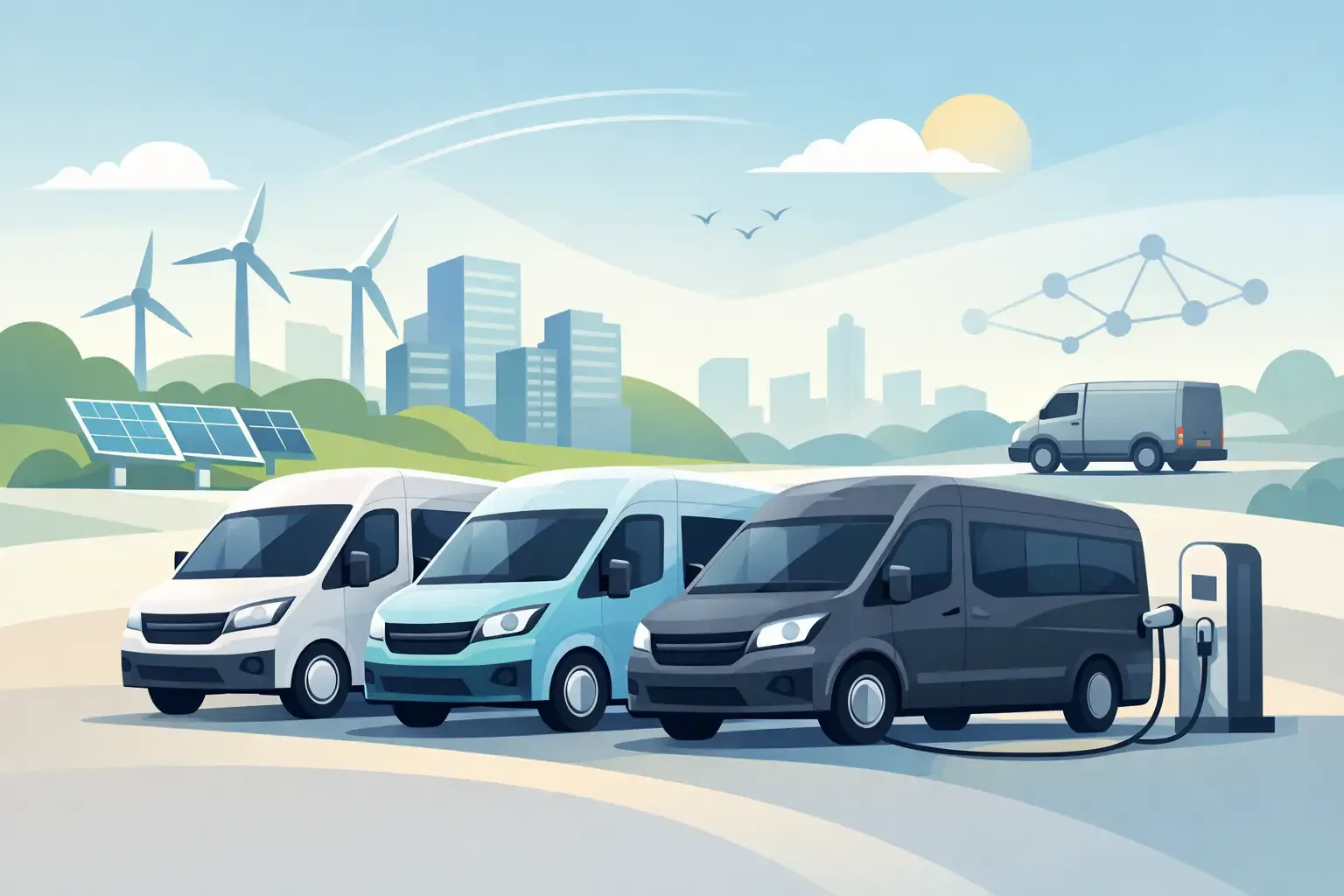
A fleet minibus is only as useful as the route it can complete, the passengers it can carry, and the support available after delivery. The top electric minibuses for fleets are not necessarily the models with the highest advertised range. They are the vehicles that match duty cycle, charging access, passenger expectations, local regulations, and the realities of international procurement.
For airport transfers, hotels, schools, staff transportation, municipal service, and executive shuttle work, electric minibuses can reduce operating costs and local emissions. But fleet buyers should assess the full operating package before selecting stock: vehicle specification, seating configuration, charging hardware, battery warranty, spare parts access, and export documentation all affect the final result.
What Makes an Electric Minibus Fleet Ready?
A fleet ready electric minibus must do more than arrive with a large battery. It needs enough usable range for the route with air conditioning, passenger load, traffic, hills, and weather accounted for. This matters especially in hot climate markets, where cabin cooling can materially reduce real world range during shuttle operations.
Passenger capacity also needs careful review. Some electric vans are sold as cargo vehicles and converted locally into passenger transport. Others leave the factory as people movers or passenger vans. Factory passenger models can simplify certification and warranty planning, while a professionally converted vehicle may offer more flexibility for specialized seating, wheelchair access, luggage space, or security requirements.
Charging capability is equally operational. Overnight AC charging is often sufficient for a hotel or staff shuttle returning to a fixed depot. Airport, intercity, or multi shift fleets may require DC fast charging to keep vehicles in service. The best decision depends on dwell time and route scheduling, not on charging speed alone.
Finally, international buyers must confirm left hand or right hand drive availability, charging connector standards, local homologation requirements, and service part availability before shipment. A competitively priced unit can become expensive if it arrives with an incompatible charging port or a specification that cannot be registered locally.
Top Electric Minibuses for Fleets by Use Case
Rather than treating every application as identical, fleet operators should compare electric minibuses according to the passengers and routes they serve.
Mercedes Benz eSprinter Tourer for Professional Passenger Transport
The Mercedes Benz eSprinter Tourer is a strong candidate for commercial passenger fleets that value a recognized platform, refined cabin presentation, and broad upfitting potential. It suits airport transfers, premium hotel routes, corporate transportation, and executive shuttle operations where vehicle image carries commercial value.
Its appeal is not only the electric powertrain. The Sprinter platform is familiar to many fleet maintenance teams and body builders, making it practical for configurations with additional seating, luggage solutions, accessibility equipment, or route specific interiors. Availability and final specifications vary by market, so buyers should confirm battery capacity, seating layout, charging configuration, and passenger homologation at the sourcing stage.
The trade off is acquisition cost. A premium badge and a highly specified passenger configuration can raise the initial investment. It makes most sense where fleet presentation, driver comfort, and established commercial vehicle support justify that position.
Ford E-Transit Passenger Conversions for Flexible Shuttle Fleets
The Ford E-Transit has become a practical foundation for electric shuttle conversions in many markets. While it is widely known as an electric commercial van, its body formats and fleet familiarity make it relevant for passenger applications when supplied in the correct conversion or passenger ready specification.
For operators running employee transport, local transfer services, campus routes, or municipal shuttle work, the E-Transit can offer useful flexibility. It is especially suitable when a fleet needs a familiar commercial platform with space for custom seating, luggage storage, or mobility adaptations.
The key procurement question is whether the intended configuration is factory approved and compliant in the destination market. Buyers should not assume that every cargo van conversion will meet local passenger certification requirements. Confirm seating capacity, seatbelt anchoring, emergency exits, HVAC capacity, and vehicle registration documentation before committing to an order.
Peugeot e-Traveller and Toyota Proace Verso Electric for Hotel and VIP Transfers
The Peugeot e-Traveller and Toyota Proace Verso Electric are well suited to fleets prioritizing a passenger focused experience in a more compact format. Their dimensions can be an advantage in urban centers, hotel entrances, business districts, and destinations where maneuverability matters as much as seating capacity.
These models work particularly well for premium hotel transfers, chauffeur services, small group tourism, and corporate passenger movement. Their interior layouts are generally more people mover oriented than larger converted vans, which can improve ride comfort and perceived quality for guests.
Their limitation is capacity and route scale. They are not the first choice for high volume school transport, large airport luggage loads, or long daily distances without reliable charging. For smaller groups on predictable routes, however, their compact footprint can improve utilization and reduce parking constraints.
Maxus MIFA 9 for Executive and Hospitality Fleets
The Maxus MIFA 9 is positioned as a fully electric premium people mover and is worth evaluating for hospitality, corporate, and VIP transportation. It brings a modern cabin, comfort focused seating, and an all electric proposition that can support a high end service offering without the operating noise of a conventional van.
This model is best considered where passenger experience is central to the business case. It can be a strong fit for luxury hotels, private transport firms, executive airport transfers, and premium tourism operators. Fleet buyers should assess local distributor and service coverage, as after sales strength differs significantly between countries.
For a fleet requiring heavy duty daily loading, multiple driver shifts, and maximum luggage capacity, a larger commercial passenger van may be the better operational choice. The MIFA 9 is designed to elevate the passenger experience, not replace every high capacity shuttle.
Renault Master E-Tech Electric for Practical Route Based Service
The Renault Master E-Tech Electric provides another useful route for fleet buyers seeking a large electric van platform for passenger conversion or purpose built shuttle use. Its commercial orientation makes it relevant for operators focused on functional transport rather than luxury appointments.
School support routes, staff transportation, local authority services, and short distance community transport can all be suitable applications. The vehicle is most effective when the operator has a defined depot, dependable overnight charging, and predictable daily mileage.
As with any large van passenger program, the conversion partner matters. A vehicle with the right battery but poor interior execution will not serve a commercial fleet well. Evaluate floor materials, seat durability, air conditioning, access steps, lighting, grab rails, and luggage arrangements with the same care used for the powertrain.
Hyundai County Electric for Higher Capacity Minibus Routes
For buyers requiring a traditional, higher capacity minibus rather than a passenger van, the Hyundai County Electric deserves consideration in markets where it is available and supported. Its format can be better aligned with organized staff transport, schools, urban feeder routes, and government or municipal applications.
A purpose built minibus can provide more favorable passenger flow and standing room than a converted van, depending on the layout. It may also suit operators that need regular stops and higher passenger turnover. However, its larger footprint requires appropriate depot space, charging infrastructure, and route planning.
Market availability is a decisive factor. Buyers should verify whether the model can be supplied in the required steering orientation, charging standard, and local certification specification before building a procurement plan around it.
How to Compare Electric Minibuses Before Export
Fleet procurement should begin with route data, not a brochure range figure. Review average daily mileage, the longest route segment, passenger load, idle time, road grade, ambient temperature, and the availability of backup vehicles. A minibus operating close to its range limit every day leaves little room for diversions, charging delays, or battery performance changes over time.
Then assess the vehicle as an export unit. Confirm the exact model year, VIN-level specification, battery condition for used inventory, charging cable and connector type, seating count, inspection status, and documentation required at destination. For new units, establish whether the quoted vehicle is physically available, in production allocation, or subject to factory lead time.
The commercial calculation should include charging installation, import duties, inland delivery, insurance, driver training, planned maintenance, and replacement vehicle coverage. Electric fleets can offer favorable operating economics, but the benefit depends on electricity pricing, utilization, and a charging plan that avoids unnecessary downtime.
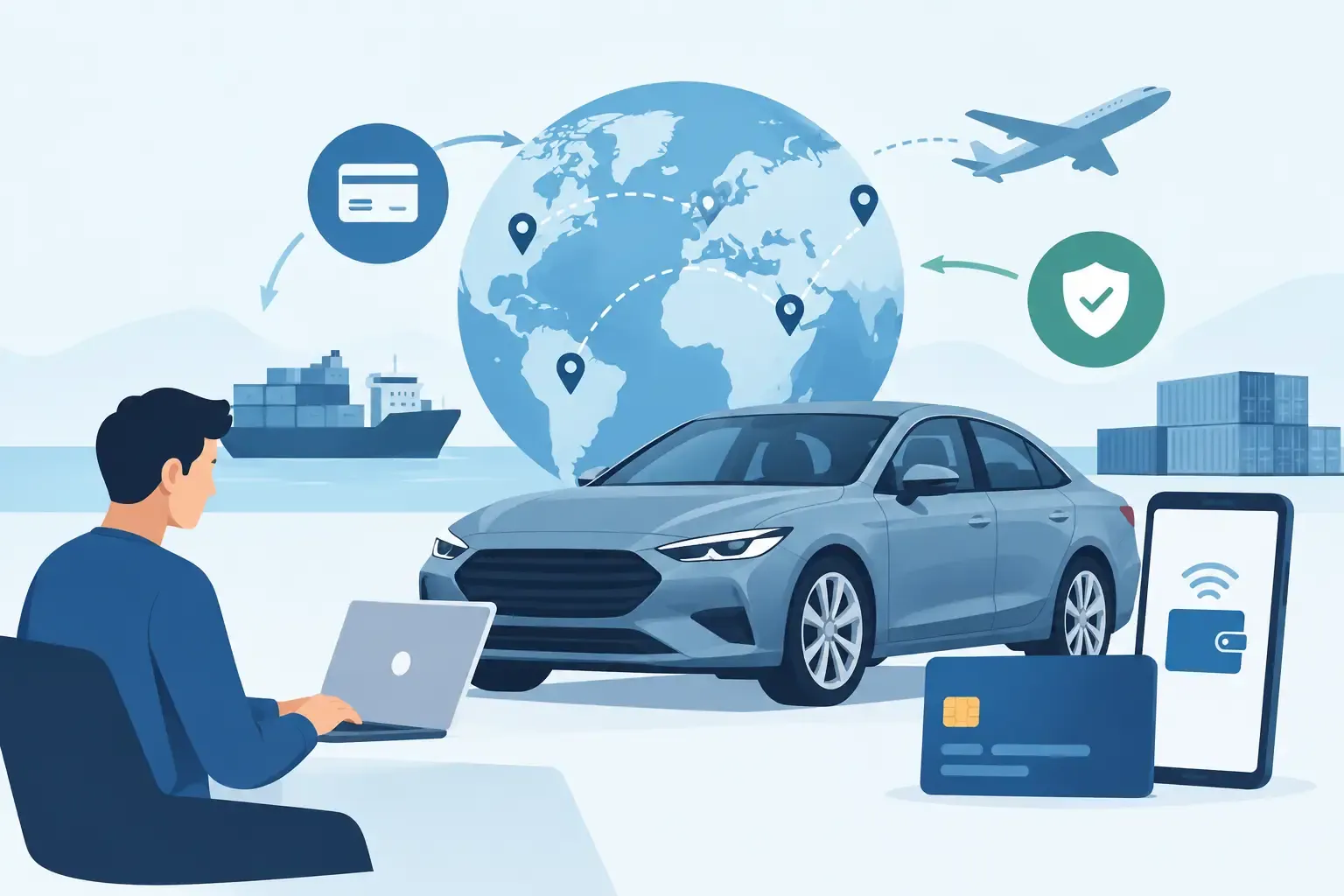
Automotion Global supports international buyers with export ready vehicle sourcing, pre shipment inspection coordination, and worldwide delivery planning. For fleet orders, a clear written specification is the most efficient starting point: required capacity, target market, preferred drive side, route range, charging standard, and delivery timeline.
Build the Fleet Around the Route
The right electric minibus is the one that returns to service reliably every day, not the one that looks strongest on a specification sheet. Start with a representative route, validate real operating range with a conservative buffer, and select a passenger layout that supports the actual work. With the right vehicle specification and export plan in place, electrifying shuttle operations becomes a practical procurement decision rather than a high risk experiment.