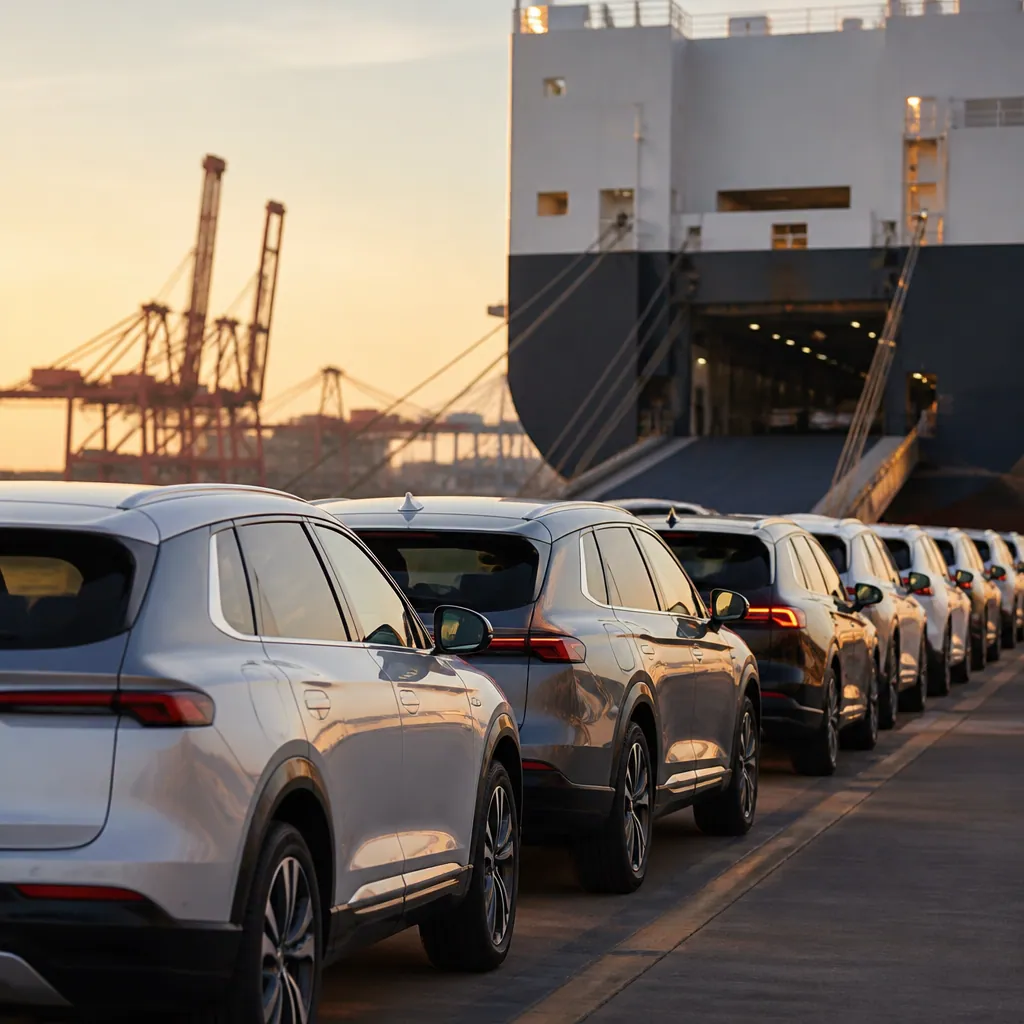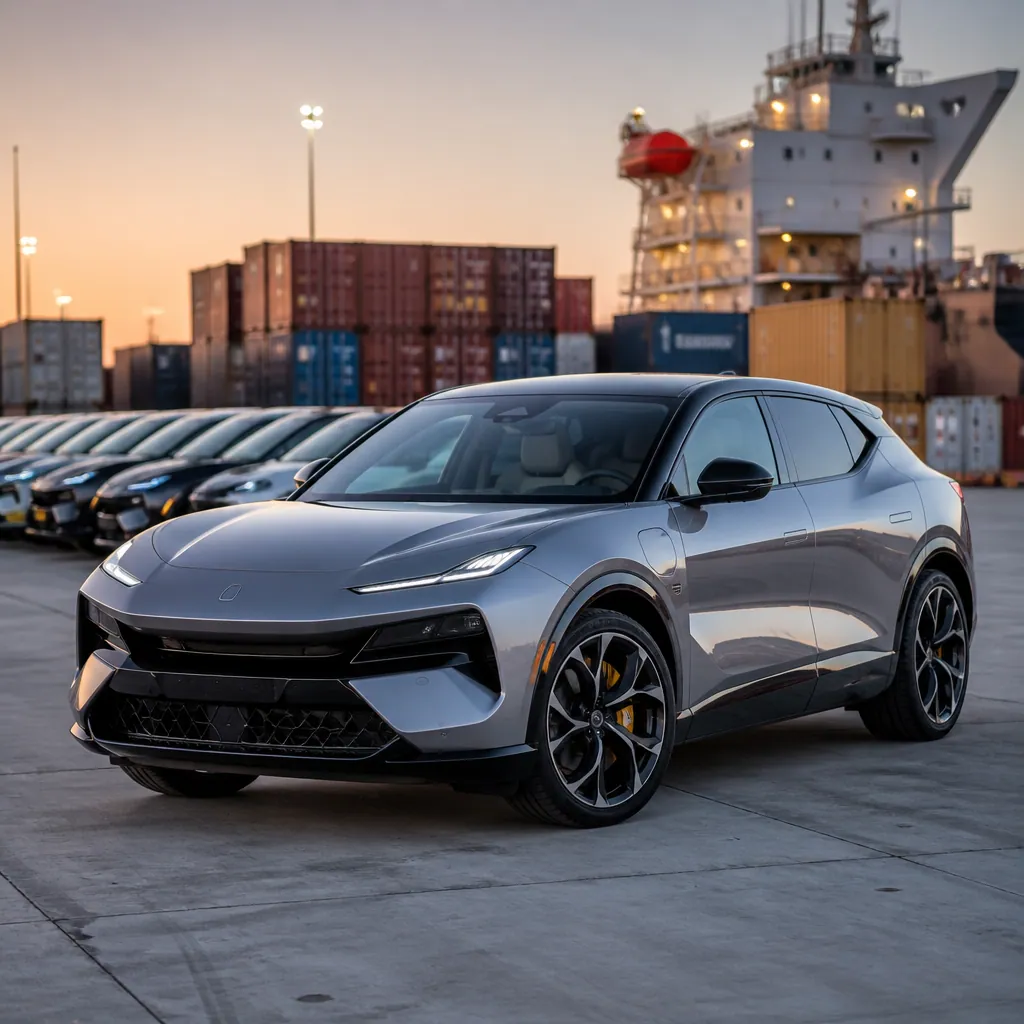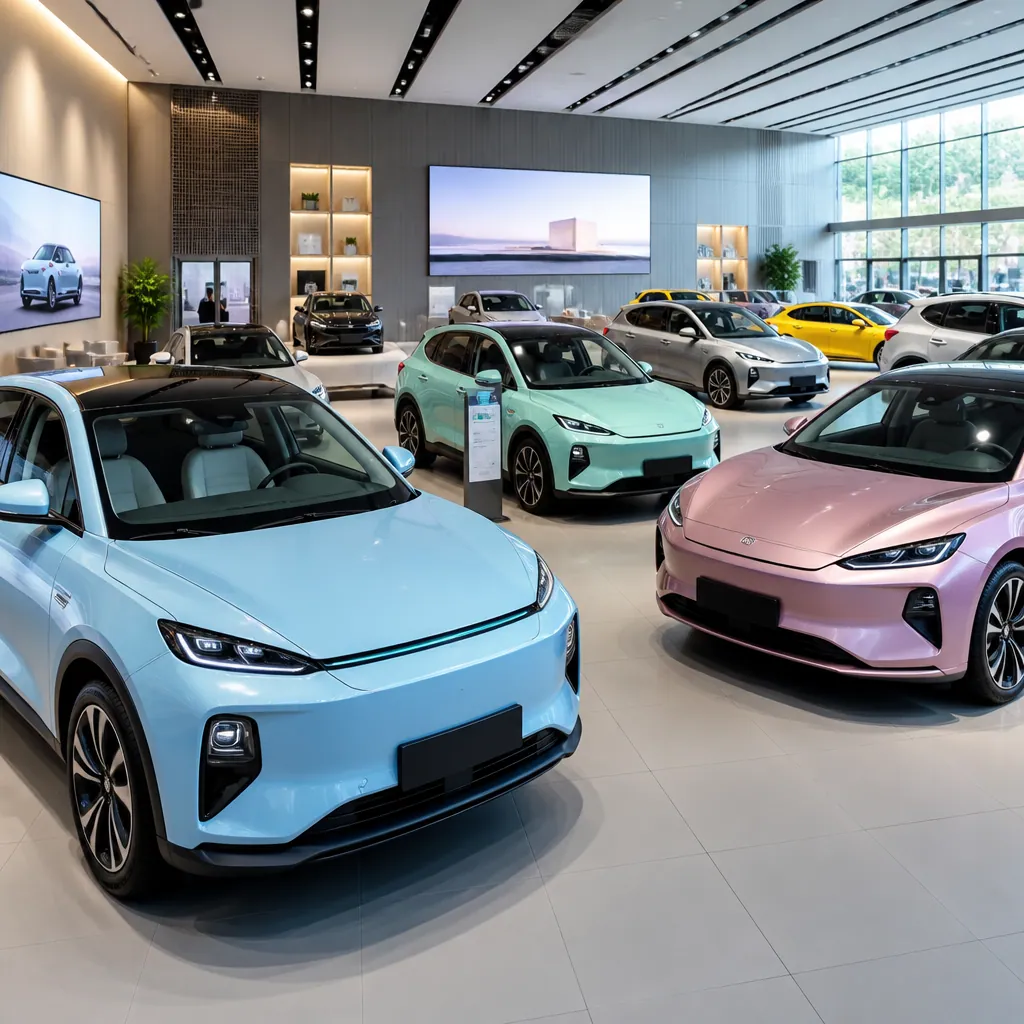
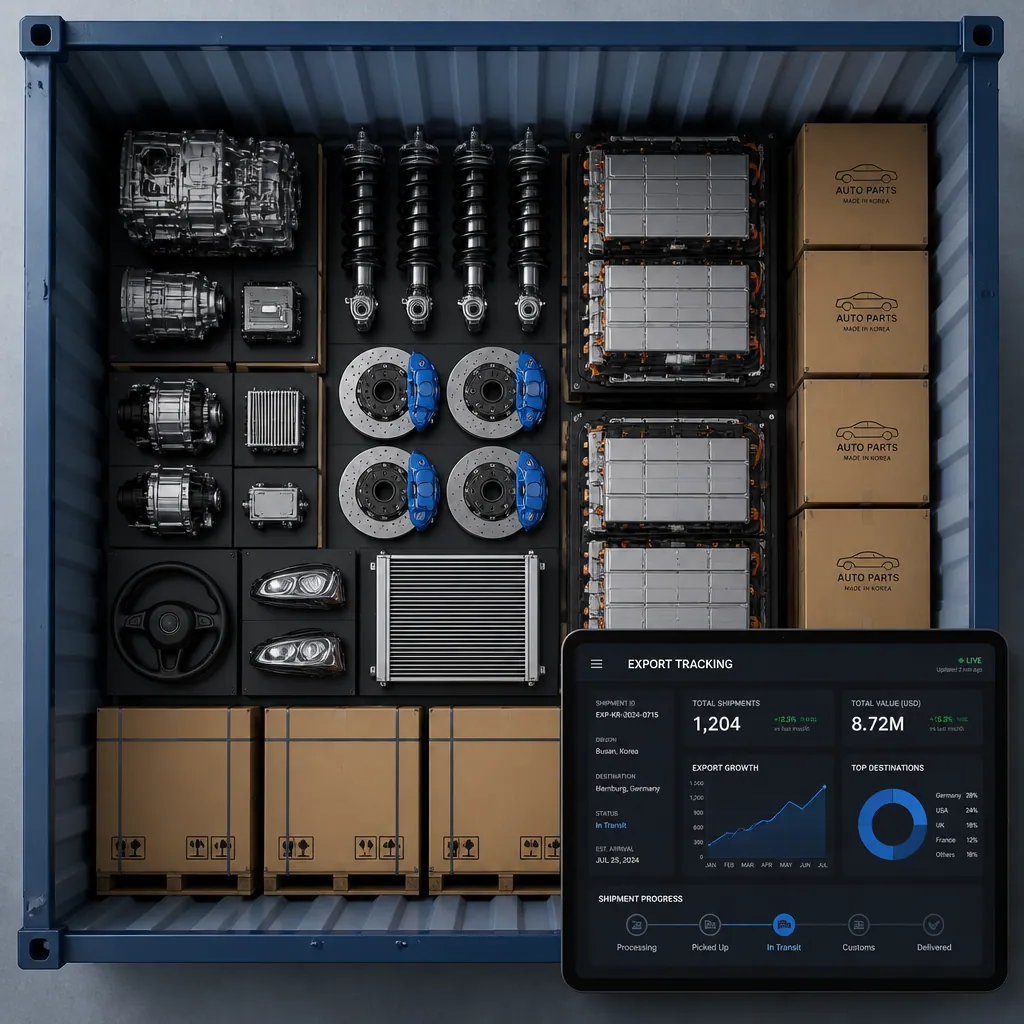
Chinese plug in hybrid exports surged 210% in the first half of 2024 compared to just 40% for battery electric vehicles over the same period, according to data from the China Association of Automobile Manufacturers. By 2025, PHEV export volumes reached roughly 969,000 units, a near tripling year on year. For vehicle dealers, importers, and fleet operators sourcing from China, this is not a trend to watch from the sidelines. It is the most important structural shift in the global automotive export market right now, and the dealers and distributors who position early will hold the strongest inventory and pricing advantages in their markets. This article breaks down what is driving the PHEV export China boom, which models matter, and exactly what importers need to know before placing their first or next order.
Quick Takeaways
| Key Insight | Explanation |
|---|---|
| PHEV exports are outpacing BEV exports from China | Chinese PHEV exports grew more than triple the rate of BEV exports in H1 2024, and the gap widened further into 2025 with PHEV exports reaching roughly 969,000 units. |
| Charging infrastructure gaps are the primary demand driver abroad | Markets across the Middle East, Africa, Southeast Asia, and Latin America lack dense public charging networks, making PHEVs a more practical choice for end buyers than pure BEVs. |
| Chinese PHEV electric ranges now exceed 100 km on average | The fleet average type approval electric range of Chinese PHEVs exceeded 100 km from 2023 to 2024, considerably higher than the roughly 70 km average in Europe and the United States during the same period. |
| BYD leads PHEV export growth across multiple regions | BYD achieved over 117% year on year export growth in H1 2025, with strong PHEV-driven performance in the Middle East (+208% YoY), Europe (+249% YoY), and Southeast Asia (+144% YoY). |
| EU tariff risk is real but non-EU markets remain open | The EU is preparing countervailing duties on Chinese PHEVs. Dealers serving the Middle East, Africa, and Asia face no equivalent barrier, making these the priority markets for Chinese PHEV import strategies right now. |
| PHEV orders suit fleet operators and mixed use buyers | PHEVs allow fleet operators to run on electric power for short daily routes and fall back on petrol for long haul or remote operations, a fit that pure BEVs cannot match in infrastructure light markets. |
| Early dealer positioning creates long term margin advantage | As PHEV demand grows in emerging markets, the first importers to establish brand partnerships and inventory depth will command better wholesale pricing and aftersales lock in than latecomers. |
The Numbers Behind the Boom
The scale of the Chinese plug in hybrid export surge is difficult to overstate. In the first half of 2024, PHEV exports from China grew at more than five times the rate of battery electric exports. By the first five months of 2025, China’s PHEV passenger vehicle exports had grown nearly 140%, reaching a total of 324,000 units in that period alone, according to data from the China Automobile Dealers Association. For the full year 2025, PHEV export volumes came in at roughly 969,000 units, a near tripling from the prior year.
In 2024, BEVs still accounted for roughly 74% of China’s EV exports, with PHEVs at about 26%. Within a single year, that PHEV share nearly doubled. The trajectory is clear: PHEVs are taking a rising share of China’s total automotive export volumeand Chinese automakers have made a deliberate strategic decision to prioritize PHEV variants in their export product lines.
For dealers and importers, the message is direct: the manufacturers are investing in these drivetrains for export, which means model pipelines, spare parts chains, and technical support for PHEVs are better resourced today than they were two years ago. Sourcing a PHEV import dealer arrangement with a reliable Chinese export partner is no longer a niche play, it is the mainstream direction of the market.
“If I only look at producing BEVs, then I miss out 50% of the new energy vehicle market. There is a place for PHEVs. The transition to BEVs really depends on various countries’ policies and ecosystem.”, Vincent Wong, Executive Vice President, SAIC-GM-Wuling, speaking at the Gaikindo Indonesia International Auto Show.
Why PHEVs Win in Export Markets Where BEVs Struggle
The single biggest reason Chinese PHEVs are dominating export orders is not price. It is charging infrastructure. Markets across Southeast Asia, Latin America, Africa, and much of the Middle East lack the dense public charging networks that China itself has built over the past decade. In those environments, buying a battery electric vehicle carries real risk for the end consumer: range anxiety is not theoretical, it reflects a genuine gap in available infrastructure.
PHEVs break that constraint entirely. A buyer in a market with sparse chargers can run the vehicle on petrol day to day, use the battery for short urban trips when charging is convenient, and never face the stranded vehicle scenario that puts many consumers off BEVs. This dual fuel flexibility is the PHEV’s core commercial argument, and it is a stronger argument in infrastructure light export markets than it ever was in China itself.
The Infrastructure Gap Is Not Closing Quickly
In markets like Brazil, Mexico, the Philippines, Indonesia, and Thailand, public charger density remains low, with EV-to-charger ratios often exceeding 10:1 according to figures from the IEA Global EV Outlook. The Middle East and Africa present similar or wider gaps outside of major urban centers. For a fleet operator running vehicles across mixed urban and rural terrain, a pure BEV is simply not operationally viable in many of these contexts.
This is exactly the customer profile that dealers serving Automotion Global’s core markets, the Middle East, Africa, and Asia, encounter daily. The PHEV is not a compromise product for these buyers. It is the right product.
Chinese PHEV Technology Has Matured
It is worth being precise about what “Chinese PHEV” means in 2025. These are not first generation plug in hybrids with limited electric range bolted onto existing petrol platforms. The fleet average type approval electric range of PHEVs sold in China exceeded 100 km from 2023 to 2024, considerably higher than the roughly 70 km average seen in Europe and the United States during the same period. BYD’s DM-i platform, for example, now powers vehicles with electric only ranges starting at 55 km on smaller battery variants and exceeding 120 km on larger packs, with total combined range stretching well beyond 1,000 km on a full tank and full charge.
The engineering quality has advanced to a point where Chinese PHEVs compete directly with Japanese and European hybrid offerings on technical specifications, while often undercutting them significantly on price. That combination is what is driving volume growth across every major non European export market.
Pro tip: When evaluating a Chinese PHEV model for your market, prioritize the electric only range figure and the real world combined range. A model with 80+ km electric range will cover most daily urban driving cycles without touching the petrol engine, which is a powerful retail selling point even in markets with limited charging infrastructure.
The Chinese PHEV Models Dominating Export Orders
Not all Chinese PHEV models travel equally well across borders. Export volume concentrates around a handful of established platforms from the manufacturers with the strongest global distribution and aftersales infrastructure. Dealers placing PHEV import orders need to understand which brands and models have genuine export momentum versus which are domestic market products with limited export support.
BYD: The Volume Leader
BYD is the dominant force in Chinese PHEV exports. Its DM-i hybrid platform underpins multiple models that are actively sold in export markets, including the Song Plus (sold as the Seal U in Europe), the Destroyer 05 (sold as the King in Latin America and as the Seal 5 DM-i in several Asian markets), and the newer Seal 05 DM-i on the fifth generation DM-i 5.0 platform. BYD achieved 443,098 passenger vehicle exports in H1 2025, a 117.8% year on year increase, according to data compiled by the Gasgoo Automotive Research Institute. Its PHEV-driven performance in the Middle East grew over 208% year on year in the same period.
Chery and Jetour: Volume and Breadth
Chery topped Chinese passenger vehicle exporter rankings in H1 2025 with 545,933 units, holding a 17.8% share of total Chinese vehicle export volume. Chery’s export network, spanning more than 1,000 dealer points and over 2,500 distribution outlets globally as of late 2024, means aftersales support is more developed than many newer export brands. Jetour, Chery’s dedicated SUV brand, has established growing PHEV-variant export volumes in the Middle East and African markets.
SERES and Emerging PHEV Export Players
SERES, which produces the Aito brand in partnership with Huawei, represents the premium end of Chinese PHEV exports. While volumes are smaller than BYD or Chery, SERES PHEVs command higher transaction prices and are targeting dealerships that want to position in the upper mid segment. For importers building a tiered portfolio, a combination of volume BYD or Chery PHEVs alongside a premium SERES or comparable brand can cover a wider buyer range.
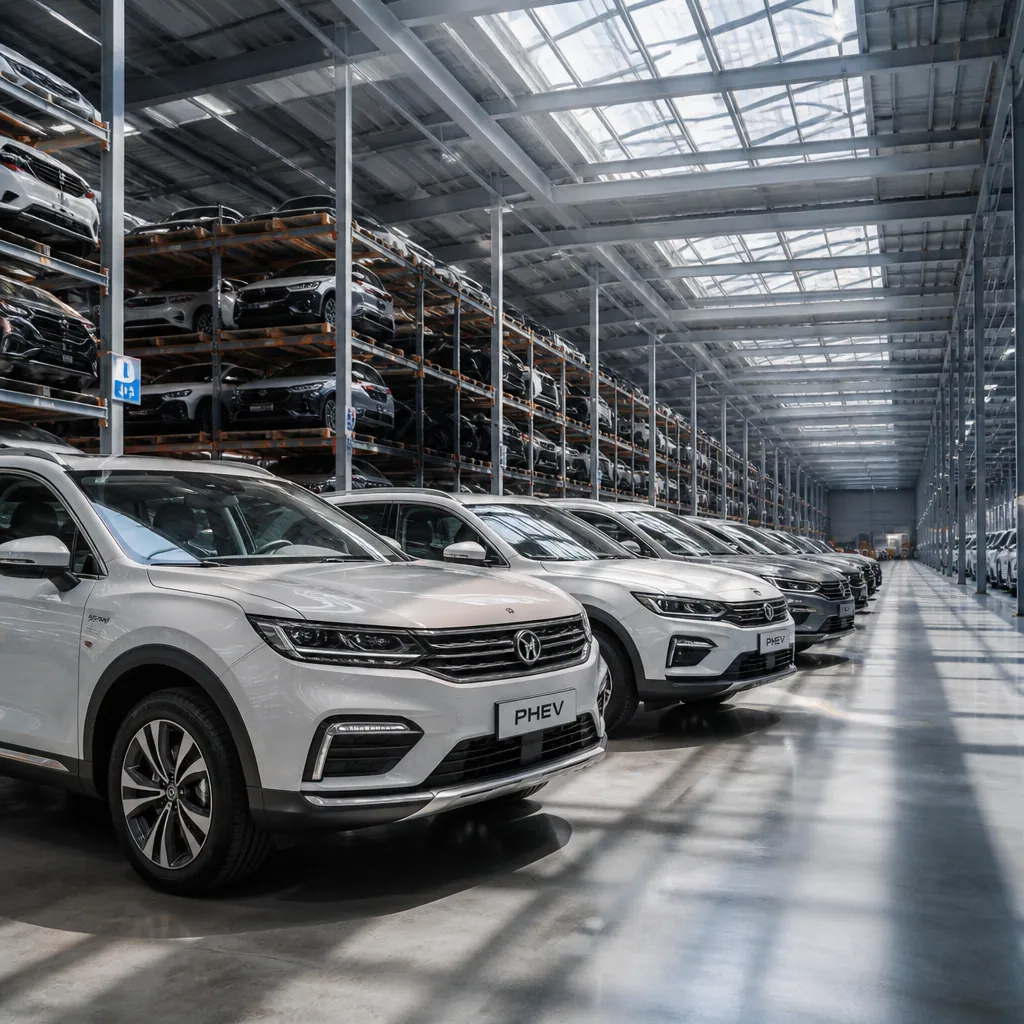
Pro tip: When building a PHEV import portfolio, match the model to your specific market segment. Fleet operators buying for mixed urban rural use typically prioritize total range and low running costs. Private buyers in the same market often prioritize cabin quality and brand recognition. A single PHEV brand rarely optimizes for both, plan for two or three complementary models from the start.
Comparing Chinese PHEV Export Options for Dealers
The table below compares three of the most export relevant Chinese PHEV platforms by the criteria that matter most to importers and dealers, not raw specifications, but the factors that affect sourcing decisions, inventory risk, and aftersales viability.
| PHEV Platform / Brand | Key Export Strengths | Dealer Considerations |
|---|---|---|
| BYD DM-i (Song Plus / Seal U / Destroyer 05) | Widest export market presence; multiple model variants; strong electric range (55 to 120 km EV-only); established RHD and LHD configurations; BYD’s own battery (Blade LFP) supply chain reduces parts risk | Minimum order quantities and distributor tier requirements are significant; brand is premium positioned in some markets; model refresh cycle is fast so check for stock age |
| Chery / Jetour PHEV SUVs | Largest Chinese exporter by volume; strong dealer network in Middle East, Africa, Asia; wide SUV body style availability; competitive wholesale pricing; broad spare parts footprint | Brand awareness varies widely by market; some Chery sub brands require separate distributor agreements; PHEV-specific variants may have longer lead times than ICE equivalents |
| SERES / Aito PHEV (Premium Segment) | Higher transaction prices support stronger dealer margins; Huawei powered cabin tech is a genuine differentiator; targets buyers moving up from Japanese brands | Lower export volumes mean thinner aftersales infrastructure outside China; requires more investment in technical training; not suitable as a standalone brand without a volume brand alongside it |
What Dealers and Importers Need to Know Before Ordering
Placing a Chinese PHEV import order is not the same process as ordering a conventional ICE vehicle from an established Western manufacturer. The sourcing, documentation, and homologation requirements have specific considerations that catch first time importers off guard.
Homologation and Type Approval
Every export market has different type approval requirements for PHEVs, and the classification of a PHEV for customs and regulatory purposes varies by jurisdiction. In some markets, a PHEV is classified and taxed differently from a conventional ICE vehicle or a pure BEV, which can affect the landed cost significantly. Before ordering, confirm with your customs authority how the specific model you are importing will be classified, and ensure the vehicle has the required certifications for your market. A competent export partner will have managed these processes before and will provide the documentation set required for smooth customs clearance.
Spare Parts and Aftersales Planning
A PHEV has both a combustion drivetrain and an electric drivetrain. That means the spare parts chain is more complex than for either a pure ICE or a pure BEV. Common ICE parts (filters, belts, injectors) apply, as do EV-specific components (battery management systems, charging ports, inverters). Dealers who underestimate this complexity end up with vehicles sitting unrepaired in their workshops, damaging customer relationships fast. Work with an export supplier that offers spare parts support as part of the supply arrangement, not as an afterthought.
Inspection Before Shipment
For PHEVs specifically, pre shipment inspection should include a full charging cycle test, a check of the battery management system, and a verification of both drivetrain modes. A vehicle that has a fault in either the electric or combustion mode may not be detectable through a standard visual inspection. Any reputable export partner should be running functional PHEV-specific checks before units leave the factory or consolidation point.
In practice, dealers sourcing through Automotion Global have the advantage of a structured inspection and export documentation process built into the supply chain, which matters more for PHEVs than for simpler ICE vehicles precisely because the complexity of the drivetrain creates more points of failure between factory and delivery.
Tariff and Regulatory Risk: The EU Lesson for All Markets
The European Union imposed additional countervailing duties on Chinese battery electric vehicle imports in October 2024. Chinese automakers responded quickly by pivoting export volumes toward PHEVs, which initially fell outside the scope of those duties. The result was a near-600% year on year surge in Chinese PHEV exports to the EU in certain months of early 2025, according to Chinese customs data. The EU has since recognized this and is preparing to extend countervailing duties to PHEVs as well, effectively closing what the European Commission identified as a loophole.
For dealers operating in the Middle East, Africa, and Asia, this EU situation is instructive in two ways. First, those markets currently face no equivalent tariff barrier on Chinese PHEVs, giving importers in those regions a clear cost advantage in sourcing. Second, the EU experience demonstrates that trade policy can shift faster than a typical vehicle procurement cycle, meaning importers everywhere should build regulatory monitoring into their market planning, not treat it as someone else’s problem.
The markets that Automotion Global serves, across the Middle East, Africa, and wider Asia, are currently among the most accessible for PHEV export China sourcing. That window will not stay open indefinitely as local regulatory landscapes evolve, which is precisely the argument for moving decisively now rather than waiting for perfect market conditions.
Frequently Asked Questions
What is driving the surge in Chinese PHEV exports?
The primary driver is the charging infrastructure gap in key export markets. In regions like the Middle East, Africa, Southeast Asia, and Latin America, public charging networks are not dense enough to support mass BEV adoption. PHEVs remove that barrier by offering full petrol fallback capability alongside electric mode operation. Chinese automakers have responded to this demand signal by investing heavily in PHEV model development for export, resulting in vehicles with electric only ranges that now commonly exceed 80 to 120 km, making them genuinely competitive with pure BEVs for typical daily use.
Which Chinese PHEV brands are best positioned for Middle East and Africa distribution?
BYD and Chery are the two most export established brands with proven distribution reach in the Middle East and Africa. BYD’s DM-i platform models (including the Song Plus and Destroyer 05/Seal 5 DM-i range) carry the strongest brand momentum in 2025. Chery leads on raw export volume and has the most developed physical dealer and parts network outside China. For dealers building a portfolio, a combination of both brands across different price segments typically provides the best coverage of buyer profiles in these markets.
How does the PHEV import process differ from importing a conventional ICE vehicle from China?
The documentation and homologation process is more involved for PHEVs. You need to confirm how the vehicle is classified for customs purposes in your market, as PHEV tax treatment varies significantly by jurisdiction. Pre shipment inspection needs to cover both drivetrain modes and battery system health, not just the standard mechanical checks. The spare parts chain is also more complex, covering both ICE and EV components. Working with an export partner that has specific PHEV export experience, including documentation, inspection, and aftersales logistics, removes the most common friction points from the process.
Is the EU tariff situation on Chinese PHEVs relevant to dealers in Africa and the Middle East?
Not directly, in terms of tariff exposure, Middle Eastern and African markets currently face no equivalent countervailing duties on Chinese PHEVs. But the EU situation is a useful signal. It shows that trade policy can shift rapidly once import volumes reach politically sensitive levels. Dealers in currently open markets should treat the current low barrier environment as a window to establish supply relationships, inventory depth, and brand positioning, rather than assuming the current regulatory landscape will remain unchanged indefinitely.
What electric range should dealers prioritize when selecting Chinese PHEV models for export?
Prioritize models with at least 80 km of type approval electric range. This figure covers most daily urban driving cycles in the markets Automotion Global serves, which means end buyers can run primarily on electricity for daily use while retaining full petrol capability for longer journeys or when charging is unavailable. Chinese PHEVs have been raising this bar consistently: the fleet average type approval electric range of Chinese PHEVs exceeded 100 km from 2023 to 2024, which is considerably higher than comparable European or US PHEV averages. Models with shorter ranges are harder to retail against this improving benchmark.
Can PHEVs suit fleet operators as well as private buyers?
PHEVs are arguably a better fit for many fleet use cases than pure BEVs in infrastructure light markets. Fleet operators running mixed urban and rural routes benefit directly from the dual fuel capability: short urban legs on electric power keep operating costs down, while petrol capability eliminates range risk on longer or remote routes. The total cost of ownership calculation also benefits from lower fuel consumption on urban cycles. Fleet operators sourcing through a structured export channel like Automotion Global can further negotiate delivery schedules and spare parts arrangements that make PHEV fleet deployment operationally manageable from day one.
If you are currently evaluating Chinese PHEVs for your dealership or fleet operation, share your market and the specific challenges you are running into, what works in one region often does not translate directly to another, and the specifics matter.
References
- Rest of World: Chinese plug in hybrid export surge analysis and market drivers
- Tendata: China PHEV passenger vehicle export statistics and CADA data, 2025
- ICCT: PHEV market trends and policies in China, EU, and US through 2024
- Gasgoo: China passenger vehicle exporter rankings H1 2025, BYD and Chery data
- The China Academy: Why overseas markets embrace Chinese PHEVs as domestic demand shifts