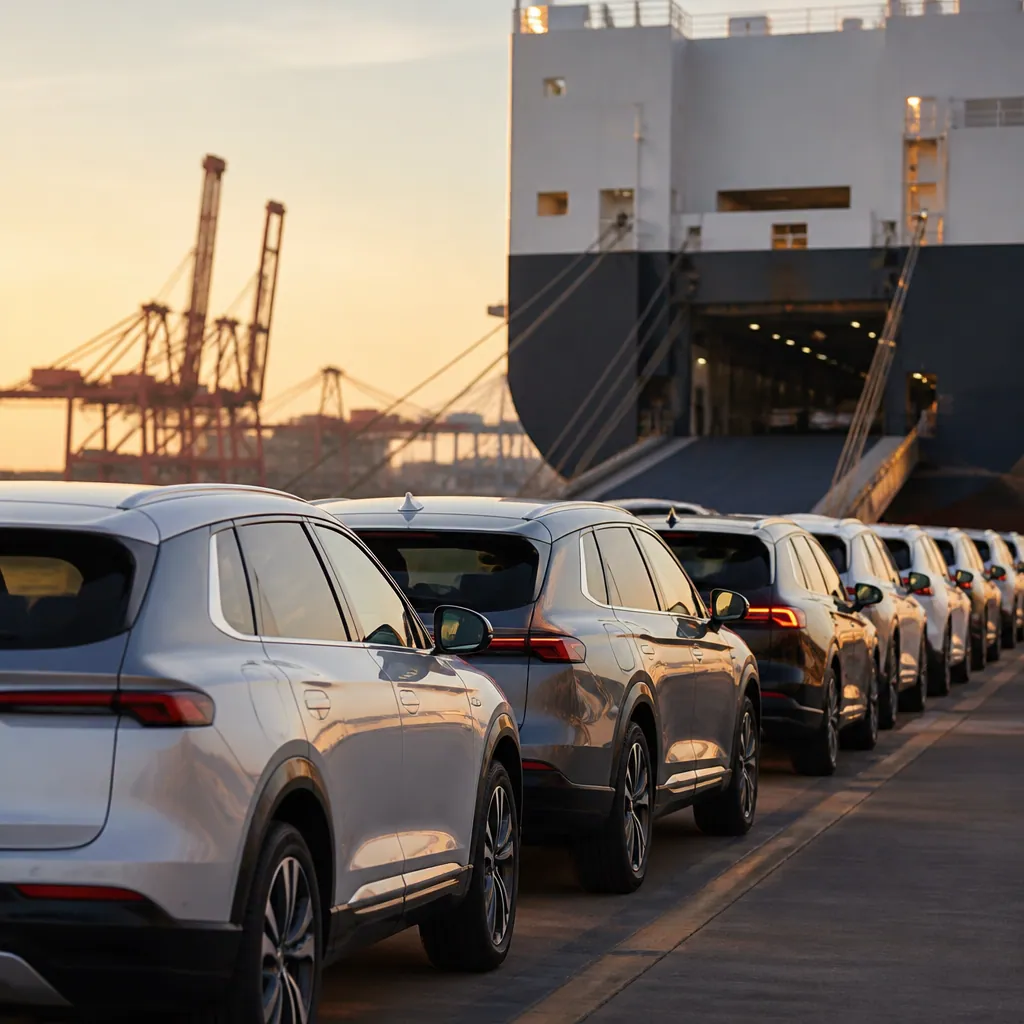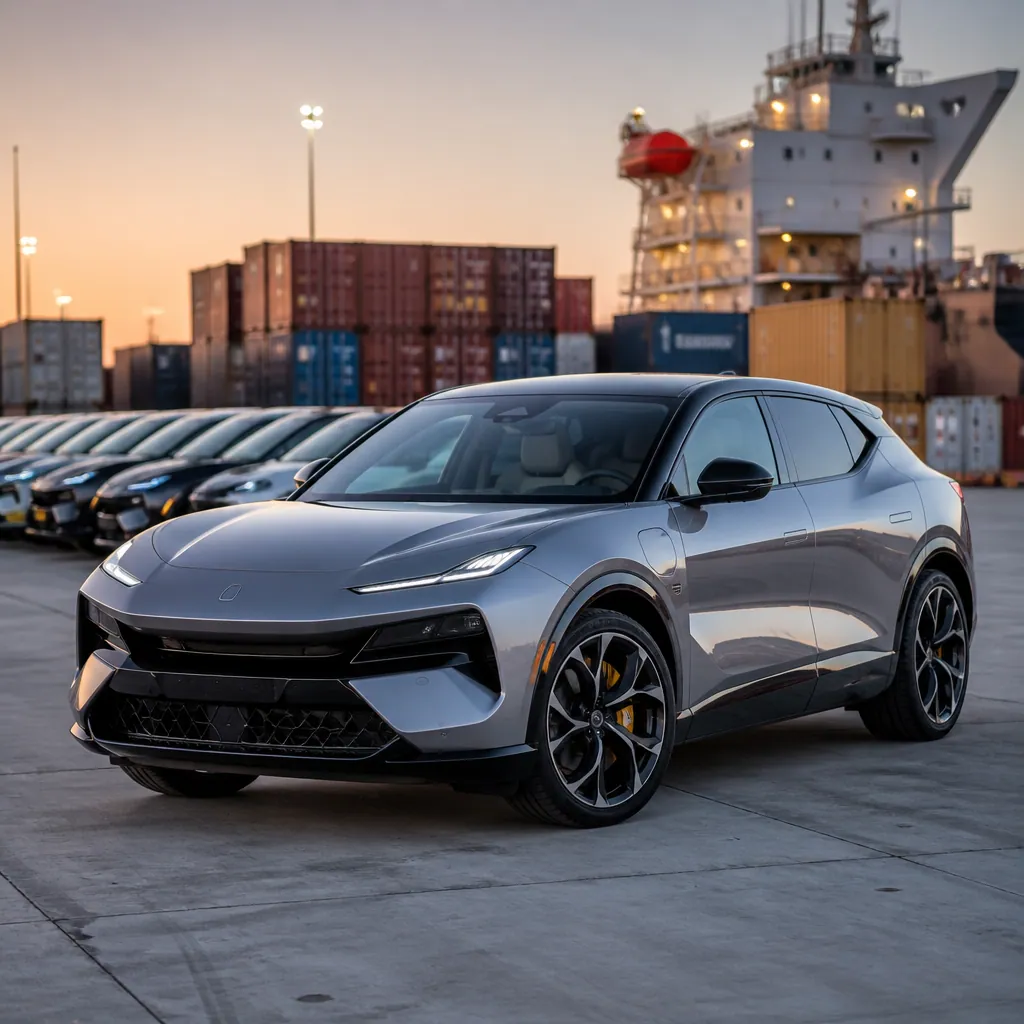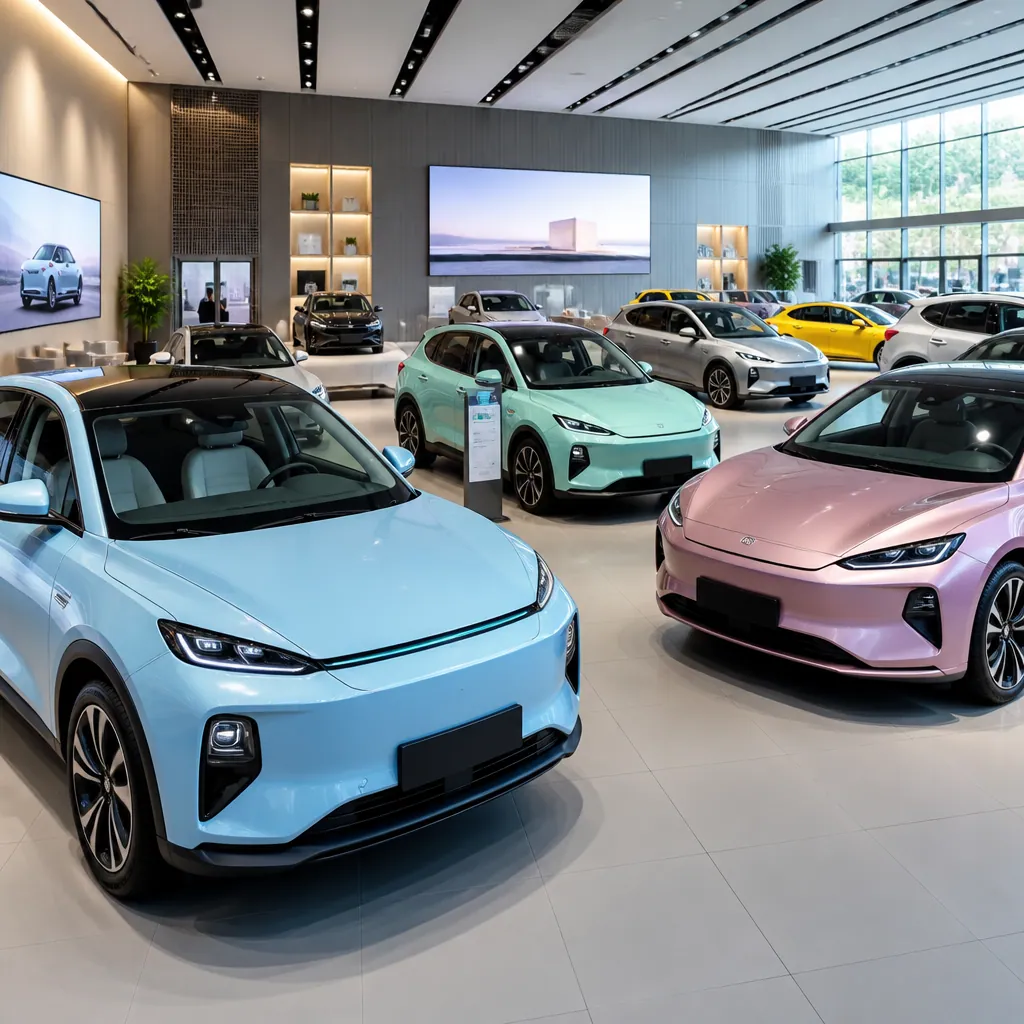

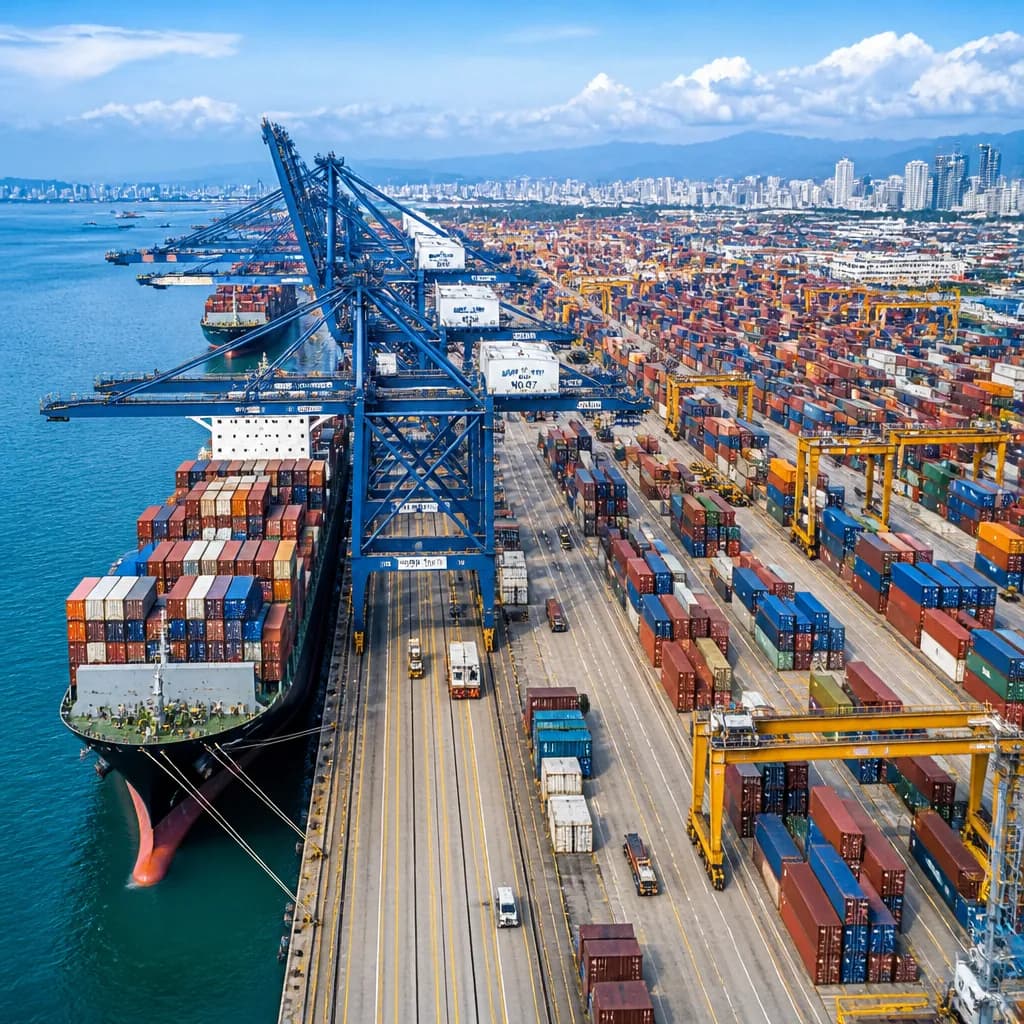
Chinese PHEV exports grew 210% in the first half of 2025 compared to just 40% growth for battery electric vehicles over the same period. That gap is not a coincidence. Dealers and distributors sourcing vehicles for the Middle East, Africa, and emerging Asian markets are discovering what the export data already confirms: PHEV export China is the dominant trade story of this decade, and the window to position early is open right now. The question dealers need to answer is not whether to stock Chinese new energy vehicles. It is which powertrain type fits their specific market, and which models to commit to first.
Why PHEV Exports Are Outpacing BEV from China
The numbers from China’s automotive export data tell a clear story. In 2025, plug in hybrids accounted for roughly 969,000 units of all Chinese NEV exports, representing growth of approximately 230%, while battery electric exports grew at a significantly slower pace. The BYD Song Plus, a PHEV SUV, became the single most exported vehicle from China in the first half of 2025 with over 134,000 units shipped, jumping from 11th place to 1st in the rankings year over year.
This is not a story about PHEVs being “better” than BEVs in absolute terms. It is a story about market fit. Chinese PHEVs solve a real problem that pure EVs cannot in markets where charging infrastructure is developing, grid reliability is variable, or buyer psychology still anchors on driving range as a non negotiable.
In markets where BEV infrastructure or incentives are weak, PHEVs offer a practical solution and allow Chinese automakers to compete on cost, range, and performance simultaneously.
For dealers serving markets in West Africa, the Gulf states, Southeast Asia, or Central Asia, this is the fundamental commercial argument. PHEVs remove the single biggest objection to buying a Chinese new energy vehicle: the fear of being stranded without a charge.
There is also a technology angle that dealers rarely discuss with their customers. Chinese PHEV electric range has advanced considerably. The fleet average type approval electric range of Chinese PHEVs exceeded 100 km from 2023 onward, significantly higher than the roughly 70 km average seen in comparable European and American models during the same period. A customer who plugs in at home overnight in Nairobi, Lagos, or Riyadh will cover most of their daily driving on electricity alone. The petrol engine becomes a long range insurance policy rather than a primary powertrain.
Understanding the Three Powertrain Types Dealers Actually Need to Know
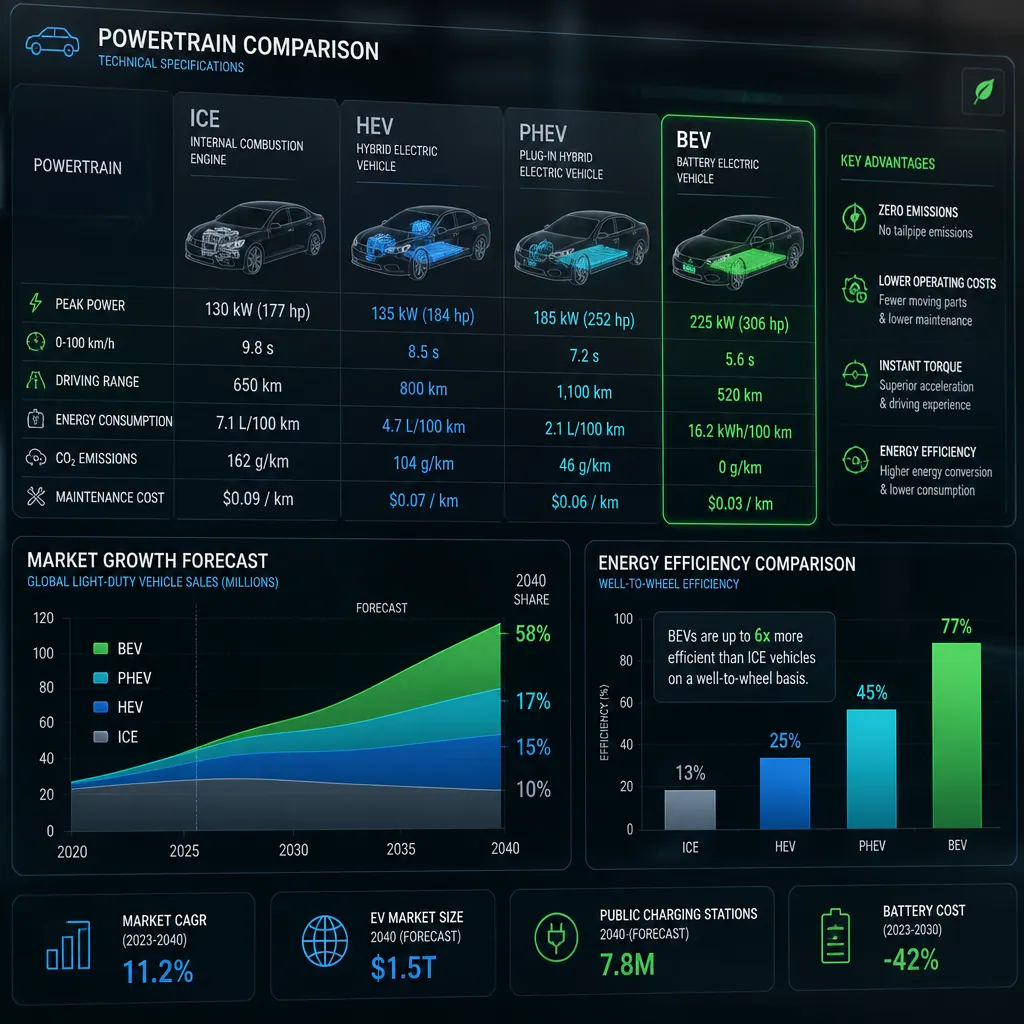
When sourcing Chinese new energy vehicles for export, dealers frequently conflate three distinct architectures. Getting this wrong leads to stocking vehicles that underperform in specific market conditions or generate aftersales headaches that could have been avoided.
Standard PHEV (Parallel Hybrid)
In a standard PHEV, both the electric motor and the petrol engine can drive the wheels, either separately or together. The battery is charged by plugging in or by the engine. Most buyers in markets with limited charging will use these primarily as conventional hybrids that occasionally run on electric power. The Haval H6 PHEV and several Chery Tiggo PHEV variants follow this architecture. These work well in markets where buyers want the green credentials and lower fuel bills without depending on charging.
Extended Range EV (EREV or Range Extender)
In an EREV, the petrol engine never drives the wheels directly. It acts exclusively as a generator to charge the battery. The vehicle always drives like an electric car. This architecture is increasingly popular in China and is spreading rapidly into export markets. Models like certain Li Auto and AITO variants, as well as newer Chery and Geely export models, use this layout. EREVs deliver a smoother, more EV-like driving experience while still allowing the driver to refuel at any petrol station. For fleet operators who want driver comfort without compromising operational flexibility, this is often the optimal choice.
Pure BEV
Battery electric vehicles remain the right choice for urban markets with strong charging networks and supportive government policy. The BYD Atto 3, BYD Seal, and various MG EV models perform well where dealers have confidence that buyers can charge at home or work. In markets like the UAE’s major urban centres, Saudi Arabia’s Riyadh and Jeddah, or Indonesia’s Jakarta, BEV demand is real and growing. The mistake is treating BEV as the default and applying it everywhere.
Pro tip: When evaluating models for a new market, ask the supplier for the EV-only range figure under WLTP or CLTC conditions, not just the combined range. A PHEV with 80 km of EV range behaves very differently in daily use than one with 130 km, and that difference matters enormously to a customer who will never access a fast charger.
Market by Market Breakdown: PHEV vs BEV Fit
The biggest mistake in sourcing Chinese new energy vehicles for export is treating “electrification” as a single category. The right powertrain varies dramatically by country, and within countries, by city versus rural context.
Middle East and Gulf States
EV sales penetration across the UAE, Saudi Arabia, and Qatar roughly doubled from around 2% to about 4% in 2024, with close to 24,000 EV units sold in the UAE alone. That base is growing, but public charging infrastructure in secondary cities and across regional road networks remains patchy. PHEVs and EREVs are the practical choice for fleet operators running vehicles beyond city centres. Dealers stocking both powertrain types can serve urban buyers with BEVs while offering PHEV alternatives for buyers with longer or less predictable routes. In Saudi Arabia, high daily temperatures affect battery performance in pure BEVs, which is another argument for PHEV as a lower risk fleet procurement option.
Sub Saharan Africa
Chinese car exports to Africa hit 222,000 units between January and May 2025, a 67% increase compared to the prior year. The growth is accelerating, but charging infrastructure between urban and rural areas varies enormously. For most African markets, a PHEV or EREV SUV is the more practical import choice at this stage. BEVs make sense in specific city markets where dealers can confirm home charging is feasible for their customer base. Stocking exclusively pure electric in a market like Nigeria or Kenya without first mapping your customer’s charging reality is a commercial risk that is straightforward to avoid.
Southeast Asia
Southeast Asian markets vary considerably by country. Thailand and Indonesia have active EV incentive programmes and growing public charging, which supports BEV demand in urban areas. Malaysia, Vietnam, and the Philippines have more variable infrastructure. Dealers operating across multiple Southeast Asian markets typically find that PHEVs produce the most consistent sales volume across their portfolio because they work in every market condition rather than depending on infrastructure assumptions being correct.
Top Chinese PHEV and EREV Models for Export Dealers
Model selection matters as much as powertrain type. The Chinese market produces hundreds of PHEV variants, but only a subset have the export documentation, homologation track record, parts availability, and brand recognition to move reliably in international markets. These are the models currently demonstrating strong export volume.
BYD Song Plus DM-i
The BYD Song Plus DM-i became the single most exported vehicle from China in H1 2025, with over 134,000 units shipped globally. It offers a competitive EV-only range, strong fuel economy when running on the hybrid drivetrain, and the backing of BYD’s growing global parts and service network. For dealers entering a new market with Chinese vehicles, the Song Plus is a low risk starting point because BYD’s brand awareness is now broad enough that customers recognise it. The DM-i stands for Dual Mode intelligent, BYD’s own PHEV system. It runs primarily on electricity for short trips and switches to a highly efficient petrol engine for longer distances.
Chery Tiggo PHEV Variants
Chery remained the highest volume exporter from China by total units in the first half of 2025, and its Tiggo PHEV lineup is a strong option for dealers in markets where brand recognition for premium positioned Chinese vehicles is still developing. The Tiggo 8 Pro PHEV, in particular, offers seven seats and a competitive combined range, making it well suited for family buyers and small fleet applications in African and Middle Eastern markets. Chery’s global network of assembly partnerships across Egypt, Pakistan, Malaysia, and Indonesia also gives it aftersales parts familiarity that benefits import dealers.
Great Wall Haval PHEV Range
Great Wall’s Haval brand offers PHEV variants of several of its most popular export SUVs. The Haval H6 PHEV and related models in the Haval lineup use a multi mode hybrid drivetrain that performs consistently in varied climate conditions. Great Wall has invested in building export focused service infrastructure, which matters for fleet operators who cannot afford extended repair waiting times. For dealers targeting fleet procurement contractsthe Haval PHEV range tends to offer a competitive total cost of ownership argument that resonates with commercial buyers.
Geely and EREV Options
Geely’s newer PHEV and EREV architecture offers extended electric only range combined with a combined total range that eliminates range anxiety entirely. The Geely Galaxy lineup, developed for both domestic and export markets, sits in the mid range segment and targets buyers who want an EV driving experience without giving up the ability to refuel anywhere. For dealers in markets where customers are curious about EVs but not yet ready to commit fully, EREV models from Geely’s export portfolio serve as a useful bridge product.
Pro tip: When sourcing PHEV models for fleet operators, always confirm the battery warranty terms in writing before signing the supply agreement. Chinese manufacturers have different warranty transfer policies for export markets, and a fleet operator discovering that the battery warranty does not transfer to a commercial buyer is a problem that will cost the dealer relationship.
PHEV vs BEV vs EREV: Export Dealer Comparison
The table below compares the three main powertrain types across the factors that matter most to vehicle dealers and fleet operators sourcing Chinese vehicles for export markets.
| Factor | PHEV (Parallel Hybrid) | EREV (Range Extender) | BEV (Pure Electric) |
|---|---|---|---|
| Infrastructure dependency | Low. Runs on petrol if no charging available. | Low. Petrol range extender eliminates range anxiety. | High. Requires reliable charging network for daily use. |
| Daily EV range (typical export models) | 80 to 130 km on electric alone. | 100 to 220 km on electric alone, then extender activates. | 300 to 500+ km, fully electric. |
| Best market fit | Markets with mixed urban and rural use, developing charging. | Markets wanting EV experience without infrastructure risk. | Urban dense markets with reliable home or public charging. |
| Fleet operator appeal | High. Flexible fuelling, lower operational complexity. | High. EV driving economics, petrol backup. | Medium. Strong in urban fleets with depot charging. |
| Customs and import classification | Varies. Some markets apply NEV incentives, others tax as conventional. | Varies. Often classified as EV depending on jurisdiction. | Most likely to qualify for NEV import incentives where they exist. |
| Export growth rate (H1 2025) | PHEV and EREV combined: approximately 210% growth year on year. | Approximately 40% growth year on year. | |
| Aftersales parts complexity | Medium. Two powertrains, but petrol parts widely available. | Medium. Simpler than parallel hybrid mechanically. | Lower mechanical complexity, but battery replacement cost is high. |
Stocking Decisions: What Dealers Consistently Get Wrong
The most common mistake dealers make when entering the Chinese vehicle export space is treating the PHEV vs BEV decision as a brand preference question rather than a market infrastructure question. A dealer in Accra who stocks only BEVs because the brand is strong and the price is right will find that half their potential buyers disqualify themselves based on charging concerns alone, before the sales conversation even begins.
Ignoring the Range Extender Category
Many dealers default to evaluating standard PHEVs and BEVs and overlook the EREV segment entirely. This is a meaningful omission. EREVs are growing fast in China’s domestic market and in its export pipeline because they genuinely resolve the core tension: customers want the quiet, smooth, low running cost experience of an EV, but they do not want to be dependent on charging infrastructure. The EREV architecture delivers both. Dealers who add one or two EREV models to their portfolio often find they serve as conversation starters with buyers who were on the fence about EVs.
Over indexing on Headline Combined Range
A combined range figure of 1,200 km looks impressive on a brochure and is accurate, but it misleads buyers who interpret this as meaning the car travels 1,200 km on a single charge. The figure includes distance covered by the petrol engine. Dealers need to communicate EV-only range as the primary daily use figure and position the total combined range as the travel flexibility figure. Failing to set this expectation correctly generates dissatisfied customers who feel misled, which damages dealer reputation more than a lower combined range figure would.
Neglecting Aftersales Planning at the Point of Sourcing
In practice, the stocking decision and the aftersales plan need to be made together. A PHEV that sells well but has a 12-week lead time on its high voltage battery management components will generate more reputational damage than a slower selling model with reliable local parts access. When sourcing Chinese PHEVs or BEVs for export, dealers should confirm spare parts availability, technical documentation language, and whether the manufacturer has a regional parts warehouse before committing to volume orders. This is a step that gets skipped in the rush to secure early allocations of popular models.
Treating the Decision as Permanent
Market conditions for EVs change quickly. Charging infrastructure in Gulf cities is expanding at a measurable pace. Government incentive programmes in Southeast Asia shift regularly. The right PHEV-to-BEV stocking ratio today is not the right ratio in three years. Dealers who build supplier relationships flexible enough to adjust the mix as conditions evolve will outperform those who lock in a single powertrain strategy and hold it regardless of what the market signals.
Frequently Asked Questions
What makes Chinese PHEV exports different from European or Japanese hybrids?
Chinese PHEVs and EREVs generally offer higher electric only range than comparable European or Japanese models. The average Chinese PHEV’s type approval electric range exceeded 100 km from 2023 onward, compared to roughly 70 km for European and American models during the same period. Chinese manufacturers have also been faster to adopt advanced battery chemistry and software defined powertrain management, which produces better real world fuel economy figures than the type approval numbers alone suggest.
Can PHEV models from China be imported without special EV homologation?
It depends entirely on the destination market. Some markets classify PHEVs as conventional internal combustion vehicles for import duty purposes, which can eliminate NEV incentives but also reduce homologation complexity. Other markets, particularly those actively promoting electrification, treat qualifying PHEVs as NEVs with corresponding benefits. Dealers should confirm the specific HS code classification and applicable standards with a customs broker in each destination market before committing to a model. This is not a step to resolve after vehicles have already been purchased.
Which Chinese brands have the strongest aftersales support for export markets?
BYD has invested most visibly in export aftersales infrastructure, including establishing overseas parts warehouses with thousands of components stocked for immediate dispatch. Chery has a strong aftersales network through its assembly partnerships in markets including Egypt, Pakistan, and Malaysia. Great Wall’s Haval brand has built dealer network support across multiple African and Middle Eastern markets. The key variable is not which brand is best globally, but which brand has made the specific infrastructure investment in the dealer’s target market.
Should fleet operators choose PHEV or BEV for commercial vehicle procurement?
For fleet operators running mixed route operations that include both urban and inter city distances, PHEVs and EREVs are consistently the lower risk choice. They allow depot based overnight charging to reduce fuel costs on predictable routes while retaining the ability to refuel on petrol for irregular or longer journeys. Pure BEVs are optimal for urban only fleets where daily mileage is predictable, routes are short, and depot charging can be installed. Fleet operators should map their actual route data before making the decision, not rely on which powertrain has the better headline specifications.
What is the practical difference between a PHEV and an EREV for a dealer’s customer?
In a standard PHEV, the petrol engine can drive the wheels directly alongside or instead of the electric motor. In an EREV, the petrol engine only generates electricity and never turns the wheels. The practical difference for a buyer is that an EREV always drives like an electric vehicle, with the smooth, linear power delivery that EV drivers prefer. A parallel PHEV may feel different when the engine switches modes, particularly at higher speeds. For customers who are new to EVs and making the transition from petrol, EREVs often produce higher satisfaction scores because the driving experience is consistent regardless of which energy source is active.
How should dealers split their initial stock order between PHEVs and BEVs?
There is no universal ratio, but a practical starting point for a dealer entering a market without strong prior data is to weight PHEV and EREV models more heavily in the initial order and supplement with a smaller number of BEV units targeted at urban buyer segments. The reason is straightforward: a PHEV can always be sold to a buyer who could also have bought a BEV, but a BEV cannot always be sold to a buyer who needs the petrol backup. Starting with a PHEV-weighted portfolio and adjusting based on actual sales data is lower risk than the reverse.
If you are currently evaluating which Chinese PHEV or EV models to source for your market, we would like to hear which powertrain architecture your buyers are asking about most.
We would love your feedback and any insights you would share with others. What perspective would you add?
References
- Rest of World: How Chinese plug in hybrid exports are reshaping global automotive trade in 2025
- ICCT: PHEV market trends and policy developments across China, the EU, and the US
- Car News China: Top 20 most exported vehicles from China in the first half of 2025
- Electrive: Full year 2025 Chinese NEV export and domestic sales data breakdown
- FobEV: Chinese PHEV and hybrid export buyers guide for emerging market dealers