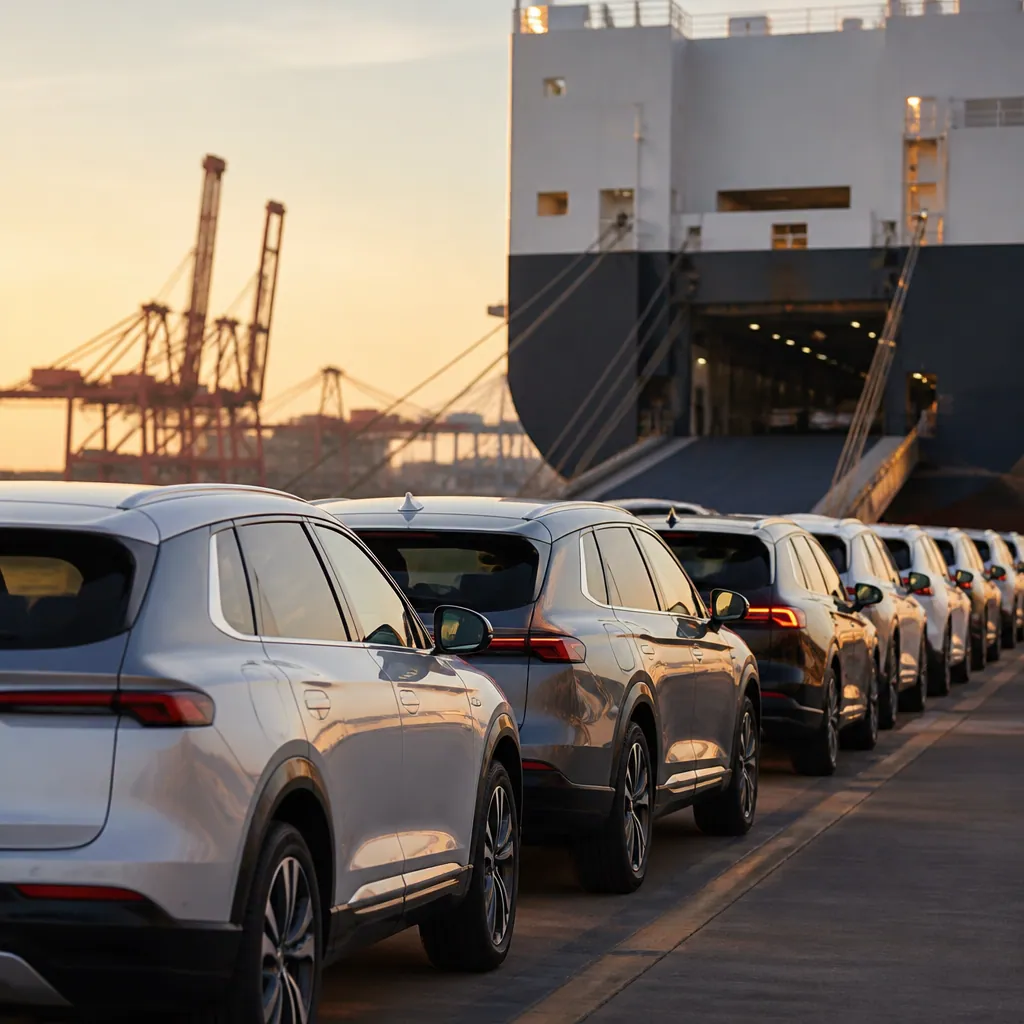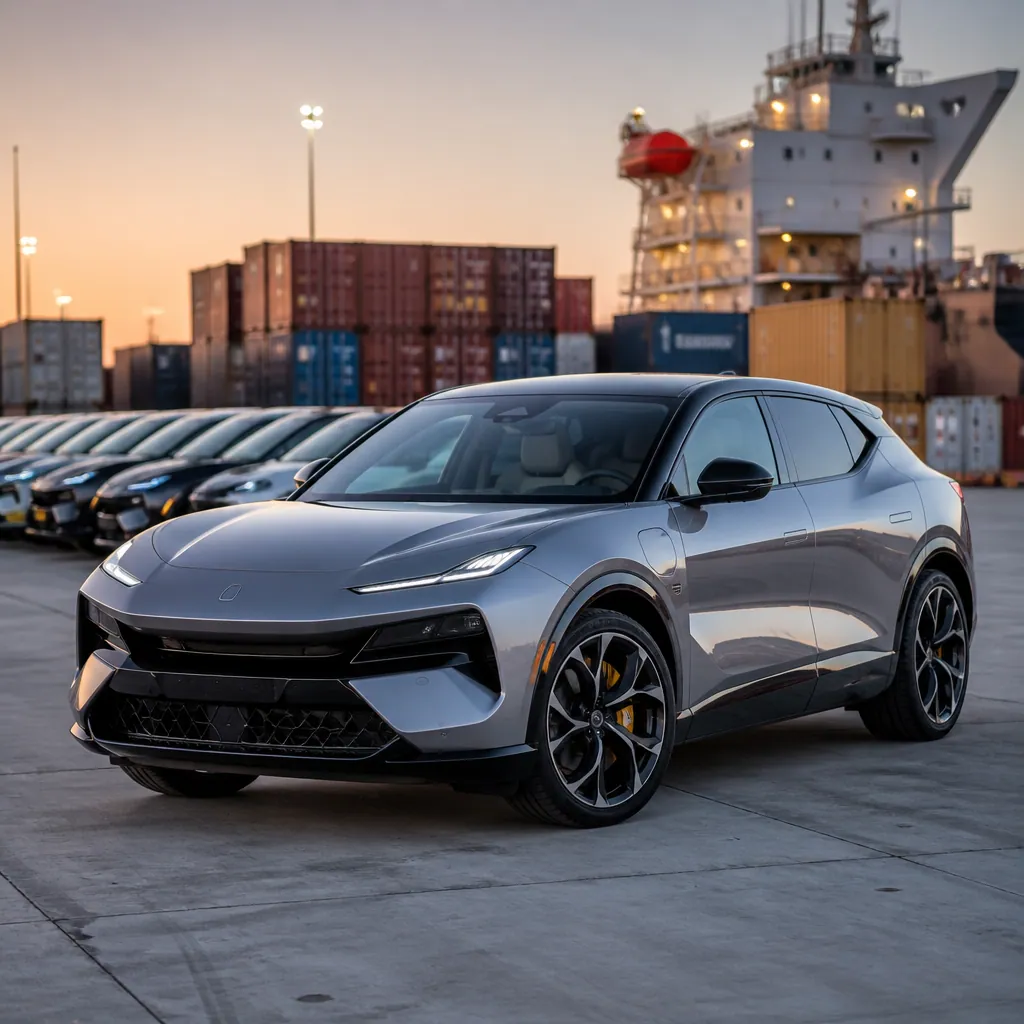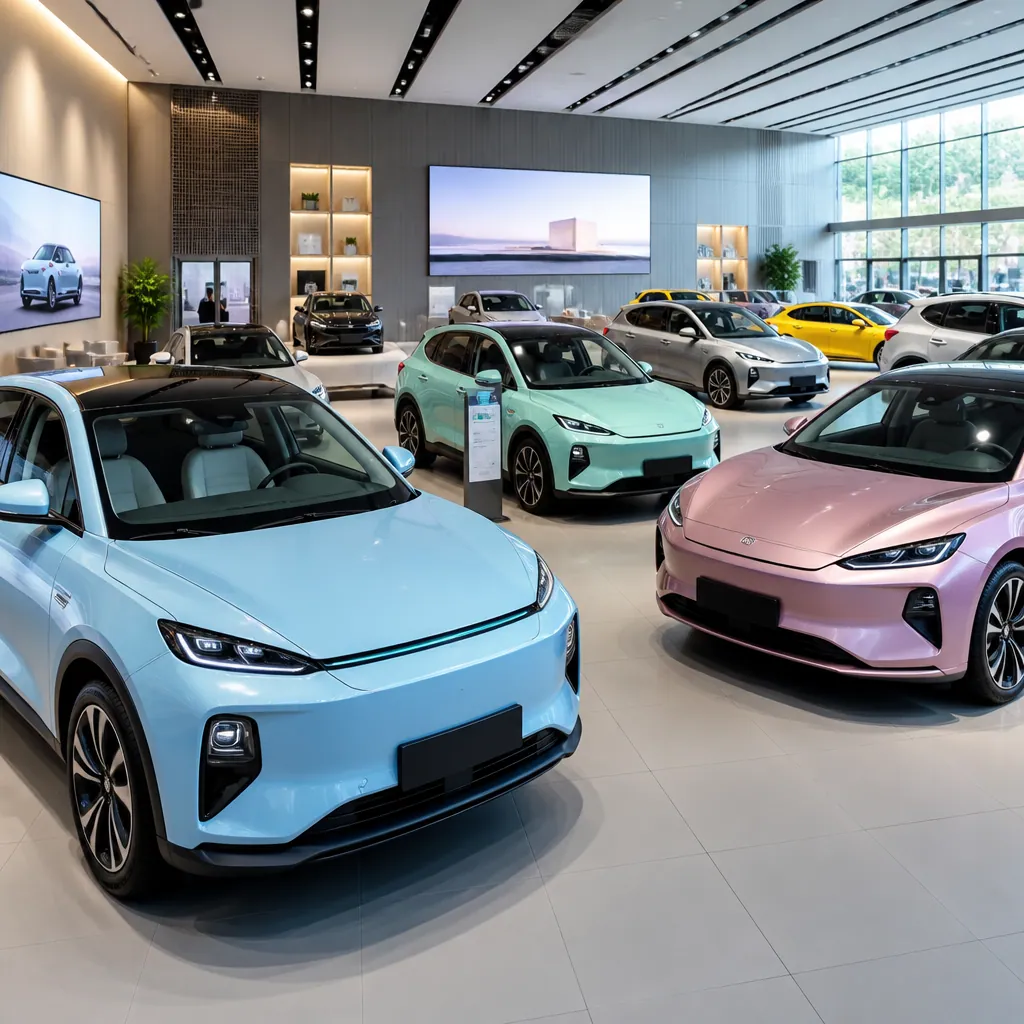

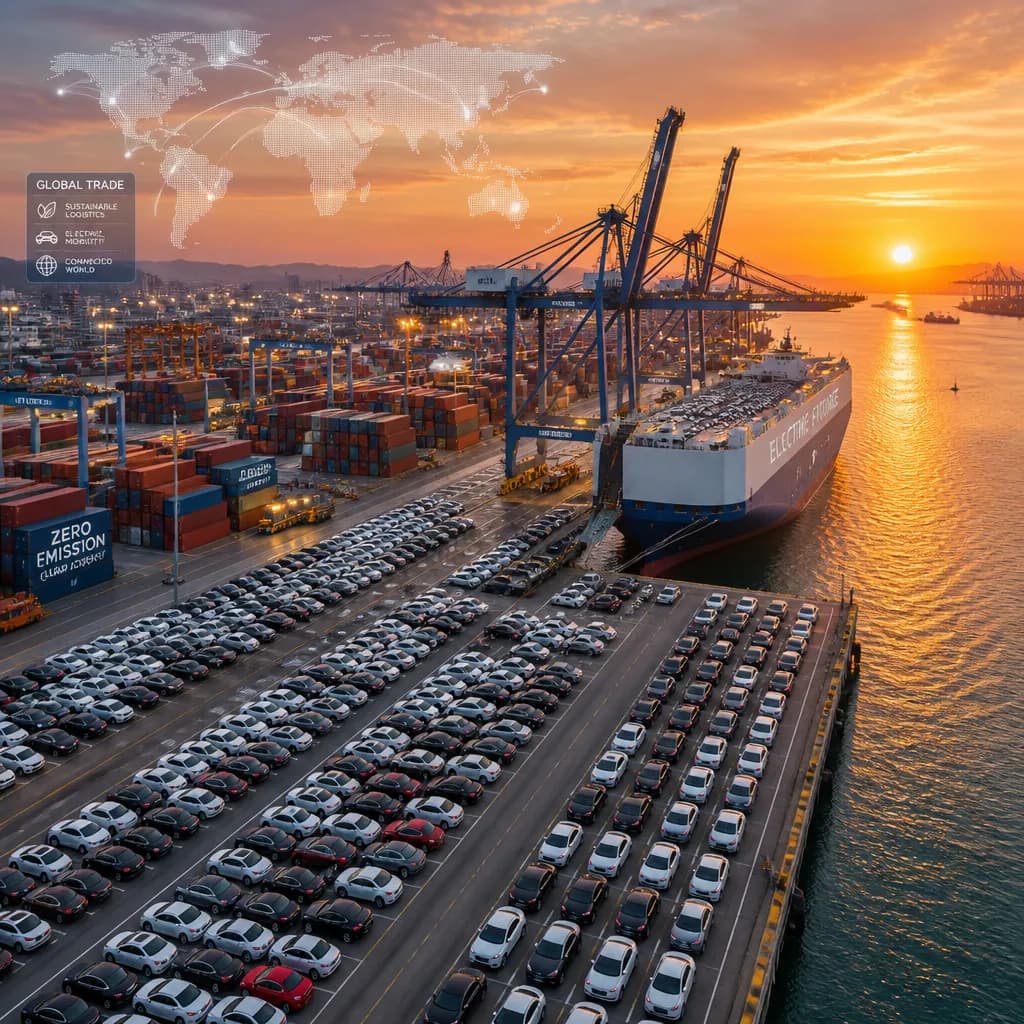
China is now the world’s largest car exporter. In 2024 alone, China shipped roughly 5.5 million vehicles internationally, with electric vehicles and plug in hybrids making up close to 40% of that volume. If you are a vehicle dealer, fleet operator, or importer looking to import electric vehicles from Chinathe opportunity is real, but so are the landmines. Tariff regimes vary wildly by destination, battery classification rules are tightening, and supplier quality ranges from world class to dangerously inconsistent. This guide walks you through every stage of the process, from choosing the right EV model and supplier to clearing customs in your target market, so you can move faster and make fewer expensive mistakes.
Why Chinese EVs Dominate Global Exports
China’s dominance in the EV export market is not a trend, it is a structural reality. China controls roughly 85% of global battery production capacity and refines between 70% and 90% of critical battery raw materials such as lithium, cobalt, and graphite. That supply chain control translates directly into competitive manufacturing costs that no other country can currently match at scale.
In 2025, approximately 70% of all EVs produced globally came from Chinese factories. For importers in the Middle East, Africa, and Asia, that means China is not just one option among many. It is the primary source, and aligning your procurement strategy accordingly is not a compromise, it is good business.
Pro tip: Do not enter sourcing negotiations without first confirming that your target model is on China’s official export permitted vehicle list. From January 1, 2026, China’s Ministry of Commerce requires export licenses for pure electric passenger vehicles, and customs inspections of those vehicles must follow the Catalog of Import and Export Commodities Subject to Compulsory Inspection. Build this compliance step into your sourcing timeline now, not after you have placed a deposit.
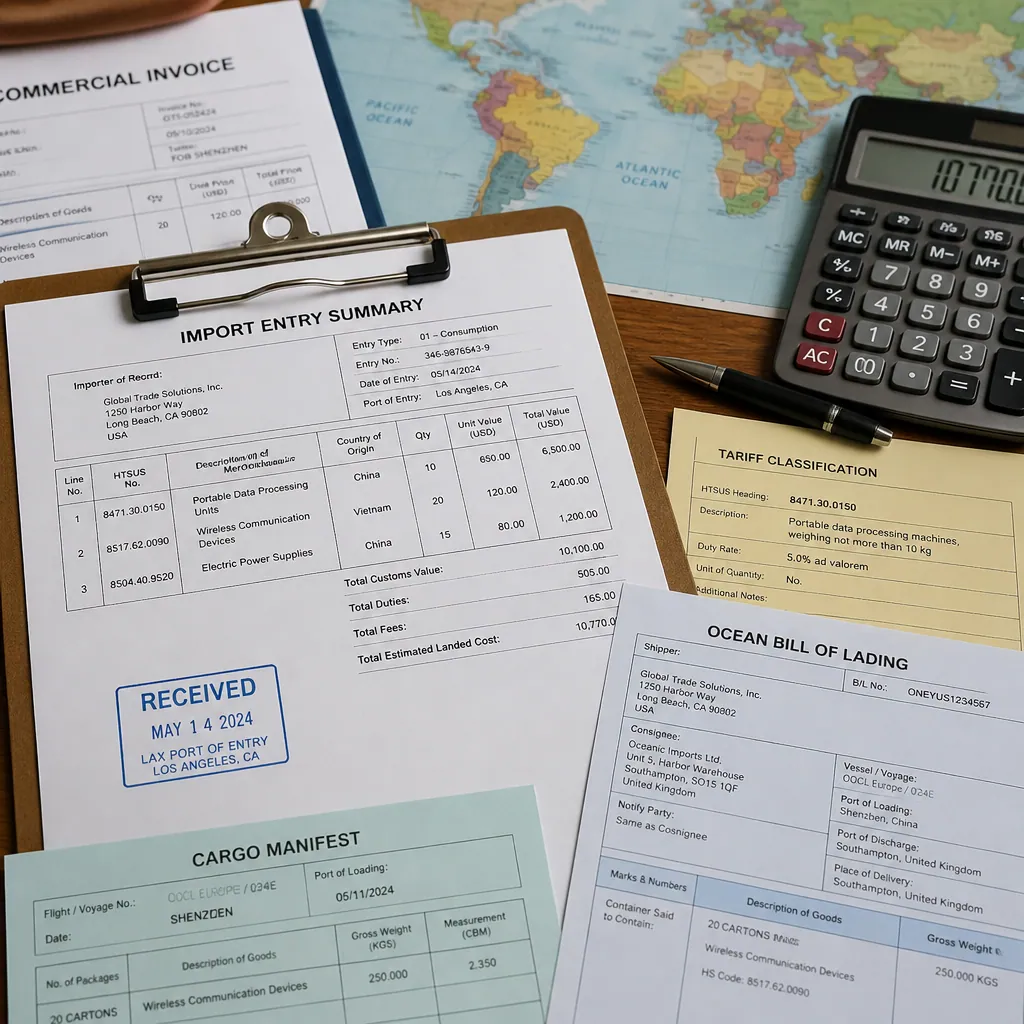
Top Chinese EV Brands for Importers
Not all Chinese EV brands carry the same risk profile for an importer. Brand reputation, spare parts availability, and aftersales support infrastructure vary enormously. Below is a practical overview of the brands that consistently appear in international export volumes and that Automotion Global regularly sources for dealer and fleet clients.
BYD
BYD is the undisputed volume leader. Its passenger vehicle sales jumped more than 40% in 2024, with overseas shipments surging strongly. The brand covers a wide price range, from the entry level Seagull city car to the Qin L EV sedan and the Tang SUV. BYD’s proprietary Blade Battery is widely recognized for thermal stability and longevity, which matters significantly when you are importing vehicles to hot climate markets. For importers in the Middle East and Africa, BYD’s growing regional aftersales network reduces one of the biggest post import risks.
SAIC (MG Brand)
SAIC is among the leading exporters by volume among Chinese brands, with international sales driven heavily by the MG marque. The MG brand carries strong name recognition in markets like the UK, Australia, and the Gulf, making dealer sell through easier than with newer Chinese nameplates. SAIC’s EV and hybrid models are built on platforms that already meet multiple international homologation standards.
Geely and Chery
Geely’s portfolio spans mass market and premium EVs, with brands including Zeekr and Geometry targeting different buyer segments. Chery operates nine sub brands, including Omoda and Jaecoo, which are specifically designed for export markets, including right hand drive configurations. Both groups offer 7-year vehicle warranties and 8-year battery warranties on select models, matching or exceeding international norms. For fleet buyers, these warranty terms are a serious commercial advantage.
Around 2 in 5 Chinese car exports are now electric or plug in hybrid models. For importers in growth markets, the question is no longer whether to add Chinese EVs to their range, but how to do it without operational errors that eat the margin.
Comparison: Key Chinese EV Brands for International Importers
| Brand / Group | Primary Export Models | Best Suited For |
|---|---|---|
| BYD | Seagull, Atto 3, Tang, Qin L EV, Seal | Fleet buyers, dealers needing broad price range, hot climate markets |
| SAIC (MG) | MG4, ZS EV, MG5 | Markets with existing MG brand recognition, right hand drive countries |
| Chery (Omoda / Jaecoo) | Omoda 5, Jaecoo 7, Tiggo based EVs | Emerging market distributors, export ready configurations out of factory |
Understanding Tariffs and Import Duties by Region
Tariff policy is where most first time importers get a serious surprise. The global picture is highly fragmented, and rates have moved sharply in both directions in the past two years. The wrong assumption about your destination market’s duty rate can erase your entire margin before the vehicle reaches the lot.
Middle East and Africa
These are currently among the most accessible markets for Chinese EV imports from a tariff perspective. Many Gulf Cooperation Council (GCC) markets apply low to moderate general import duties on vehicles, and there are no sector specific countervailing measures against Chinese EVs at the time of writing. African markets vary more widely by country, with some applying relatively modest duties and others layering VAT, excise, and registration taxes that can significantly increase the landed cost. Always calculate total landed cost, not just the headline duty rate, before committing to a pricing strategy for a new market.
Southeast Asia
ASEAN countries have generally been lowering EV tariffs as part of broader clean energy adoption strategies. Indonesia waived import taxes on EVs through 2025, and Malaysia offered zero duty rates through December 2025. These are favorable conditions for importers, but they are also temporary measures, so build a contingency into any multi year distribution agreement that assumes current rates.
Europe
The European Commission imposed definitive countervailing duties on imports of new battery electric vehicles from China under Regulation (EU) 2024/2754. Individual duty rates differ by manufacturer and are applied on top of the existing standard vehicle import duty. Importers into EU markets must present a valid commercial invoice with a specific signed declaration (additional code D008 in the import declaration) at the customs authority; failure to present this means the highest applicable duty rate is charged automatically. This is not a paperwork technicality. It is a meaningful cost risk.
Western Markets (US, Canada)
The US and Canadian markets are effectively closed for most importers of Chinese EVs at the moment. The United States finalized Section 301 tariff increases in 2024, pushing EV-specific rates to punishing levels. Canada announced a 100% tariff on Chinese made EVs starting October 2024. These markets are not the focus for most Automotion Global clients, but it is worth being aware that vehicles or components sourced through third countries may still attract scrutiny under country of origin rules.
Pro tip: Brazil is gradually increasing its EV tariffs and is planning to reach 35% by 2026. If you are building distribution in Latin America, price your contracts to account for this trajectory rather than locking in margins based on current rates alone.
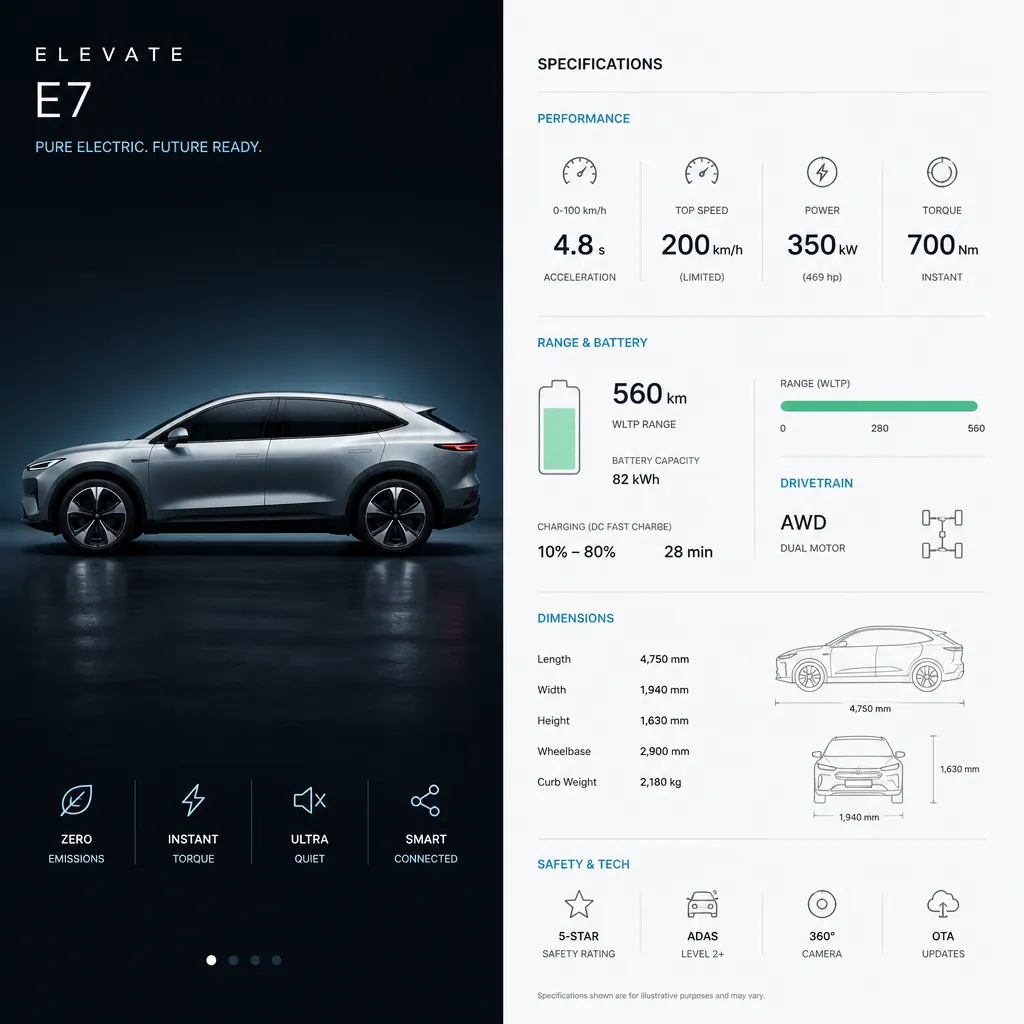
Required Documentation for EV Import
EV imports require a more involved documentation set than standard ICE vehicle imports, primarily because of the battery. Get one document wrong and you face customs detention, carrier rejection, or re export at your cost. The following are the core documents you should expect to manage for any Chinese EV shipment.
Export Side Documents from China
- Certificate of Origin: Confirms the vehicle was manufactured in China. Required by customs authorities in virtually every destination market, and especially critical where preferential trade agreements or anti dumping measures reference country of origin.
- Manufacturer’s Certificate of Conformity (CoC): Confirms the vehicle meets the technical standards of the target market. This is required for homologation and registration. Without it, the vehicle may not legally be sold or registered in the destination country.
- Commercial Invoice and Packing List: Must match exactly the declared customs value. Any discrepancy triggers a customs query or audit.
- Dangerous Goods Declaration (DGD): Electric vehicles with lithium ion batteries are classified as dangerous goods under the IMDG Code. The correct UN number for lithium ion battery powered vehicles is UN 3556. Using the outdated UN 3171 classification, which was phased out under IMDG Amendment 42 to 24 effective January 1, 2026, will result in carrier rejection of your booking.
- Battery State of Charge (SOC) Verification: Carriers require written documentation that the vehicle’s battery is charged to 30% or less before loading. Some carriers accept up to 50% with enhanced documentation on RoRo vessels. Arriving at the terminal without this paperwork, or with a battery charged above the carrier’s threshold, results in detention and fees of roughly $1,000 to $2,000 per vehicle, plus re scheduling delays.
Import Side Documents at Destination
- Import permit or vehicle import license (where required by local authority)
- Customs entry declaration with correct HS code for battery electric vehicles
- Homologation approval or type approval certificate for the destination market
- Insurance certificate covering the cargo in transit
Shipping Chinese EVs: RoRo vs. Container
The two standard methods for shipping vehicles from China are Roll on/Roll off (RoRo) and containerized shipping. For EVs specifically, both options work, but each comes with different cost structures, risk profiles, and operational requirements.
RoRo Shipping
RoRo is the default for high volume vehicle shipments. Vehicles are driven directly onto the vessel and secured to vehicle decks. It is generally more cost efficient for large quantities and eliminates the need for lifting equipment at origin and destination. The trade off is that vehicles are exposed to the marine environment and cannot be inspected as easily during transit. For RoRo, carriers typically require a battery SOC of 30% to 50%, because the vehicle must be driven on and off the vessel under its own power. Not all destination ports have RoRo terminals, so confirm terminal infrastructure before booking this method.
Container Shipping
Containerized shipping offers better protection for individual high value vehicles, allows mixed cargo in the same container (useful for grouping vehicles with spare parts), and is available at a wider range of destination ports. However, it is more expensive per vehicle for small orders and requires proper bracing and securing inside the container. For premium EV models where paintwork and exterior condition are a selling point, many importers prefer the additional protection of a container.
Both methods fall under the IMDG Code for dangerous goods classification. The correct packing instruction for vehicles with lithium ion batteries is P912. Freight forwarders with dangerous goods certification can prepare and sign the Dangerous Goods Declaration even if your supplier does not hold that certification, which is a practical workaround for first time exporters.
Pre Shipment Inspection and Quality Control
A common mistake among importers buying Chinese EVs for the first time is to rely entirely on factory photos and supplier claims. In practice, the gap between a factory’s marketing materials and what arrives at the port of destination can involve missing features, specification mismatches, unreported transport damage, and battery health that does not match what was invoiced.
A proper pre shipment inspection for an electric vehicle should cover the following at minimum: full exterior and interior condition check against the purchase specification, battery health test with documented state of health (SOH) reading, confirmation of all onboard software versions and feature activation, verification that all relevant certificates and homologation documents are physically present with the vehicle, and a functional check of charging systems including both AC and DC charging ports.
Third party inspection agents based in China can perform this work on your behalf before the vehicle leaves the factory or bonded warehouse. The cost is modest relative to the risk of receiving a non compliant or damaged vehicle that then has to be rectified at destination, at your expense, with the supplier already paid.
Automotion Global coordinates pre shipment inspections as part of its standard export process. This is not an add on. It is a baseline quality control step that protects both the importer and the supplier relationship long term.
Working with a Chinese EV Export Partner
The difference between a smooth EV import and a costly one usually comes down to who is managing the process on the China side. A genuine export partner does more than arrange a factory purchase order and book freight. They coordinate supplier verification, confirm export licensing compliance, prepare and review all export documentation, manage pre shipment inspection, handle Chinese customs clearance, coordinate with the freight forwarder on dangerous goods compliance, and provide ongoing aftersales support once the vehicle is in your market.
What to Look for in an Export Partner
Ask any prospective partner the following directly: Can they provide references from importers in your specific target market? Do they hold or work with freight forwarders holding dangerous goods certification under IMDG? Can they supply the correct UN 3556 Dangerous Goods Declaration and SOC documentation for every shipment? Do they have a process for managing warranty claims with Chinese manufacturers on your behalf? If the answers are vague, that tells you everything you need to know.
Red Flags in the Chinese EV Export Market
Be cautious of suppliers offering prices that are significantly below the manufacturer’s published export pricing. This usually indicates either a misrepresented specification, a vehicle with undisclosed history, or a supplier without the licenses required to export legally. From January 2026, China requires export licenses specifically for pure electric passenger vehicles, so any supplier who dismisses compliance steps is either uninformed or deliberately cutting corners. Neither is acceptable when you are importing vehicles worth tens of thousands of dollars per unit.
At Automotion Global, we work with established automotive suppliers and partners across China and provide end to end export management for dealers, distributors, fleet operators, and private buyers across the Middle East, Africa, and Asia. Our focus is on transparent pricing and long term reliability, not single transaction volume.
Frequently Asked Questions
What is the minimum order quantity to import electric vehicles from China?
There is no universal minimum, but practically speaking, single unit imports are possible for private buyers and small dealers. For commercial importers looking to build dealer stock, orders of 5 to 20 units or more make the per unit logistics and documentation costs significantly more efficient. Fleet operators typically start at larger quantities and benefit from negotiated factory pricing that single unit buyers cannot access.
How long does shipping from China take for electric vehicles?
Sea freight is the standard method for vehicle exports. Transit times vary by destination port, but most routes from major Chinese export ports to the Middle East take roughly 15 to 25 days, and routes to East or West Africa typically range from 25 to 40 days. These are transit only figures. Total delivery time from order confirmation to arrival at your port should factor in production lead time (if ordering from factory), pre shipment inspection, export customs clearance in China, and vessel sailing schedules. A realistic total timeline from order to port delivery is often 45 to 90 days depending on model availability and shipping frequency.
Do Chinese EVs come with warranties valid outside China?
Many Chinese manufacturers now offer international warranties on new vehicles, with leading brands such as BYD, Geely, and MG providing coverage packages including 7-year vehicle warranties and 8-year battery warranties on select models. However, the practical value of a warranty depends entirely on whether there is an authorized service network in your market to honor it. Before committing to a brand for your market, confirm what aftersales infrastructure exists, or what your export partner can provide to support warranty claims on your behalf.
What is the correct dangerous goods classification for shipping an electric vehicle from China?
Electric vehicles with lithium ion batteries are classified as Class 9 dangerous goods under the IMDG Code. The correct UN number is UN 3556 (vehicles with lithium ion batteries). The previous classification UN 3171 was phased out under IMDG Code Amendment 42 to 24, which became mandatory from January 1, 2026. Using the outdated UN number will result in your booking being rejected by carriers. You also need a signed State of Charge (SOC) verification document confirming the battery is at 30% or less before loading.
Which markets are most accessible for importing Chinese EVs right now?
Markets in the Middle East, Southeast Asia (particularly ASEAN countries), and many African markets currently present fewer tariff barriers than Western markets. GCC countries apply general vehicle import duties without the sector specific countervailing measures that have been introduced in the EU and North America. ASEAN countries have been actively reducing EV tariffs to encourage adoption. These conditions make the regions that Automotion Global serves, including the Middle East, Africa, and broader Asia, the most commercially viable targets for Chinese EV importers at present.
How do I verify that a Chinese EV supplier is legitimate?
Start with three checks: confirm the supplier’s business registration number against Chinese business registry records, verify that the specific vehicle model they are offering appears on the manufacturer’s official export approved list, and ask for documented evidence of previous successful export transactions, ideally with references from importers in your region. From 2026, also confirm that the supplier holds or is working under a valid export license for pure electric passenger vehicles. Legitimate suppliers will not hesitate on any of these points. Evasion on documentation is a consistent indicator of a problematic transaction.
Have you already started sourcing Chinese EVs for your market, or are you still weighing which brand and model to start with? Share your experience or questions below, and we will do our best to give you a direct, practical answer.
References
- Global EV tariff tracker covering import duties and trade policies by region for 2024
- Practical shipping guide for exporting electric vehicles from China, covering UN classifications and SOC requirements
- Overview of the major Chinese electric car brands and their global export performance
- China’s new export license requirements for pure electric passenger vehicles effective January 2026
- Step by step guide to importing electric cars from China including documentation and duty considerations