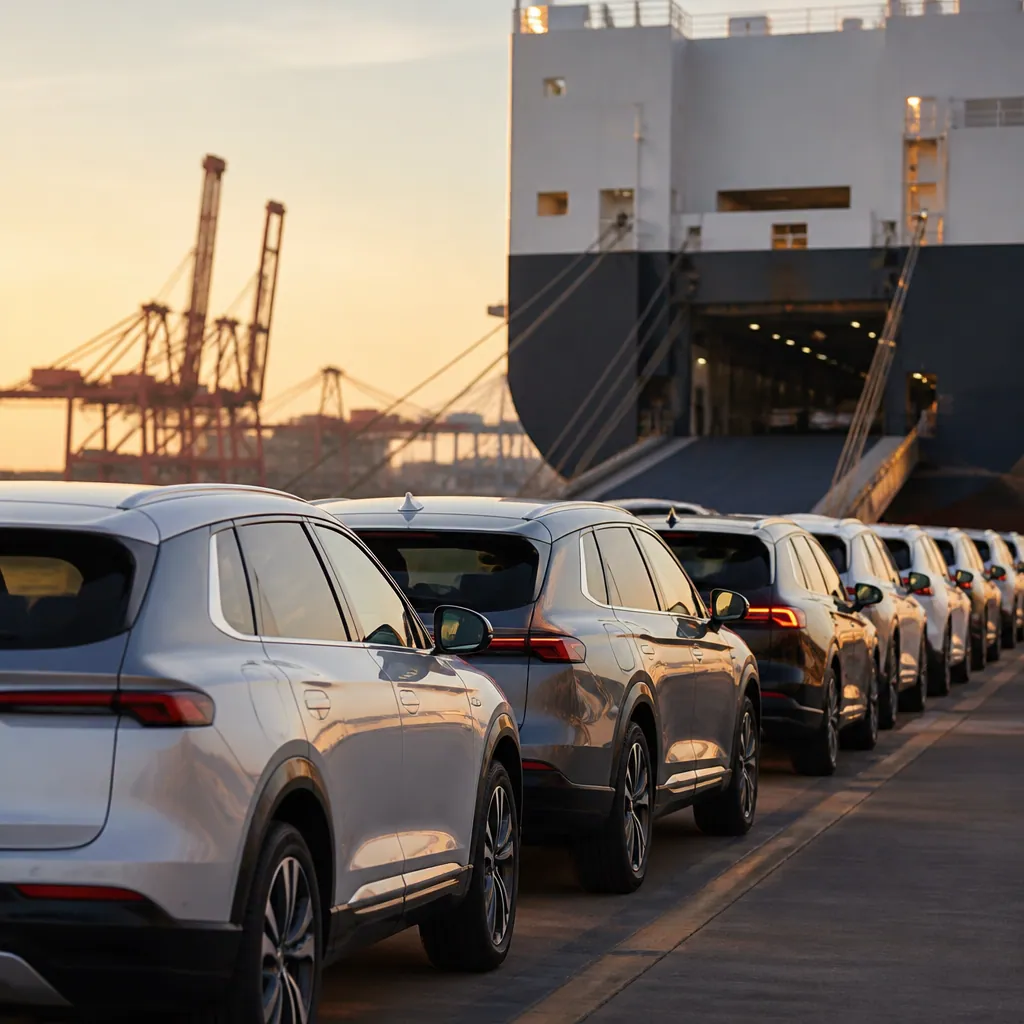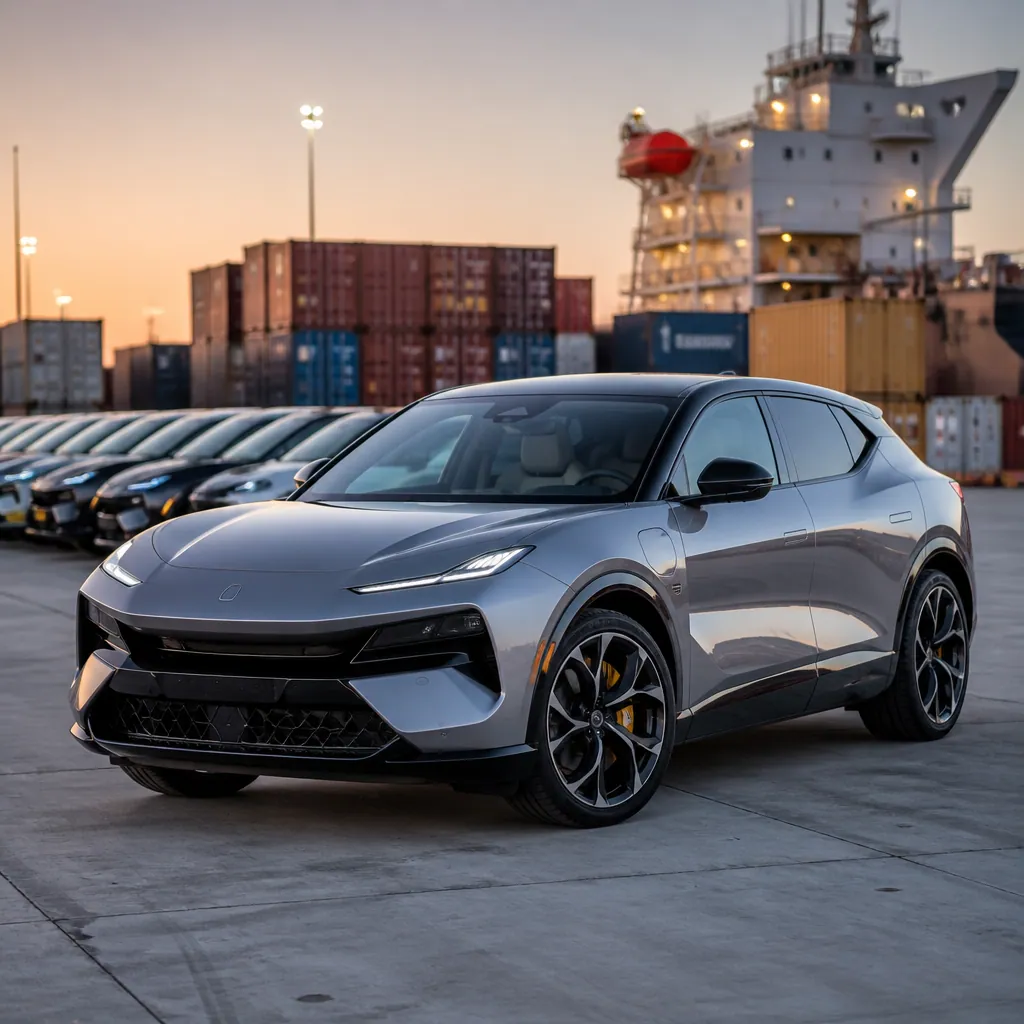


You negotiate a sharp price on a batch of new Chinese SUVs, the deal looks clean, and then the vehicles arrive at your destination port with freight surcharges, destination handling fees, and a minimal insurance policy that does not cover the bodywork dents sustained during transit. That is what happens when the shipping term in your contract is CIF and you did not read the fine print. The choice between FOB price Chinese cars and CIF is not a paperwork detail. It determines who controls costs, who holds the risk, and who ends up absorbing the difference between the quoted price and the real landed cost. For vehicle dealers, fleet operators, and importers sourcing from China, choosing the wrong term can quietly erase your margin before a single car reaches the showroom floor.
What FOB and CIF Actually Mean
Both FOB and CIF are governed by Incoterms 2020the internationally recognized framework published by the International Chamber of Commerce. They apply exclusively to sea and inland waterway transport, which means they are the correct terms for container shipments of vehicles out of Chinese ports such as Shanghai, Tianjin, Guangzhou, or Ningbo.
Under FOB (Free On Board)the seller delivers the goods onto the vessel named by the buyer at the agreed port of shipment. Risk transfers to the buyer the moment the cargo is on board. The buyer then arranges and pays for the ocean freight and insurance for the remainder of the journey.
Under CIF (Cost, Insurance and Freight)the seller goes further. The seller pays for ocean freight to the named destination port and arranges a minimum level of cargo insurance. Risk, however, still transfers to the buyer once the goods are loaded on board the vessel at the origin port. This is the part that catches importers off guard: the seller pays for freight and insurance, but the buyer carries the risk from the moment the ship leaves port.
The risk transfers at the same point under both FOB and CIF. The difference is who pays for freight and insurance after that point, and that distinction has enormous practical consequences for vehicle importers.
Quick Takeaways
| Key Insight | Explanation |
|---|---|
| Risk transfers at the same point under both terms | Under both FOB and CIF, risk passes to the buyer once vehicles are loaded on board the vessel at the origin port. CIF does not give you more risk protection. |
| CIF insurance is minimum coverage only | Under Incoterms 2020, CIF requires only Institute Cargo Clauses C. This covers named perils like fire and sinking but excludes theft, water damage, and handling damage. |
| FOB lets you control freight costs | With FOB, you choose your freight forwarder and negotiate your own rates. With CIF, the seller marks up freight and you have no visibility into what was paid. |
| CIF quoted prices look lower but rarely are | A CIF price bundles freight and insurance at rates the seller controls. Destination charges, handling fees, and demurrage are still your problem once the ship arrives. |
| FOB is better for experienced importers with a freight partner | FOB works best when you have a reliable freight forwarder in China or a trusted export coordinator who can book the vessel and arrange comprehensive insurance on your behalf. |
| Some destination countries restrict CIF imports | Certain markets require the buyer to insure with a local insurer. In those markets, CIF terms create a compliance problem from the start. |
| Fleet buyers benefit most from FOB transparency | When importing multiple vehicles in a single shipment, even a small per unit freight markup under CIF compounds quickly. FOB keeps cost control on your side. |
Understanding the mechanics behind each term is not enough on its own. The real damage happens in execution, and vehicle importers face specific pressures that generic cargo importers do not. Vehicles are high value, large volume items. A single RoRo (Roll on/Roll off) shipment or container load of cars carries a purchase price that makes every percentage point of avoidable cost significant. This is where the choice of shipping term stops being administrative and starts being financial.

Where Risk Transfers and Why It Matters for Vehicles
The risk transfer point is identical under both terms: the buyer assumes risk once the vehicles are on board the vessel at the Chinese port. This is not a small technicality. It means that if a CIF shipment of ten electric vehicles is damaged at sea, the seller’s only obligation is to file a claim with the insurance policy they arranged, and that policy covers only the minimum required under Incoterms 2020.
What “Minimum Cover” Looks Like in Practice
The standard minimum under CIF is Institute Cargo Clauses C. This covers a narrow list of named perils: fire, explosion, vessel sinking, stranding, and collision. It does not cover theft, water ingress, or damage from rough handling during loading and unloading. For vehicles, which are susceptible to scratches, bodywork damage, and water intrusion during transit, this gap is significant.
Under FOB, you control your own insurance. You can choose Institute Cargo Clauses Awhich covers all risks except those specifically excluded. For new Chinese passenger cars, SUVs, or electric vehicles valued at tens of thousands of dollars each, all risks coverage is not optional. A claim denied because the damage type was not listed in a CIF policy is a loss the seller has no obligation to cover.
The Bill of Lading and Who Controls It
Under CIF, the seller books the vessel and controls the bill of lading until the goods arrive. This reduces your visibility into the shipment’s routing, transit time, and any delays. Under FOB, your freight forwarder books the vessel and the bill of lading reflects your chosen carrier. For importers managing delivery schedules for dealership stock or fleet deployment, that control is operationally valuable.
The Hidden Cost Problem with CIF Vehicle Imports
The CIF price for a vehicle sounds complete because it includes freight and insurance. In practice, it is the starting point for a series of costs that the seller never discloses. This is one of the most common sources of budget overruns for importers new to sourcing vehicles from China.
Freight Markups Built Into the Seller’s Price
Chinese vehicle exporters who quote CIF prices negotiate freight rates with shipping lines directly. The rate they pass to you is rarely the rate they paid. The markup on ocean freight is a profit center for the seller, not a transparent cost pass through. When you negotiate on FOB terms, you see the actual freight rate from your own forwarder. There is no margin for the seller buried in that number.
Pro tip: When comparing a FOB price versus a CIF price from the same Chinese supplier, always request an itemized CIF breakdown showing freight, insurance, and the factory price separately. If the supplier refuses to break it out, that is your signal that the freight line contains a markup.
Destination Charges Are Your Problem Regardless of Term
A common misconception is that CIF means the seller handles everything to your port. It does not. CIF ends at the named destination port. Port handling, customs clearance, import duties, local delivery, and any demurrage that accumulates while you wait for documentation are all the buyer’s responsibility under both FOB and CIF. The difference is that with FOB, you typically have more direct relationships with agents at the destination port and can move faster. With CIF, you are waiting on documents the seller controls.

Routing and Transit Time
Under CIF, the seller chooses the shipping route and carrier. For vehicle exporters in China, this sometimes means selecting the cheapest carrier rather than the fastest or most reliable one. Dealers who need stock for a specific launch date or fleet operators with deployment schedules cannot afford routing decisions made by a supplier optimizing their own freight costs. FOB puts that routing decision in your hands.
Insurance: The Detail Most Importers Miss
Insurance is where CIF’s limitations are most consequential for vehicle importers, and also where most buyers discover the problem too late. The Incoterms 2020 framework requires the seller under CIF to insure the goods at a minimum of 110% of the contract value under Institute Cargo Clauses C. This sounds reassuring until you look at what Clauses C actually excludes.
Theft is not covered. Water damage from rain or condensation is not covered. Damage from improper handling at loading or discharge is not covered. For a shipment of new vehicles moving on RoRo vessels or in containers, these are not theoretical risks. They are the most common causes of damage claims on automotive cargo routes from China to Africa, the Middle East, and Southeast Asia.
Pro tip: If you are buying on FOB terms, instruct your freight forwarder or insurance broker to arrange Institute Cargo Clauses A coverage at 110% of the vehicle value. The premium is a small fraction of the vehicle cost, and it is the only way to ensure you are covered for the types of damage that actually occur on these routes.
Some importing countries also mandate that cargo insurance be placed with a locally licensed insurer. In markets where this regulation applies, a CIF shipment can create an immediate compliance problem because the seller has already placed insurance with a Chinese insurer. Verify your destination country’s rules before agreeing to CIF terms.
FOB vs. CIF Comparison Table
The table below compares the two terms directly across the factors that matter most for vehicle importers sourcing from China.
| Factor | FOB (Free On Board) | CIF (Cost, Insurance and Freight) |
|---|---|---|
| Risk transfer point | When vehicles are on board the vessel at origin port | Identical: when vehicles are on board the vessel at origin port |
| Who pays ocean freight | Buyer arranges and pays directly | Seller pays, often with markup built in |
| Insurance coverage | Buyer arranges, can choose Institute Cargo Clauses A (all risks) | Seller arranges minimum: Institute Cargo Clauses C only |
| Cost transparency | High: buyer sees actual freight and insurance costs | Low: seller bundles costs; markups are not visible |
| Buyer control over routing | Full: buyer selects carrier and route | None: seller selects carrier and route |
| Best suited for | Experienced importers with a freight forwarder or export coordinator | First time importers or small one off shipments where simplicity is the priority |
| Destination port charges | Buyer’s responsibility | Buyer’s responsibility (CIF ends at destination port) |
When CIF Actually Makes Sense
FOB is the better term for most professional vehicle importers. That is a clear position and it is defensible. But there are situations where CIF has genuine merit, and dismissing it entirely would give you an incomplete picture.
CIF works well when you are importing a small number of vehicles for the first time and you do not yet have a freight forwarder relationship in China. The logistics of booking a vessel, arranging export clearance, and coordinating pickup at a Chinese port are not simple for a first time buyer. Letting the seller manage those elements, even at a markup, can prevent more costly mistakes.
CIF also makes sense when the seller is offering a genuinely competitive all in rate and you can verify that the insurance coverage has been upgraded beyond the Clauses C minimum. Some established Chinese exporters will negotiate Clauses A coverage into a CIF quotation if asked directly. Get it in writing and confirm the insurer’s name and policy number before shipment.
A common mistake is assuming that CIF is the simpler option in every scenario. It reduces the administrative steps on the China side, but it increases the unpredictability on the destination side. Importers who operate through a partner like Automotion Global get the benefit of coordinated export logistics without losing cost visibility, which removes the main reason a professional buyer would default to CIF.
How to Work with a Supplier on FOB Terms
Requesting FOB terms from a Chinese vehicle supplier is straightforward in principle. In practice, some suppliers push back because CIF gives them a freight revenue stream they prefer to keep. Here is how to handle it.
Request a Back to Back Price Comparison
Ask your supplier to quote both FOB and CIF for the same vehicle specification. Then get an independent freight rate from your forwarder for the same route and vessel type. If the CIF-to-FOB difference is larger than the freight rate your forwarder quotes, the supplier is marking up freight. This is common, and making it visible is usually enough to shift the negotiation.
Specify the Port of Loading Clearly
FOB must name the port of loading, for example FOB Shanghai or FOB Tianjin. The port matters because it affects both the freight rate and the seller’s responsibility for inland transport and export clearance in China. The seller handles Chinese export formalities under FOB, which simplifies your side of the transaction significantly.
Confirm Export Documentation Is Included
Under FOB, the seller is responsible for export clearance and must provide the commercial invoice, packing list, certificate of origin, and any vehicle specific documentation such as SONCAP certificates, homologation certificates, or compliance documents required in your destination market. Confirm this in writing before finalizing the contract. Missing export documents are a leading cause of delays at destination ports, and under FOB, the responsibility for getting them right sits squarely with the seller up to the point of loading.
Working with an experienced vehicle export coordinator removes much of this friction. For international buyers sourcing passenger cars Chinese passenger carselectric vehicles, or fleet vehicles from China, having a partner who manages supplier coordination, inspection, and documentation on your behalf means you get the cost advantages of FOB without having to manage the Chinese logistics chain yourself.
Frequently Asked Questions
What does FOB price mean for Chinese cars?
The FOB price for Chinese cars is the cost of the vehicle as delivered onto the vessel at the named Chinese port of loading. It includes the vehicle price, inland transport to the port, export clearance, and loading charges in China. It does not include ocean freight, marine insurance, destination port charges, customs duties, or local delivery at your end. When comparing vehicle quotes from multiple Chinese suppliers, always confirm whether the price is FOB or ex factory (EXW) to make an apples to apples comparison.
Is CIF better for first time vehicle importers from China?
CIF reduces the administrative burden on the import side in China, which can be useful if you have no freight forwarder relationship there yet. However, CIF comes with minimum only insurance coverage, no control over freight costs or routing, and hidden markups that inflate your total landed cost. First time importers are better served by working with a vehicle export specialist who can manage FOB logistics on their behalf, rather than defaulting to CIF and absorbing the seller’s freight margin.
What insurance does a CIF shipment actually provide for vehicles?
Under Incoterms 2020, CIF requires the seller to arrange cargo insurance at the minimum level under Institute Cargo Clauses C. This covers major named perils such as fire, explosion, vessel sinking, stranding, and collision. It does not cover theft, water damage, or damage from handling during loading and unloading. For vehicle shipments, where handling damage and water ingress are real risks, this minimum coverage is rarely adequate. Importers who need comprehensive protection should either negotiate Clauses A coverage into the CIF contract or switch to FOB and arrange their own all risks policy.
Can I use FOB or CIF for air freight of vehicles?
No. Both FOB and CIF apply exclusively to sea and inland waterway transport under Incoterms 2020. Vehicles shipped by air require different Incoterms. The equivalent of FOB for air freight is FCA (Free Carrier), and the equivalent of CIF for air freight is CIP (Carriage and Insurance Paid To). In practice, vehicles are almost always shipped by sea using RoRo vessels or containers, making FOB and CIF the relevant terms in the vast majority of import transactions from China.
How do I know if a Chinese vehicle exporter is marking up freight in a CIF quote?
Request a FOB price for the same vehicle and route, then get an independent freight quote from a freight forwarder for the same origin port, destination port, and cargo type. Calculate the difference between the FOB price plus your freight quote versus the CIF price. If the CIF price is significantly higher than your own FOB-plus-freight calculation, the supplier is marking up freight. A markup of ten to twenty percent on the freight component is common. Transparent suppliers will provide a CIF breakdown that shows the freight and insurance components separately. Suppliers who refuse to itemize the CIF price are usually protecting a freight margin.
What happens if my vehicle is damaged during a CIF shipment and I need to make a claim?
Under CIF, the seller has arranged the insurance, but the risk transferred to you when the vehicles were loaded onto the vessel. You are the insured party and you must file the claim with the insurer the seller chose. If the damage is not covered by Institute Cargo Clauses C, such as handling damage or water ingress, the claim will likely be denied. You then have limited recourse against the seller, who has fulfilled their Incoterms obligation by providing minimum coverage. This is why verifying the insurance coverage before shipment, not after a loss, is essential for any vehicle import transaction.
Have you run into unexpected costs choosing between FOB and CIF on a vehicle import from China? Share what happened in the comments or reach out directly. Your experience helps other dealers and fleet operators avoid the same pitfalls.
References
- Why experienced importers prefer FOB over CIF when sourcing from China
- FOB vs. CIF compared: insurance, risk, and cost differences explained
- Incoterms 2020 FOB and CIF: responsibilities, costs, and recommendations for importers
- CIF Incoterm explained: seller obligations, insurance requirements, and letter of credit use
- Incoterms 2020 official reference: FOB, CIF, and all eleven rules defined