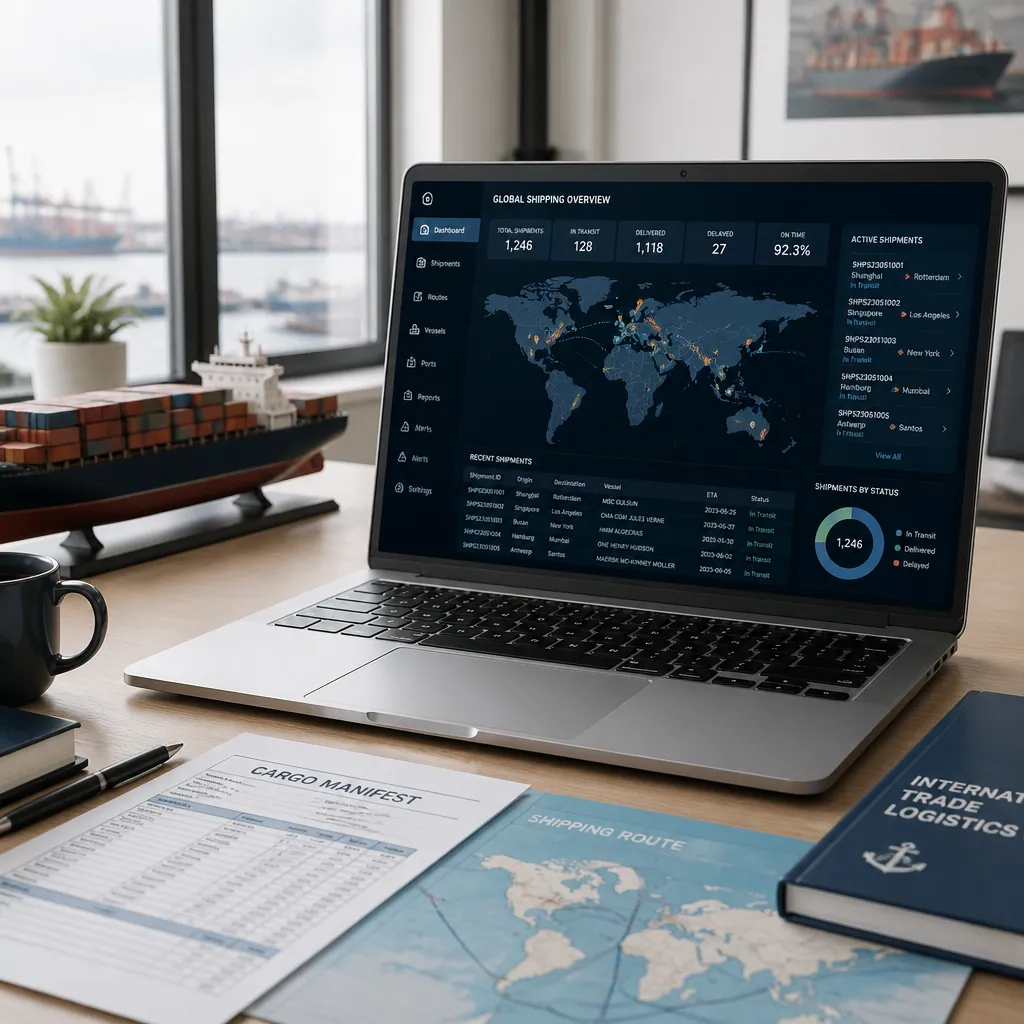
If you have ever received a vehicle quote from a Chinese supplier and wondered why the final landed cost in your country looks nothing like the number you were given, the answer almost always starts with FOB price. Understanding FOB pricing on China cars is not optional for dealers and importers. It is the single most important pricing concept in international vehicle trade, and getting it wrong can turn a profitable deal into a loss before the first container ship leaves port. This guide cuts through the confusion and gives you a practical, deal ready understanding of how FOB vehicle export pricing works when sourcing from China.
What Is FOB Price and What Does It Actually Cover?
FOB stands for Free On Boardand it is one of the most widely used Incoterms in international trade, published by the International Chamber of Commerce. In practical terms, a FOB price for a vehicle from China means the seller covers all costs and risks up to the point the vehicle is physically loaded onto the vessel at the named Chinese export port. After that moment, everything is the buyer’s responsibility.
For a vehicle quoted at, say, FOB Shanghai, the Chinese supplier or exporter is responsible for the factory price of the vehicle, inland transport from the factory or storage facility to the port, export customs clearance and any export duties, and port handling and loading charges. Once the car is on board the ship, the seller’s obligation ends.
This is a clean, well defined handover point, which is exactly why FOB is the preferred Incoterm for experienced vehicle importers. You know precisely what you are paying for, and you retain full control over everything that happens from the moment the vessel sets sail.
The named port in a FOB quote is not a formality. It defines exactly where the seller’s liability ends and the buyer’s begins. A single port difference can change the quote by hundreds of dollars per vehicle.
A key point that many first time vehicle importers overlook: roughly 70 percent of China’s exports are priced on FOB terms, which means most Chinese vehicle suppliers are very comfortable working under this structure. If a supplier pushes back hard on providing a FOB price, that is worth noting.
FOB vs. EXW, CIF, and DDP: Knowing the Difference
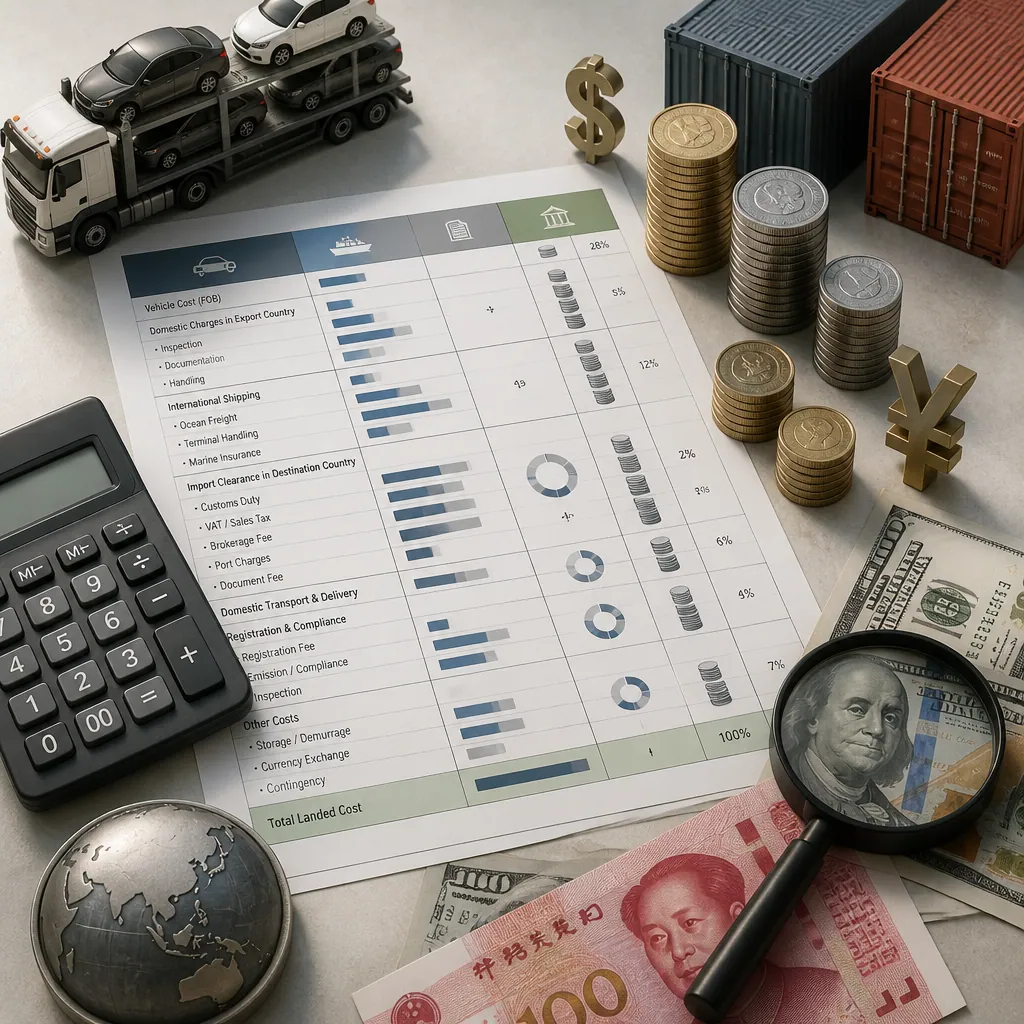
Every vehicle quote from China comes with an Incoterm attached, even if the supplier does not spell it out clearly. The four you will encounter most often are EXW, FOB, CIF, and DDP. Each one moves the cost and risk boundary to a different point in the supply chain.
EXW (Ex Works)
Under EXW, the vehicle price covers only the car at the factory gate. The buyer handles all inland transport within China, export clearance, port loading, ocean freight, and everything beyond. This gives the buyer maximum price visibility but also requires a trusted in country logistics partner in China. For most international dealers without a China based operation, EXW is impractical.
FOB (Free On Board)
FOB is the sweet spot for most vehicle importers. The seller handles everything inside China, up to and including loading the vehicle onto the vessel. The buyer controls ocean freight, insurance, and all destination side costs. This gives you negotiating power on freight rates and full visibility over what you are actually paying.
CIF (Cost, Insurance, and Freight)
Under CIF, the seller arranges and pays for ocean freight and cargo insurance to the destination port. This sounds convenient, but in practice the seller selects the carrier and the insurance provider, often opting for minimum coverage. The freight and insurance costs are embedded in the vehicle price, meaning you cannot verify whether they are competitive. Hidden surcharges and inflated freight markups are common under CIF arrangements.
DDP (Delivered Duty Paid)
DDP is the all in option. The seller delivers the vehicle to your location with all duties, taxes, and customs clearance paid. It is the simplest pricing structure for a buyer, but it puts almost all risk on the seller, which typically means a significantly higher vehicle price. DDP also means you have no visibility into individual cost components.
Pro tip: Always ask for a FOB price alongside any CIF or DDP quote you receive. Then get your own freight rate from an independent shipping provider for the same route. The gap between the two freight figures is often where significant savings sit.
What FOB Does Not Cover: The Costs Dealers Miss
This is where vehicle import budgets most commonly fall apart. Dealers see a FOB price China cars quote, assume it is close to their landed cost, and then get hit with a cascade of additional charges at the destination port and beyond.
Once the vehicle crosses the ship’s rail at the Chinese port, all of the following become the buyer’s responsibility: ocean freight (whether RoRo or container), cargo insurance, import customs duties and taxes at the destination country, destination port handling and terminal charges, import clearance fees from your customs broker, any homologation or vehicle compliance costs, inland transport from destination port to your facility, and pre delivery inspection costs.
For vehicles imported into markets across the Middle East or Africa, destination import duties alone can add 20 to 40 percent or more on top of the FOB price, depending on the country and vehicle category. This is not a trivial addition. It must be modelled into your deal from day one.
Pro tip: Build a landed cost model before committing to any vehicle purchase. Start with the FOB price, then add each cost layer systematically: freight, insurance, import duty, VAT or local taxes, port handling, customs clearance, and inland delivery. The number you end up with is the true cost per vehicle to your facility. Only then can you set a realistic retail or wholesale price.
From FOB to Landed Cost: Building Your Full Import Budget
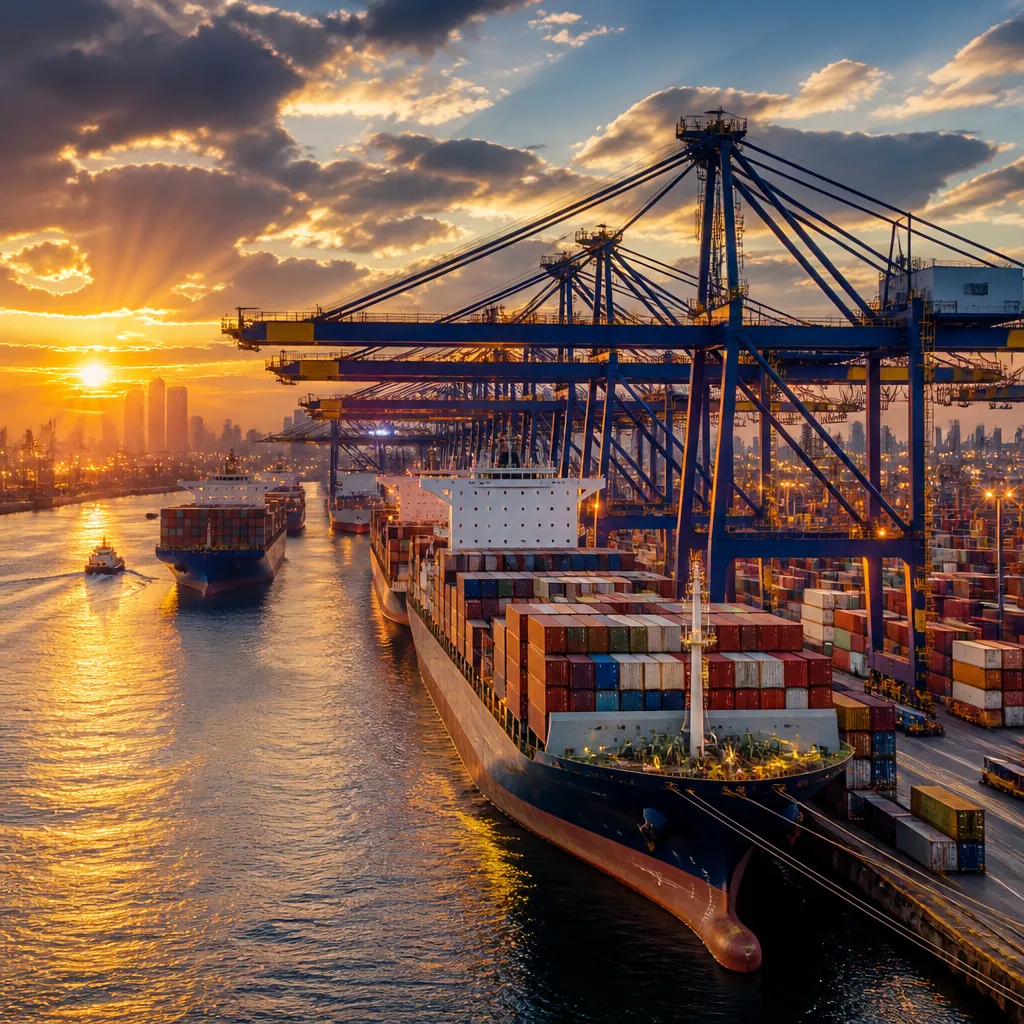
The formula for a vehicle’s true landed cost from China is straightforward in structure, even if the individual figures require verification for each shipment and destination market.
Start with the FOB price at the named Chinese port. Add ocean freight, which varies depending on whether you are using RoRo or container shipping, the origin port, and your destination. Add cargo insurance, typically calculated as a small percentage of the CIF value (the FOB price plus freight). Then layer in destination port charges, which cover terminal handling and unloading fees. Add import duties and taxes, which are determined entirely by your destination country’s tariff schedule for the relevant HS code. Finally, add customs broker fees and inland delivery.
In practice, the total additional cost from FOB to your facility can equal 30 to 80 percent of the original FOB figure depending on your destination market, shipping method, and duty structure. Markets with high vehicle import duties will see the largest gap. The FOB price is the starting point, not the finish line.
One common mistake among dealers new to China vehicle imports is comparing quotes from different suppliers on different Incoterms. An EXW price that looks lower than a FOB price from another supplier may actually be more expensive once you add China inland transport and export clearance. Always normalize all quotes to the same Incoterm before comparing them.
Choosing the Right Chinese Export Port and Why It Affects Your FOB Quote
The named port in a FOB quote directly determines the price, because the supplier or exporter is paying inland transport to that port. The major vehicle export ports in China include Shanghai, Tianjin, Guangzhou (specifically the Nansha terminal), Dalian, Ningbo, and Qingdao. Each serves a different geography of Chinese vehicle manufacturers.
Shanghai is the largest and most commonly used vehicle export port in China. Tianjin serves manufacturers based in northern China. Guangzhou’s Nansha terminal is a major hub for southern China based EV and passenger car manufacturers, with direct shipping links to many markets across Asia, the Middle East, and Africa. Ningbo handles both RoRo and container shipments and is close to a number of major manufacturing clusters.
The practical implication: if a factory is in Guangdong province, a FOB Guangzhou price will be lower than a FOB Shanghai price for the same vehicle, because the inland transport leg is shorter. Conversely, if a factory is near Shanghai, quoting FOB Tianjin would inflate the inland transport cost embedded in the FOB price. Always ask the supplier where the vehicle is located and verify that the named port is the logical export point for that factory location.
As a buyer, you can sometimes negotiate to use a specific port that gives you better vessel connections or more competitive ocean freight rates to your destination. In that case, the FOB price adjusts to reflect the actual inland distance to that port.
RoRo vs. Container Shipping After FOB: Which Is Right for Your Order?
Once the vehicle is loaded at the Chinese port under FOB terms, the next major decision is the shipping method. This is entirely the buyer’s decision under FOB, and it has a material impact on cost, transit time, and risk.
RoRo (Roll on/Roll off) Shipping
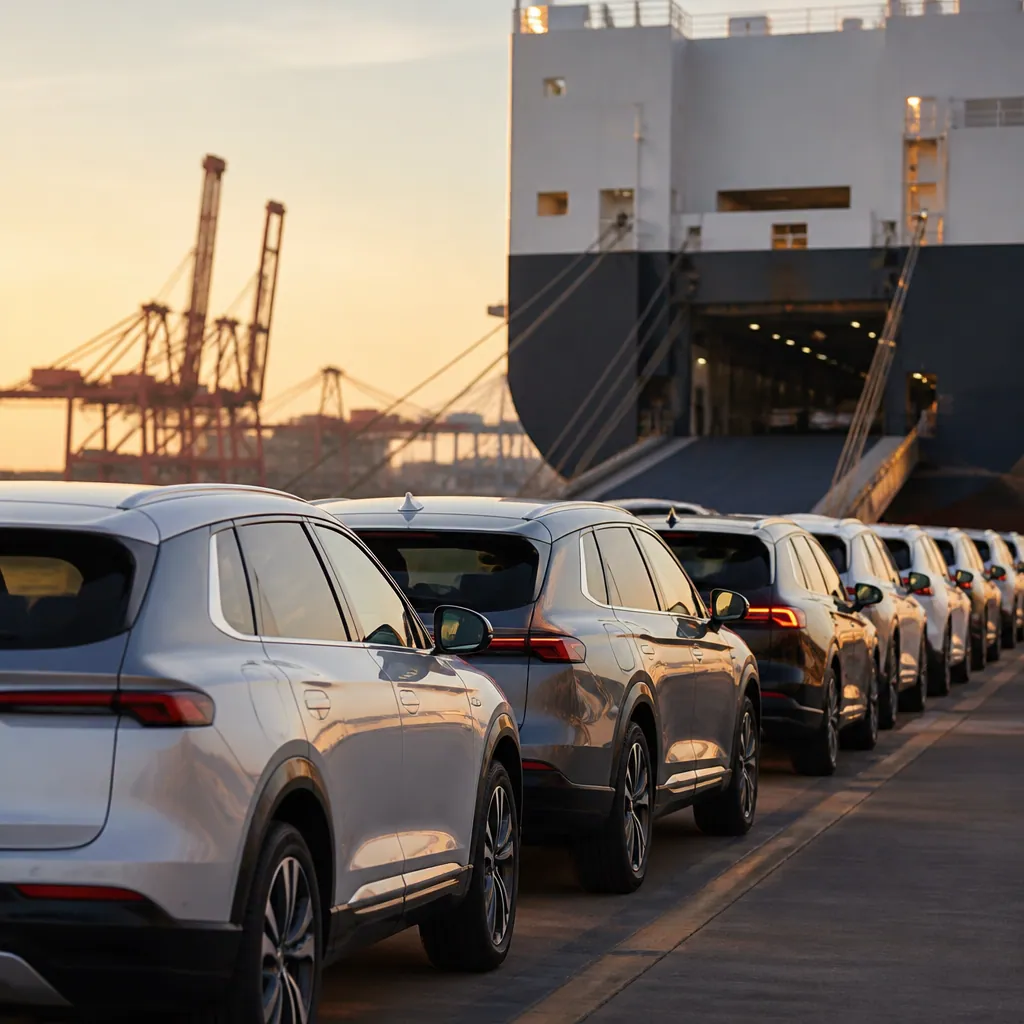
RoRo is the standard method for bulk vehicle export. Vehicles are driven on and off the vessel under their own power. It is generally more cost effective per vehicle at scale and is well suited to large orders. The main constraints are that RoRo vessel availability is not guaranteed for all ports and all destinations, and RoRo provides less protection against weather and port handling damage compared to enclosed container shipping.
Container Shipping
A standard 40-foot high cube container can typically hold three to four midsize sedans or EVs when loaded using proper racking. Container shipping offers better physical protection for individual vehicles, greater flexibility in routing and vessel choice, and the ability to combine vehicles with spare parts in the same shipment. It is often the preferred method for smaller orders, high value vehicles, or dealers who also need to import spare parts alongside their vehicles.
The right choice depends on your order size, vehicle type, destination port, and the level of protection you need for the vehicles in transit. For fleet orders of identical models in large volumes, RoRo is usually more economical. For mixed orders or premium vehicles, container shipping often makes more sense.
How to Negotiate a FOB Vehicle Price From China
FOB pricing is not fixed. There is usually room to negotiate, particularly if you understand where the individual cost components sit within the FOB number.
Start by requesting both the EXW (ex factory) price and the FOB price for the same vehicle. The difference between these two figures represents the inland transport, export clearance, and port loading costs embedded in the FOB price. For a typical vehicle export from a Guangdong factory through Guangzhou, this difference should be within a known range. If the gap is significantly larger than the actual logistics cost for that route, the supplier may be adding a markup to the logistics component.
You can verify this by getting an independent quote from a freight forwarder for the China inland leg. If the independent quote comes in substantially lower than the gap in the supplier’s pricing, you have a legitimate negotiating point.
Volume is your strongest negotiating tool. Larger orders give you the standing to push on vehicle price, port, and payment terms. Repeat orders matter even more. Suppliers in China price long term relationships differently from one off transactions. If you intend to import regularly, make that clear early in the negotiation.
One warning: a suspiciously low FOB price deserves scrutiny. Corners cut on vehicle specification, documentation accuracy, export compliance, or pre export inspection can create far larger problems at the destination than the savings justify. Price is important, but the integrity of the entire export process matters more.
Incoterms Comparison for Vehicle Importers
The table below compares the three most common Incoterms used in China vehicle export, specifically from the perspective of a dealer or importer making buying decisions.
| Incoterm | What the Seller Covers | What the Buyer Covers |
|---|---|---|
| EXW (Ex Works) | Vehicle at factory gate only. No transport, no export clearance. | All inland China logistics, export clearance, port loading, ocean freight, insurance, destination costs, import duties. |
| FOB (Free On Board) | Vehicle price, inland transport to named port, export clearance, port loading. | Ocean freight, cargo insurance, destination port charges, import duties, customs clearance, inland delivery at destination. |
| CIF (Cost, Insurance, and Freight) | Everything in FOB, plus ocean freight to destination port and minimum cargo insurance. | Destination port charges, import duties, customs clearance, inland delivery. No control over freight or insurance quality. |
Frequently Asked Questions
What does FOB price include when buying a car from China?
A FOB price on a China car export covers the factory price of the vehicle, inland transport from the factory or storage location to the named Chinese export port, export customs clearance, and port handling and loading charges onto the vessel. The seller’s responsibility ends the moment the vehicle is on board the ship. Everything from that point, including ocean freight, insurance, import duties, and destination costs, is the buyer’s responsibility.
Is FOB or CIF better for importing vehicles from China?
FOB is generally better for experienced importers because it gives you direct control over ocean freight selection and cargo insurance. Under CIF, the seller selects the freight carrier and insurance provider, often choosing minimum cost options that embed a markup into the vehicle price. With FOB, you can source competitive freight rates independently and choose insurance coverage that genuinely protects your shipment value. The only case where CIF simplifies things is if you have no freight provider relationships and are importing for the first time, but even then, developing those relationships is worth the effort.
How do I calculate the total landed cost from a FOB China car price?
Start with the FOB price at the named Chinese port. Add ocean freight to your destination port (get a quote from a freight forwarder for your specific route and shipping method). Add cargo insurance, typically a small percentage of the insured value. Then add destination port terminal handling charges, import customs duty based on your country’s tariff rate for the vehicle’s HS code, any local VAT or taxes on imports, customs broker fees, and inland delivery from the destination port to your facility. The total is your true landed cost per vehicle.
Why does the named port matter in a FOB China vehicle quote?
The named port defines exactly where the seller’s cost and risk responsibility ends. It also determines how much inland transport cost is embedded in the FOB price, since the supplier is paying to move the vehicle from the factory to that port. A factory in Guangdong province exporting through Guangzhou will have a lower FOB price than the same vehicle exported through Shanghai, because the inland distance is shorter. The named port also affects your ocean freight cost, since shipping rates vary by origin port and vessel availability differs between ports.
Can I negotiate the FOB price on vehicles from China?
Yes, FOB vehicle prices from China are negotiable, particularly on volume orders or repeat business. The most effective approach is to request both the EXW (ex factory) price and the FOB price, then verify whether the gap between the two reflects actual logistics costs for that route. If the supplier is padding the logistics component, you have a clear basis to negotiate. Volume, payment terms, and the prospect of an ongoing business relationship are your strongest negotiating tools.
What happens if the vehicle is damaged after the FOB point?
Under FOB terms, once the vehicle is on board the vessel at the Chinese port, risk transfers entirely to the buyer. If the vehicle is damaged during ocean transit, unloading, or at the destination port, the claim is the buyer’s responsibility. This is why cargo insurance arranged by the buyer, with adequate coverage for the full replacement value of the vehicles, is not optional under FOB. Always ensure your insurance policy covers the total value of the shipment, not just the FOB price, since freight and other costs are also at risk.
If you are currently sourcing or planning to import vehicles from China, we would like to hear about your experience with FOB pricing. What has surprised you most about the true cost of car imports from China? Share your questions or thoughts in the comments below.
References
- Why FOB is usually safer than CIF for China imports: an Incoterms explainer for importers
- How FOB, EXW, and landed cost differ: a practical cost breakdown for international buyers
- Step by step guide to calculating FOB price for international shipments
- Overview of China’s key vehicle export ports and RoRo terminal infrastructure
- What FOB means in practice: shipping process and buyer responsibilities explained