China exported over 900,000 commercial vehicles in 2024 alone, a figure that keeps climbing year on year. Yet many fleet operators and vehicle importers still approach the process the same way they would buying a local used truck: a handshake deal, minimal paperwork, and fingers crossed at the border. That approach fails consistently. Sourcing commercial vehicles from China successfully requires a clear grasp of how the export chain actually works, which brands hold up in the field, what documentation customs will demand, and how to protect your investment once the vehicles are in country. This guide covers all of it, without the fluff.
Why China Dominates Commercial Vehicle Exports
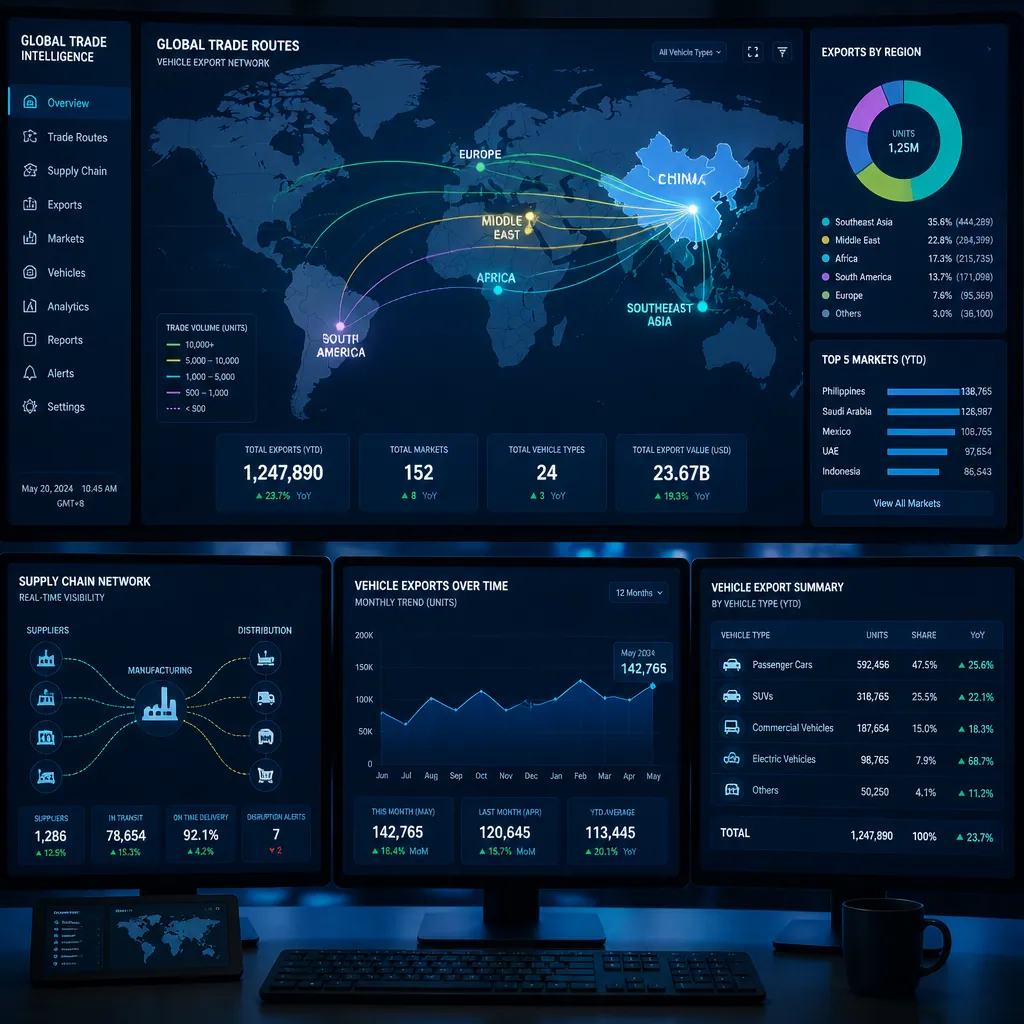
The numbers are not close. Chinese manufactured commercial vehicles dominate Southeast Asian, Middle Eastern, African, and South American markets with over 70% market share, according to SPGlobal. This is not a fluke or a temporary price war. It reflects decades of manufacturing investment, a deeply integrated supply chain, and an ability to configure vehicles for specific market requirements that many Western manufacturers simply do not offer at comparable price points.
In the first half of 2023, Chinese commercial vehicle exports increased nearly 25% year on year, totalling around 400,000 units and generating 77 billion yuan. By 2024 China exported 904,000 commercial vehicles, a year on year increase of 17.5%. These are not garage level operations. The manufacturers behind these export volumes include publicly listed conglomerates with global engineering partnerships.
For fleet operators in Africa, the Middle East, and Southeast Asia, the practical case is straightforward: parts availability is high, price per unit is lower than comparable European or Japanese alternatives, and lead times on new builds are competitive. The challenge is not whether to buy from China. The challenge is buying correctly.
Types of Commercial Vehicles Available for Export
The range of commercial vehicles available for export from China covers almost every application a fleet buyer or distributor would need. Understanding the categories matters because different vehicle types carry different documentation requirements, homologation rules, and shipping configurations.
Heavy Duty Trucks and Tractor Units
This is the volume segment. Exports in recent years have been heavily boosted by tractor trailers and trucks dominating developing market infrastructure and logistics sectors. Key manufacturers in this space include SINOTRUK (HOWO and Sitrak ranges), SHACMAN (F3000 and X3000 series), FAW Trucks (J6 and JH6), Dongfeng, Foton (Auman), and Beiben. Each brand targets a slightly different application and price band.
Sinotruk has built strong visibility in heavy duty tippers, tractor heads, construction trucks, and mining applications, and has gained acceptance in developing markets because of its affordability, parts availability, and suitability for rugged operating conditions. Shacman competes closely in construction and mining and has a reputation for durability. FAW positions itself as a more premium offering within the Chinese market, targeting buyers who want tighter manufacturing tolerances.
Light Commercial Vehicles and Vans
Vans, pickups, and light trucks for last mile delivery, small business operations, and municipal fleets represent a fast growing export category. Chinese brands including SAIC, JAC, and Foton offer light commercial vehicles that are well suited to urban fleet operations across Africa and the Middle East. Many are now available in both diesel and CNG variants, and electric light commercial vehicles are entering the export pipeline.
Buses and Minibuses
China is the world’s largest bus producer. Yutong, King Long, Higer, and Zhongtong all have significant export operations. Zhengzhou Yutong Bus introduced advanced EV battery safety technology for commercial use as far back as 2021and the company has an established presence in Africa and the Middle East. Bus exports require additional type approval documentation in most destination markets, so budget extra time for compliance review.
Special Purpose and Municipal Vehicles
Dump trucks, concrete mixers, water tankers, refrigerated trucks, and garbage collection vehicles are all produced in volume for export. These vehicles typically require bespoke configuration and closer coordination with the manufacturer. Lead times are longer, but the pricing advantage over European equivalents can be substantial.
The Export Process Step by Step
The export process for commercial vehicles from China is more structured than many buyers expect. There is no shortcut that skips any of the following stages without creating a problem further down the chain.
Stage 1: Vehicle Sourcing and Specification Confirmation
This is where most mistakes are made. Buyers who send a vague enquiry for “a 40-tonne tractor unit” and accept the first quote will almost always receive a vehicle configured for the Chinese domestic market, which may not meet the road regulations, axle load limits, or homologation requirements of the destination country. Specification must be confirmed in writing before any pro forma invoice is issued. This includes drive configuration (LHD vs RHD), emission standard compliance, tire size, axle load ratings, and any country specific safety requirements.
Pro tip: Always request the full technical specification sheet (in English) before paying any deposit. Verify that the engine emission standard (Euro III, Euro V, or Euro VI equivalent) matches the import requirements of your destination country. Many African markets accept Euro III; the Middle East often requires Euro V or equivalent. Getting this wrong means the vehicle will not clear customs.
Stage 2: Supplier Verification and Pre Production Inspection
Working directly with a Chinese factory is not automatically better than working through an established export agent. Factories are set up to manufacture, not to manage international logistics, documentation, and post delivery support. A reputable export partner handles the supplier relationship, arranges pre shipment inspection by an accredited third party agency, and coordinates the full documentation package.
The single biggest risk in a direct factory purchase is not the vehicle quality. It is the absence of any enforceable recourse if the specification is wrong, the documentation is incomplete, or the vehicle fails inspection at the destination port.
Stage 3: Payment Terms and Contract
Standard payment terms for new commercial vehicle exports from China are typically a deposit of 30% against a pro forma invoice, with the balance paid against shipping documents before release of the bill of lading. Letters of credit (LC) are used for larger orders or when the buyer and supplier have no prior trading history. Avoid paying 100% upfront to any supplier you have not previously transacted with and verified through independent references.
Stage 4: Pre Shipment Inspection
Under China’s updated export framework, each vehicle requires an inspection by a certified third party agency, and exporters must submit the resulting inspection reports to customs. This is no longer optional or informal. For commercial vehicles, compliance with standard WM/T 9 to 2022 governs the quality criteria that must be met. Pre shipment inspection protects both the exporter and the buyer, and any credible export partner will arrange this as a standard part of the process.
Stage 5: Export Documentation and Customs Clearance
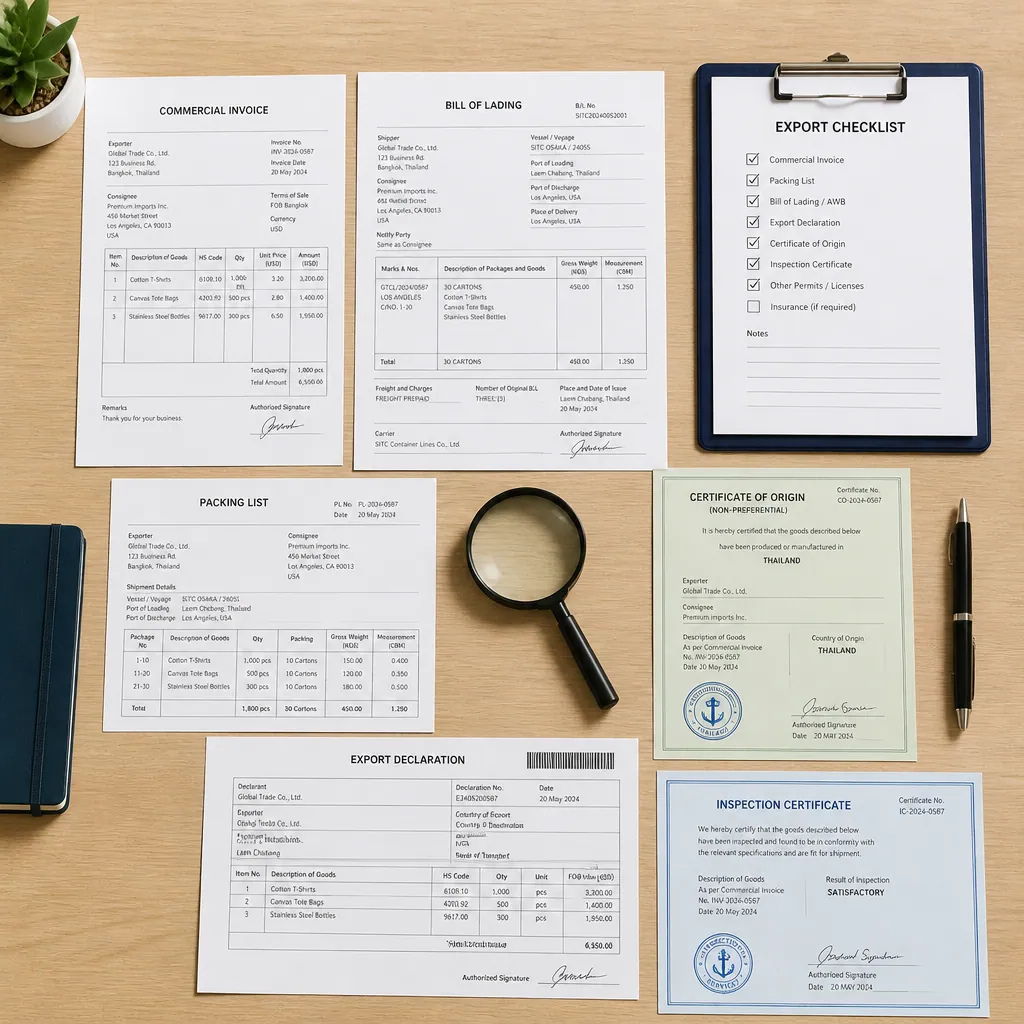
China’s export customs procedures require a defined set of documents. Necessary documents include a bill of lading, commercial invoice, packing list, customs declaration, insurance policy, and sales contract, as well as any applicable inspection certificates. For commercial vehicles, the Vehicle Identification Number (VIN), engine number, and chassis specifications must appear consistently across all documents. Any discrepancy between the invoice description and the physical vehicle specification is grounds for customs hold at the destination port.
Stage 6: Shipping and Delivery
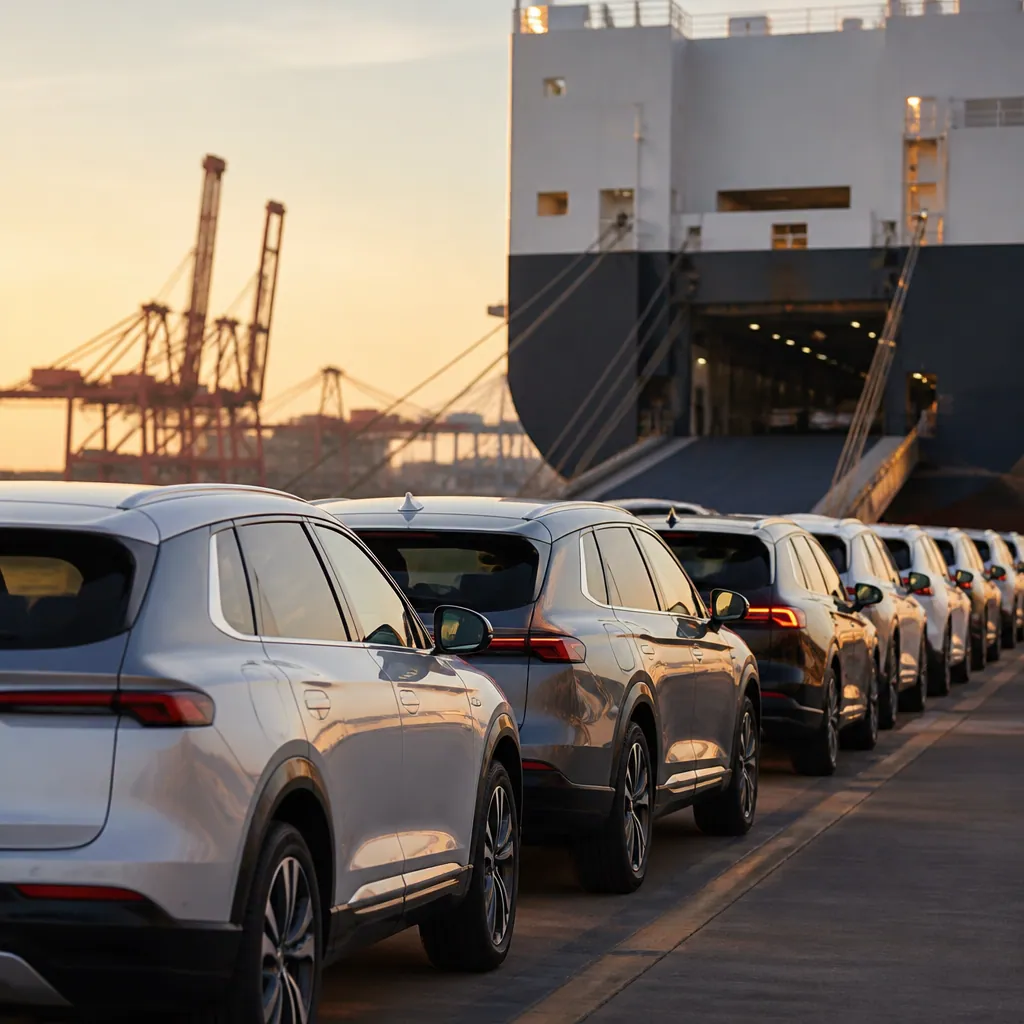
Heavy commercial vehicles are almost always shipped via Roll on Roll off (RoRo) vessels or, in some cases, as flat rack container loads for special purpose vehicles. RoRo is preferred for standard trucks and tractor units because it reduces handling damage risk and typically offers better port to port schedules to major destinations in Africa, the Middle East, and Southeast Asia. Key export ports for commercial vehicles include Tianjin, Shanghai, Guangzhou, and Qingdao.
Pro tip: Confirm whether the destination port can handle RoRo vessels before confirming the shipment method. Some secondary ports in Africa and Southeast Asia only handle containerised cargo. Switching from RoRo to container after the vehicle is at the Chinese port adds cost and delay.
Documentation and Compliance Requirements
Documentation is the part of the process that most buyers underestimate until something goes wrong. A vehicle stuck at the destination port because of a missing or incorrect document costs money every day it sits there, and the fix often requires re issuing original documents from China, which can take weeks.
Core Export Documents
Every commercial vehicle export from China requires at minimum: a commercial invoice with full vehicle specifications, a packing list, a bill of lading (or airway bill, though air freight is not relevant for commercial vehicles), an export customs declaration from China, a certificate of origin, and the manufacturer’s certificate of conformity. For RoRo shipments, a port specific gate in document and vessel booking confirmation are also required.
Destination Country Homologation
This is a separate layer entirely. Many markets require that vehicles are type approved or homologated before they can be registered and operated. Requirements vary significantly by country. Gulf Cooperation Council (GCC) markets apply Gulf Standards Organisation (GSO) technical requirements. East African markets often require a road worthiness certificate and axle load compliance documentation. Buyers must confirm the specific homologation pathway for their destination country before placing a vehicle order, not after the vehicle arrives.
Exporters must also comply with import regulations in destination countries, including the issuance of declarations of conformity where required. Failing to arrange this before shipment means the vehicle cannot be legally registered in the destination market.
Choosing the Right Supplier or Export Partner
The market for China vehicle export services ranges from highly professional operations with in house inspection teams and legal documentation expertise to individuals running transactions from a phone. The difference is not always visible from a website or an initial email exchange.
What to Look For in an Export Partner
A credible export partner for commercial vehicles from China should be able to demonstrate: direct relationships with the major Chinese commercial vehicle manufacturers, the ability to arrange independent pre shipment inspection, a clear process for handling export documentation, experience with customs procedures in your destination country, and an aftersales or spare parts support capability for post delivery issues.
Automotion Global operates as exactly this kind of complete export solution. Rather than simply connecting buyers to factory price lists, the service covers sourcing, supplier coordination, pre shipment inspection, export documentation, customs handling, international shipping coordination, and aftersales support. For fleet operators and vehicle distributors who are not based in China and cannot physically oversee the process, this kind of end to end coverage is not a luxury. It is the practical minimum for buying safely.
Red Flags to Avoid
Be cautious of suppliers who cannot provide independent inspection reports, who request full payment before any documentation is issued, who cannot confirm vehicle specifications in writing, or whose communication disappears after the deposit is paid. These are not edge cases. They are common patterns in low accountability export transactions.
Shipping Options Compared
The choice of shipping method affects cost, transit time, risk of damage, and destination port options. For commercial vehicles, the decision usually comes down to RoRo versus container. Here is how the main options compare for buyers sourcing commercial vehicles from China.
| Shipping Method | Best For | Key Considerations |
|---|---|---|
| RoRo (Roll on Roll off) | Standard trucks, tractor units, buses, vans | Lower handling damage risk, competitive rates on major trade lanes, requires RoRo capable destination port |
| Container (Flat Rack or Open Top) | Special purpose vehicles, oversized loads, vehicles that exceed RoRo clearance heights | More flexible on destination ports, higher per unit cost, increased lashing and securing complexity |
| Groupage / Shared Container | Small orders of light commercial vehicles, vans, or pickups | Lower cost for small quantities, slower transit due to consolidation schedules, suitable for smaller vehicles only |
Major Chinese ports handling commercial vehicle exports include Tianjin in the north, Shanghai and Ningbo in the east, and Guangzhou (Nansha) in the south. The choice of loading port depends on where the manufacturer is located and which vessel routes best serve your destination. Working with an export partner who has established freight relationships at multiple Chinese ports gives buyers more scheduling flexibility and typically better rates.
Common Mistakes Buyers Make
After handling commercial vehicle sourcing across multiple markets, the same errors appear repeatedly. Knowing them in advance is the most practical protection.
Ordering to the wrong specification. The most common and most expensive mistake. A truck built for China’s domestic market may have the wrong steering configuration, the wrong emission rating for import, non compliant axle loads, or metric versus imperial tyre sizes that are impossible to source locally. Confirm the destination market specification before any money changes hands.
Skipping pre shipment inspection. Buyers who skip inspection to save cost or time almost invariably regret it. Inspection at the Chinese port costs a fraction of what it costs to deal with a defective vehicle after it has cleared customs and been driven several thousand kilometres.
Underestimating total landed cost. The ex factory price of a commercial vehicle from China is not the landed cost. Add freight, marine insurance, destination port charges, import duties, homologation fees, and any port inspection costs. In many African markets, total import duties and taxes on a commercial vehicle can add 30 to 50% to the ex factory price. Fleet buyers who budget only for the vehicle price will face a serious cash flow problem at the destination port.
Ignoring aftersales and spare parts. A truck that cannot be maintained is not an asset. Before selecting a brand, confirm that parts are available in your market, that there are authorised service centres, and that your supplier or export partner has a mechanism for handling warranty claims and parts orders after delivery. This is a critical factor that separates brands with genuine export commitment from those simply clearing domestic overstock.
Frequently Asked Questions
What types of commercial vehicles can be exported from China?
The full range is available for export: heavy duty trucks and tractor units, light commercial vehicles and vans, buses and minibuses, special purpose vehicles (dump trucks, concrete mixers, refrigerated trucks), and electric commercial vehicles. The key is confirming that the specific variant you need is configurable for your destination market’s road, emissions, and registration requirements before ordering.
How long does it take to export a commercial vehicle from China?
For stock vehicles or models in current production, the typical timeline from confirmed order to loading at a Chinese port is 4 to 8 weeks, depending on the manufacturer and required configuration. Transit time from China to major destinations varies: approximately 20 to 30 days to Middle East ports, 25 to 40 days to East or West African ports, and 18 to 28 days to Southeast Asian destinations. Add destination customs clearance time on top of vessel transit. Total time from order to in country delivery is typically 8 to 16 weeks for standard orders.
Do Chinese commercial vehicles meet international emission standards?
Yes, but this must be explicitly confirmed at the time of order. Chinese manufacturers produce vehicles to multiple emission standards simultaneously, and the domestic market standard is not always the same as what your destination country requires. Specify the required emission standard in writing in the purchase contract. Most major manufacturers can supply Euro V or Euro VI equivalent engines for export orders, but this affects pricing and lead time, so confirm early.
What is the difference between buying directly from a Chinese factory and using an export partner?
Buying directly from a factory means you are responsible for all export documentation, pre shipment inspection, freight booking, customs compliance, and aftersales coordination yourself. This is manageable for large fleet operators with in house logistics teams and established China relationships. For most vehicle dealers, distributors, and fleet operators who are not based in China, using an experienced export partner reduces risk significantly and often costs less in total than managing direct factory purchases with errors, delays, and post delivery problems. Automotion Global provides this complete export solution, covering every stage from sourcing to aftersales support.
What documents are required to import commercial vehicles from China?
At a minimum: a commercial invoice, packing list, bill of lading, certificate of origin, export customs declaration, and manufacturer’s certificate of conformity. Many destination countries require additional documents including a type approval or conformity of production certificate, an axle load compliance certificate, and in some markets a local port inspection certificate. Requirements differ by country and vehicle type, so verify the specific documentation checklist for your destination market before the vehicle is shipped.
Can I order right hand drive (RHD) commercial vehicles from China?
Yes. Most major Chinese commercial vehicle manufacturers offer both LHD and RHD configurations for export markets, though RHD production runs may require a minimum order quantity or longer lead times for certain models. RHD is standard for markets including the United Kingdom, Australia, Kenya, South Africa, and many other sub Saharan African and South/Southeast Asian countries. Confirm the available RHD variants and any minimum order requirements before finalising your vehicle selection.
How do I protect myself against receiving a vehicle that does not match my order?
Three measures provide the most protection: first, a detailed written specification confirmed by the manufacturer before any payment; second, an independent pre shipment inspection carried out by an accredited third party inspection agency at the Chinese port before loading; and third, a clear contractual remedy clause in your purchase agreement. Working with an export partner that arranges all three as standard reduces the risk of specification mismatches to near zero for buyers who cannot physically travel to China to oversee production.
Have you sourced commercial vehicles from China for your fleet or distribution business? Share what worked, what surprised you, or what you would do differently in the comments below.
References
- How China leads global commercial vehicle exports: market share and growth data
- China vehicle production and export figures for 2024 from CarNewsChina
- China Commercial Vehicle Forum 2024: production, sales, and export statistics
- China tightens vehicle export inspection and compliance requirements in 2025
- Overview of the top Chinese commercial truck brands and their export markets