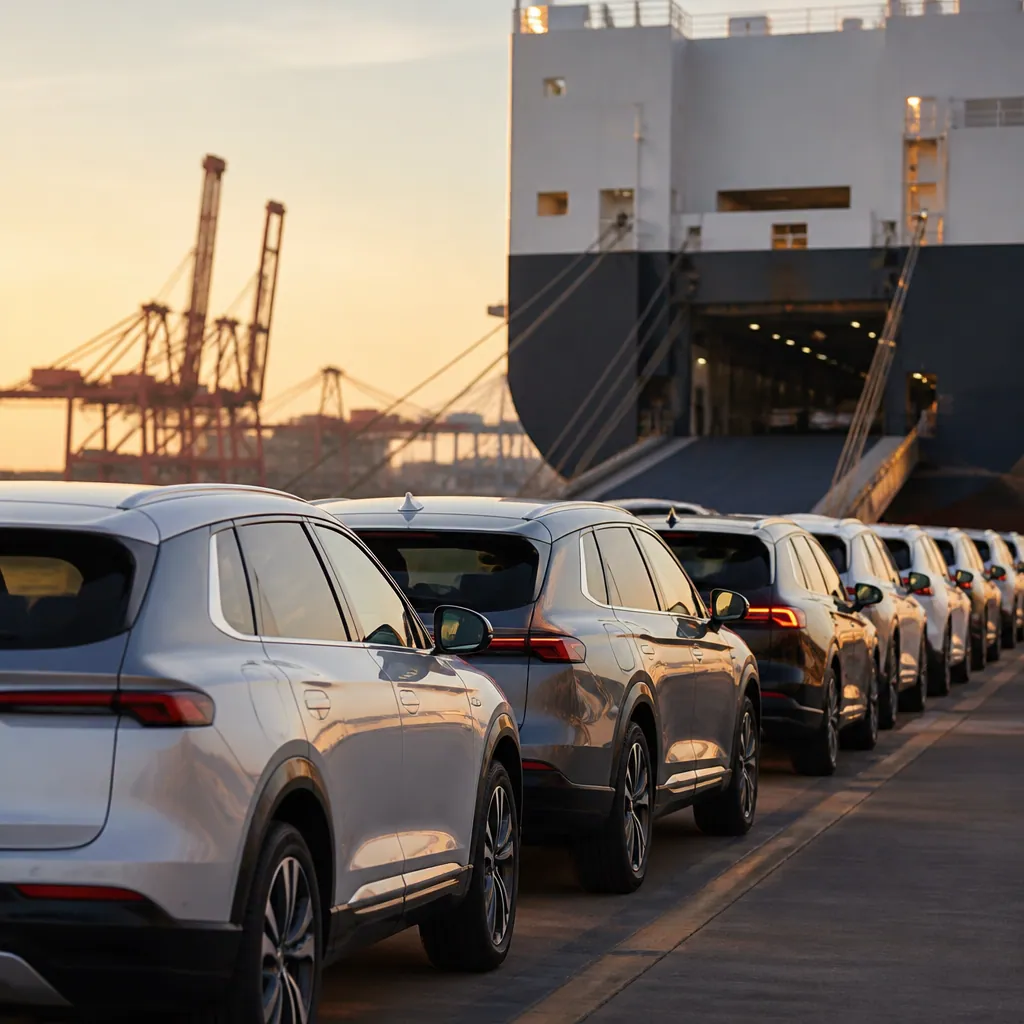

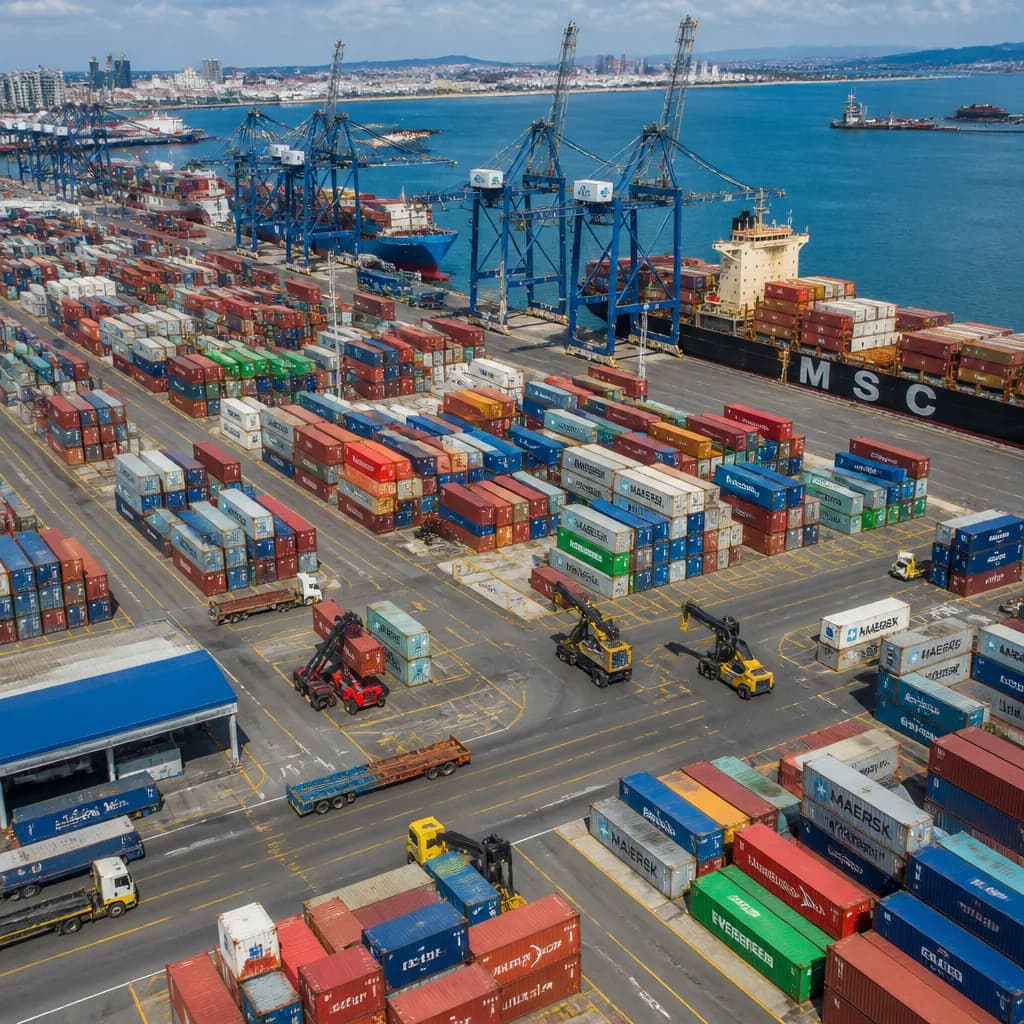
More than 222,000 Chinese vehicles reached African markets in just the first five months of 2025, with May alone recording a 104% year on year surge. Yet for every dealer or distributor who navigated that process cleanly, there is another who discovered too late that a missing SONCAP certificate, a wrong HS code, or an underestimated port clearing bill turned a profitable deal into a costly standstill. This guide covers how to export cars from China to Africa the right way: documents, shipping methods, country specific compliance, cost structure, and the common mistakes that catch first time importers off guard.
Quick Takeaways
| Key Insight | Explanation |
|---|---|
| Ocean freight is rarely the biggest cost | Destination port charges, import duties, and in country clearing typically exceed the sea leg cost. Budget for the full landed price, not just the freight quote. |
| SONCAP certification is non negotiable for Nigeria | Without a valid SONCAP Certificate (SC) obtained before shipment, your vehicle will not clear Nigerian customs. This must be arranged in China before the ship departs. |
| Right hand drive is mandatory for South Africa | South Africa requires RHD vehicles. Ordering a LHD unit by mistake is an expensive error that cannot be corrected at the port. |
| The HS code 8703 series governs passenger vehicle imports | Correct HS code classification is the foundation of every customs declaration. A mismatch triggers inspection delays and potential penalties in most African markets. |
| China offers zero tariff trade with 53 African nations | For qualifying countries, this policy can reduce vehicle retail prices by 20% to 40%, making Chinese vehicles especially competitive against alternatives. |
| Container shipping is generally preferred for EVs | Some RoRo carriers impose battery restrictions on electric vehicles. Container shipping provides better protection and avoids those restrictions for high value EV stock. |
| A licensed local customs broker is essential, not optional | Countries like South Africa and Nigeria have digitized customs systems (eDMS, CBN single window) that require broker registration. Attempting to self clear is a practical impossibility for most importers. |
Why the China Africa Car Trade Is Accelerating
The numbers are hard to dismiss. China exported US$654.89 million in passenger vehicles to South Africa alone in 2024, according to UN COMTRADE data. Across the whole continent, 222,000 units moved from Chinese factories to African buyers in the first five months of 2025, a pace that reflects structural demand, not a temporary spike.
Several forces are driving this. Chinese manufacturers produce vehicles at price points that are difficult to match from European or Japanese supply chains. Trade policy works in buyers’ favour in most markets: China’s zero tariff arrangement covers 53 African nations, and that preferential access directly reduces landed costs. African governments are also opening their markets more deliberately for electric vehicles, with Ethiopia, Ghana, and Kenya among the markets actively promoting EV imports through tax exemptions and reduced duties.
For vehicle dealers, distributors, and fleet operators, this is not simply a price story. Chinese brands now compete on specification, technology, and reliability in ways they did not five years ago. The question is no longer whether to source from China. The question is how to do it without losing margin to avoidable logistics and compliance errors.
The Full Document Checklist
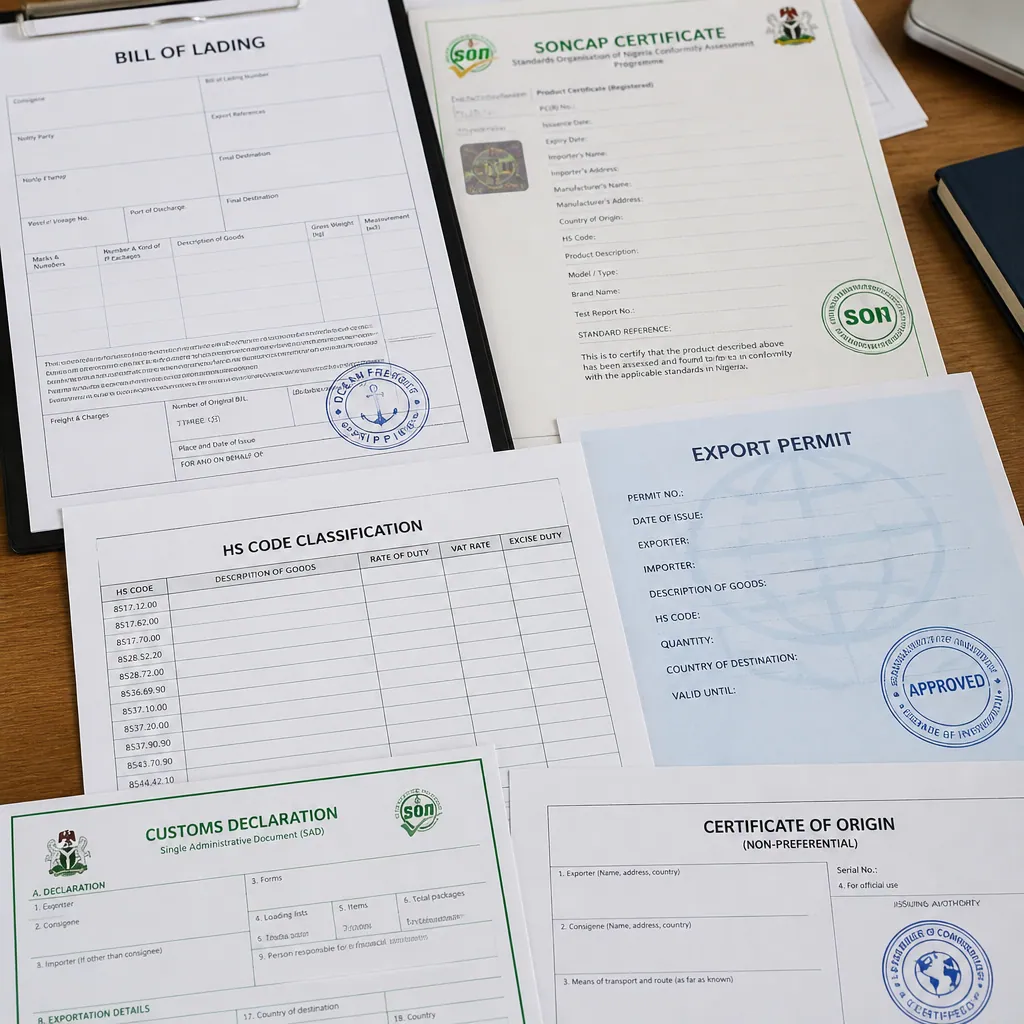
Document errors are the single most common reason for port delays. Every document listed below must be accurate, consistent with each other (especially the VIN and pricing), and ready before the vessel departs. Corrections after departure are possible in theory but expensive in practice.
Core Export Documents (China Side)
The commercial invoice is the foundation of the shipment. It must include the full VIN, engine number, declared price, model year, and buyer and seller details. The packing list accompanies it and states gross weight and dimensions. These two documents must agree with each other precisely.
A Certificate of Origin establishes that the vehicle was manufactured in China, which is the document that activates preferential tariff treatment under applicable trade agreements. The vehicle inspection certificate, issued either by the manufacturer or a certified third party inspection body in China, confirms that the vehicle meets the technical requirements for export and is in the condition described. Marine insurance documentation is also required at most African ports and protects the shipment during transit.
Documents Specific to the Destination Country
Nigeria requires a SONCAP Product Certificate obtained in China before loading, then a SONCAP Certificate issued before departure. South Africa requires registration in the Customs eDocument Management System (eDMS) and an import declaration submitted by a licensed customs broker. Morocco requires a Certificate of Conformity and, for EVs, environmental compliance certificates confirming the vehicle is no more than five years old.
Pro tip: Always request the vehicle inspection report in both Chinese and English. Many African customs authorities require the English version, and waiting for a translation while a vehicle sits at port costs real money in storage fees.
Shipping Methods: RoRo vs Container
The choice between Roll on/Roll off (RoRo) and container shipping is not just about cost. It affects risk exposure, flexibility, and what you can legally ship depending on the vehicle type.
| Factor | RoRo Shipping | Container Shipping (40ft High Cube) |
|---|---|---|
| How cost is calculated | By volume (CBM). A midsize sedan is roughly 12 to 13 CBM; a large SUV or pickup is 15 to 16 CBM. | Flat rate per container box, divided across all vehicles loaded inside. |
| Best for | Standard passenger cars and commercial vehicles in bulk. Simpler loading process. | Electric vehicles, high value units, single unit shipments, or mixed cargo (spare parts inside the container). |
| EV suitability | Some RoRo carriers impose battery restrictions. Verify carrier policy before booking. | Generally preferred for EVs. Avoids battery restriction issues and provides better protection. |
| Approximate ocean freight cost (per vehicle, China to Africa) | Around $800 to $2,400 per vehicle depending on route and CBM. | Varies by container rate and number of units loaded. Often more cost effective for 2+ vehicles per box. |
| Transit time (China to Africa) | Roughly 6 to 8 weeks quay to quay, depending on port congestion and transhipment routing. | |
The most important thing to understand about shipping costs is that ocean freight is often the smaller part of the total bill. Destination port charges, import duties, and in country clearing fees typically cost more than the sea leg itself. A dealer who budgets only for freight and is then surprised by the clearing bill is a dealer who will lose margin on every single deal.
Pro tip: If you are shipping two or more standard passenger cars to the same destination, calculate whether a shared 40-foot high cube container undercuts the per unit RoRo rate. For many China to West Africa routes, the container option becomes cheaper at two units and cheaper still at three.
Country by Country Compliance Requirements
Africa is not one market. Import regulations differ by country to a degree that genuinely catches first time importers off guard. What clears customs in Mombasa may be rejected in Lagos. The following covers the markets where compliance requirements are most specific and most consequential.
Nigeria
Nigeria is one of Africa’s highest volume markets for Chinese vehicles and one of its most complex to navigate. The SONCAP certification process is the central compliance challenge. Before shipment, the Chinese supplier must obtain a Product Certificate (PC) from an authorized testing firm in China. A SONCAP Certificate (SC) must then be obtained before the vessel departs. Shipping without the SC means the vehicle will not clear customs, full stop.
The financial process also has a Nigeria specific step. Importers must open a Form M through the Central Bank of Nigeria’s single window trade portal via an authorized commercial bank. This is the most critical financial and regulatory hurdle for Nigerian imports. Some customs offices also require a duty deposit of 10% to 20% of estimated duties, which must be accounted for in cash flow planning. The HS code submitted must match the vehicle precisely, as the system automatically generates duty figures from the VIN and any mismatch triggers immediate scrutiny.
South Africa
South Africa enforces right hand drive as a mandatory requirement. No LHD vehicle can be legally registered, so this must be confirmed at the vehicle sourcing stage, not at the port. Certification through the South African Bureau of Standards (SABS) is mandatory, and all documentation must be registered electronically through the Customs eDocument Management System (eDMS) before a licensed customs broker can submit the import declaration. Approximately 30% of incoming vehicles are selected for physical inspection to verify VIN, labeling compliance, and overall vehicle condition.
Kenya
Kenya is actively reviewing its EV import regulations as part of its ongoing policy agenda, with discussions around VAT policy adjustments and potential age restrictions for imported vehicles. The market is generally receptive to Chinese vehicles, and EV-friendly policies are being developed to encourage adoption. Importers should verify current policy status at the time of each shipment, as Kenya’s regulatory framework is in active development.
Morocco
Morocco requires that only vehicles manufactured within the last five years are eligible for import. A Certificate of Conformity is a mandatory document for completing registration. On tariffs, Morocco has taken a specific position: tariff exemptions apply to hybrid vehicles but not to fully electric vehicles as of current policy. This means the landed cost calculation for EVs into Morocco differs from hybrid vehicles, and importers should model both scenarios before ordering stock.
Understanding the Real Cost Structure
The total cost of importing a vehicle from China to Africa has four distinct layers. Treating any one of them as the whole picture is the most reliable way to underestimate your landed cost and lose margin.
The first layer is the vehicle price ex factory or FOB. This is the price the supplier quotes and the figure most buyers focus on exclusively. The second layer is international freight, covering ocean shipping, port handling at the Chinese port of loading, and any inland transport to get the vehicle to the Chinese port. The third layer is destination costs: port receiving charges, local agent fees, and storage if clearance is delayed. The fourth layer is duty and tax, which varies by country, vehicle type, and declared value.
Ocean freight is usually the smaller half of what you actually pay. Destination port charges, duty, and clearing at the other end typically cost more than the sea leg itself.
This structure has a practical implication: comparing suppliers purely on ex factory price while ignoring freight routing, port efficiency, and local clearing costs is a false economy. A vehicle sourced slightly cheaper but routed through a congested port with high clearing fees will often cost more in the end than a vehicle priced slightly higher but shipped through a faster, lower cost gateway.
Pro tip: Always request a full landed cost breakdown from any supplier or freight partner before committing. This should show: ex factory price, inland freight to port, FOB charges at the Chinese port, ocean freight, destination port charges, estimated import duty, and clearing agent fees. If a supplier cannot or will not provide this breakdown, that tells you something important about how they operate.
EVs and PHEVs: Special Considerations
Electric vehicles and plug in hybrids from China are the fastest growing segment of the Africa import market, and they come with a specific set of logistics and compliance considerations that standard ICE vehicles do not.
Battery Classification and Shipping Restrictions
Lithium ion batteries are classified as dangerous goods under international shipping regulations. Some RoRo carriers impose restrictions or additional requirements on vehicles with large battery packs. Container shipping generally avoids these issues and is the more reliable method for EV shipments. If you plan to ship EVs via RoRo, verify the carrier’s specific battery policy before booking, as this varies by shipping line.
EV-Specific Trade Policy Benefits
The zero tariff policy China maintains with 53 African nations directly benefits EV importers in qualifying markets. Countries like Ethiopia, Ghana, and Kenya are implementing additional EV-specific incentives, including tax exemptions and reduced import duties, that can substantially affect the landed cost calculation. These incentives are not automatic: they typically require the correct documentation at customs, including a valid Certificate of Origin proving Chinese manufacture.
Charging Infrastructure as a Commercial Consideration
For fleet operators and dealers, the viability of EVs in a given market is not purely about import costs. Charging infrastructure, electricity reliability, and the availability of warranty support and spare parts are commercial factors that determine whether EV stock will sell and perform. Sourcing from a supplier who can also provide aftersales support and spare parts logistics significantly reduces post sale risk in markets where local service networks for Chinese EV brands are still developing.
Working with a China Based Export Partner
The volume and complexity of the China Africa vehicle export process means that most successful importers work with a China based export partner who handles sourcing, documentation, inspection, and freight coordination. The question is what to look for in that partner.
What a Competent Export Partner Actually Does
A genuine export partner does more than send an invoice and book a ship. They coordinate directly with the vehicle manufacturer or supplier, arrange pre shipment inspection by a qualified inspector, prepare and verify all export documentation for consistency, manage customs declaration on the Chinese side, and coordinate with freight carriers for the right shipping method given the vehicle type and destination. For markets with specific certifications like SONCAP, they manage the certification process in China before the vessel loads.
Red Flags to Watch for
A common problem in this market is intermediaries who present themselves as exporters but are actually resellers with no direct access to manufacturers or inspection facilities. The signs are usually a refusal to provide factory direct pricing evidence, no ability to arrange pre shipment inspection, and vague answers about which testing facilities handle certifications. Paying a deposit to an entity that cannot clearly explain the inspection and certification process is a significant financial risk.
Automotion Global operates as a direct international vehicle supplier with established supplier coordination across China, covering passenger cars, EVs, PHEVs, SUVs, commercial vehicles, and fleet orders. The service covers the full export chain: sourcing, inspection, documentation, shipping, customs support, and aftersales assistance. For dealers and importers new to the China Africa trade route, that integrated model removes the coordination burden and reduces the risk of document gaps that cause port delays. Contact Automotion Global to discuss your specific market requirements and get a landed cost estimate for your target destination.
Frequently Asked Questions
What documents do I need to export cars from China to Africa?
The core set includes a commercial invoice with VIN and pricing, a packing list, a Certificate of Origin, a vehicle inspection certificate, a Bill of Lading, and a marine insurance certificate. Destination specific additions include SONCAP certification for Nigeria, SABS certification and eDMS registration for South Africa, and a Certificate of Conformity for Morocco. Every document must be internally consistent, particularly on VIN, pricing, and model year, or customs delays will follow.
How long does it take to ship a vehicle from China to Africa?
Ocean transit typically runs 6 to 8 weeks from the Chinese port of loading to the African destination port, depending on the route, any transhipment stops, and port congestion at both ends. This does not include time spent preparing export documentation in China or customs clearance time at the destination. For planning purposes, a realistic door to door timeline for a well prepared shipment is often 10 to 14 weeks from order confirmation.
Is RoRo or container shipping better for Chinese vehicles going to Africa?
For standard passenger cars in volume, RoRo is generally simpler and competitive on cost. For electric vehicles and PHEVs, container shipping is preferred because some RoRo carriers impose battery restrictions, and containers provide better protection for high value units. For single unit or low volume shipments of any type, the economics of a full container can be unfavorable unless you are loading spare parts or accessories alongside the vehicle to fill the space.
What is SONCAP certification and why does it matter for Nigeria?
SONCAP stands for Standards Organisation of Nigeria Conformity Assessment Programme. It is a mandatory pre shipment certification for vehicles entering Nigeria. The process has two stages: a Product Certificate (PC) obtained from an authorized testing firm in China, and a SONCAP Certificate (SC) issued before the vessel departs. Shipping to Nigeria without a valid SC means the vehicle will not be cleared at the Nigerian port, regardless of any other documentation. This certification must be arranged in China, before loading, through an approved body.
What import duties should I expect when importing Chinese vehicles into Africa?
Duty rates vary considerably by country and vehicle type. China’s zero tariff policy with 53 African nations benefits qualifying markets and can reduce retail prices significantly. Outside those arrangements, standard import duties on vehicles range widely across the continent, and individual countries may add VAT, excise duties, or surcharges. The only reliable approach is to confirm the current duty rate and applicable tariff classification with a licensed customs broker in your specific destination country before pricing your order.
Can I import electric vehicles from China to Africa, and are there any special rules?
Yes, and in many markets the conditions are actively improving. Ethiopia, Ghana, and Kenya have implemented or are developing EV-specific import incentives including tax exemptions and reduced duties. Morocco allows EV imports with specific documentation requirements, including a Certificate of Conformity and evidence the vehicle is no more than five years old. The key practical difference from ICE vehicles is shipping: container transport is the more reliable method for EVs due to battery related restrictions on some RoRo carriers.
How do I verify a vehicle supplier in China before paying a deposit?
Request evidence of direct manufacturer relationships, not reseller documentation. Ask specifically which pre shipment inspection body they use and whether you can receive the inspection report directly. Verify that they have handled SONCAP or other destination specific certifications before for your target market, and ask for references from buyers in similar markets. A supplier who cannot clearly answer questions about inspection and certification procedures is one who cannot reliably manage the documentation on which your customs clearance depends.
Have you imported vehicles from China to an African market? Share what the process looked like from your side, especially any port specific lessons that would help other importers.
References
- Guide to customs clearance, SONCAP certification, and compliance for South Africa and Nigeria vehicle imports
- Overview of EV import regulations, country specific rules, and trade policy incentives across Africa
- Step by step guide to importing Chinese vehicles into Nigeria including Form M and SONCAP process
- Shipping methods, port transit times, and real cost breakdown for vehicles moving from China to African ports
- UN COMTRADE data on China vehicle exports to South Africa