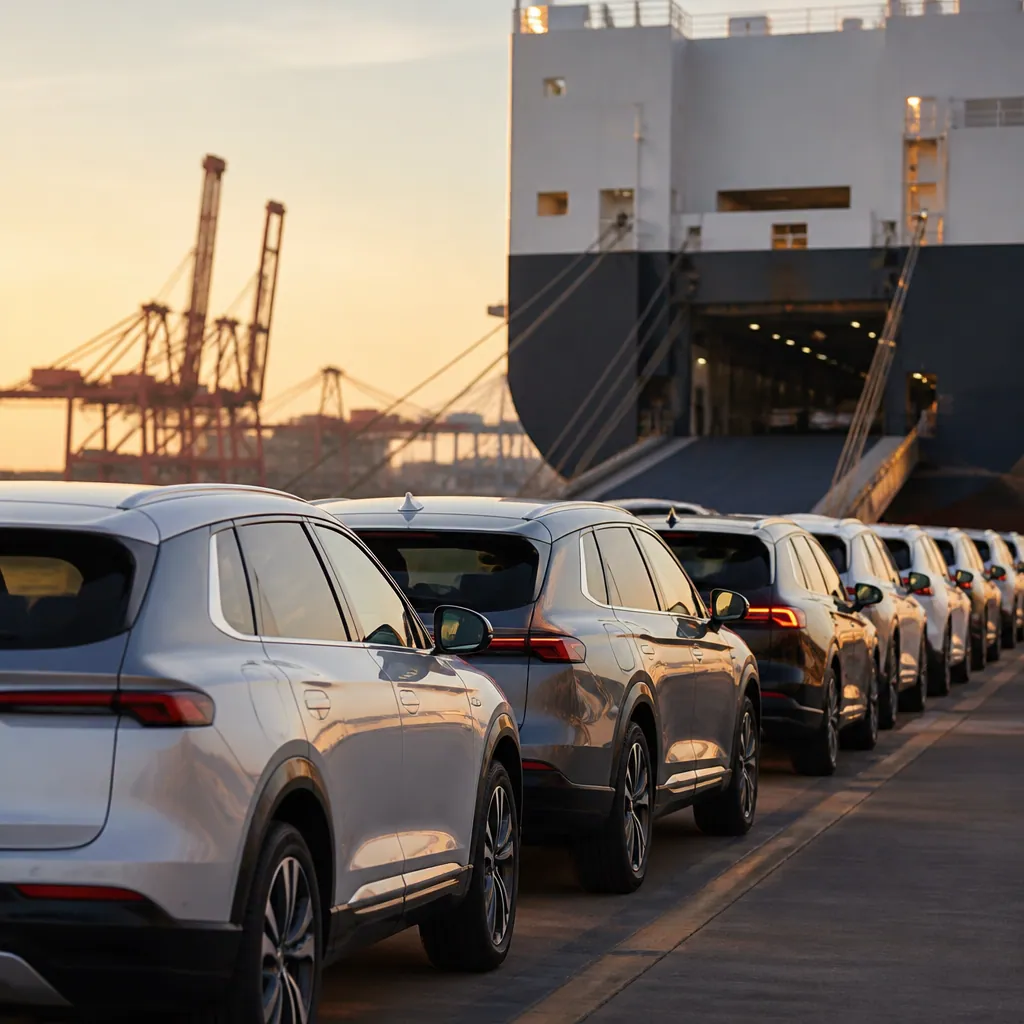

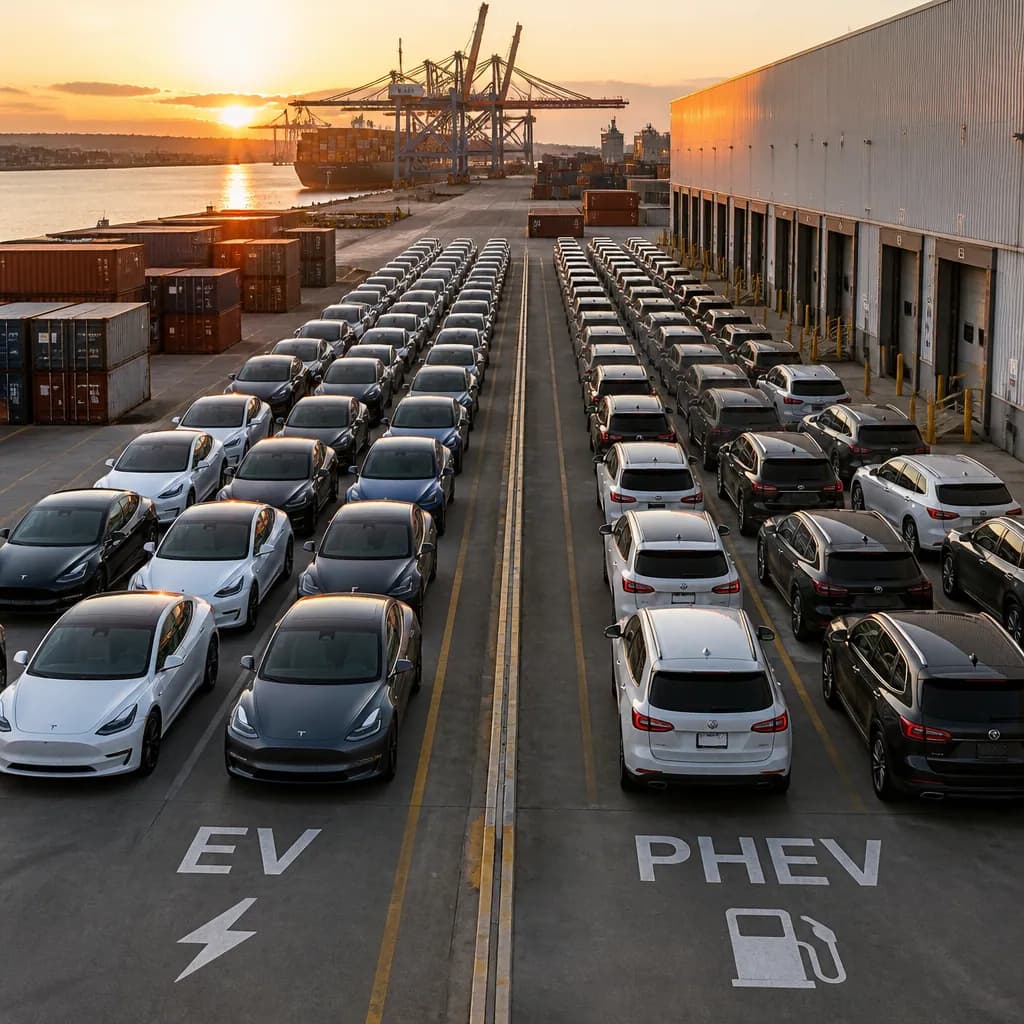
If you are sourcing vehicles from China for resale or fleet deployment abroad, the EV vs PHEV China export question is no longer academic. Chinese plug in hybrid exports surged 210% in the first half of 2024compared to just 40% growth for battery electric vehicles, according to data from the China Association of Automobile Manufacturers. That gap has only widened since. Meanwhile, China has announced that pure electric passenger vehicles will require export licenses from January 1, 2026, a regulatory shift that has no equivalent for hybrids. For vehicle dealers, fleet operators, and importers sourcing from China, getting the powertrain decision right from the start determines inventory risk, customer satisfaction, and long term margin.
Quick Takeaways
| Key Insight | Explanation |
|---|---|
| PHEVs are outpacing BEVs in Chinese export growth | Chinese PHEV exports tripled in the first half of 2025 versus the prior year, far outpacing the 40% BEV growth rate over the same period. |
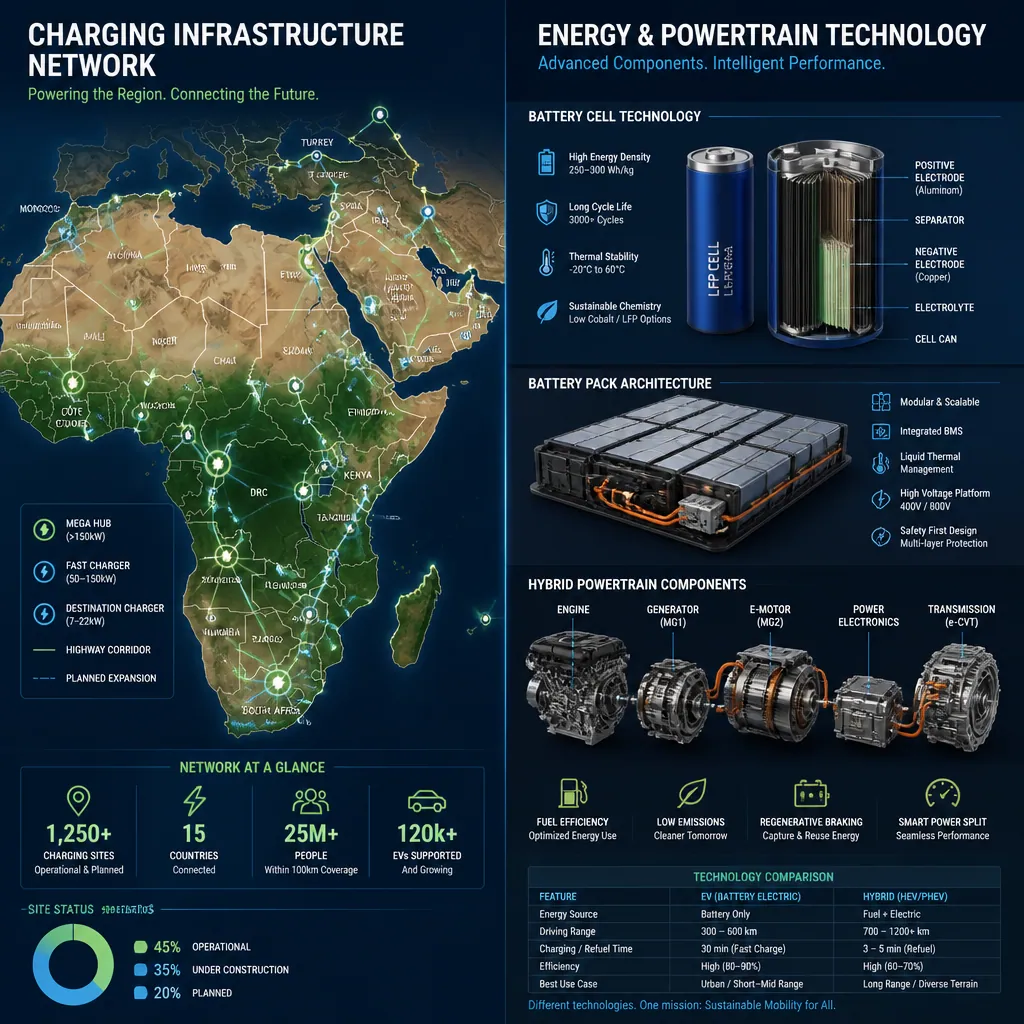
| Charging infrastructure gaps favor PHEVs in most export markets | Markets across Africa and parts of the Middle East have limited public charging networks, making PHEVs a safer choice for buyers without reliable home or depot charging. |
| BEVs face new Chinese export licensing requirements | From January 1, 2026, China requires export licenses for pure electric passenger vehicles. Hybrid models are currently exempt, removing a layer of supply risk for PHEV importers. |
| EU tariffs target BEVs, not PHEVs | The EU imposed countervailing duties of up to 35.3% on Chinese BEVs from October 2024. Chinese PHEVs face no equivalent additional duty, creating a meaningful price advantage in compliant markets. |
| BEVs work well in urban, infrastructure rich environments | City based taxi fleets, government procurement programs, and urban logistics operators in well serviced cities can achieve strong total cost of ownership with BEVs. |
| China holds 55% of electric car imports in developing markets | Outside major markets, Chinese origin vehicles accounted for 55% of electric car sales in 2025, up from around 10% in 2021, confirming China’s dominant role for importers. |
| PHEVs bridge customer hesitation, BEVs lock in lower running costs | PHEVs reduce the adoption risk for buyers new to electrified vehicles. BEVs offer lower fuel and maintenance costs over the vehicle’s life but require committed infrastructure support. |
Understanding the Two Vehicle Types
Before choosing what to import, it is worth being precise about what each vehicle type actually delivers, because the marketing language from manufacturers often blurs the real differences.
Battery Electric Vehicles (BEVs)
A battery electric vehicle runs entirely on electricity stored in a high capacity battery pack. There is no combustion engine, no fuel tank, and no exhaust system. The vehicle must be recharged at a charging point, whether at home, at a depot, or at a public station. Range per charge varies widely across Chinese models, but mid range BEVs from brands like BYD, SAIC, and Chery typically offer usable real world ranges in urban driving conditions. BEVs have significantly lower maintenance costs because they eliminate oil changes, transmission servicing, and exhaust repairs. Regenerative braking also reduces brake wear.
The trade off is simple and non negotiable: without reliable charging infrastructure, a BEV becomes a liability. That constraint is not a technology problem. It is a deployment environment problem, and it is the single most important factor for importers to assess before placing an order.
Plug In Hybrid Electric Vehicles (PHEVs)
A plug in hybrid electric vehicle carries both a battery pack and a combustion engine. The battery can be charged from an external power source, allowing purely electric driving for a limited range. When the battery depletes, the combustion engine takes over. This dual mode operation means a PHEV driver can run on electricity for daily commutes and short trips, then switch to fuel for longer distances or in areas with no charging points.
PHEVs are heavier and mechanically more complex than BEVs, and they cost more to maintain than a straight combustion vehicle. But they remove the anxiety that comes with committing to electric only operation in markets where infrastructure is patchy. That is why Chinese PHEV exports have surged so sharply, and why brands like BYD have specifically positioned PHEV SUV models for African and Middle Eastern markets.
Pro tip: When briefing a dealer network on PHEVs, emphasize the electric first operation for daily use. Customers who only ever use the combustion engine lose most of the fuel cost benefit and are more likely to report dissatisfaction. Train showroom staff accordingly.
Market Fit by Region: Middle East, Africa, and Beyond
The right powertrain type is not a universal answer. It depends heavily on the deployment environment of your end customer. Dealers and distributors who import the wrong type for their market will face returns, complaints, and damaged brand reputation.
Gulf States: A Market Maturing Toward BEVs, But Not There Yet
China’s automotive market share in Arab Gulf countries grew from around 2% in 2019 to approximately 15% by 2025, a remarkable shift driven by competitive pricing and improving brand perception. The Gulf states represent a market of more than 2.3 million new vehicle sales annually. Governments across the region are actively investing in charging infrastructure and offering EV incentives as part of national energy transition programs.
In practice, BEVs are viable for urban buyers in the UAE and Saudi Arabia who have access to home charging or well developed commercial charging networks. However, for buyers in secondary cities, rural areas, or those who regularly drive long distances between urban centers, a PHEV is the more defensible sale. Fleet operators running mixed routes, including highway and urban segments, will find PHEV vehicles considerably easier to operate without depot charging upgrades.
Sub Saharan Africa: PHEVs Are the Safer Default
Many countries in Africa now import more than 80% of their electric cars from China, making Chinese vehicles the market standard by default. Yet public charging infrastructure in most sub Saharan markets remains limited, and grid reliability is inconsistent in several key markets. This is not a theoretical concern. It is a practical daily reality for fleet operators and private buyers alike.
BYD holds approximately 35% of Africa’s EV market, and the brand has deliberately introduced PHEV models alongside its BEV lineup in this region. The Sealion 5 Super PHEV SUV was launched in South Africa at a price point below many competing plug in hybrid models, signaling a clear strategy to convert buyers from combustion vehicles using the PHEV as a bridge rather than asking them to commit fully to electric. For importers serving sub Saharan markets, leading with PHEVs and offering BEVs where verifiable charging infrastructure exists is the lower risk approach.
A market with no charging network does not need a better EV. It needs a vehicle that works without one. PHEVs fill that gap while markets build toward full electrification.
Southeast Asia and Other Developing Markets
Markets across Southeast Asia show a similar pattern. Urban centers with growing charging networks are adopting BEVs, particularly for taxi and ride hailing fleets where vehicles charge overnight at depots. Outside those urban corridors, PHEVs hold a strong practical advantage. Fleet operators in countries with variable fuel quality should also check manufacturer specifications carefully, as some Chinese PHEV engines are calibrated for fuel standards that vary across markets.
Charging Infrastructure Reality on the Ground
Charging infrastructure is the single biggest determinant of whether a BEV deployment succeeds or fails. This point cannot be overstated, and it is the factor that most importers underweight when making sourcing decisions.
What the Infrastructure Gap Actually Means for a Dealer or Fleet Operator
Limited public charging infrastructure remains one of the primary barriers to EV adoption across the Middle East and Africa, according to market research covering the region. That barrier is not abstract. It means customers who buy a BEV without reliable home charging will either underuse the electric powertrain, run the vehicle on petrol equivalent costs, or return to the dealer with complaints that have nothing to do with vehicle quality.
For fleet operators, the infrastructure gap translates directly into capital expenditure. Installing depot charging for a large fleet is a significant investment that requires time, permitting, and grid capacity. A PHEV fleet can begin operating immediately using existing fuel infrastructure, with charging added incrementally. This is a meaningful operational advantage in markets where electrification is directionally correct but not yet fully supported by public infrastructure.
Pro tip: Before committing to a BEV import order for a fleet customer, ask them to document their charging plan in writing. If they cannot describe how vehicles will charge every night, switch them to a PHEV recommendation. One fleet failure due to range anxiety will cost more in reputation than the margin on the original sale.
Where BEVs Genuinely Work Well
Urban taxi and ride hailing fleets in cities with functional public or depot charging are strong BEV use cases. Dubai Taxi Company’s partnership to deploy 200 all electric BYD Seal taxis is a concrete example of the conditions under which BEVs make sense: a city with developed infrastructure, a centralized fleet operator who can manage charging, and a predictable daily route pattern. Government procurement programs with dedicated charging depots are another natural fit. For these customers, the lower running costs of a BEV make a compelling financial case over a three to five year ownership horizon.

EV vs PHEV: A Direct Comparison for Import Markets
The table below compares BEVs, PHEVs, and conventional ICE vehicles specifically from the perspective of a dealer or importer sourcing from China for markets in the Middle East, Africa, or Southeast Asia.
| Consideration | Battery Electric Vehicle (BEV) | Plug In Hybrid (PHEV) |
|---|---|---|
| Infrastructure dependency | High. Requires reliable charging at home, depot, or public network. | Low. Can operate entirely on fuel if charging is unavailable. |
| Running cost advantage | Very high where electricity is cheap and reliable. Fuel eliminated entirely. | Moderate. Electric for short trips, fuel for longer distances. Benefit depends on charging frequency. |
| Import tariff risk (EU markets) | Significant. EU countervailing duties up to 35.3% on Chinese BEVs as of October 2024, on top of the standard 10% duty. | Lower. PHEVs are not subject to the EU’s additional countervailing duties on Chinese BEVs. |
| Chinese export licensing (from Jan 2026) | Subject to new export license requirement announced September 2025. | Currently exempt from the new export license requirement. |
| Maintenance complexity | Lower. No oil changes, simpler drivetrain, reduced brake wear. | Higher than BEV. Two drivetrains to service, though electric first operation reduces combustion engine wear. |
| Customer adoption barrier | Higher. Buyers new to EVs often have range anxiety and charging uncertainty. | Lower. Fuel fallback removes the psychological barrier for first time EV buyers. |
| Best market fit | Urban fleets with depot charging, government procurement, infrastructure mature cities. | Mixed urban/rural markets, regions with limited charging, fleet operators transitioning from ICE. |
Regulatory and Tariff Landscape for Importers
The regulatory environment for Chinese vehicle exports is changing faster than most importers track. Two developments in particular should be on every sourcing team’s radar.
The EU BEV Tariff Situation
The European Union adopted definitive countervailing duties on Chinese battery electric vehicles in October 2024. These duties, which range up to 35.3% depending on the manufacturer and are applied on top of the standard 10% EU import duty, apply specifically to BEVs. Individual duties for sampled manufacturers were set at 17.4% for BYD, 19.9% for Geely, and 37.6% for SAIC. PHEVs are not covered by these additional duties, which explains much of the surge in Chinese PHEV exports to European markets.
For importers serving markets adjacent to EU trade zones, or for distributors who sometimes move inventory across borders, this distinction matters practically. Sourcing a PHEV instead of a BEV can mean a materially lower landed cost in tariff sensitive markets.
China’s New BEV Export Licensing Requirement
China announced in September 2025 that pure electric passenger vehicles will require export licenses effective January 1, 2026. Hybrid models, including PHEVs, are explicitly exempt from this requirement. The policy is understood to address overproduction pressures and price competition among Chinese manufacturers in export markets. For importers, the practical effect is an additional administrative layer for BEV shipments, potentially affecting lead times and adding compliance steps that do not apply to PHEV orders.
This is not a reason to avoid BEVs entirely, but it is a supply chain variable that needs to be factored into order timelines, particularly for large orders or fleet supply contracts with hard delivery deadlines.
Pro tip: If you are building a mixed BEV and PHEV sourcing portfolio, timeline the BEV orders to allow for the additional export licensing process. Work with a supplier like Automotion Global who understands both the documentation requirements and the timing implications, rather than discovering the delay after the order is placed.
Fleet Operator Considerations
Fleet buyers and operators have different calculation frameworks from private buyers or dealer networks. The decision between BEV and PHEV needs to account for operational patterns, total cost of ownership, driver behavior, and serviceability at scale.
Total Cost of Ownership: Where BEVs Win and Where They Do Not
BEVs have a clear long term cost advantage in the right conditions. Eliminating fuel costs entirely and reducing maintenance spend produces genuine savings over a multi year fleet cycle. The challenge is that these savings are not automatic. They require reliable overnight charging, predictable daily route patterns that stay within range, and access to service networks that can handle the specific BEV models in your fleet.
In markets where electricity costs are high, grid reliability is inconsistent, or public charging infrastructure is sparse, the BEV cost advantage erodes quickly. A PHEV fleet running primarily on fuel in a market with no charging access is simply an expensive ICE vehicle with a heavier battery pack, and the economics reflect that.
Driver Behavior and Fleet Management
Fleet operators often overlook the behavioral dimension. BEVs require drivers to actively manage range and charging. In large fleets with varied driver behavior, this creates operational friction that PHEVs avoid almost entirely. A driver who forgets to charge or arrives at a destination with insufficient range is a problem that PHEV eliminates by design. For fleet managers running operations across multiple cities or regions with inconsistent infrastructure, PHEVs reduce the number of operational variables that need to be managed centrally.
Serviceability and Spare Parts Access
Both BEVs and PHEVs from Chinese manufacturers require access to spare parts and service capable technicians. This is a practical concern in markets where the Chinese automotive service network is still developing. Automotion Global provides spare parts support and aftersales assistance specifically because this gap is real in many of the markets we serve. PHEVs, with their conventional engine components, are generally more serviceable by existing workshops in markets where EV-specific technical training is limited. BEVs require more specialized tooling and skills, particularly for high voltage system work.
The best fleet operators treat sourcing and aftersales as a single decision. A vehicle that is cheap to acquire but expensive and slow to service is not a low cost fleet vehicle. It is a high risk one.
Frequently Asked Questions
What is the main difference between a BEV and a PHEV for import purposes?
A BEV runs entirely on battery power and must be charged from an external source. A PHEV combines a battery with a combustion engine and can run on either electricity or fuel. For import purposes, the key differences are tariff treatment (BEVs face specific additional duties in the EU), the new Chinese export licensing requirement for BEVs from January 2026, and infrastructure dependency in the destination market. PHEVs currently face fewer regulatory hurdles in most import markets and require no charging infrastructure commitment from the end user.
Which powertrain is better suited for African import markets?
PHEVs are the safer default for most African import markets. Limited public charging infrastructure and variable grid reliability make full BEV deployment operationally risky in many sub Saharan countries. PHEVs allow buyers and fleet operators to benefit from electric driving where charging is available while retaining fuel operation as a fallback. As infrastructure develops over time, BEV demand will grow, but PHEVs currently offer a more defensible value proposition for most African markets outside of specific urban fleet applications.
Are Chinese PHEVs subject to the same EU import tariffs as Chinese BEVs?
No. The EU’s countervailing duties imposed in October 2024 apply specifically to battery electric vehicles from China. These duties add up to 35.3% on top of the standard 10% EU import tariff, depending on the manufacturer. Chinese PHEVs are not covered by these additional duties. This tariff differential has driven a significant shift in Chinese vehicle export composition toward PHEVs for European adjacent markets and has made PHEVs a more cost competitive import choice in tariff sensitive regions.
Will the new Chinese BEV export licensing requirement affect supply timelines?
Potentially, yes. China announced in September 2025 that pure electric passenger vehicles will require export licenses from January 1, 2026. PHEVs are exempt. For importers placing large BEV orders or managing fleet supply contracts with fixed delivery dates, this adds an administrative step that can affect lead times. The degree of impact will depend on how smoothly the licensing process is implemented, but prudent importers should build additional timeline buffer into BEV orders and work with experienced export partners who understand the documentation requirements.
For a mixed fleet operation, should a fleet operator source all BEVs, all PHEVs, or a combination?
A mixed fleet is the practical answer for most operators transitioning from combustion vehicles. Deploy BEVs on predictable urban routes where vehicles charge at a central depot overnight. Use PHEVs for mixed route operations, long distance segments, or locations without reliable charging. This approach lets a fleet operator capture the fuel cost savings of BEVs where conditions support them, without exposing the entire operation to range and infrastructure risk. Over time, as charging infrastructure matures in the market, the BEV share of the fleet can increase.
How do I assess whether my target market is ready for BEVs?
Ask four questions. First, is there reliable home or depot charging available to the end user? Second, are there public fast charging stations covering the typical daily routes? Third, is the local grid reliable enough to ensure vehicles are fully charged each morning? Fourth, are local workshops trained and equipped to service high voltage BEV systems? If the answer to any of these is no or uncertain, a PHEV is the more appropriate recommendation for that market right now. Do not let manufacturer enthusiasm or trend reporting substitute for an honest infrastructure assessment on the ground.
Have you navigated the BEV versus PHEV decision for your own market? Share what you found in the comments, as real world sourcing experience from different markets helps the whole community make better decisions.
References
- How Chinese plug in hybrid exports surged past battery electric vehicles in global markets
- IEA Global EV Outlook 2025: Trends in electric car markets and PHEV growth in China
- China’s automotive market share growth in the Gulf and the EV export landscape
- China’s new export license requirement for pure electric passenger vehicles from 2026
- EU definitive countervailing duties on Chinese battery electric vehicles adopted October 2024