
A vehicle can look like the right purchase on an FOB price sheet and still be the wrong fit once it reaches its destination. An effective EV PHEV comparison goes beyond fuel consumption or battery range. For international buyers, the decision also depends on charging access, local fuel pricing, service capability, shipping requirements, regulations, and the daily duty cycle the vehicle must handle.
Battery electric vehicles and plug in hybrids can both reduce fuel use, emissions, and operating costs. However, they solve different procurement problems. The right choice is the vehicle that can perform reliably in its destination market without creating avoidable charging, maintenance, or compliance issues.
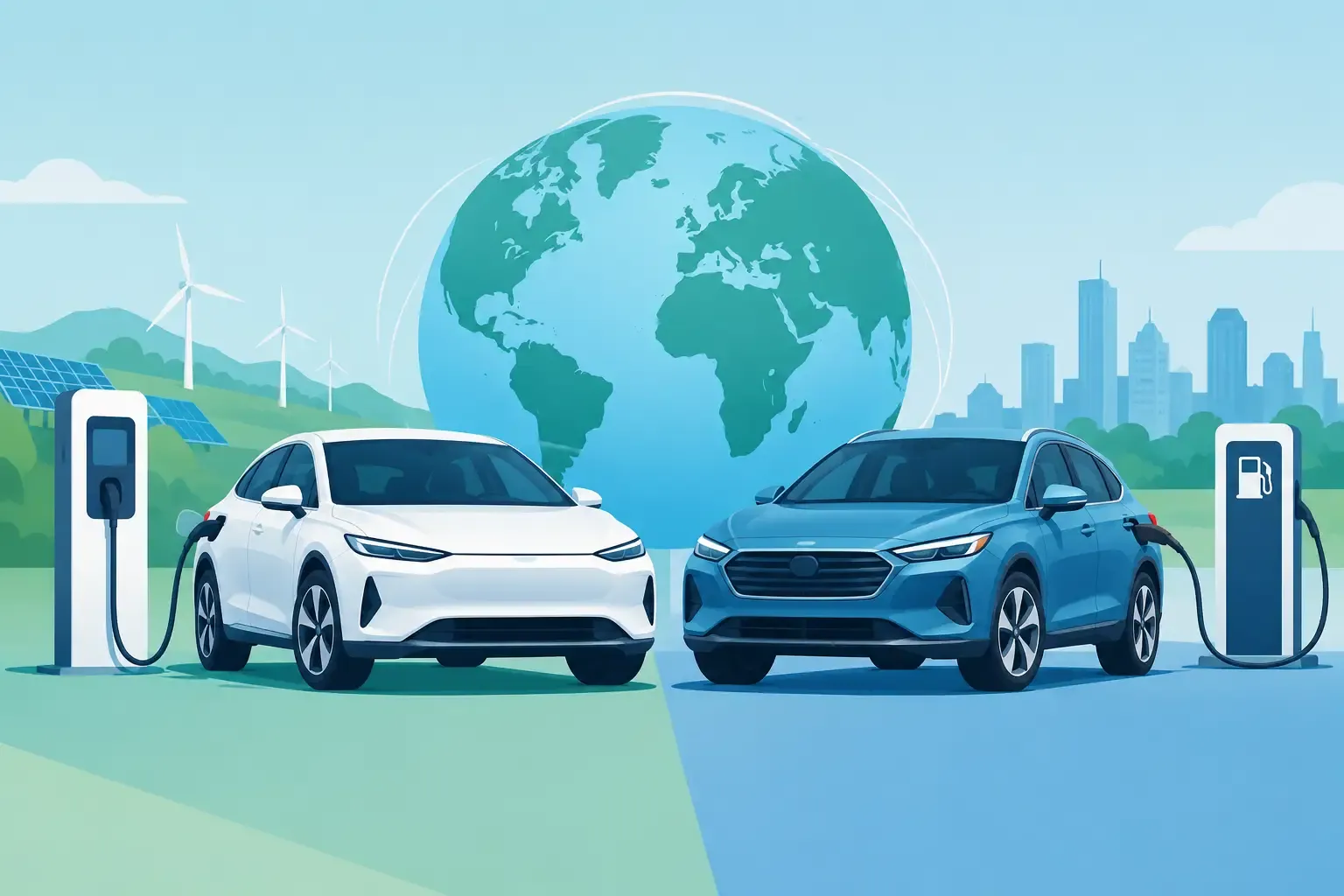
EV PHEV Comparison: The Core Difference
An EV, or battery electric vehicle, runs entirely on electricity stored in a high voltage battery. It has no gasoline engine, no exhaust system, and no routine engine oil service. EVs are best suited to buyers with dependable access to charging and driving patterns that fit the vehicle’s real world range.
A PHEV, or plug in hybrid electric vehicle, combines a rechargeable battery and electric motor with an internal combustion engine. It can travel a limited distance on electricity alone, then continue using gasoline when the battery is depleted. Most PHEVs can also recharge through external charging equipment, although the gasoline engine prevents the vehicle from being dependent on public chargers for longer journeys.
This distinction is operationally significant. An EV requires a charging plan. A PHEV benefits from one, but can continue operating where charging is unavailable. For a buyer sourcing vehicles across borders, that difference can determine whether a low emission vehicle becomes a productive asset or an underused unit.
When an EV Is the Better Commercial Decision
An EV is often the stronger choice when routes are predictable and charging can be controlled. This includes corporate fleets returning to a depot, hotel or airport transfer operations, urban delivery services, executive transport, and private buyers with home charging. Charging overnight at a fixed location can make EV ownership straightforward and cost effective.
The main financial advantage is lower energy and maintenance demand. Electricity can cost substantially less per mile than gasoline in many markets, especially where commercial charging rates or private energy contracts are favorable. EVs also have fewer mechanical service components than combustion powered vehicles. There are no oil changes, spark plugs, exhaust system repairs, or transmission services in the conventional sense.
Performance is another consideration. Electric motors provide immediate torque, which is useful in city traffic, on inclines, and during loaded commercial use. Many current EVs also offer quiet operation and a refined cabin experience that suits executive, hospitality, and premium passenger applications.
The limitation is not simply stated range. It is range under real operating conditions. High speeds, heavy cargo, steep terrain, air conditioning use, cold weather, and battery age can all reduce the distance available between charges. Buyers should assess the realistic daily route, not the headline laboratory figure.
For exports, charging compatibility requires early confirmation. A vehicle’s charging port standard, onboard charger specification, and fast charging capability must match the destination infrastructure or available adapters. Importing an EV with limited local charging support can weaken resale value and complicate fleet deployment.
EVs Work Best With Planned Charging
A well managed EV fleet does not need an extensive public charging network for every vehicle. It needs the right charging access at the right time. A delivery operation that returns vehicles to the same location every evening may be a better EV candidate than a private owner who drives unpredictable long distance routes.
Buyers should also verify local electrical capacity before ordering multiple units. Adding several chargers to a warehouse, dealership, residential development, or transport depot may require electrical upgrades, permitting, load management, or utility coordination. These costs should be included in the total acquisition plan rather than treated as an afterthought.
When a PHEV Offers More Flexibility
A PHEV is often the practical middle ground for markets where charging infrastructure is growing but not yet dependable across all regions. It delivers electric driving for short local trips while retaining the flexibility of gasoline for longer distances, rural travel, or unplanned route changes.
For private buyers, a PHEV can cover daily commuting in electric mode if charging is available at home or work. For business users, it can reduce fuel consumption in city operation without forcing drivers to redesign intercity schedules around charging stops. This is particularly relevant for cross border operations, sales teams, service vehicles, and fleets traveling beyond major urban centers.
The trade off is complexity. A PHEV contains both electric drive equipment and a combustion engine. It requires conventional engine maintenance in addition to hybrid system diagnostics, and it has more components than a pure EV. The battery is generally smaller than an EV battery, which lowers electric only range but can simplify transport weight and charging requirements.
A PHEV only delivers its best efficiency when it is charged regularly. If drivers never plug it in, the vehicle may operate largely as a heavier gasoline hybrid and use more fuel than expected. This is a key fleet management issue. Procurement teams should consider driver behavior, charging discipline, and reporting capability before selecting PHEVs at scale.
Operating Cost: Compare the Full Use Case
The purchase price is only one part of an EV or PHEV decision. International buyers should compare the complete operating profile over the intended ownership period. An EV may have a higher initial cost but lower scheduled maintenance and energy expenses. A PHEV may cost less to deploy in areas with limited charging but still requires gasoline, engine servicing, and periodic emissions related maintenance.
Fuel and electricity pricing vary sharply by market. In locations with inexpensive electricity and high gasoline prices, EV economics can be compelling. Where electricity is expensive, unreliable, or generated through limited capacity networks, the advantage may be reduced. Government incentives, registration fees import dutiesand road taxes can also change the financial result.
Depreciation deserves equal attention. Demand for EVs and PHEVs is shaped by local charging access, brand support, spare parts availability, battery warranty coverage, and buyer confidence. A model with strong support in the destination market may retain value better than a cheaper unit with uncertain service backing.
Export Checks Before You Commit
International sourcing adds requirements that domestic buyers may not face. Vehicle specification must be matched to the destination country before payment, loading, or shipment booking. This is especially important for electrified vehicles because regional versions can differ in charging hardware, software settings, safety features, language configuration, and applicable certification.
Before proceeding with an EV or PHEV order, confirm these operational points:
- The vehicle is eligible for import, registration, and road use in the destination market.
- Charging connector type, voltage compatibility, and charging speed suit available infrastructure.
- Battery documentation, transport classification, and shipping procedures meet carrier requirements.
- Parts, diagnostic equipment, and qualified technicians are available locally or through a support plan.
- The final specification matches the buyer’s climate, road conditions, seating, cargo, and security requirements.
Lithium ion batteries are routinely shipped internationally, but they require proper documentation and carrier handling. State of charge, battery condition, packaging standards, and vessel or container rules may affect the shipping process. Working with an export partner that understands pre shipment inspection and battery vehicle documentation helps prevent delays at port.
Do Not Confuse PHEVs With EREVs
An extended range electric vehicle, or EREV, can appear similar to a PHEV because it includes both a battery and an engine. The operating design is different. In an EREV, the electric motor is typically responsible for driving the wheels, while the engine primarily acts as a generator to extend range. In a PHEV, the combustion engine may directly assist in powering the vehicle depending on the system design.
This difference matters when evaluating efficiency, driving character, servicing, and buyer expectations. Export buyers should request the correct technical specification rather than relying only on broad labels such as hybrid or range extender.
Choosing the Right Vehicle for the Destination Market
Choose an EV when daily mileage is known, charging can be secured, and lower energy and maintenance costs are a priority. It is particularly suitable for city based fleets, controlled route operations, and buyers with access to home, office, or depot charging.
Choose a PHEV when electric driving is desirable but routes vary, charging is inconsistent, or longer gasoline backed range is necessary. It is often the safer transition option for mixed use fleets and buyers operating across regions with uneven infrastructure.
The strongest procurement decision is based on deployment, not assumptions. Automotion Global can support buyers seeking export ready EVs, PHEVs, and other modern mobility vehicles by aligning available stock with destination requirements, inspection expectations, and international delivery planning. Start with the route, the charging reality, and the import rules, then select the powertrain that will keep working after delivery.