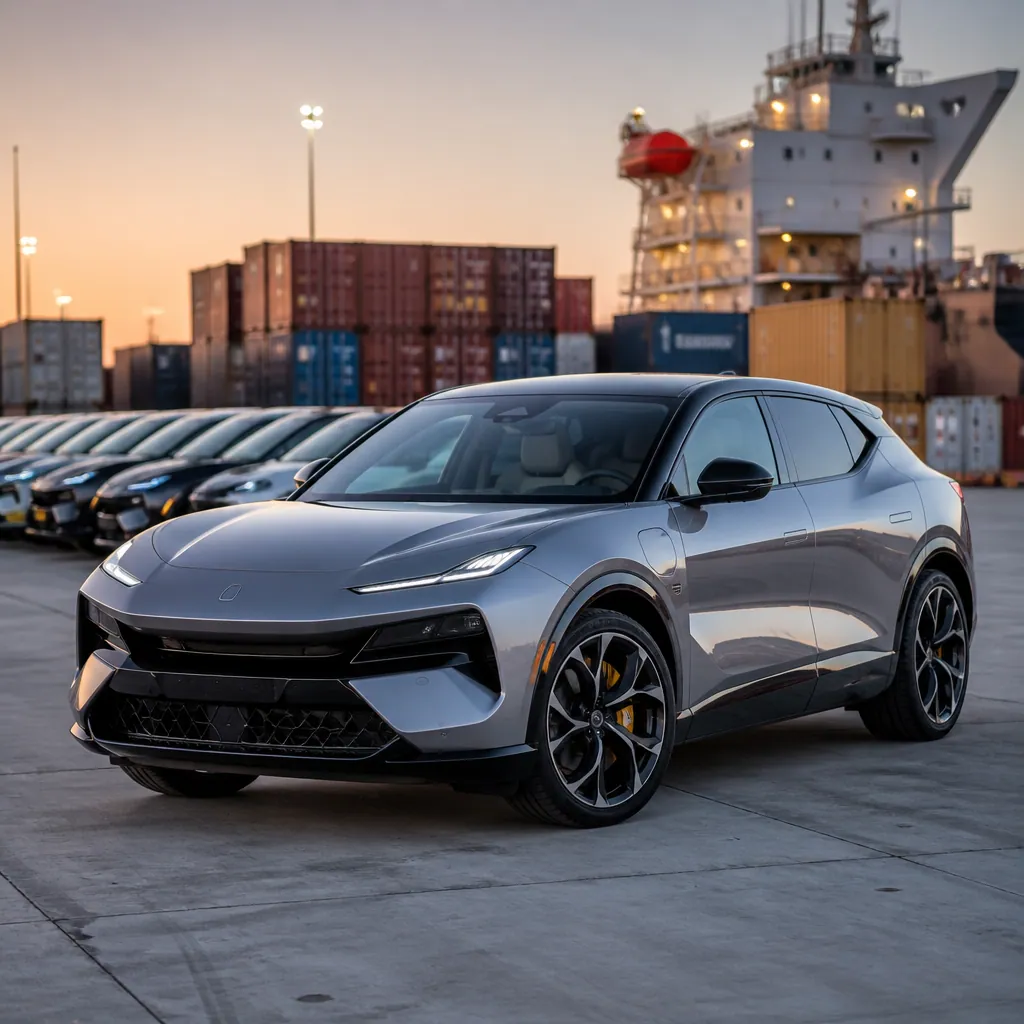

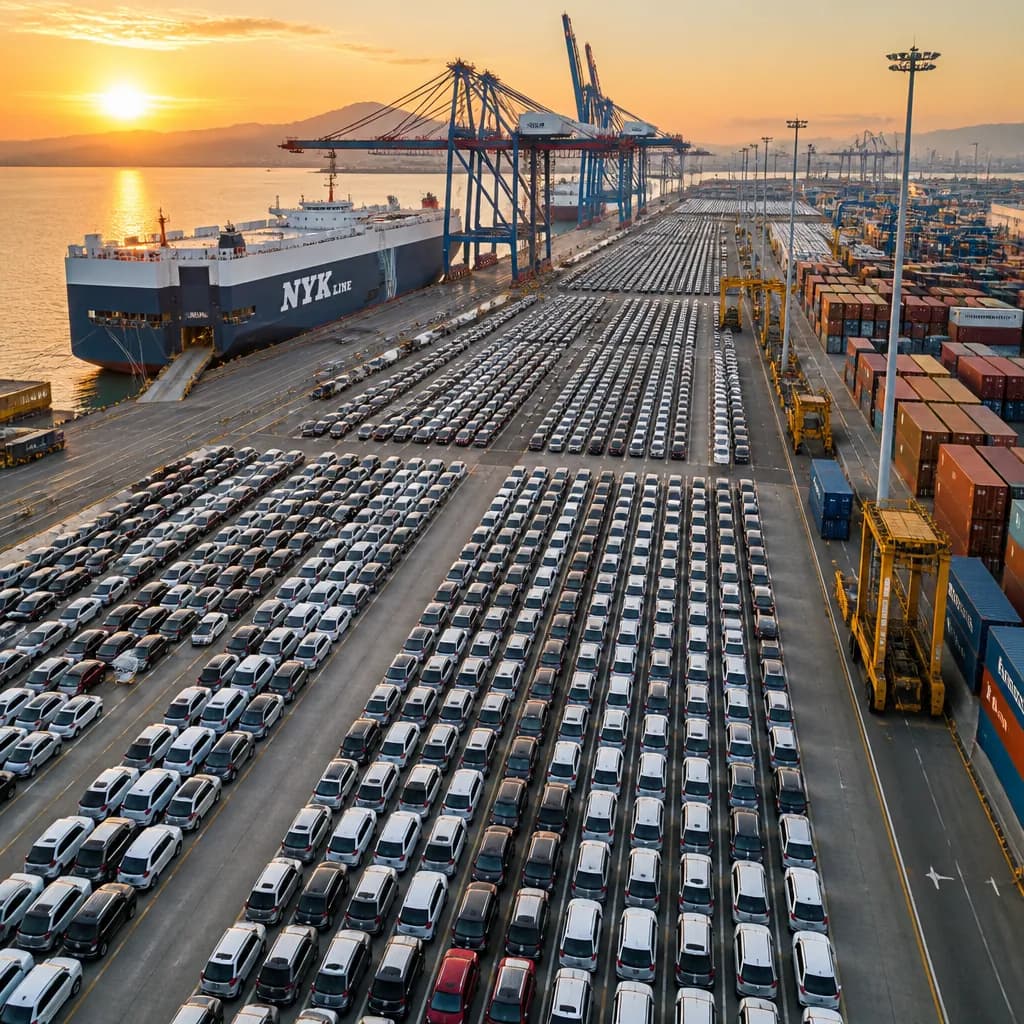
A lot of international buyers hear “Dubai stock vehicles” and assume it simply means used cars from the UAE. It does not. The term describes something more specific and, for the right buyer, considerably more valuable: vehicles that have already been cleared, deregistered, and prepared for cross border shipment from one of the world’s most efficient automotive export markets. Understanding what that actually means, and what it does not guarantee, is the difference between a smooth import and an expensive mistake. This guide breaks down the Dubai stock vehicle market honestly, for dealers, fleet operators, and importers who need facts, not sales talk.
Quick Takeaways
| Key Insight | Explanation |
|---|---|
| “Dubai stock” means export cleared, not just UAE-sourced | A genuine Dubai stock vehicle has been deregistered by the RTA and issued an export certificate, making it legally ready to leave the UAE. |
| GCC spec is a real engineering difference, not a marketing label | GCC-spec vehicles are adapted for extreme heat, desert dust, and regional fuel quality. That matters for buyers in the Middle East, Africa, and similar climates. |
| VAT zero rating is time sensitive | Export sales from the UAE can be zero rated for VAT, but the vehicle must leave within 90 days with documented proof of export. Miss the window and 5% applies. |
| Jebel Ali is not just a port; it is a logistics system | Dubai’s Jebel Ali Port provides established shipping routes to Africa, Asia, and Europe, which directly reduces transit times and freight costs for buyers in those markets. |
| Warranty does not travel with the car | Manufacturer warranties issued through UAE-authorized distributors typically do not transfer to buyers in other countries. Confirm this before purchasing. |
| New Chinese vehicles offer a direct factory alternative | For buyers who want brand new vehicles at competitive prices with full documentation from source, sourcing directly from China bypasses the UAE resale markup entirely. |
| Documentation quality varies by supplier | Not every seller using the phrase “export ready” has completed the full RTA export certificate process. Always request the actual export certificate before committing funds. |
What Are Dubai Stock Vehicles, Exactly?
The phrase Dubai stock vehicles is used loosely in international automotive trade, and that looseness creates problems. In its correct meaning, a Dubai stock vehicle is one that has been sourced from UAE inventory, deregistered with the relevant transport authority (the Roads and Transport Authority, or RTA, in Dubai’s case), issued a formal vehicle export certificate, and made available for international shipment. It is a specific legal and logistical status, not just a geographic description.
In practice, the UAE’s position as a re export hub means that Dubai holds vehicles from dozens of brands and configurations at any given time. These range from GCC-specification SUVs and pickup trucks through to commercial vans and passenger sedans. The inventory is broad because the UAE imports at scale and operates one of the most active vehicle resale markets in the world.
Where buyers get into trouble is treating every seller’s claim of “export ready” as equivalent. An export ready car in the strict sense has cleared its RTA deregistration, has no outstanding fines, Salik charges, or bank finance holds, and carries a valid export certificate. A car that is simply sitting on a Dubai dealer’s lot and available for purchase is not the same thing. The paperwork distinction is real and enforces itself at customs.
Pro tip: Before transferring any deposit, ask the supplier for the RTA export certificate reference number and the Mulkiya deregistration confirmation. If they cannot provide both, the vehicle is not legally export ready yet, regardless of how it is described in their listing.
GCC Spec: What It Means for Your Market
When a vehicle is described as GCC-specit means the manufacturer configured that unit specifically for Gulf Cooperation Council markets: Saudi Arabia, the UAE, Kuwait, Qatar, Bahrain, and Oman. These are not cosmetic differences. GCC-spec vehicles carry engineering adaptations for high ambient temperatures, fine desert dust ingestion, and the fuel grades typically available across the region.
What GCC Spec Actually Changes in the Vehicle
The most significant adaptations include upgraded cooling systems for the engine and cabin, reinforced air filtration for dust heavy environments, rust prevention coatings appropriate to coastal humidity, and calibration for local fuel grades. These are not features you can retrofit cheaply. A non-GCC vehicle running in a hot desert climate will show the difference in reliability within a few years of ownership, which is why resale values of non-GCC imports in the UAE secondary market are consistently lower.
For buyers in Africa, the Middle East, and South Asia, where climate conditions broadly align with the Gulf, GCC-spec vehicles are a practical fit. For buyers in Europe or temperate markets, the equation changes, and homologation requirements often require modification before the vehicle can be registered locally.
The Warranty Reality
This is the point that catches importers off guard. Manufacturer warranties issued through UAE-authorized distributors, such as Al Futtaim for Toyota or similar channel partners for other brands, generally do not transfer to buyers outside the UAE or to buyers outside the authorized network. Once the vehicle crosses a border, that coverage becomes difficult or impossible to claim in most destination countries. Buyers in Africa and parts of Asia have traditionally accepted this trade off in exchange for price and availability, but it should be a calculated decision, not an oversight.
The price advantage of Dubai stock vehicles is real. The hidden cost is what you spend to manage warranty gaps, local compliance, and documentation errors that a direct source supplier would have handled at origin.
The Export Documentation Chain
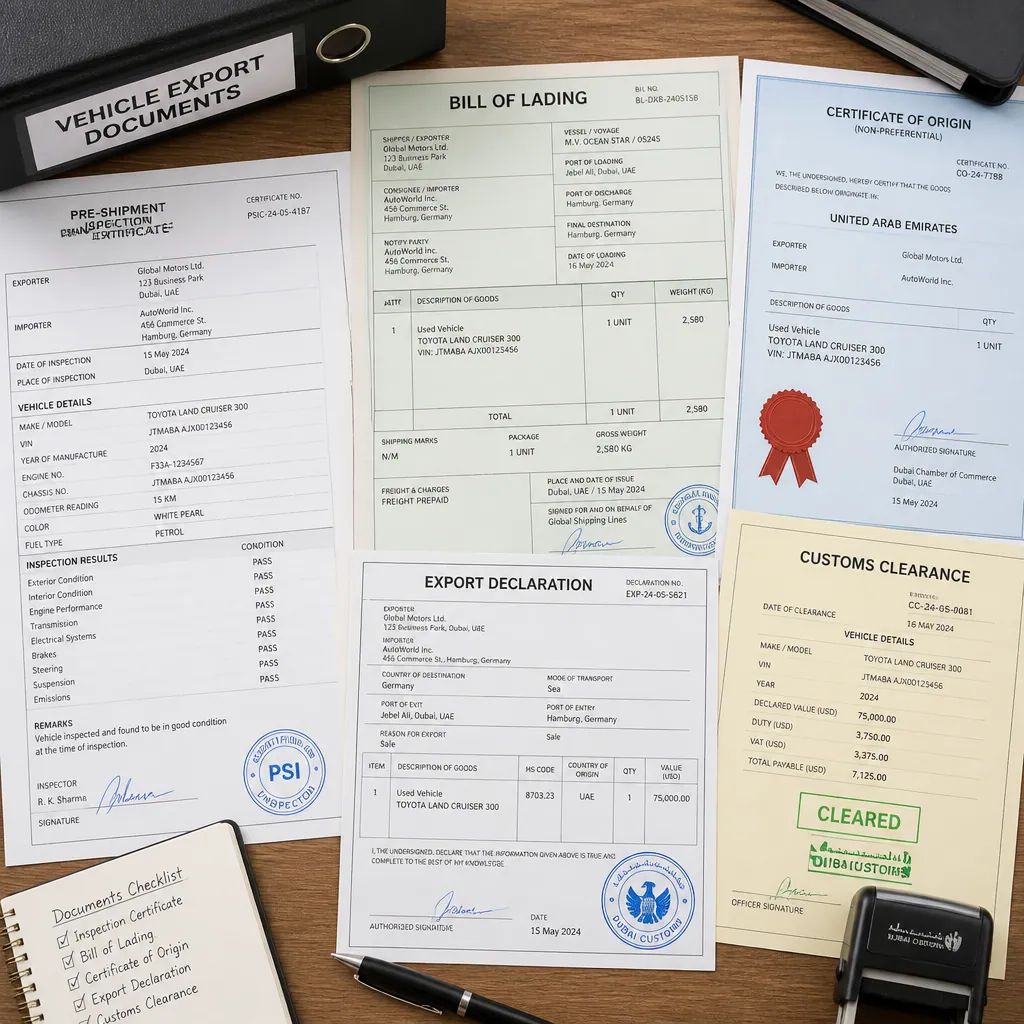
Understanding the documentation chain for export ready cars from Dubai is non negotiable for any serious importer. A single missing document can stall a shipment at port or trigger customs rejection at the destination country. The core documents required under UAE law are consistent, even if the specific authority issuing them varies by emirate.
The RTA Export Certificate Process
For a Dubai registered vehicle, the export certificate is issued by the Roads and Transport Authority. The process requires: clearing all outstanding fines, Salik road toll charges, and any bank finance hold on the vehicle; submitting the vehicle’s Mulkiya (registration card), Emirates ID of the registered owner, and an inspection report where applicable; surrendering the vehicle’s number plates; and paying the applicable RTA fee. Once submitted, the RTA cancels the UAE registration and issues the export certificate, which is what customs require to allow the vehicle to leave the country.
A Sharjah registered vehicle goes through the Sharjah traffic authority rather than the RTA, but the steps follow the same logic. The export certificate is always issued by the authority that holds the registration, not by the seller or shipping agent.
Beyond the Export Certificate
A complete export documentation package for a Dubai stock vehicle also includes the Mulkiya deregistration confirmation, a customs clearance document, a Bill of Lading (issued by the shipping line at Jebel Ali), and port clearance documentation. For buyers importing into countries with specific compliance requirements, such as SABER certification for Saudi Arabia, additional paperwork is layered on top. A supplier who describes themselves as handling “full documentation” should be able to itemize every one of these documents, not just reference them vaguely.
Pro tip: Request a pre shipment inspection report from an independent inspector at the Dubai end, not just the seller’s own assessment. Condition discrepancies between origin inspection and destination delivery are the single most common dispute in international vehicle export transactions.
Jebel Ali Port: Why It Matters for International Shipping
Jebel Ali Port is the UAE’s primary vehicle export hub and one of the largest container ports in the world. Its importance to the Dubai stock vehicle trade is not simply geographic. The port operates established direct shipping routes to markets across Africa, South and Southeast Asia, and Europe, which means lower freight costs and shorter transit times than sourcing from locations with less developed maritime infrastructure.
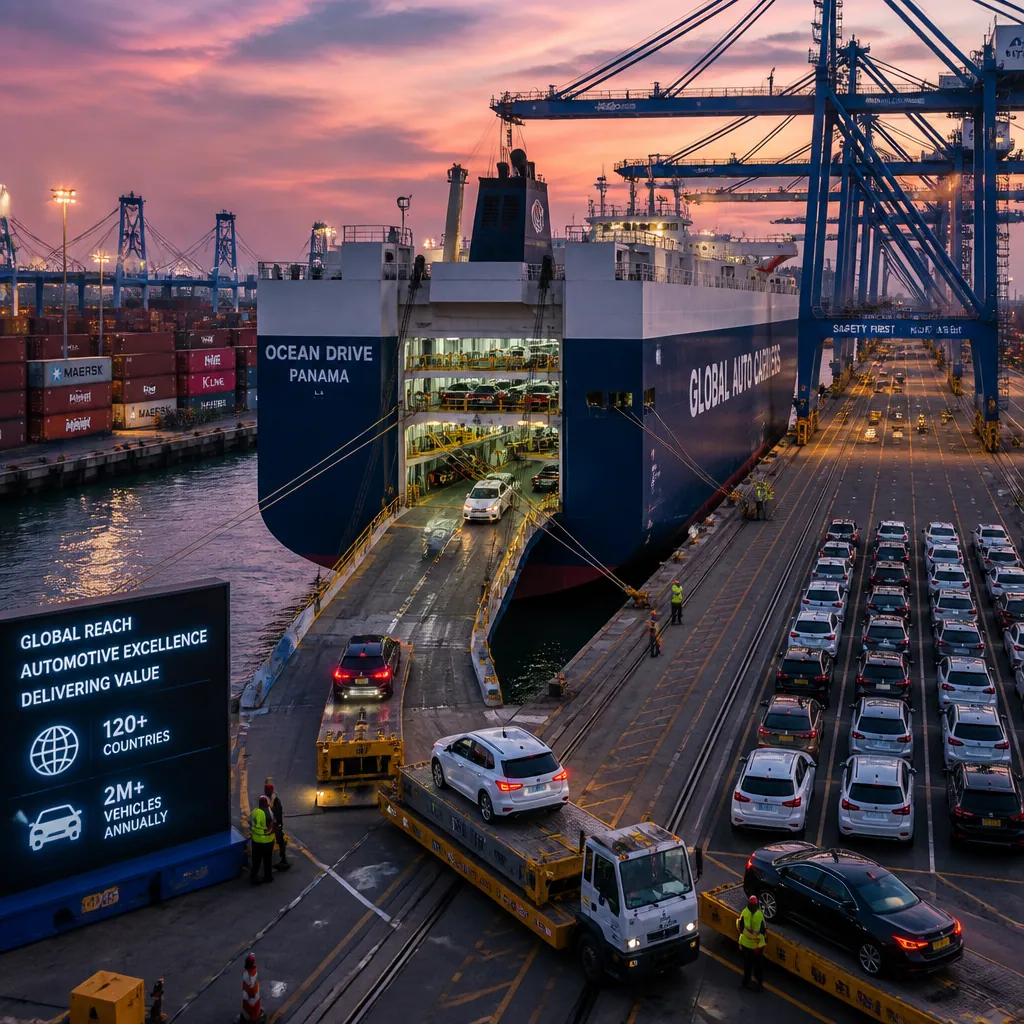
For buyers in East Africa, West Africa, or South Asia, the shipping route from Jebel Ali is often the most cost effective option available for used vehicle imports. Roll on, roll off (RoRo) shipping is the standard and cheapest method for vehicle export, while container shipping offers more protection for higher value or vulnerable units. The choice between the two affects both cost and delivery condition, and a reputable supplier will walk you through both options with actual freight quotes rather than vague estimates.
Port clearance at Jebel Ali is part of the export documentation chain and must be completed before the vessel departs. Buyers who engage suppliers without a physical presence or established relationships at Jebel Ali should factor in the risk of logistical delays at this stage, particularly during peak shipping periods.
Dubai Stock vs. Direct from China: A Practical Comparison
For international buyers and fleet operators, the choice between sourcing Dubai stock vehicles and sourcing brand new vehicles directly from China has become increasingly relevant. Chinese automotive brands have expanded aggressively into the UAE and broader Middle East market, and Chinese origin vehicles are now a significant proportion of both new sales and re export inventory. The comparison is worth making clearly.
| Factor | Dubai Stock Vehicles (Used/Pre Owned) | Brand New Vehicles Direct from China |
|---|---|---|
| Vehicle condition | Pre owned; condition varies by age, mileage, and previous owner | Factory new; zero mileage, no prior ownership |
| Price entry point | Lower upfront cost for the vehicle itself | Competitive factory pricing; no dealer resale markup |
| Warranty coverage | Manufacturer warranty typically expires or is non transferable | Full manufacturer warranty from date of purchase |
| Documentation complexity | Requires UAE deregistration, export certificate, Mulkiya clearance | Factory export documentation; simpler origin paperwork chain |
| Model and spec availability | Limited to what exists in UAE inventory at purchase time | Full range of current models and specifications available to order |
| Resale markup | UAE dealer or individual margin built into price | No intermediate resale margin; direct from factory or authorized exporter |
| Aftersales support | Dependent on destination country network; often limited | Can be structured with supplier at point of sourcing |
The practical conclusion is straightforward. Dubai stock vehicles make sense when a buyer needs a specific pre owned unit quickly, is comfortable managing the UAE documentation process, and has confirmed that the destination country’s import rules accommodate used vehicle imports without prohibitive duties. Direct from China sourcing makes more sense when the buyer wants new vehicles, wants a warranty, wants to specify configuration, or is ordering in volume where per unit pricing at factory level outperforms anything available in the UAE resale market.
Risks Buyers Ignore Until It Is Too Late
The Dubai stock vehicle market has genuine advantages, but certain risks appear consistently in failed transactions. Buyers who acknowledge these in advance are the ones who close deals cleanly.
Incomplete Export Clearance Sold as “Ready”
The most common operational problem is a seller presenting a vehicle as export ready when the RTA export certificate has not yet been issued. The seller may have initiated the process, but until the certificate is in hand, the vehicle cannot legally depart the UAE. Buyers who wire funds based on a seller’s assurance rather than verified documentation lose leverage immediately if delays arise.
Hidden Finance or Fines on the Vehicle
The RTA will not issue an export certificate on a vehicle with an outstanding bank mortgage or unresolved traffic fines. If a buyer is purchasing from a private seller or a smaller dealer, this due diligence falls on the buyer. Requesting a Vehicle Clearance Certificate (VCC) before committing is not optional; it is standard practice among experienced importers.
Homologation Gaps for Non-GCC Destinations
Buyers importing Dubai stock vehicles into countries with strict emissions or safety compliance standards face homologation costs that can erode the price advantage entirely. European markets in particular require Euro 5 or Euro 6 compliance, and most GCC-spec vehicles are not configured to meet these standards without modification. Buyers in Africa and the Middle East generally have more flexibility here, but individual country requirements vary and must be checked against the specific vehicle before purchase.
Shipping Damage Without Pre Shipment Inspection
RoRo shipping is cost effective but exposes vehicles to the possibility of loading, transit, and unloading damage. Without an independent pre shipment inspection report documenting the vehicle’s condition at the Dubai end, a buyer has no clean evidentiary basis for a damage claim on arrival. This is a solvable risk, but only if the inspection happens before the vessel departs.
Who Should Actually Buy Dubai Stock Vehicles?
Dubai stock vehicles are well suited to a specific buyer profile, not every international buyer. Getting this wrong wastes time and money on both sides of the transaction.
The buyer who benefits most from Dubai stock vehicles is one who needs a specific pre owned model that is either unavailable or prohibitively expensive in their home market, who is importing into a country with established used vehicle import processes and manageable duties, and who has a local workshop capable of servicing the vehicle without manufacturer warranty support. Dealers in East Africa sourcing used Toyota Land Cruisers or pickup trucks from Dubai fit this profile well. So do fleet operators in South Asia who need specific commercial van configurations that were popular in the UAE market.
The buyer who should look elsewhere is one who needs brand new vehicles, wants full manufacturer warranty coverage, needs to specify build configurations, or is importing into a market where used vehicle import duties make the economics unfavorable. For that buyer, sourcing new vehicles directly from Chinese manufacturers, with full factory documentation and warranty, is a structurally better option. The price advantage that Dubai stock vehicles offer over new vehicles disappears quickly once warranty costs, duty differentials, and reconditioning expenses are factored in.
At Automotion Globalwe work with dealers, fleet operators, and importers across the Middle East, Africa, and Asia who want brand new vehicles sourced directly from China with complete export documentation, inspection, and aftersales support. If your buying requirements point toward new vehicles rather than UAE resale stock, that is the conversation worth having.
Frequently Asked Questions
What does “export ready” actually mean for a Dubai stock vehicle?
A genuinely export ready Dubai stock vehicle has been deregistered by the relevant UAE transport authority (the RTA for Dubai registered vehicles), issued a formal vehicle export certificate, cleared of all outstanding fines and finance holds, and had its registration plates surrendered. Until all of these steps are complete, the vehicle cannot legally cross a UAE border or be loaded at Jebel Ali Port. The phrase is used loosely by some sellers, so always request the actual export certificate rather than accepting a verbal assurance.
Are GCC-spec vehicles suitable for buyers outside the Middle East?
It depends on the destination market. For buyers in Africa, South Asia, and other regions with similar climatic conditions, GCC-spec vehicles are generally well suited and parts availability is reasonable. For buyers in Europe or North America, GCC-spec vehicles require homologation, and in most cases that means meeting stricter emissions standards (Euro 5 or Euro 6 for EU markets) that the vehicle was not built to. The homologation cost can be significant and must be calculated before committing to a purchase.
Does the manufacturer warranty stay valid when I import a Dubai stock vehicle?
In most cases, no. Manufacturer warranties issued through UAE-authorized distributors are tied to the local authorized dealer network and do not transfer to buyers in other countries. Once a vehicle is exported and deregistered from the UAE, the original warranty is effectively inaccessible for buyers outside the GCC. This is one of the most significant practical differences between buying a pre owned Dubai stock vehicle and buying a brand new vehicle directly from a factory authorized exporter.
What is the advantage of Jebel Ali Port for vehicle export?
Jebel Ali Port operates established direct shipping routes to markets across Africa, Asia, and Europe, which means competitive freight rates and shorter transit times compared to less connected ports. It is the UAE’s primary vehicle export hub and handles both RoRo (roll on, roll off) and container shipping. Buyers importing into East Africa, West Africa, or South Asia will often find that Jebel Ali offers the most cost effective freight option, though this should always be confirmed with actual shipping quotes for the specific destination.
How does buying Dubai stock vehicles compare to sourcing new vehicles directly from China?
Dubai stock vehicles are typically pre owned, carry no remaining manufacturer warranty, and are priced with a UAE resale margin built in. Sourcing new vehicles directly from China gives buyers factory new condition, full warranty, the ability to specify configurations, and no intermediate resale markup. For volume buyers or fleet operators, direct from China sourcing generally delivers better value per unit once total cost of ownership is calculated. Dubai stock vehicles make more sense for buyers who need a specific used model quickly or whose destination market imposes restrictions on new vehicle imports.
What documents should I insist on receiving before paying for a Dubai stock vehicle?
At minimum: the RTA export certificate (or equivalent from the relevant emirate’s transport authority), the Mulkiya deregistration confirmation, a Vehicle Clearance Certificate confirming no outstanding fines or finance, and an independent pre shipment inspection report. Once the vehicle is shipped, you will also need the Bill of Lading from the shipping line and the port clearance documentation from Jebel Ali. If the seller cannot produce the export certificate before you transfer funds, the vehicle is not legally export ready regardless of what they tell you.
Have you bought cars from Dubai stock before, or are you currently comparing your sourcing options? Share your experience or questions in the comments, we read every one.
References
- UAE vehicle export process explained: RTA certificate, documentation, and shipping options
- Dubai vehicle export documentation requirements and Jebel Ali Port shipping overview
- How to apply for an RTA vehicle export certificate in Dubai
- GCC-spec vs. imported spec vehicles: what the difference means for buyers in the UAE
- Dubai used car export market guide for international buyers and dealers