Most international buyers who have been burned by a bad vehicle export deal share one thing in common: they skipped the verification steps because the supplier looked professional online. Websites are cheap to build. Promises are easy to make. When you are wiring a five- or six figure deposit for a consignment of vehicles, the cost of skipping due diligence is not an inconvenience, it is a total loss. Learning how to compare Chinese car exporters systematically, before any money moves, is the single most important skill a vehicle dealer, fleet operator, or distributor working in this space can develop.
Why Exporter Selection Matters More Than Brand Selection
Buyers often spend weeks comparing BYD versus Chery, or Haval versus Jetour, and then pick a supplier in an afternoon. That priority is backwards. The vehicle brand determines what you are buying. The exporter determines whether it actually arrives, in the condition described, with documentation that clears customs in your country.
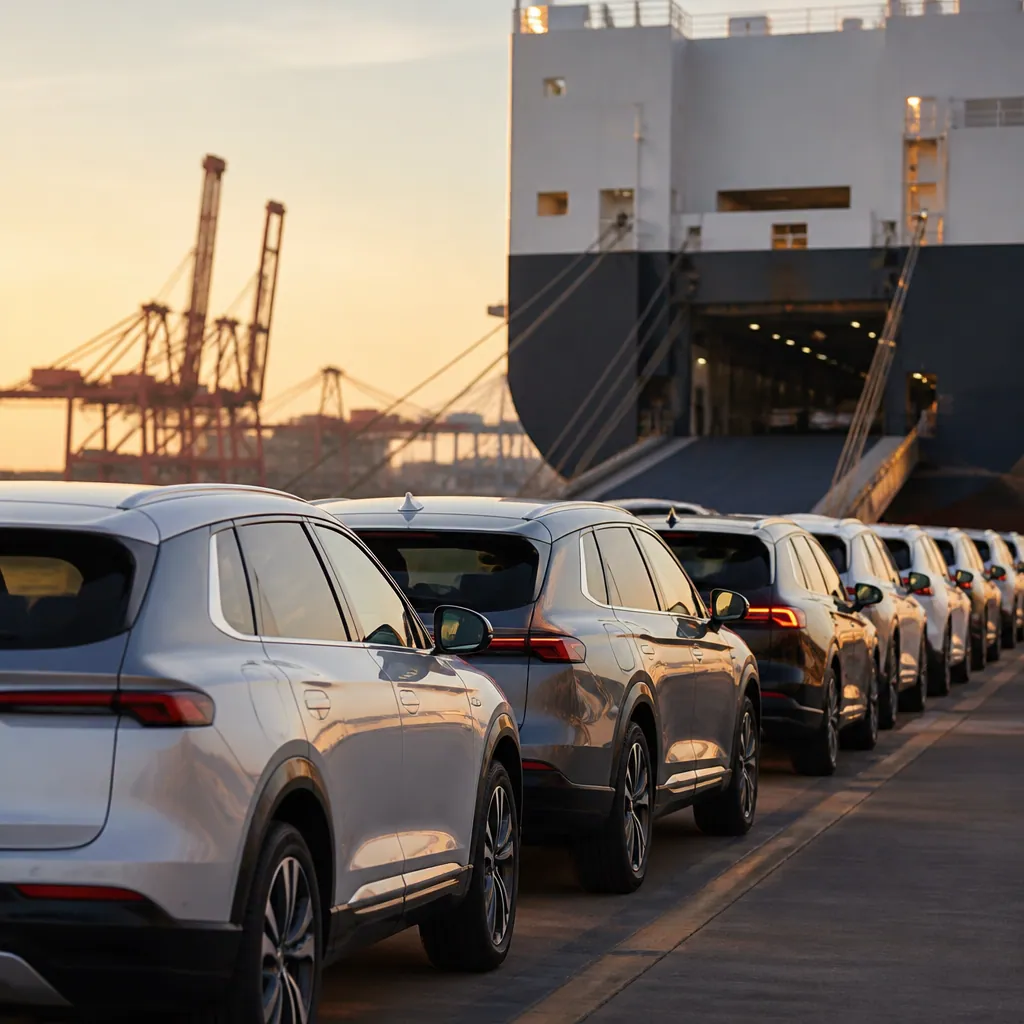
China’s vehicle export volumes have grown dramatically. In 2025, China’s automobile exports exceeded 7 million vehicles, reaching 7.098 million vehicles, a year on year increase of 21.1%, making China the world’s largest automobile exporter. That volume has attracted a wide spectrum of operators into the export space, from established, factory authorized distributors to one person trading accounts reselling on thin margins with no physical infrastructure. The market is not self regulating. You have to be.
The checklist below is structured in the order you should actually work through it: start with legal standing, move to documentation capability, and finish with post delivery support. Do not skip ahead to pricing until the earlier boxes are checked.
Quick Takeaways
| Key Insight | Explanation |
|---|---|
| Verify business registration before anything else | A legitimate exporter can show a Chinese business licence with vehicle export scope, matching bank account name, and active registration status on China’s official registry. Missing or mismatched details are a hard stop. |
| Export licence scope must include vehicles | Not every Chinese trading company is authorized to export vehicles. The Ministry of Commerce (MOFCOM) issues specific export permissions. Ask for the licence number and verify it on the official portal. |
| A VIN-level document set is the minimum | The commercial invoice, packing list, certificate of origin, and export certificate should all reference the specific VIN of your vehicle, not a generic template. Generic documents are a warning sign. |
| Independent pre shipment inspection is your main safeguard | A trustworthy exporter will accept, and support, third party inspection before full payment. An exporter who resists independent inspection is protecting something you need to see. |
| Incoterms define your risk exposure | EXW leaves nearly all logistics risk with you. FOB transfers risk at the port of loading. CIF covers sea transit. Understand exactly what the quoted price includes before signing any proforma invoice. |
| Aftersales capability is a differentiator, not a bonus | For fleet buyers and dealers, spare parts availability and technical support after delivery directly affect your resale value and customer retention. Treat it as a selection criterion, not an afterthought. |
| Price gaps above 20 to 30% below market signal serious risk | Chinese new car export pricing is relatively transparent. Prices significantly below market typically indicate undeclared damage, title issues, tax fraud, or outright scam rather than a genuine deal. |
Legal Credentials: The Non Negotiable Starting Point
Before you evaluate a single vehicle model or discuss shipping terms, establish that the company you are dealing with is legally constituted and authorized to export vehicles from China. This is not bureaucratic formality, it is the foundation everything else rests on.
Business Licence and Registration Status
A legitimate Chinese vehicle exporter can show you four things within one working day: a business licence whose scope includes vehicle export, a company bank account in the same name as that licence, per unit documentation for the actual vehicle you are buying (VIN, invoice, export certificate), and a willingness to let an independent inspector see the vehicle before it is paid for in full. If any one of those four is absent, the risk is not marginal.
Check the registration status directly. The registration status must show “active” or “in operation.” If it says “revoked” or “deregistered,” that is a hard stop. The National Enterprise Credit Information Publicity System (gsxt.gov.cn) lets you search any Chinese registered company by name or registration number. Use it.
MOFCOM Export Authorization
Verify authenticity by checking exporter licence screenshots with the MOFCOM URL (mofcom.gov.cn), looking for the latest timestamp and the “Pass” (通过) indicator shown in the picture. An exporter who cannot produce a verifiable MOFCOM licence is not authorized to export vehicles from China, regardless of what their website claims.
Pro tip: Ask the exporter to send you a dated screenshot of their MOFCOM verification page, then verify it yourself at the same URL within 24 hours. Screenshots can be edited. Independent verification cannot be faked.
Vehicle Sourcing and Inventory Transparency
There is a meaningful difference between an exporter who has direct access to manufacturer inventory and one who is a second hand reseller operating between you and another trader. The difference matters for pricing accuracy, delivery timelines, and vehicle condition.
Manufacturer Authorization versus Open Market Sourcing
Some exporters hold formal dealer or distribution agreements with specific Chinese automakers. Others purchase from the open domestic market or at auction. Neither model is automatically bad, but you need to know which one applies, because it affects everything from the vehicle’s tax status to the validity of the manufacturer warranty.
Ask directly: “Are you an authorized dealer or distributor for this brand?” Then ask for the authorization certificate. If they are not authorized, ask exactly where the vehicle is being sourced from and request documentation of that purchase chain. Transparency here is a signal of overall reliability.
New Versus Registered Vehicles
This distinction matters especially after regulatory changes that took effect in 2026. Beginning January 1, 2026, vehicles registered for less than 180 days face tighter export restrictions. Exporters must provide a manufacturer issued After Sales Service Confirmation Letter, verified export destination and vehicle details, and local service network information with an official company seal. Vehicles without complete documentation will not receive export licences.
Any exporter quoting you on recently registered vehicles must be able to demonstrate compliance with these requirements. Failure to do so means the shipment may be blocked at the Chinese port of departure.
Pro tip: For fleet orders, request a full vehicle identification list (make, model, VIN, production date, registration date if applicable) before confirming your order. This forces the exporter to work from specific units rather than hypothetical inventory, and it surfaces any registration date issues early.
Export Documentation: What a Competent Exporter Prepares
Documentation errors are one of the most common causes of customs clearance delays and vehicle seizures. A capable exporter does not just pass paperwork along, they prepare it correctly for your destination country from the start.
Core Documents for Every Shipment
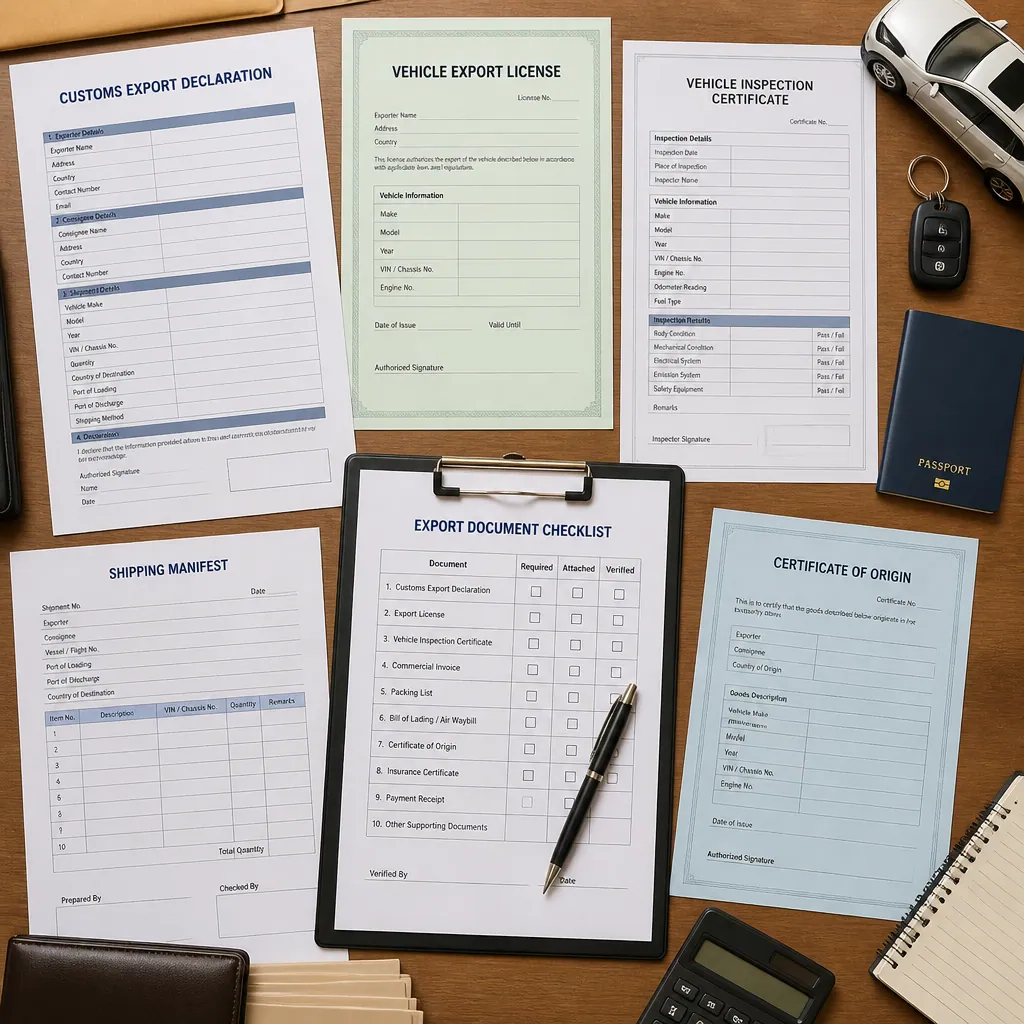
The commercial invoice must include full details such as buyer and seller information, vehicle model, brand, VIN, FOB or CIF price, and payment terms. The packing list must clearly state vehicle dimensions, weight, quantity, and packaging method. These are the minimum. A competent exporter will also prepare a Certificate of Origin (COO) issued by the China Council for the Promotion of International Trade (CCPIT) or Chinese Customs, and a Bill of Lading matched to the shipping arrangement.
For electric vehicles, additional documents are required. UN38.3 and MSDS documentation is required for lithium battery transportation compliance. Any exporter handling EV exports who is not familiar with these requirements is a liability, not an asset.
Document Accuracy and Bilingual Preparation
All documents must be bilingual (English and Chinese) and legally stamped. Errors in declared values, mismatched VINs between the invoice and the Bill of Lading, or missing stamps are the specific details that stop shipments at customs. Ask a prospective exporter to show you a sample document set from a previous completed export, redacted for the original buyer’s privacy is fine. The format and completeness of that sample tells you a great deal.
The quality of an exporter’s documentation tells you more about their operational competence than anything on their website. A clean, complete, VIN-specific document set is evidence of a business that has done this before and knows what customs officials actually check.
Pre Shipment Inspection and Quality Control
Pre shipment inspection is where many buyers cut corners to save a few hundred dollars and then spend tens of thousands correcting the consequences. Do not negotiate it away.
What a Proper Inspection Covers
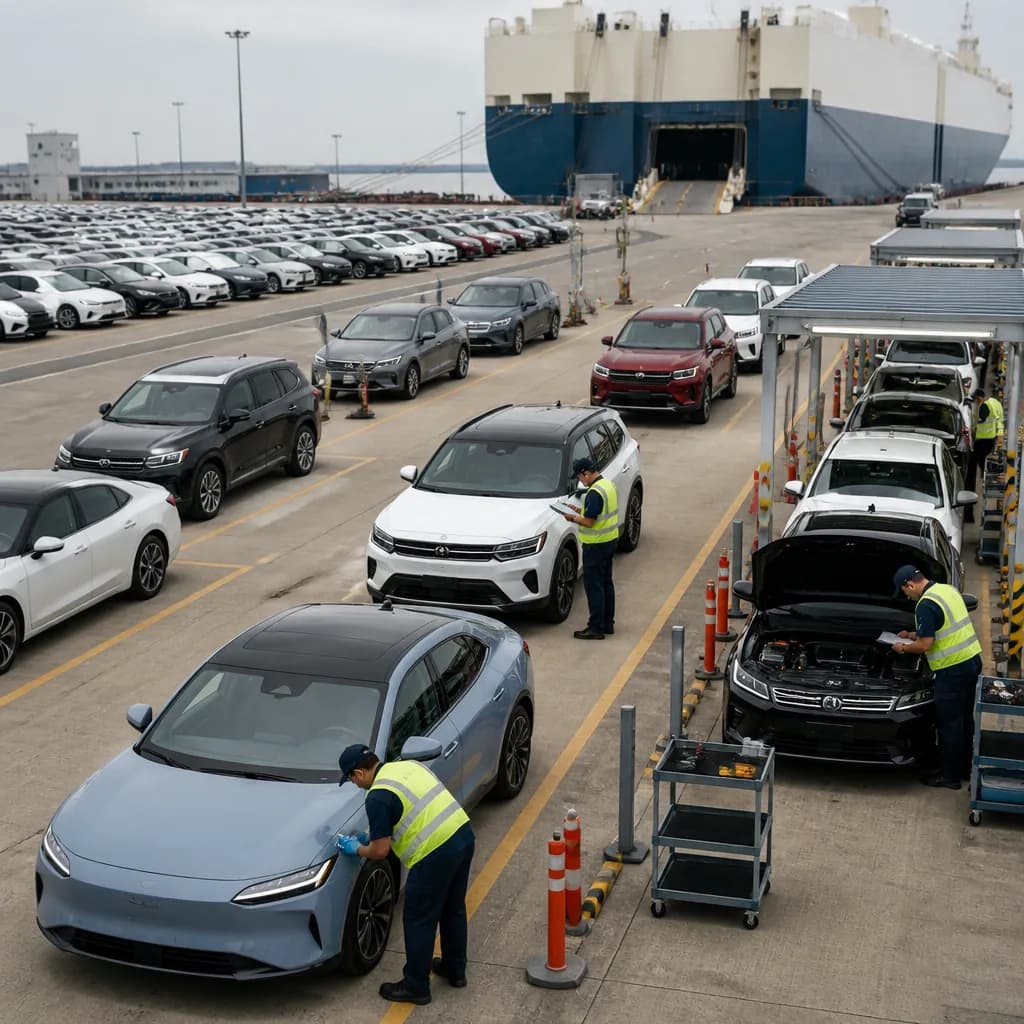
Serious exporters use documented inspection protocols, including photo evidence, GPS video, and written checklists. But the burden of verification still sits with the buyer. Your responsibility is to ensure that an independent inspector, not affiliated with the exporter, physically sees the vehicle before the balance payment is made.
A credible inspection covers VIN verification against documents, paint and bodywork condition, mechanical start up, electrical systems check, odometer reading, and confirmation of included accessories. For EV and PHEV units, battery state of health should also be recorded.
Independent vs. Exporter Arranged Inspection
There is a clear difference between an exporter who arranges their own internal inspection and one who actively supports your access to an independent third party inspector. The former is useful but not independently verifiable. The latter is the standard you should hold any exporter to. A trustworthy exporter will accept and support independent inspection, an exporter who resists independent inspection is protecting something you need to see.
Shipping Terms and Logistics Capability
Incoterms are not fine print. They are the terms that define exactly who owns the risk at each stage of the journey from a factory in Guangzhou to a port in the Middle East or Africa. Getting this wrong costs real money.
Understanding EXW, FOB, and CIF for Vehicle Shipments
EXW (Ex Works) means you take responsibility for everything from the factory door. This is rarely practical for international buyers who do not have established Chinese freight contacts. FOB (Free On Board) transfers risk to you once the vehicle is loaded at the Chinese port. This is a common and workable arrangement if you have reliable freight forwarders. CIF (Cost, Insurance, and Freight) means the exporter covers sea freight and marine insurance to your destination port. This is generally the most straightforward option for buyers who are new to the China export route or who are placing smaller orders.
Ask any exporter you are evaluating to quote in at least two Incoterms so you can understand what is and is not included. An exporter who can only quote EXW is often signalling limited logistics capability.
Shipping Method: RoRo versus Container
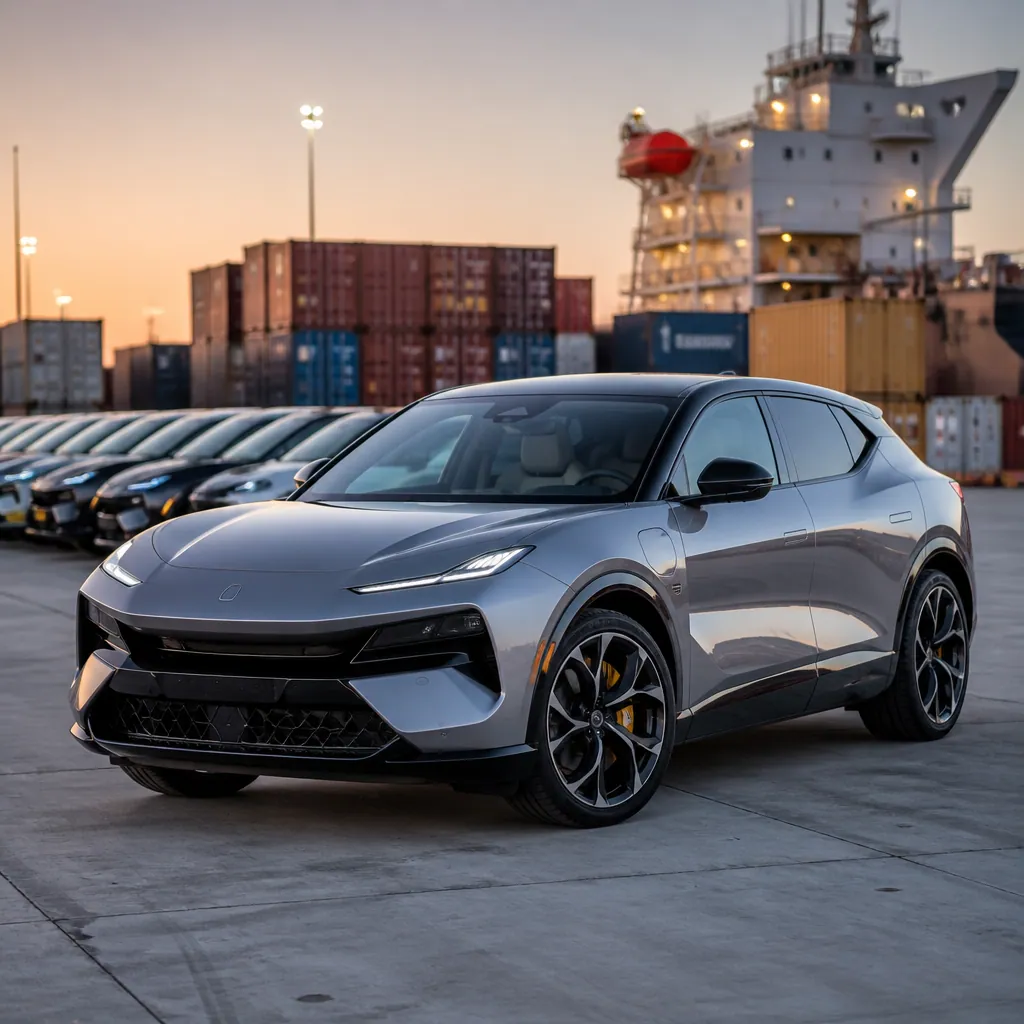
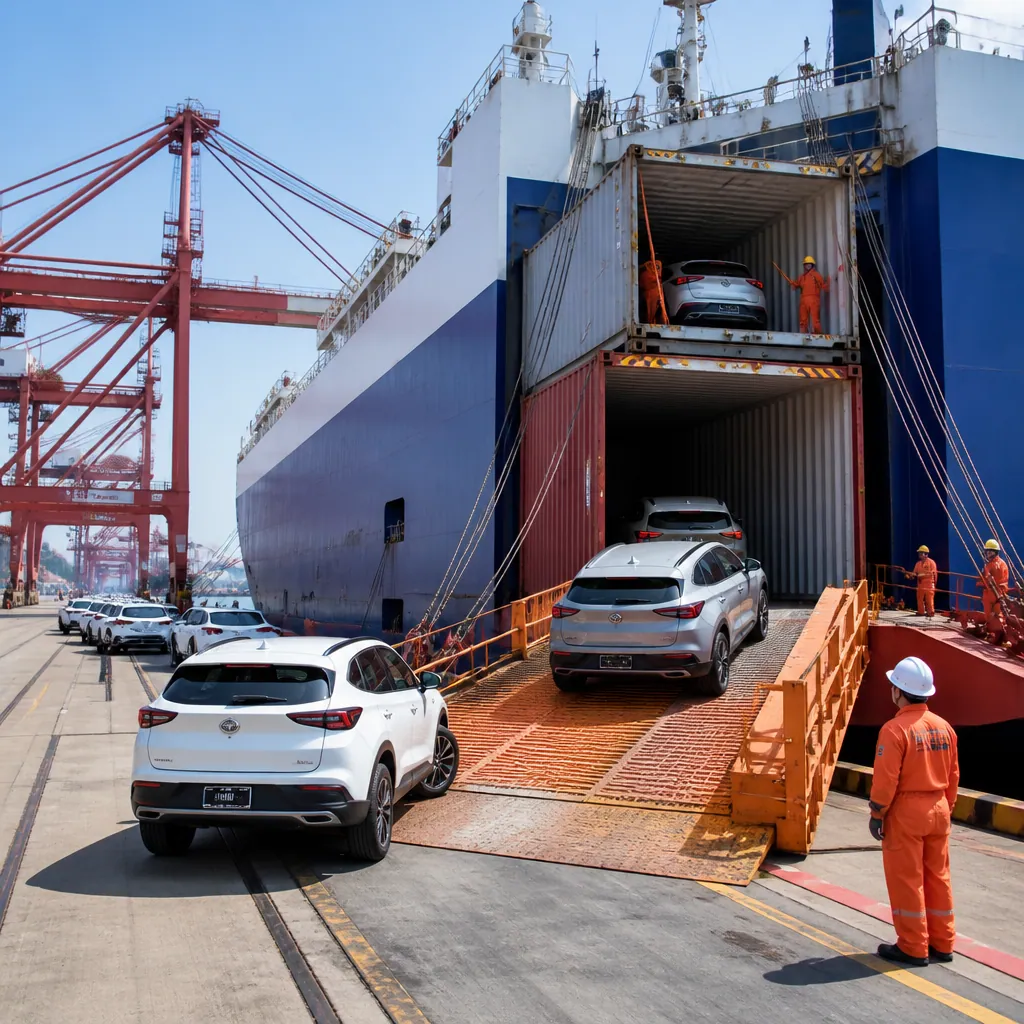
Roll on Roll off (RoRo) shipping is typically cheaper for vehicles but offers less physical protection during transit. Container shipping protects the vehicle better, and for high value or electric vehicles, it is the preferred method. A capable exporter will advise you on the appropriate method for your vehicle type and destination, not simply quote the cheapest option. The ability to coordinate either method, and to handle the associated port paperwork on the departure side, is a practical indicator of logistics competence.
Aftersales Support and Spare Parts Access
Fleet operators and dealers who buy Chinese vehicles for resale in markets like the UAE, Saudi Arabia, Kenya, Nigeria, or South Africa face a specific challenge: the aftersales infrastructure for Chinese brands in many of these markets is still developing. The exporter you choose either helps bridge that gap or leaves you exposed to it.
Spare Parts Availability and Lead Times
Ask directly: does the exporter maintain a spare parts inventory or have an established supply channel for the brands they sell? What is their average lead time for common consumables (filters, brake pads, belts) and for less common mechanical components? For fleet buyers, downtime caused by parts unavailability has a direct cost in lost operational days. A supplier who dismisses this question is telling you their interest ends at the point of delivery.
Technical Documentation and Warranty Clarity
Chinese manufacturers vary in how warranty coverage is structured for export vehicles. Some provide international warranty support through their own growing service networks. Others require claims to be processed through the original Chinese dealer, which is impractical once the vehicle is in another country. Get the warranty terms in writing before purchase, specifically, where claims are processed, who covers labour costs, and whether the warranty is transferable if you are a dealer reselling to end buyers.
Technical documentation in the buyer’s language (or at minimum in English) is also something to verify. Service manuals, wiring diagrams, and diagnostic codes in Mandarin only are a real operational problem for fleet workshops outside China.
Red Flags That Should Stop a Deal Immediately
The following are not reasons to negotiate harder. They are reasons to walk away.
If a price is more than roughly $500 below the transparent domestic market price for a new vehicle of the same model, that is a major red flag. Prices significantly below market typically indicate undeclared damage, a title problem, a tax irregularity, or an outright scam. The China new vehicle market is large and competitive, but it is not so competitive that a legitimate seller can sustain pricing 25 to 40% below market.
Fraudulent exporters may offer “flexible documentation” options, such as providing both new and used car export documents for the same vehicle at different prices. Any supplier who offers to adjust documentation based on what customs rate you want to pay is not a business partner, they are an exposure.
Additional hard stops include: no physical address verifiable on maps, refusal to accept video calls showing the vehicle and the company premises, payment terms that require 100% upfront before any inspection, and pressure to complete the transaction before documentation is complete. Legitimate exporters will give you time to review documentation, ask questions, and verify details. If someone is pushing you to wire money immediately, that is a high pressure sales tactic, not a trustworthy business practice.
Comparison: Direct Manufacturer vs. Trading Company vs. Full Service Exporter
There are three main supplier types you will encounter when sourcing vehicles from China. Each has different capabilities, constraints, and risk profiles. Knowing which type you are dealing with changes how you evaluate them.
| Supplier Type | Strengths | Limitations |
|---|---|---|
| Direct Manufacturer / OEM Export Division | Factory direct pricing on large volumes; authoritative technical documentation; manufacturer warranty clearly structured; strong model specific expertise. | Typically requires high minimum order quantities; limited flexibility on mixed brand orders; export process support may be minimal for smaller buyers; less responsive to custom configuration requests. |
| Trading Company | Can source multiple brands in one order; often lower minimum quantities; more flexible on deal structure; useful for buyers testing the market with small initial orders. | No direct manufacturer relationship; documentation chain is longer and harder to verify; warranty arrangements may be unclear; quality control depends entirely on the trading company’s own processes, which vary widely. |
| Full Service Export Specialist | Handles sourcing, inspection, documentation, customs, freight, and aftersales in one relationship; deep knowledge of destination country regulations; suitable for repeat orders and fleet supply; transparent pricing across the full chain. | Typically higher per unit cost than factory direct pricing on very large volumes; requires thorough initial vetting to establish trust; not the right fit for one off spot purchases. |
For vehicle dealers, fleet operators, and distributors sourcing regularly into markets across the Middle East, Africa, or Asia, the full service export model generally produces the most predictable outcomes. The added cost per unit is usually recovered through fewer documentation errors, fewer delays, and better continuity of aftersales support. Buyers who prioritize the lowest quoted price above all else tend to encounter the most problems.
Automotion Global operates as a full service export partner, handling every stage from vehicle sourcing and supplier coordination through to export documentation, international shipping, and aftersales assistance. For buyers comparing their options, that means a single point of accountability across the entire chain rather than assembling multiple vendors independently.
Frequently Asked Questions
How do I verify that a Chinese car exporter is legitimate before paying a deposit?
Request the business licence (including the export scope), verify the company’s registration status on China’s National Enterprise Credit Information Publicity System (gsxt.gov.cn), confirm the MOFCOM export authorization on the official portal, and check that the bank account name matches the registered company name exactly. A legitimate exporter produces all of this without hesitation. If any element is missing or does not match, do not pay a deposit.
What documents should a Chinese vehicle exporter provide for each shipment?
At minimum: a commercial invoice referencing the specific VIN, packing list, Certificate of Origin (issued by CCPIT or Chinese Customs), export certificate, and Bill of Lading matched to the shipping arrangement. For electric vehicles, UN38.3 and MSDS documentation for lithium battery compliance is also required. All documents should be bilingual (English and Chinese) and legally stamped. Anything using generic templates without VIN-specific details is a warning sign.
Is it better to buy directly from a Chinese car manufacturer or through an export specialist?
It depends on order volume and operational complexity. Buying direct from a manufacturer typically makes sense only at high volumes with dedicated procurement resources. For most international dealers and fleet operators, a full service export specialist produces more reliable outcomes, they handle documentation, inspection, customs, freight, and aftersales as an integrated service rather than leaving each stage to the buyer to coordinate separately.
What is the difference between FOB and CIF pricing for Chinese vehicle exports?
FOB (Free On Board) means the exporter’s responsibility ends when the vehicle is loaded at the Chinese port. From that point, freight costs, marine insurance, and destination customs are the buyer’s responsibility. CIF (Cost, Insurance, and Freight) means the exporter covers sea freight and insurance to your destination port. CIF is generally simpler and lower risk for buyers who do not have established freight arrangements. Always confirm exactly which Incoterm applies to any quoted price before agreeing to terms.
How should fleet buyers evaluate aftersales support when choosing a Chinese vehicle exporter?
Ask specifically: which brands does the exporter support post delivery, what is their spare parts sourcing arrangement and typical lead time, how are warranty claims processed (especially for vehicles exported to markets without a local manufacturer service network), and whether technical documentation is available in English. For fleet operators, aftersales capability directly affects total cost of ownership and operational uptime, it deserves as much evaluation weight as the vehicle price itself.
What price difference should make me suspicious when comparing Chinese car export quotes?
Chinese new vehicle export prices are relatively transparent and linked to domestic market pricing. If a quote comes in significantly below comparable pricing from other sources, treat it as a signal of risk rather than a deal. Common explanations for suspiciously low pricing include undeclared vehicle damage, title irregularities, fraudulent documentation, or tax evasion schemes, all of which create serious legal and financial exposure for the buyer after the fact.
Can I use an independent inspector for Chinese vehicle exports, or does it have to be arranged by the exporter?
You can and should arrange your own independent inspection, or at minimum specify an independent inspector acceptable to both parties. A credible exporter will support third party inspection access as a standard part of their process. The inspection should happen before the balance payment is made. Exporters who resist independent inspection, delay it, or only offer their own internal inspection report as a substitute are presenting a clear warning sign about what an independent inspector might find.
If you are currently evaluating suppliers for a vehicle sourcing programme and want to discuss how a transparent, full service export approach compares to what you are currently seeing in the market, we would be glad to hear from you.
References
- How to verify a Chinese vehicle exporter’s credentials and quality controls before committing
- Nine point checklist for confirming a Chinese car export company is legitimate
- Required export documentation and customs compliance for vehicles shipped from China
- Top Chinese vehicle import countries and export volume data for 2025
- What international buyers need to know about China’s 2026 vehicle export restrictions