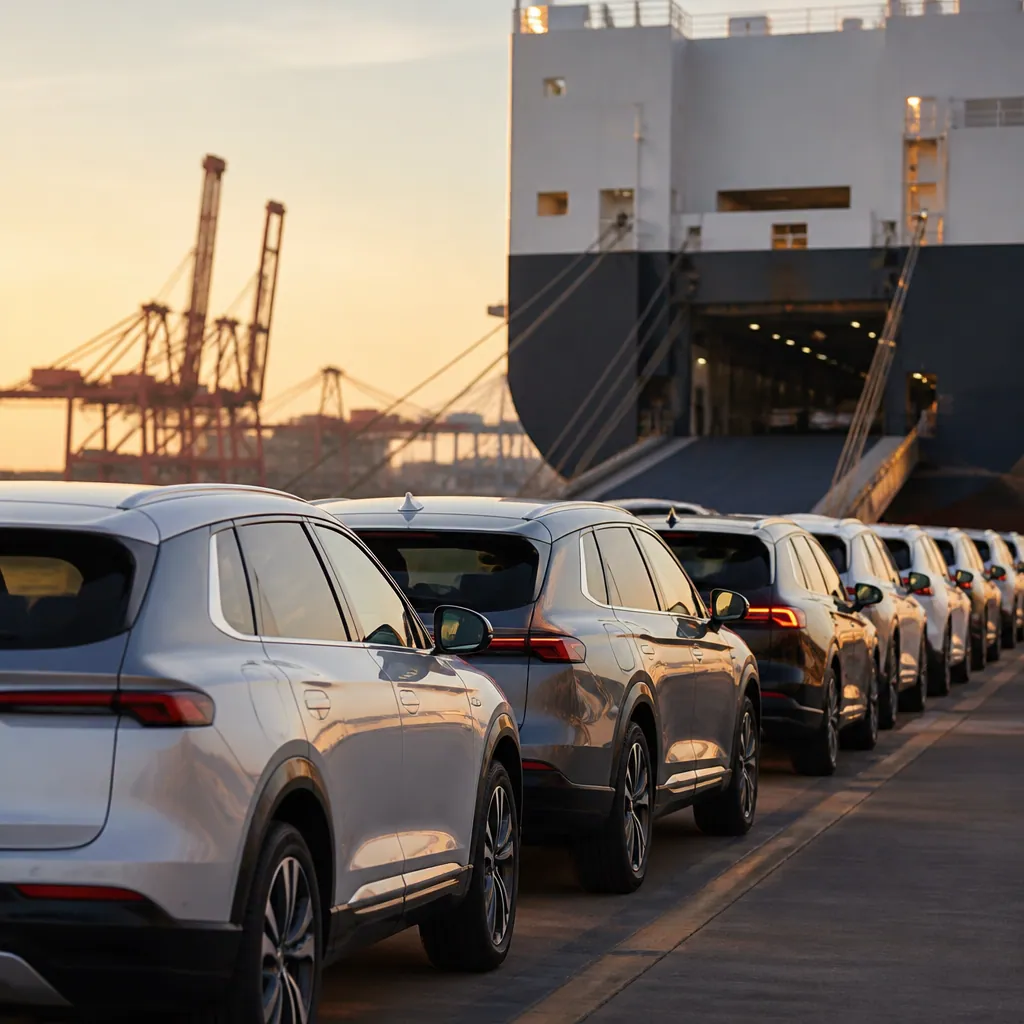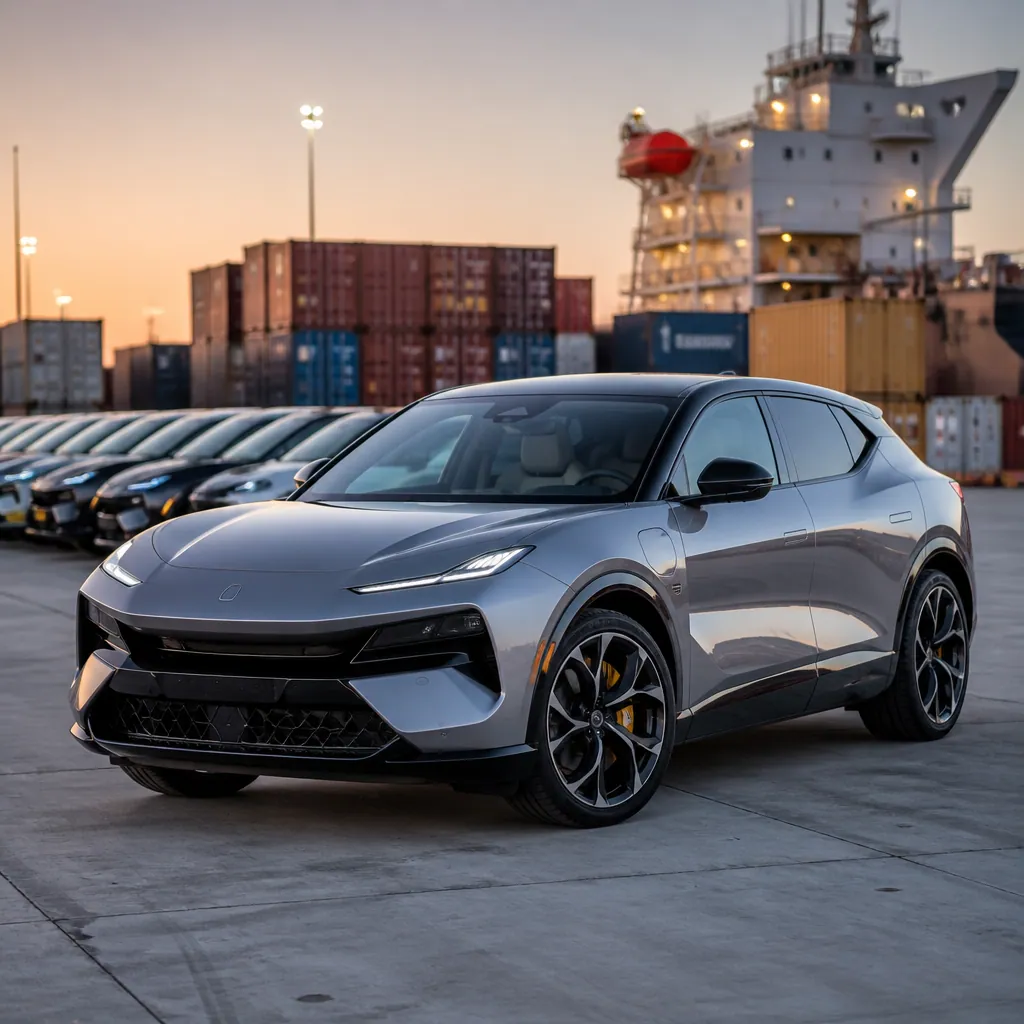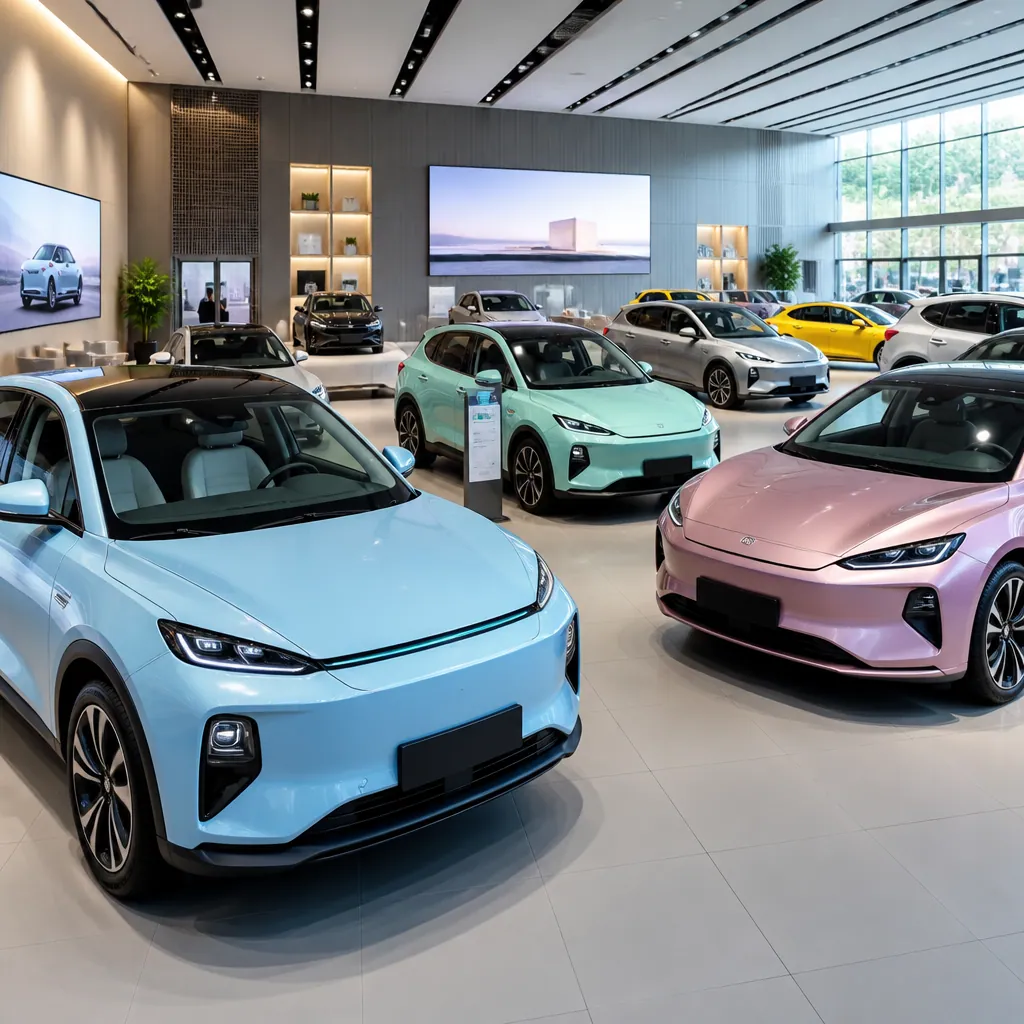

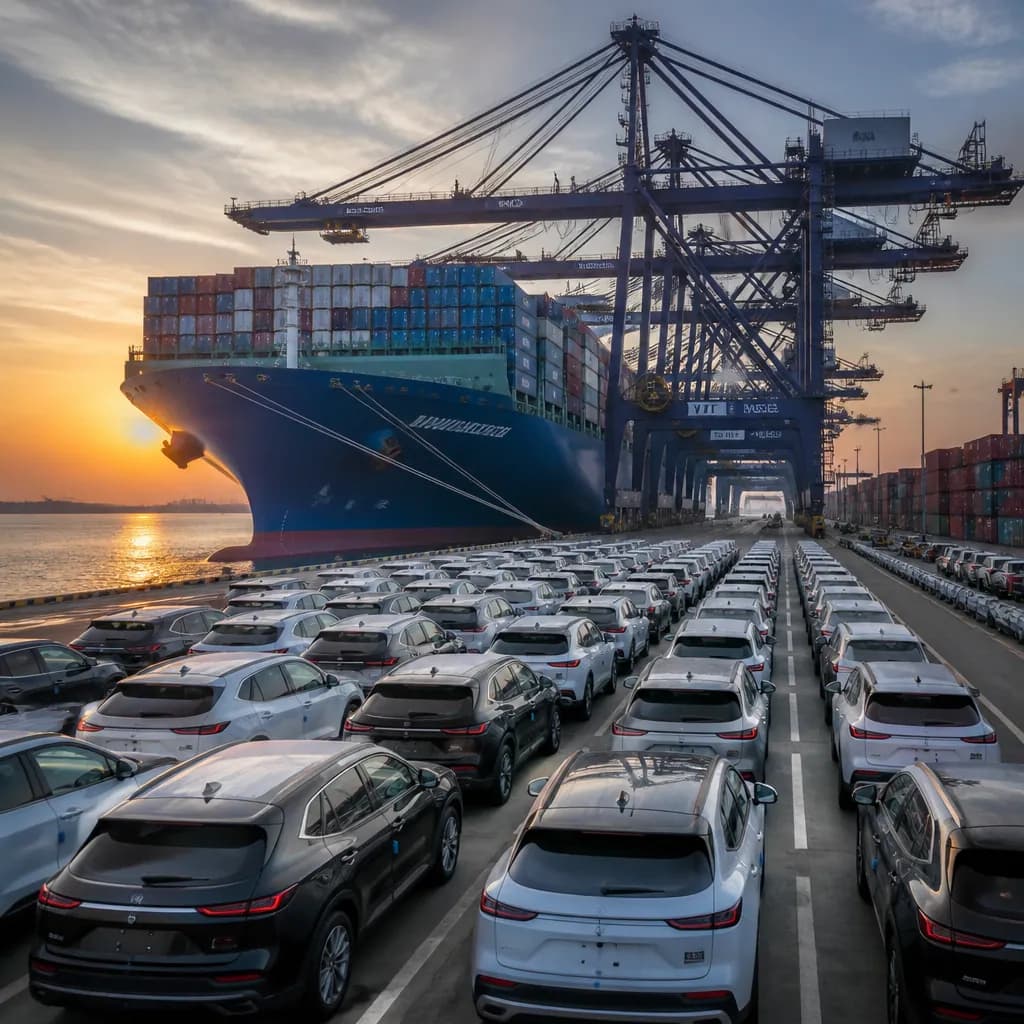
If you are sourcing vehicles for a dealership, fleet, or distribution business in the Middle East, Africa, or Asia, the scale of Chinese electric vehicles export activity in 2025 and 2026 is not a trend to monitor later. It is a procurement opportunity right now. Chinese EV exports hit a record 2.5 million units in 2025, double the figure from the prior year, and the first four months of 2026 are already tracking well above that pace. For buyers who understand FOB pricing and model selection, this market offers genuine value that comparable Japanese, Korean, or European EVs simply cannot match at the same specification level. This guide covers which models are worth your attention, what FOB prices look like in practice, and what to expect when you move from inquiry to delivery.
Why Chinese EV Exports Matter Right Now
The numbers behind this shift are hard to ignore. In 2024, China exported approximately 5.9 million vehicles in total, up from fewer than 1 million in 2020, and China is now the world’s largest vehicle exporter by volume, surpassing Japan. Of those exports, roughly 40% were battery electric or plug in hybrid vehicles. By 2025, the IEA confirmed that outside Europe and the United States, Chinese models accounted for 55% of all EV sales globally, up from about 10% in 2021.
The regional picture is even more relevant for buyers operating in markets that Automotion Global serves. Southeast Asia saw Chinese EV import growth of 130% in 2025 versus 2024. The Middle East grew 60%. Africa has been among the fastest growing destinations, with a 184% increase in imports reported through mid-2025. These are not incremental shifts. They represent a structural reorientation of global automotive supply chains toward China.
For vehicle dealers, importers, and fleet operators in these regions, the practical question is no longer whether to consider Chinese EVs. The question is which models to prioritize, what FOB prices are realistic, and how to manage the export process without getting burned by poor sourcing or documentation gaps.
Understanding FOB Pricing for China EV Exports
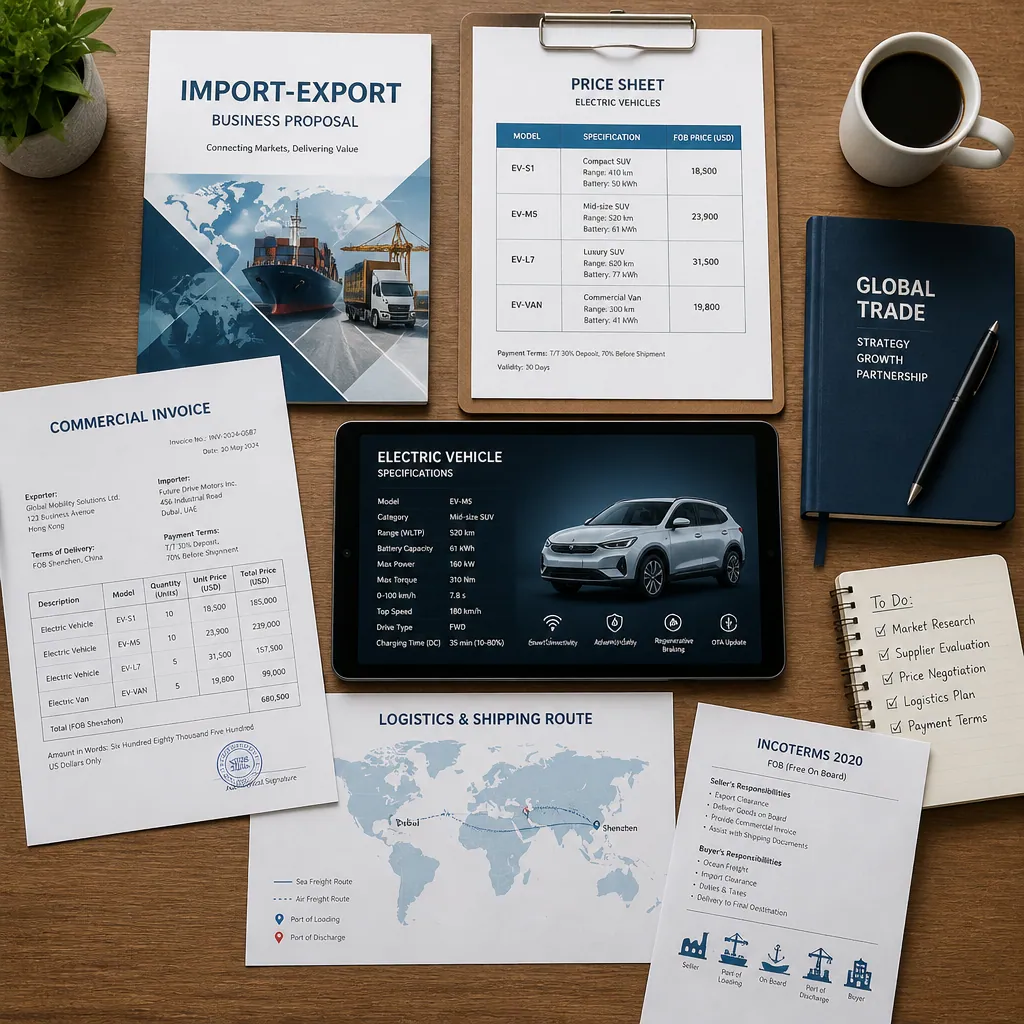
FOB (Free on Board) is the pricing basis most commonly used in Chinese vehicle exports. It means the price covers the vehicle up to the point of loading onto the vessel at a Chinese port, typically Shanghai, Tianjin, Guangzhou, or Ningbo. Everything after that point, including ocean freight, destination port charges, import duties, and local registration, is the buyer’s responsibility.
A common mistake among first time importers is treating the FOB price as the landed cost. In practice, you need to add ocean freight (which varies significantly by destination and shipment method), marine insurance, destination port handling, import duties, and any local homologation or compliance costs. For the Middle East, particularly the UAE, import conditions are comparatively favorable: the UAE charges 0% duty on pure BEVs and 5% VAT, making the landed cost very close to FOB plus freight. Other markets have higher tariff environments and buyers need to model that carefully before committing to order volumes.
Pro tip: Always request the HS code from your supplier before confirming an order. For pure BEVs, the correct HS code is typically 8703.80. Using the wrong code at destination customs can trigger incorrect duty rates or clearance delays that cost more than the initial saving on vehicle price.
Top Chinese Electric Vehicles Available for Export
The Chinese EV export market in 2025 and 2026 is not a one brand story. BYD leads in volume, but Geely (through its Zeekr and Galaxy brands), GAC Aion, Chery, Changan Deepal, Xpeng, and NIO all produce export ready vehicles with competitive specifications. The right choice depends on your target market segment, whether you are serving retail buyers, ride hailing operators, corporate fleets, or government procurement.
Entry Level and Value Segment (FOB under $22,000)
The BYD Seal 06 EV sits at the lower end of BYD’s export lineup, with FOB prices starting from around $17,683 for the base configuration. It is a pure electric mid size sedan with a NEDC-rated range of 545 km and 218 hp, making it a strong fit for urban taxi fleets and private retail buyers who need a credible range figure without a premium price. The BYD Seal 06 DM (plug in hybrid version) is available at a similar FOB level, starting from approximately $17,243.
For buyers targeting the absolute entry segment, the Chery and Great Wall ORA lineups offer competitive city oriented EVs at lower price points. These models work well in markets where charging infrastructure is still developing because buyers typically have lower daily range requirements.
Mid Range Segment (FOB $22,000 to $30,000)
This is the most active segment for bulk export orders. The BYD Atto 3 (Yuan Plus) is one of the most exported Chinese EVs globally, with FOB prices ranging from approximately $19,190 to $22,990 depending on trim level. It is a compact SUV with LFP blade battery technology, solid ANCAP safety ratings in markets that have tested it, and a well established spare parts network through BYD’s growing international dealer presence.
The BYD Seal (standard range variants) is available from approximately $28,626 FOB for the 510 km edition, delivering 282 hp and a 170 km/h top speed. For buyers who want a sedan that directly challenges the Tesla Model 3 on specifications at a lower price point, the Seal is the most commercially credible option in this range.
GAC Aion’s Y Plus is worth serious attention for fleet operators. It dominates China’s ride hailing market and is priced competitively for export. The Changan Deepal S07, available in both pure EV and range extended (EREV) versions, starts at approximately $16,900 EXW and is gaining traction in markets where range anxiety is a real objection from buyers.
Premium and Upper Mid Segment (FOB $30,000 and above)
The BYD Tang L EV (marketed as the Sealion 8 in Australia and the Atto 8 in GCC markets) is a mid to large SUV with a 100.5 kWh blade LFP battery, available at a FOB price of approximately $36,196. For dealers targeting family buyers or premium fleet operators who need seven seat capability and competitive range, the Tang L is one of the most export ready large EVs from China.
At the premium end, NIO models like the ET5 and EL6 offer battery swap capability alongside conventional charging, a differentiating feature for markets where charging infrastructure is still limited. Zeekr models (001, X, and 007) target buyers who compare against Audi, BMW, and Mercedes Benz on interior quality and driving dynamics.
The tariff argument about Chinese EVs is a European and North American argument. The volume, and the real commercial opportunity, is in Southeast Asia, the Middle East, Africa, and Latin America.
BYD Models: FOB Price Breakdown
BYD is the world’s largest new energy vehicle manufacturer and the most consistently export ready Chinese brand for international dealers and importers. Its Blade LFP battery technology, factory warranty structure, and growing global service network make it the benchmark against which other Chinese EV exports are evaluated.
The table below summarizes key BYD export models with indicative FOB price ranges. These are third party sourced figures used for orientation, and actual pricing depends on trim, order volume, and port of loading. Request verified quotes from a licensed export coordinator for confirmed figures.
| Model | Body Type / Powertrain | Indicative FOB Price (USD) |
|---|---|---|
| BYD Seal 06 EV | Mid size sedan, pure electric, 545 km range, 218 hp | From ~$17,683 |
| BYD Seal 06 DM (PHEV) | Mid size sedan, plug in hybrid, 120 km EV range | From ~$17,243 |
| BYD Atto 3 (Yuan Plus) | Compact SUV, pure electric, LFP blade battery | ~$19,190 to $22,990 |
| BYD Seal (510 to 650 km) | Mid size sedan, pure electric, 282 hp | From ~$28,626 |
| BYD Tang L EV (Sealion 8 / Atto 8) | Mid large SUV, pure electric, 100.5 kWh LFP, 7-seat | From ~$36,196 |
These prices are indicative FOB figures drawn from third party export market sources and should be treated as orientation benchmarks, not confirmed current quotes. BYD’s production pricing and export availability shifts with model year updates and order volume. For confirmed pricing on any BYD model, the correct approach is to work with a verified export coordinator who has live access to factory pricing rather than relying on published lists.
Pro tip: When comparing BYD trim levels for export, prioritize models with international standard charging ports (CCS2 or CHAdeMO) over those with China only GB/T connectors. GB/T vehicles can still be exported but require an adapter in most markets and may limit the resale audience. Confirm charging compatibility before finalizing your model selection.
Other Brands Worth Importing
Focusing exclusively on BYD is a common error that leaves dealers and fleet operators missing strong alternatives. The Chinese EV export market has several other brands with genuine export credentials and competitive pricing.
Chery and Omoda are among China’s most export active brands, with Chery particularly strong in the Middle East and Latin America. Their OMODA 5 E EV is well positioned for markets that respond to SUV styling at accessible price points. Geely’s Galaxy and Zeekr lineups offer premium specifications at prices that still undercut European equivalents significantly. GAC Aion’s S and Y Plus models are proven workhorses for ride hailing and taxi fleet procurement. Xpeng’s G6 and P7+ models appeal to buyers who want advanced driver assistance features and over the air software updates as part of the ownership proposition.
For fleet operators specifically, the GAC Aion S is worth a close look. It has been validated at scale in China’s demanding ride hailing market, which is a stress test that most international fleet evaluations do not replicate. A car that survives years of ride hailing use in Chinese cities is typically overspecified for corporate fleet applications elsewhere.
EV Type Comparison: BEV vs. PHEV vs. EREV
One of the most consequential decisions for buyers importing Chinese EVs is choosing the right powertrain type for their specific market. China’s export lineup now spans three distinct architectures, each with different implications for infrastructure requirements, import duties, and end buyer appeal.
| Powertrain Type | Best Market Fit | Key Trade Off for Importers |
|---|---|---|
| BEV (Battery Electric Vehicle) | Urban markets with established charging infrastructure; UAE, Singapore, South Africa urban centers | Lowest running cost, highest range anxiety where charging is sparse, some markets offer duty exemptions for pure EVs |
| PHEV (Plug In Hybrid) | Markets with mixed infrastructure; buyers who need fuel backup for longer journeys or rural coverage | More flexible for end buyers, but duty classification varies by market. Some markets apply ICE duty rates to PHEVs |
| EREV (Extended Range EV) | Markets where charging is unreliable; Africa, rural Asia, logistics operators with depot charging | Electric first driving with petrol backup, often better accepted by buyers new to EVs, strong fit for fleet procurement where range predictability matters |
In practice, the EREV format offered by brands like Changan Deepal, Li Auto, and AITO is often the easiest sell in markets where charging infrastructure is still patchy. Buyers get the efficiency of electric driving on their common daily routes while retaining the safety net of a petrol generator for longer trips. For dealers entering a new market with Chinese EVs for the first time, leading with an EREV model often produces faster retail velocity than starting with a pure BEV.
How to Source Chinese EVs for Export
Sourcing Chinese EVs for export is not as straightforward as requesting a pro forma invoice and arranging shipping. The vehicles that create problems for importers are almost always ones where the due diligence on documentation was treated as a formality rather than a critical task.
What a Complete Export Package Looks Like
A properly executed Chinese EV export should include factory certified vehicle inspection before loading, accurate HS code classification, a complete set of export documents (commercial invoice, packing list, bill of lading, certificate of origin, and battery certification under UN38.3 for lithium ion shipments), and destination customs support. The battery certification is non negotiable for air freight and important even for sea freight in many jurisdictions. Missing or incorrect battery documentation is one of the most frequent causes of shipment holds.
Spare parts availability deserves more attention than most importers give it before placing a first order. An EV that arrives without an accessible supply of common wear items, software update capability, or a trained service partner in the destination country creates aftersales problems that damage the importer’s reputation faster than any vehicle fault. Confirm spare parts support and aftersales arrangements before finalizing any bulk order.
RoRo vs. Container Shipping
Most Chinese EV exports to the Middle East, Africa, and Asia move by Roll on/Roll off (RoRo) vessel, which is typically cheaper per unit for standard passenger cars. Container shipping (FCL, usually 40HQ) is used for markets without RoRo port infrastructure, for orders requiring additional protection, or for mixed loads that include spare parts. Ocean freight from China to Middle East ports runs approximately $2,290 to $6,870 per 40HQ container depending on destination and season, though these rates fluctuate. Lead times from order confirmation to delivery at destination port typically run 30 to 60 days for standard export ready stock.
Working with a supplier who handles the full export chain, from factory sourcing and inspection through shipping coordination and documentation, removes significant operational complexity and reduces the risk of costly errors at either the export or import end.
Automotion Global manages this complete process for vehicle dealers, importers, and fleet operators sourcing new Chinese EVs and PHEVs for the Middle East, Africa, and Asia. If you are evaluating specific models or planning an order reach out for a direct consultation and verified pricing based on your destination market and required specifications.
Frequently Asked Questions
What does FOB price mean when buying a Chinese EV for export?
FOB (Free on Board) means the price covers the vehicle from the factory to the point of loading onto a vessel at the agreed Chinese port. Once the vehicle is on board the ship, all further costs, including ocean freight, insurance, destination port charges, duties, and registration, are the buyer’s responsibility. Always build a full landed cost model before comparing FOB prices across suppliers.
Which Chinese electric vehicle brands are best suited for export to the Middle East and Africa?
BYD, Chery, GAC Aion, and Geely are among the most export active Chinese EV brands in the Middle East and Africa. BYD leads in volume and has the broadest model range. Chery is particularly strong across the Middle East and has established market presence in parts of Africa. GAC Aion’s fleet oriented models perform well in ride hailing and corporate fleet procurement. The right brand depends on your target market segment and after sales infrastructure in the destination country.
What is a realistic FOB price range for a Chinese electric SUV in 2025 and 2026?
For a compact electric SUV such as the BYD Atto 3, indicative FOB prices from third party export sources range from approximately $19,000 to $23,000 depending on trim level. Mid size and larger electric SUVs with premium specifications can range from approximately $28,000 to over $40,000 FOB. PHEV and EREV variants in the compact to mid SUV category can often be found from around $17,000 to $25,000 FOB. These are orientation figures, and confirmed pricing requires a formal quote from a licensed export coordinator based on current factory pricing and order volume.
Are Chinese EVs ready for right hand drive markets?
Some models are produced in right hand drive (RHD) configuration for specific export markets, including BYD’s Atto 3 and Seal which have GCC type approval for relevant Middle East markets and are available in RHD for countries like Australia and Thailand. However, many Chinese EV models are produced only in left hand drive (LHD). If you are importing for an RHD market, confirm RHD availability and local type approval status before placing any order. This is a non trivial constraint that eliminates a significant portion of the Chinese EV catalog for RHD markets.
What documentation is required to export an electric vehicle from China?
A standard Chinese EV export requires a commercial invoice, packing list, bill of lading, certificate of origin, factory export license, and battery safety certification (UN38.3 for lithium ion batteries). Some markets require additional documents such as a Certificate of Conformity or specific emissions/homologation certificates. Missing battery documentation is one of the most common causes of shipment delays or customs holds. Work with an export coordinator who handles documentation as a core part of the service rather than an afterthought.
How long does it take to receive a Chinese EV after placing an export order?
Transit time from order confirmation to delivery at destination port typically ranges from 30 to 60 days for export ready stock, depending on the model, port of loading, shipping route, and destination. Add destination customs clearance time, which can range from a few days in efficient port environments like Dubai to several weeks in markets with more complex import procedures. Plan your inventory cycle accordingly, particularly if you are making commitments to end buyers on delivery timelines.
Is the China EV price war affecting export prices positively for buyers?
Domestic price competition in China has resulted in meaningful reductions in factory pricing across several model ranges, and some of that benefit has flowed through to export pricing. However, currency movements, shipping cost fluctuations, and tariff changes in specific destination markets can offset those gains. The net effect for importers varies by market. What is consistent is that Chinese EV value relative to comparable Western or Japanese alternatives has improved significantly over the past two years, making the procurement case stronger than it has ever been for price sensitive markets in the Middle East, Africa, and Asia.
Have you sourced Chinese electric vehicles for your market? Share your experience in the comments or reach out directly with the models and specifications you are evaluating.
References
- IEA Global EV Outlook 2026: Manufacturing and Trade data on Chinese EV export volumes and market share
- Al Jazeera report on China EV export surge in 2026 with regional breakdown figures
- CleanTechnica analysis of China vehicle export growth and why EV exports are accelerating
- Recharged guide to Chinese electric car brands available for export in 2026
- iEVChina in depth coverage of China EV export strategy and key markets for 2026