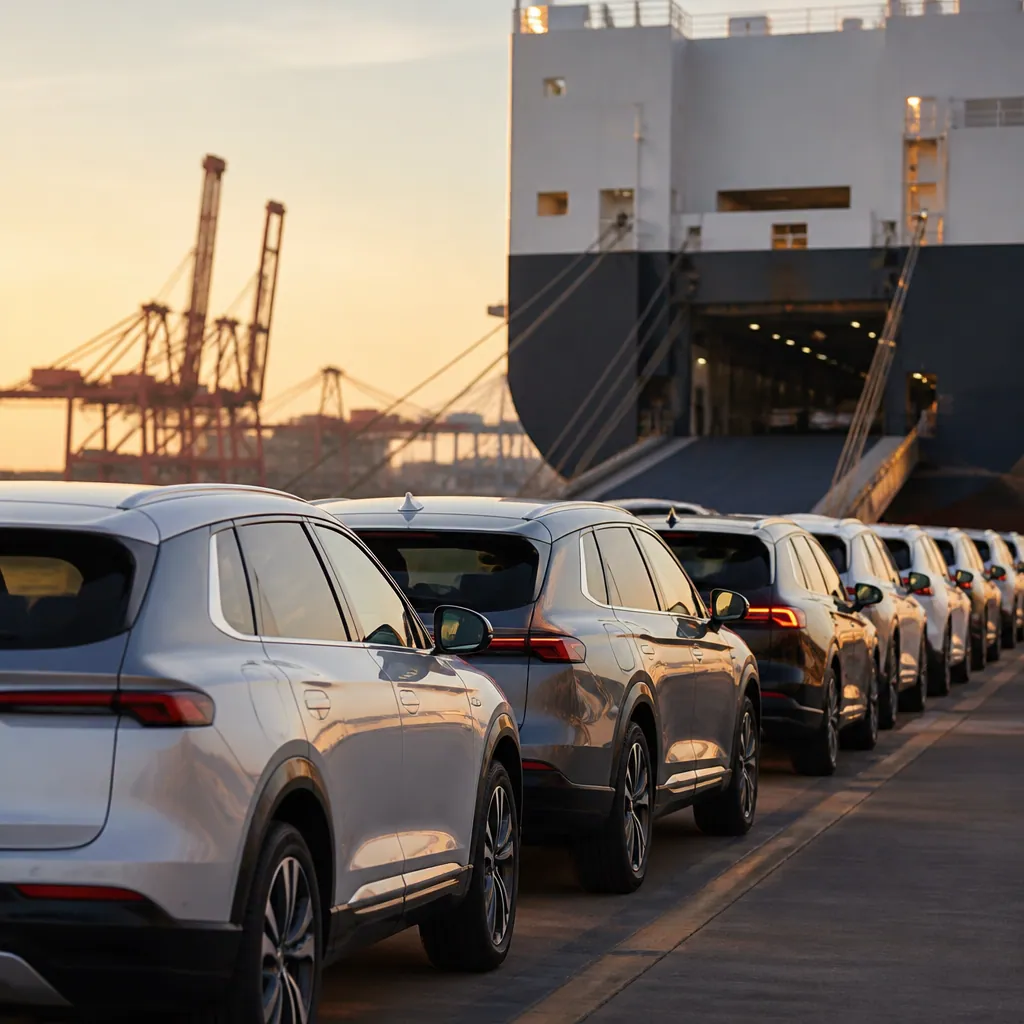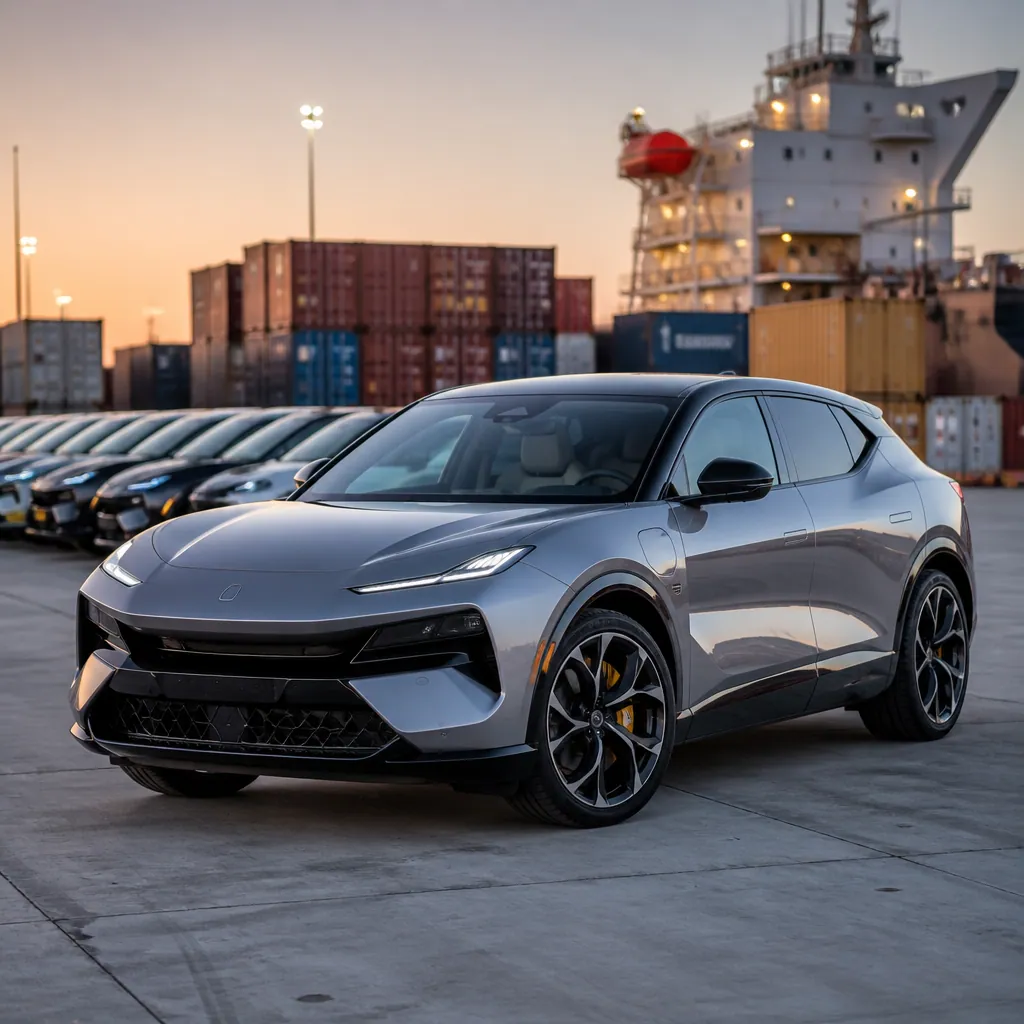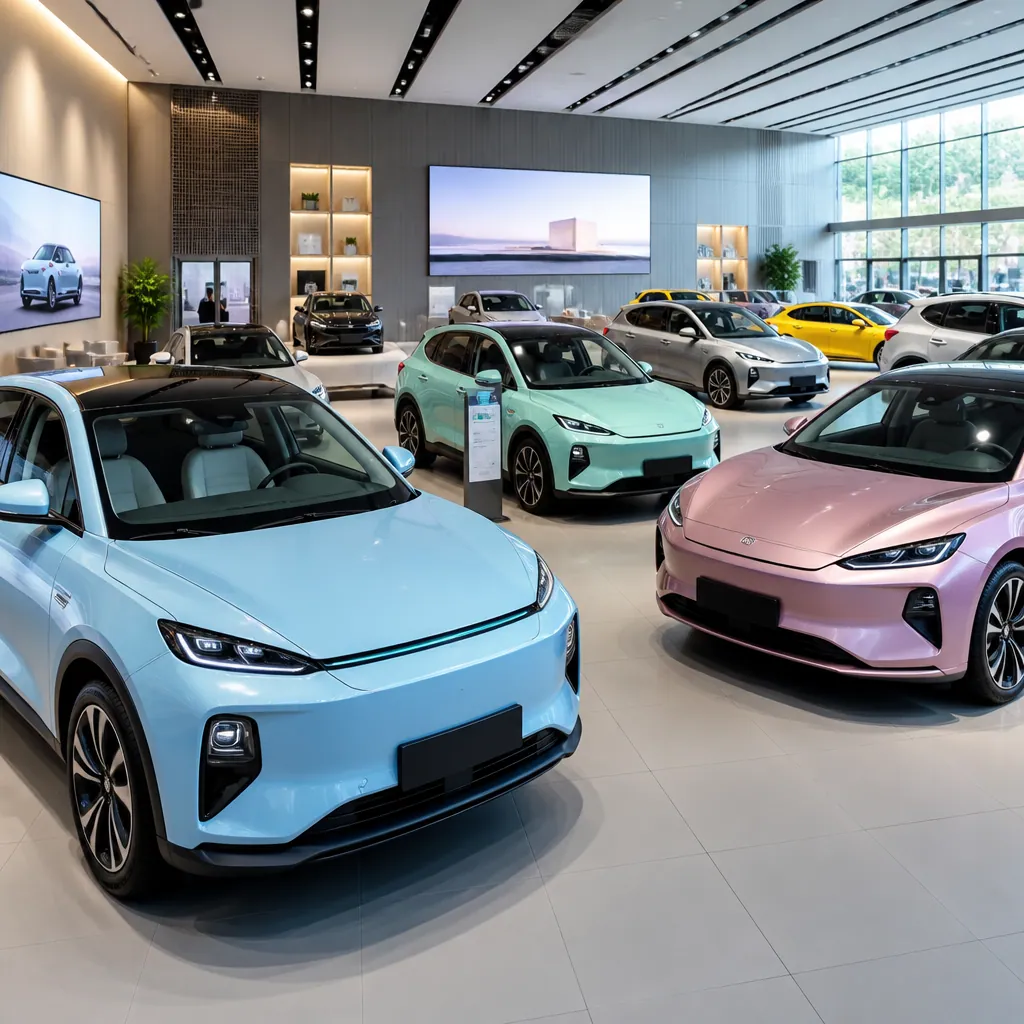

International vehicle dealers who are still hesitant to buy cars from China are leaving serious money on the table. China is now the world’s largest vehicle exporting nation, having surpassed Japan, and its manufacturers are shipping nearly six million units a year to markets across the Middle East, Africa, Asia, Europe, and beyond. The pricing is competitive, the model range is wider than most dealers realize, and the quality of Chinese EVs and PHEVs has crossed a threshold where end customers are actively requesting them. The question for serious dealers is no longer whether to source from China, but how to do it correctly.
Quick Takeaways
| Key Insight | Explanation |
|---|---|
| China is the world’s top vehicle exporter | China exported approximately 5.86 million vehicles in 2024, outpacing Japan and Germany, giving dealers access to the broadest factory fresh supply anywhere. |
| PHEV exports surged 190% year on year in 2024 | Dealers in hybrid friendly markets can now source plug in hybrids at scale, meeting demand that European and Japanese suppliers cannot match on price or availability. |
| Factory direct pricing opens up margin | Sourcing new vehicles directly through a trusted Chinese vehicle exporter removes multiple intermediary markups, compressing landed costs significantly versus buying through regional distributors. |
| Model variety is unmatched | Chinese manufacturers produce passenger cars, SUVs, EVs, PHEVs, commercial vans, and fleet vehicles under a single supply chain, so dealers can consolidate purchasing instead of dealing with multiple brands across multiple countries. |
| Pre export inspection is non negotiable | A reputable exporter arranges third party inspection at the port before loading, covering paint, battery health, software version, and mechanical condition, protecting the dealer from post arrival disputes. |
| Documentation must be market specific | Certificate of Conformity (COC), GCC type approval, or regional homologation documents vary by destination. A competent exporter prepares these before shipment, not after. |
| RoRo vs. container shipping affects cost and risk | Roll on/Roll off shipping is cheaper for high volume consignments; container shipping provides greater protection for luxury or high spec models. Dealers should specify this at the order stage, not after booking. |
China Is Now the World’s Largest Vehicle Exporter
For decades, vehicle dealers looking to buy at competitive prices from a major manufacturing nation pointed to Japan or Germany. That picture has changed. China exported approximately 5.86 million vehicles in 2024a year on year increase of 19.3%, covering both passenger cars and commercial vehicles. The country surpassed Japan to take the number one position in global vehicle exports, a shift that has direct, practical implications for international dealers.
This is not a temporary spike driven by one brand or one market. The growth was broad based, with passenger vehicle exports rising 19.7% and commercial vehicle exports rising 17.5% over the same period. Chinese independent automotive brands now account for 65.2% of total domestic passenger car sales, which means they are no longer competing at the budget fringe. They are the mainstream.
For dealers in the Middle East, Africa, and Asia, this matters because supply depth translates into order reliability. When a market can export nearly six million vehicles in a year, a dealer ordering fifty, two hundred, or five hundred units is a routine transaction, not a special favour. Lead times are manageable, factory allocations exist, and the infrastructure to move those vehicles by sea is fully operational out of ports including Shanghai, Ningbo, Guangzhou, and Lianyungang.
The shift is structural, not cyclical. Chinese manufacturers invested heavily in manufacturing capacity, battery supply chains, and export logistics. International dealers who recognize this early hold a real competitive advantage over those waiting for the situation to “stabilize.”
Pricing Advantages That Change Dealer Margins
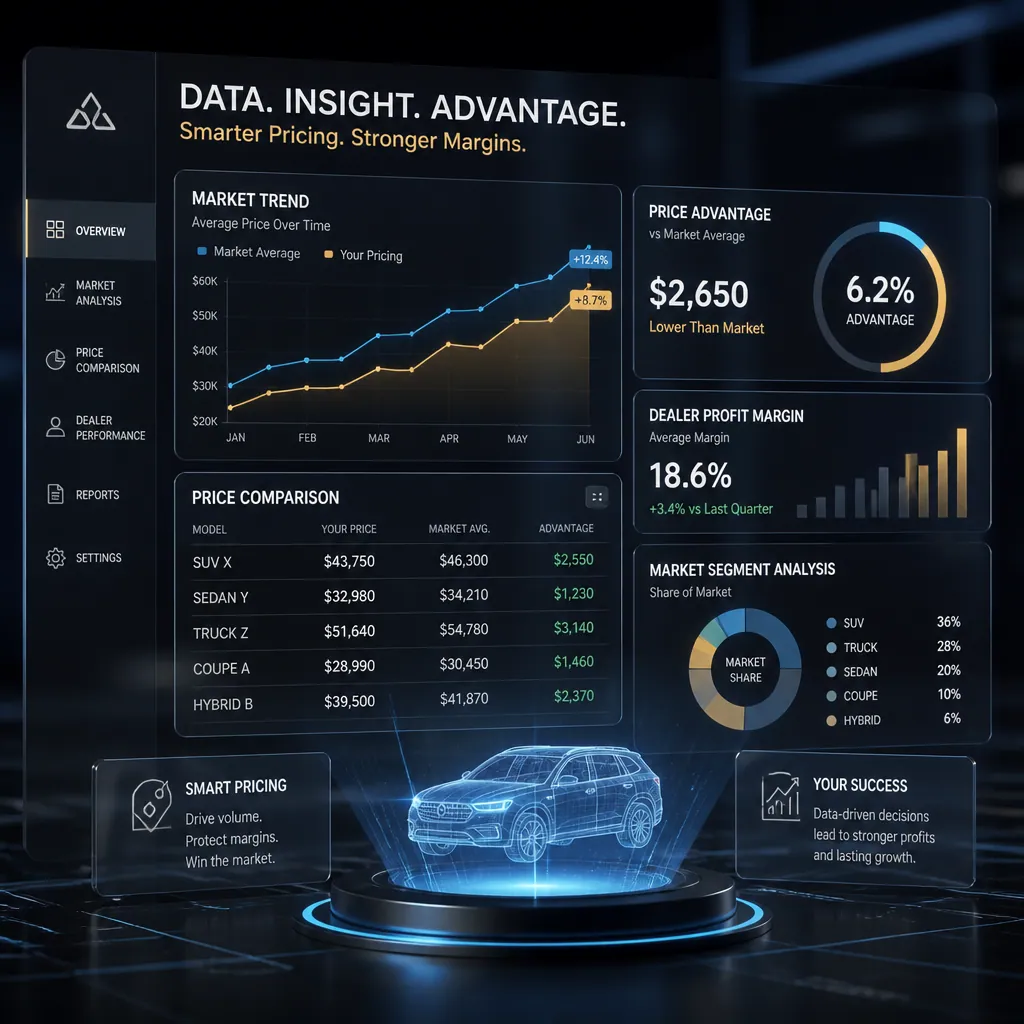
The most immediate reason international dealers choose to buy cars from China is price. Chinese manufacturing costs are lower across the board, driven by integrated supply chains, domestic raw material access, and production volumes that dwarf most Western competitors. When a dealer sources vehicles through a direct export channel rather than through a regional distributor, several layers of markup disappear from the landed cost.
How Margin Improves at Each Stage
A typical regional distributor adds a margin before selling to local dealers. That margin covers the distributor’s own logistics, warehousing, finance costs, and profit. When a dealer buys directly through a Chinese vehicle exporter with a proper export operation, that distributor margin is removed. The dealer pays closer to the actual manufacturer price plus transparent shipping and handling costs.
In practice, this means dealers can either price more competitively in their home market, absorb local duties without destroying margin, or maintain standard retail pricing while earning a higher gross per unit. All three outcomes improve the business case. For fleet operators buying in volume, the arithmetic is even more attractive because price per unit drops further with larger orders.
Pro tip: Always request an FOB (Free On Board) price from your Chinese vehicle exporter as a starting point, then model your own landed cost by adding destination country import duties, inland freight, and registration fees. Dealers who compare China FOB prices directly to in market retail prices without accounting for these costs end up with an inaccurate picture and either over- or under estimate their margins.
Minimum Order Quantities and Pricing Tiers
Chinese exporters typically operate on tiered pricing. Larger order quantities attract lower per unit prices. A dealer ordering ten units pays more per vehicle than one ordering fifty, and a fleet operator ordering two hundred or more is operating at a fundamentally different cost base. This structure rewards dealers who can consolidate demand, which is why vehicle dealers working with multiple end buyers often benefit from aggregating orders across clients rather than placing individual small orders.
The EV and PHEV Opportunity for International Dealers
The electric vehicle segment from China is where the most significant market opportunity exists for international dealers right now. China’s NEV sector exceeded 10 million units in domestic annual production and sales for the first time in 2024. Exports of new energy vehicles reached 1.284 million units, with PHEV exports growing 190% year on year. That growth rate reflects real demand, not promotional distortion.
Chinese EV brands have closed the quality gap with established international manufacturers in specific, important areas: battery technology, over the air software updates, connected vehicle features, and range. These are precisely the features end customers in growing markets ask about. A dealer who can offer a well specified Chinese EV at a meaningfully lower price than a comparable European or Japanese equivalent is in an excellent commercial position.
For dealers in the Middle East and Africa, the PHEV proposition is particularly strong. Markets where charging infrastructure is still developing find PHEVs more practical than pure BEVs, and China’s PHEV lineup is extensive, covering compact SUVs, full size SUVs, sedans, and even commercial vehicle formats. No other single country offers that range at the export volumes China can sustain.
Pro tip: When sourcing EVs or PHEVs from China, always confirm with your exporter whether the vehicle’s software, navigation interface, and language settings are configured for the destination market, not just the Chinese domestic version. This is a common oversight that creates customer dissatisfaction post delivery and can be resolved at zero cost before the vehicle is loaded at port.
What the Sourcing and Export Process Actually Looks Like
One reason some dealers hesitate to buy cars from China is uncertainty about how the process works end to end. The reality is straightforward when working with a competent exporter, but it requires paying attention to a sequence of steps that must happen in the right order.
Vehicle Sourcing and Supplier Coordination
The process starts with identifying the specific models, specifications, and configurations required for the target market. A good exporter confirms factory availability and pricing, then coordinates directly with the supplier to lock in the order. This is not simply placing an online order. It involves verifying that the variant ordered matches what is available for export, that any market specific configurations are applied, and that the delivery schedule is realistic.
Pre Export Inspection
Before any vehicle is loaded onto a vessel, a pre export inspection should take place at the port. This covers the vehicle’s physical condition, paint, glass, interior, battery health (for EVs and PHEVs), and software configuration. A reputable Chinese vehicle exporter arranges this with a third party inspection service, not their own staff, so the dealer receives an independent report. Skipping this step is one of the most common and costly mistakes in the vehicle import business. Disputes about pre existing damage are almost impossible to resolve once a vehicle is on water.
Export Documentation and Customs
Documentation requirements vary by destination market. Common documents include the commercial invoice, bill of lading, certificate of origin, and, for many markets, a Certificate of Conformity or regional type approval document. Markets in the GCC, for example, require GCC-specific homologation before vehicles can be registered. An exporter who handles documentation correctly reduces the risk of delays or rejections at the destination port.
Shipping Method Selection
Roll on/Roll off (RoRo) vessels are the standard choice for high volume vehicle shipments because they are cost effective and widely available on major trade routes. Container shipping is better suited to high value or specialty vehicles where additional physical protection is warranted. Dealers sourcing a fleet of standard passenger cars or commercial vehicles will almost always use RoRo. Dealers sourcing a small number of premium models may prefer container. Both methods are fully established in China’s export port network.
How to Choose a Chinese Vehicle Exporter
The quality of the exporter determines the quality of the experience. This is not a vague observation. It is the single most important variable in whether a dealer’s China sourcing operation runs smoothly or becomes expensive and frustrating.
What a Competent Exporter Provides
A legitimate, well operated Chinese vehicle exporter holds an export licence, has direct relationships with suppliers and manufacturers, and can provide verifiable references from clients in your target region. They do not just arrange shipping. They source the specific vehicles required, coordinate the inspection, prepare the documentation, manage customs at the China end, and provide aftersales support if issues arise post delivery.
A common mistake is treating the exporter simply as a freight forwarder. Vehicle export is a multi step commercial operation, and exporters who specialize in vehicles understand details that generic freight operators miss: model year cut offs, factory lead times, local compliance requirements, and the difference between a vehicle configured for domestic Chinese use versus one prepared for export.
Red Flags to Watch For
Exporters who cannot provide an independent pre export inspection report, who quote shipping timelines that are implausibly short, or who cannot name the specific port and vessel for a shipment are showing signs of an operation that lacks the depth to handle problems when they arise. Dealers should also be cautious of exporters who offer prices that are significantly below all other quotes. In vehicle sourcing, a price that seems too good is almost always attached to a vehicle that has undisclosed issues, is not the specified variant, or comes with incomplete documentation.
Pro tip: Ask any prospective Chinese vehicle exporter to name three markets they currently supply and provide contact details for verifiable dealer references in those markets. An operation with genuine international reach will have no problem answering this question. One that hesitates or provides only vague references deserves scrutiny before you commit an order.
At Automotion Globalthe entire process from sourcing to aftersales is handled as a complete export solution. Dealers and fleet operators working with Automotion Global across the Middle East, Africa, and Asia get supplier coordination, pre export inspection, customs documentation, international shipping, and spare parts support under one relationship, removing the complexity of managing multiple vendors across a cross border purchase.
Comparison: Sourcing Approaches for International Dealers
Not all routes to buying vehicles from China deliver the same outcome. Below is a comparison of the three most common approaches dealers actually use.
| Sourcing Approach | Key Characteristics | Best Suited For |
|---|---|---|
| Direct from Chinese Manufacturer | Lowest per unit pricing possible; requires minimum order volumes that are often large; dealer must manage all export logistics, documentation, and compliance independently; requires knowledge of Chinese commercial practices and supplier relationships | Large importers or distributors with established China side operations and in country legal/logistics teams |
| Full Service Chinese Vehicle Exporter | Handles sourcing, inspection, documentation, shipping, and aftersales; pricing is slightly above direct manufacturer but significantly below regional distributor; allows smaller orders than factory direct minimums; faster time to market; single point of accountability | International dealers, fleet operators, and importers who want reliable access to China sourced vehicles without building an internal China operation |
| Regional Distributor for Chinese Brands | Easiest process; vehicles are already in market or in regional warehouses; pricing reflects distributor margin stacked on top of import costs; model selection is limited to what the distributor stocks; no ability to customize specifications or order variants outside the distributor’s range | Dealers who need one or two units quickly and do not have the order volume to justify direct sourcing |
Frequently Asked Questions
How many vehicles do I need to order to buy cars from China cost effectively?
There is no universal minimum, but in practice, orders of five units and above begin to make the logistics economics work. Larger orders of twenty units and above typically access meaningfully better per unit pricing tiers. Some exporters, including full service operations, can accommodate smaller pilot orders for dealers who want to test a model in their market before committing to volume. The key is to be transparent with your exporter about your total annual volume, not just the first order, so they can price accordingly.
What documents are required to import vehicles from China to the Middle East or Africa?
Standard requirements include a commercial invoice, bill of lading, certificate of origin, and packing list. For GCC countries, GCC type approval or a Certificate of Conformity specific to that standard is required. African markets vary considerably by country, and some require additional import permits or pre shipment inspection certificates issued by designated inspection bodies. A competent Chinese vehicle exporter will confirm the exact document set required for your specific destination before shipment, not after the vessel has departed.
Are new Chinese EVs and PHEVs reliable enough to sell to end customers?
The reliability of Chinese EVs varies by brand and model, just as it does with vehicles from any country. Established Chinese brands producing vehicles for export have quality standards that meet or exceed the requirements of international markets. The more important question for dealers is whether the vehicles come with warranty coverage that is honoured in the destination market, and whether spare parts supply is available locally or can be sourced efficiently. Dealers should confirm both points before committing to a model range.
What is the difference between RoRo and container shipping for vehicle imports?
Roll on/Roll off (RoRo) shipping means vehicles are driven onto a specialized car carrier vessel and secured in place. It is the most cost effective method for moving vehicles in volume and is widely used on all major trade lanes from China. Container shipping places vehicles inside standard shipping containers, offering greater physical protection against weather and port handling. Container shipping costs more per unit but is preferred for high value or low volume shipments where additional protection justifies the cost. Your exporter should recommend the appropriate method based on vehicle type, order volume, and destination port capabilities.
How do I verify that a Chinese vehicle exporter is legitimate before placing an order?
Ask for their export licence, request verifiable references from dealers they currently supply in your region, and confirm that they can arrange an independent third party pre export inspection. A legitimate operation will also be transparent about the specific ports they work with, the shipping lines they use, and the timelines involved. Be cautious of any exporter who cannot provide a full pro forma invoice with itemized costs, or who is unwilling to put agreed specifications and delivery timelines in writing before you transfer any payment.
Can I source spare parts for Chinese vehicles through the same exporter?
Yes, and this is an important capability to confirm before you choose an exporter. Aftersales parts availability is one of the most common pain points dealers encounter after their first China sourced vehicle consignment. A full service exporter with a genuine aftersales operation will be able to source and ship spare parts separately, confirm parts availability for the specific models you are stocking, and provide documentation that allows your local workshops to identify the correct components. If an exporter cannot speak to spare parts support, treat it as a gap in their service that you will need to solve independently.
If you have experience sourcing vehicles from China, whether smooth or challenging, share what you found most useful in the process, your perspective helps other dealers navigate their first or next China purchase with more confidence.
We would love your feedback and any insights you would share with others. What perspective would you add?
References
- China vehicle export statistics for 2024: passenger cars, commercial vehicles, and NEV growth data
- China automotive production, sales, and export breakdown for 2024 including PHEV and BEV figures
- CNN report on China surpassing Japan as the world’s largest vehicle exporter
- Practical guide to importing Chinese EVs: documentation, inspection, and shipping methods explained
- Full guide to exporting vehicles from China: customs clearance, documentation, and compliance requirements