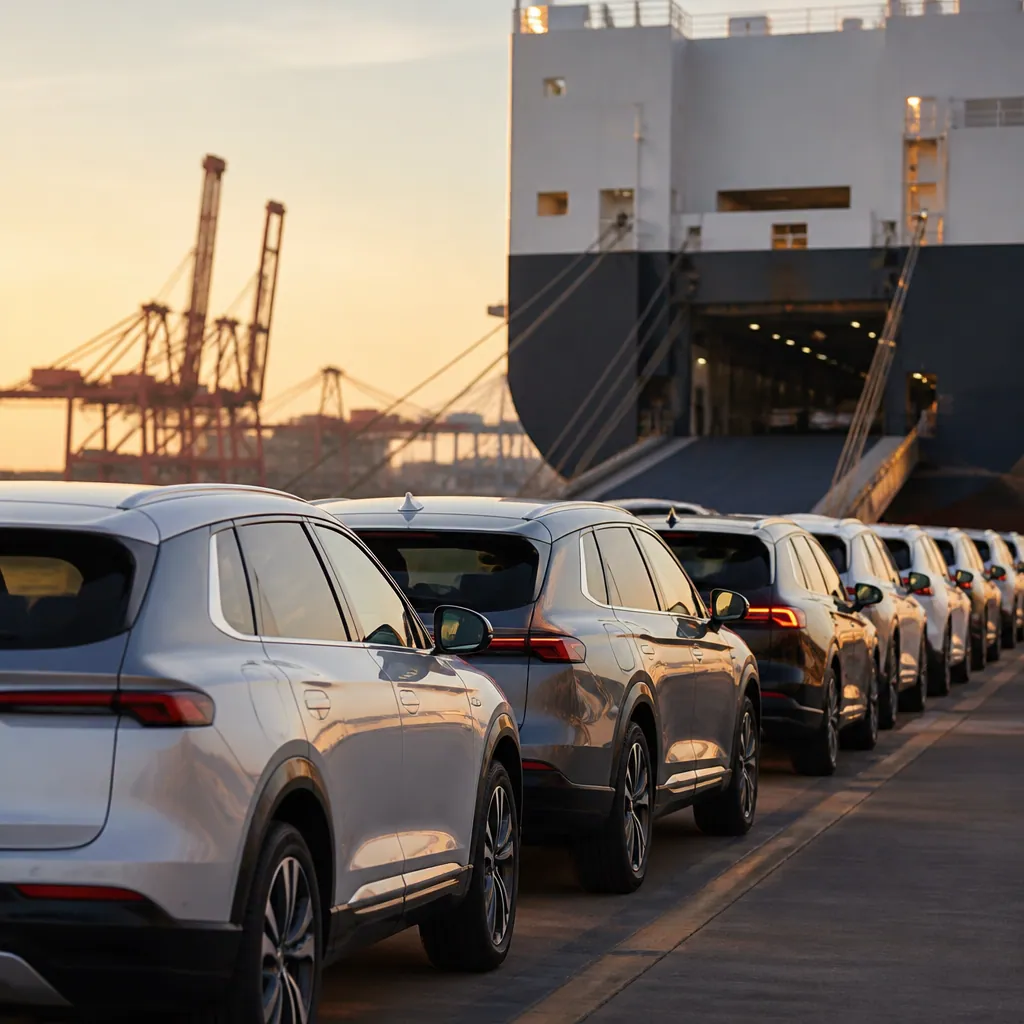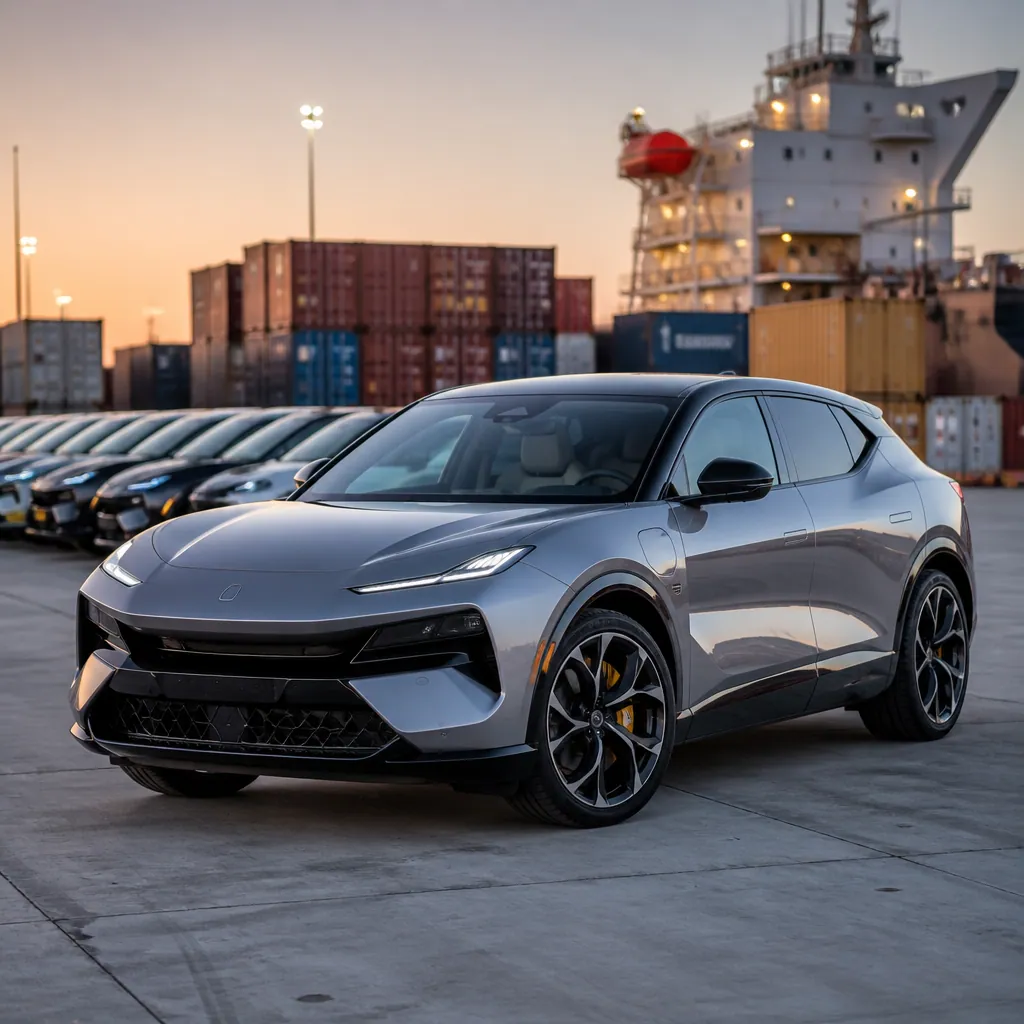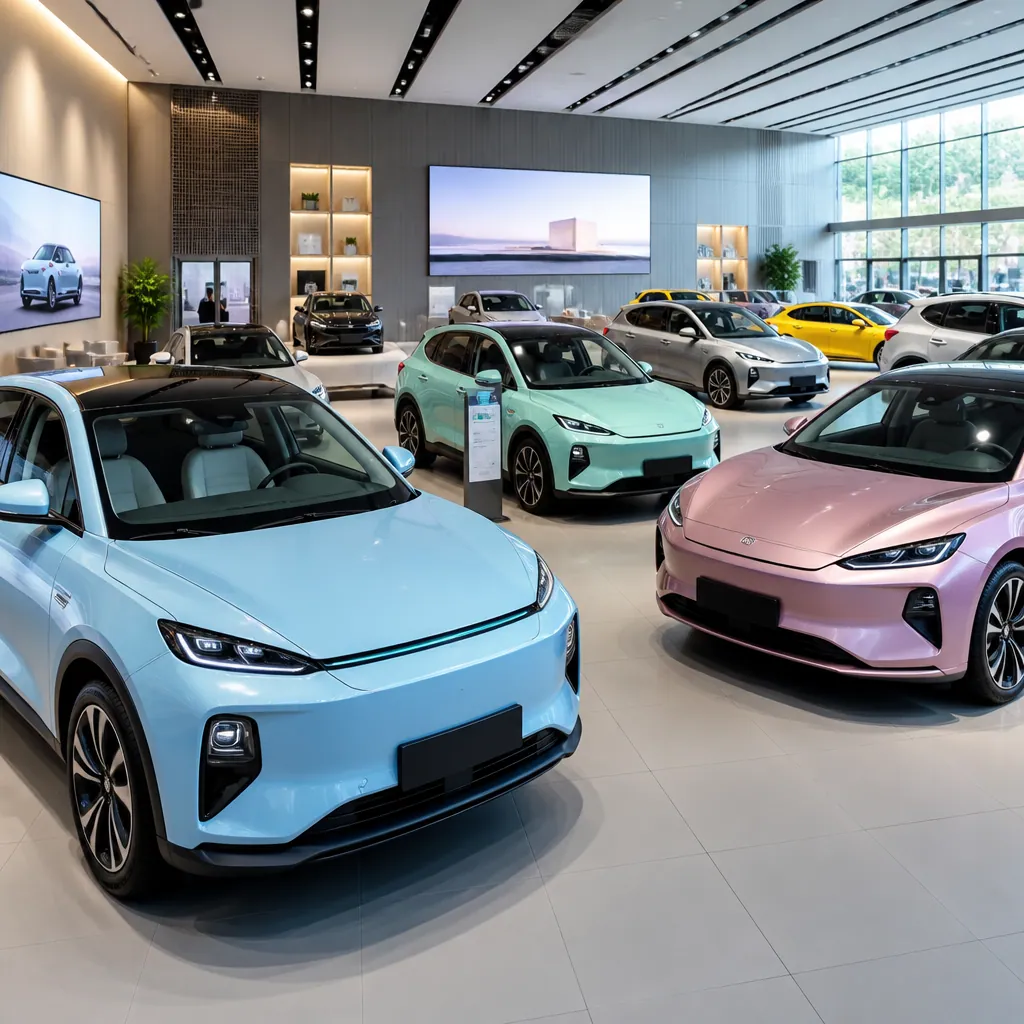

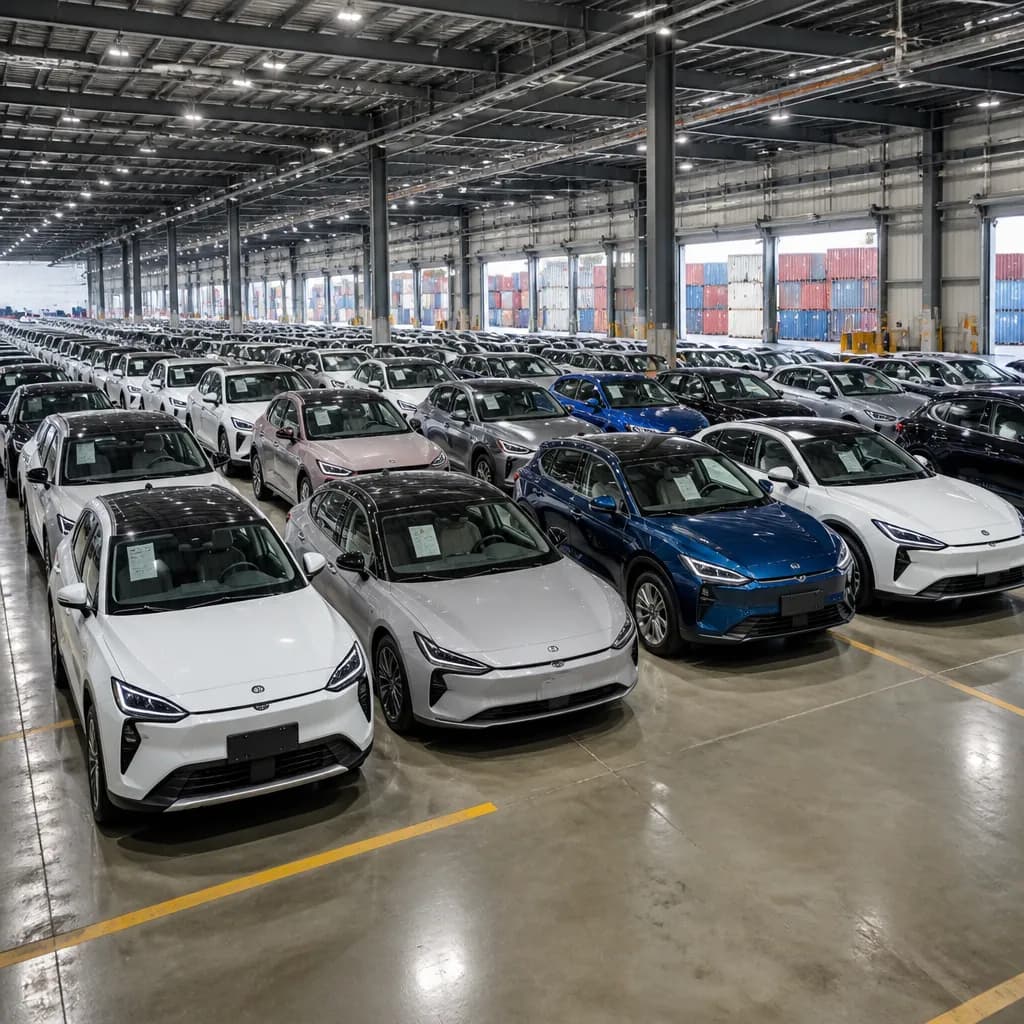
Fleet operators managing a large vehicle order face a straightforward question: where do you find the best combination of price, product range, and reliable supply? Increasingly, the answer points to China. The country’s automotive industry has matured well beyond its reputation for cheap imitations. Today it is the world’s largest vehicle exporter, shipping over 8 million units in 2025 alone, and the dominant force in electric and plug in hybrid technology. For fleet buyers in the Middle East, Africa, Asia, and other emerging markets fleet vehicles China is no longer an experiment, it is a proven sourcing strategy.
Quick Takeaways
| Key Insight | Explanation |
|---|---|
| China exported over 8.3 million vehicles in 2025 | This scale means manufacturers prioritise export logistics, documentation, and international compliance as standard practice, not an afterthought. |
| Electric trucks in China cost 10 to 26% less to operate than diesel equivalents | Fleet operators running high mileage routes see significant operating cost reductions when switching to Chinese made EV commercial vehicles. |
| Six of the world’s top 10 EV sellers are Chinese brands | Chinese manufacturers are not catching up on EV technology, they are setting the pace, with BYD edging past Tesla in global battery electric vehicle sales. |
| Chinese brands cover passenger cars, SUVs, PHEVs, vans, and commercial trucks | A single sourcing relationship in China can supply every vehicle type in a mixed fleet, eliminating multiple procurement streams. |
| Middle East EV imports from China surged dramatically | UAE shipments alone reached $2.7 billion in the first five months of 2025, confirming that regional infrastructure and demand are ready. |
| Bulk ordering unlocks better unit pricing and priority production slots | Fleet scale orders give buyers negotiating power that individual retail purchases cannot achieve, particularly with China’s highly competitive domestic market. |
| Full service export partners handle inspection, customs, and shipping | Working with an experienced China export specialist means fleet buyers do not need in house expertise in Chinese trade compliance or logistics. |
Reason 1: The Price Gap Is Real and Consistent
The price advantage of sourcing from China is not a one off discount, it is structural. China’s automotive industry benefits from a fully integrated domestic supply chain covering batteries, semiconductors, steel, and assembly. These inputs are produced at a scale that no other single country can match, which compresses the cost of every vehicle that rolls off the line.
For fleet operators, this translates directly into a lower per unit purchase price compared to sourcing equivalent vehicles from European, Japanese, or Korean manufacturers. When you multiply that saving across 50, 100, or 500 vehicles, the total budget impact is substantial. This is the primary reason that bulk car purchase China has become a standard strategy for fleet procurement teams in the Middle East and Africa.
China’s domestic market is also intensely competitive. Dozens of manufacturers are competing for sales, which keeps retail prices under constant downward pressure. Exporters who work closely with Chinese factories pass that competition driven pricing directly to international fleet buyers. The buyer benefits from a market they never have to navigate directly.
Pro tip: When requesting a fleet quote, always specify your target delivery window and port of destination upfront. Chinese manufacturers will often adjust production scheduling to accommodate large orders, and buyers who provide a clear timeline get sharper pricing than those who leave logistics vague.
Why the Price Advantage Holds for New Vehicles Specifically
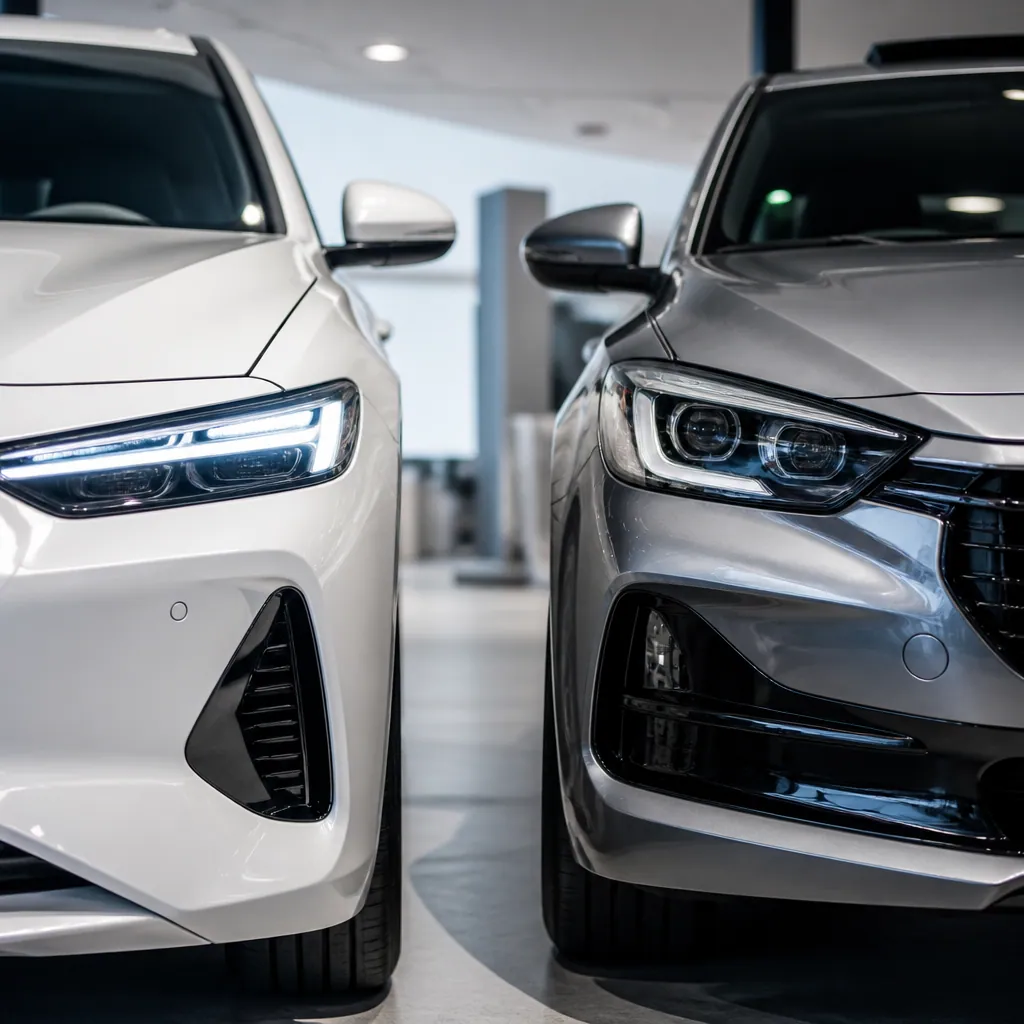
Some buyers assume Chinese price advantages apply only to used or lower spec vehicles. That assumption is wrong. Brand new vehicles from Chinese manufacturers, including fully specced EVs, PHEVs, and SUVs, routinely undercut comparable new vehicles from Western or Japanese brands by a meaningful margin. The competitive pressure in China’s domestic market has forced manufacturers to keep entry prices lower while maintaining feature parity or often exceeding it on technology.
This is especially relevant for fleet operators who require new vehicles for warranty coverage, uniform specification, and resale value predictability. Sourcing brand new fleet vehicles from China gives buyers all of those requirements at a price point that is simply not available elsewhere.
Reason 2: China Leads on EV and PHEV Technology for Fleets
Fleet electrification is no longer a future decision. Rising fuel costs and tightening emissions regulations in markets across the Middle East, Africa, and Asia are pushing fleet operators to plan their next order around electric or hybrid powertrain options. China is the right place to source those vehicles.
China’s battery electric truck sales captured almost 22% of the heavy duty market in the first half of 2025, up from 8.6% in the same period of 2024. That adoption rate reflects genuine commercial viability, not subsidised pilots. Fleet operators are choosing Chinese electric commercial vehicles because the economics work.
Chinese fleet operators report their electric freight trucks cost 10% to 26% less to operate than diesel models. For a high utilisation fleet where fuel and maintenance are major cost lines, that differential changes the business case completely.
The scale advantage is decisive. Chinese manufacturers have used their enormous domestic market to build battery supply chains and EV production expertise that no other country has assembled at equivalent cost. Fleet buyers worldwide are now the direct beneficiaries of that investment.
PHEV Options for Markets Where Charging Infrastructure Is Still Developing
Not every fleet can commit to fully electric vehicles right now. In markets where charging infrastructure is still being built, plug in hybrids offer a practical bridge. Chinese manufacturers produce an extensive range of PHEVs, from passenger sedans to SUVs and vans, at prices significantly below comparable European or Japanese PHEV models.
For fleet operators in Africa or parts of Asia where grid reliability varies by location, a PHEV fleet provides the fuel flexibility to operate without range anxiety while still capturing meaningful fuel savings on the electric only portion of each journey. This is a nuance that some operators miss when they default to a purely ICE fleet order.
Pro tip: If your fleet operates across routes with variable charging access, consider specifying a mixed order with a proportion of PHEVs for longer range routes and full BEVs for predictable urban or depot to depot operations. Chinese manufacturers can accommodate mixed spec bulk orders more readily than most buyers expect.
Reason 3: The Breadth of Models Available Matches Any Fleet Profile
One of the underappreciated advantages of fleet vehicle sourcing China is the sheer range of vehicle types available from a single sourcing market. A fleet operator running a mixed operation, including passenger cars for executives, SUVs for field teams, vans for logistics, and commercial vehicles for heavy duty use, can source every category from China’s automotive industry without switching suppliers or markets.
Six of the world’s top 10 electric vehicle sellers are Chinese brands, and companies including Geely and Li Auto are building automotive empires spanning markets from Brazil to Thailand. These are not niche manufacturers. They produce full model lineups that cover every practical fleet requirement.
This matters operationally. When a fleet is sourced from multiple markets, procurement becomes fragmented, warranty terms vary, spare parts come from different supply chains, and aftersales support requires managing multiple vendor relationships. Consolidating fleet vehicle sourcing to China through a single experienced export partner simplifies all of that.
Models Suited to Specific Fleet Roles
For corporate passenger fleets, Chinese sedan and SUV manufacturers now produce vehicles with interior quality, safety ratings, and technology features that match European competitors at a significantly lower price. For logistics and last mile delivery, Chinese electric vans and light commercial vehicles are seeing rapid adoption globally precisely because their acquisition cost and operating cost are compelling together, not just individually.
For heavy duty commercial fleet operators, the electric truck segment in China is particularly advanced. China’s electric truck dominance stems from a 15-year government campaign that treats commercial vehicles as a national priority and mandates manufacturers produce EVs as a percentage of total output. The result is a mature, competitive market for electric commercial vehicles that fleet buyers can access today.
Reason 4: China’s Export Infrastructure Is Built for Bulk Orders
China’s position as the world’s largest vehicle exporter is not just a sales statistic. It reflects the existence of a genuinely developed export ecosystem that supports fleet scale orders. According to the China Passenger Car Association, full year 2025 vehicle exports reached 8.32 million units, representing a 30% year on year increase, extending the high growth streak that began after breaking the 1-million unit mark in 2021.
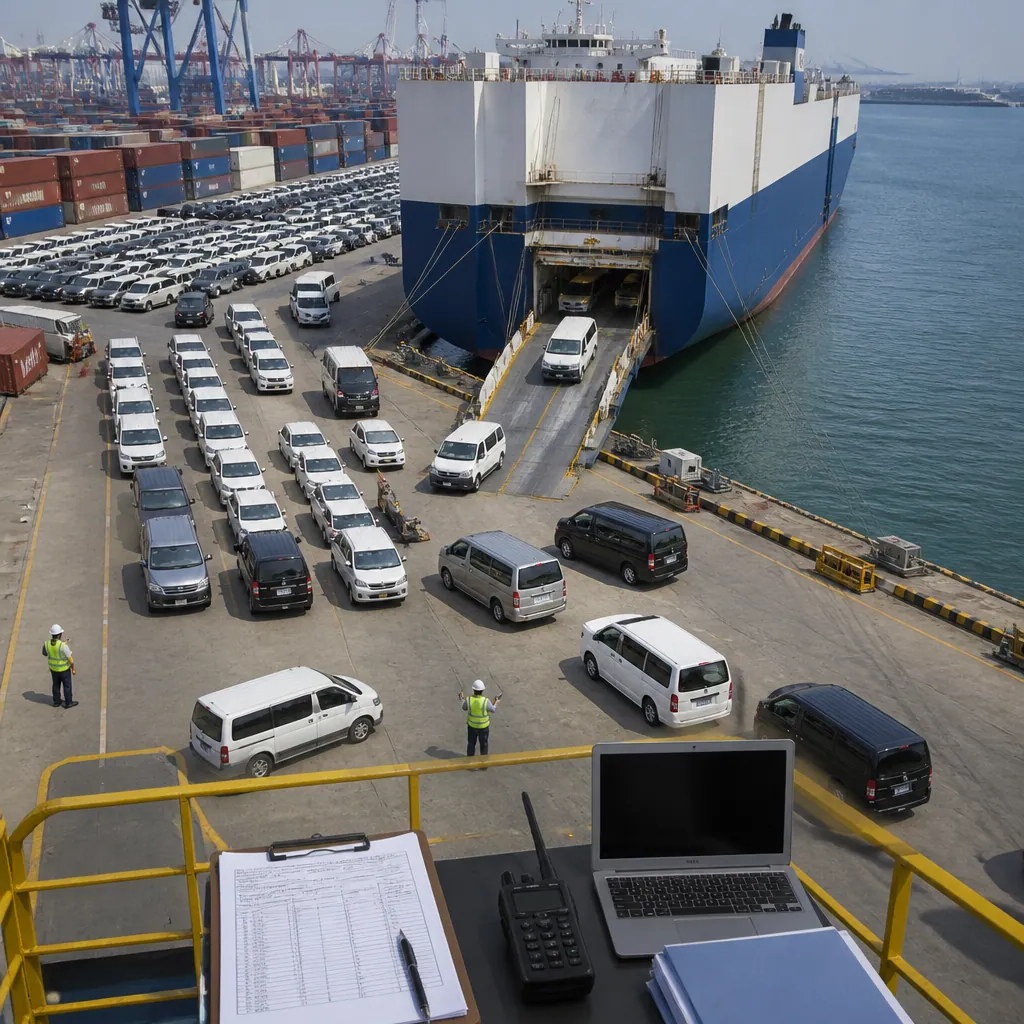
That volume demands infrastructure. China’s major ports handle vehicle exports with the logistics capacity, documentation processes, and carrier relationships that make large fleet shipments operationally straightforward. Manufacturers and export partners have built workflows specifically around multi unit orders, RoRo shipping, and the customs documentation requirements of target markets in the Middle East, Africa, and Asia.
A common mistake fleet buyers make when approaching China directly for the first time is underestimating the importance of pre shipment vehicle inspection. At fleet scale, a single quality issue replicated across dozens of units creates a significant operational problem on arrival. Working with an export partner that conducts thorough pre shipment inspections, confirms specifications against the order, and manages the export documentation end to end is not optional, it is the difference between a successful fleet deployment and an expensive remediation exercise.
What a Full Service Export Solution Actually Covers
A complete China vehicle export process for fleet buyers includes supplier sourcing and price negotiation, factory or pre delivery inspection, export documentation covering certificates of origin and conformity, customs procedures at the origin port, international freight coordination, and destination port handling. Aftersales support and spare parts supply are increasingly part of the package as well.
Fleet operators who have previously bought vehicles through regional distributors are often surprised by how much more transparent and controllable the process becomes when working directly with an experienced China export specialist. You see the factory pricing, you control the specification, and you are not paying for a distributor’s margin on top of an already inflated landed cost.
Reason 5: Lower TCO Over the Fleet Lifecycle
Purchase price gets the most attention in fleet procurement decisions, but total cost of ownership across the vehicle’s working life is the number that actually matters. China sourced vehicles, particularly EVs and PHEVs, score well on both sides of that equation.
Electric cars generally have lower running costs than internal combustion engine vehicles, mainly due to their higher efficiency, and the recent rise in oil prices has further increased the cost savings associated with driving an EV. For fleet operators in the Middle East and Africa where fuel import costs directly affect operating budgets, this is a material factor.
Chinese EV adoption reduces fuel import bills, easing foreign exchange pressure and freeing capital for growth in Africa and the Global South. BYD and other Chinese brands drove Africa EV sales from about 4,000 to about 25,000 units in 2025. That growth reflects real operational and financial benefits, not just environmental positioning.
Maintenance Costs and Spare Parts Availability
A concern that fleet operators sometimes raise about Chinese vehicles is spare parts availability in their target market. This concern was valid several years ago. It is much less valid today. As Chinese automotive brands have expanded their global export volumes, they have built regional parts distribution networks and trained service centres in the Middle East, Africa, and Asia.
In practice, fleet operators who source through an experienced export partner with an aftersales support component have access to scheduled parts supply, technical documentation, and service support that makes maintaining a Chinese vehicle fleet no more complex than maintaining a fleet from any other origin. The key is choosing an export partner who treats aftersales as part of the service, not as an optional extra.
Sourcing Approach Comparison
| Sourcing Approach | Key Advantages | Key Limitations |
|---|---|---|
| Direct from Chinese manufacturer | Lowest possible unit price, direct factory relationship, full spec control | Requires in house expertise in Chinese trade compliance, logistics, and inspection. Language and legal complexity is significant without local support. |
| Through a China vehicle export specialist | Full service support including sourcing, inspection, documentation, shipping, and aftersales. Transparent pricing with access to factory level costs. No in house China expertise required. | Export partner margin adds to unit cost, though this is typically offset by better negotiated factory pricing and avoided errors. |
| Through a regional distributor (non China origin) | Familiar process, local presence, established service network | Higher unit cost with distributor margin stacked on manufacturer margin. Fewer EV and PHEV options. Less pricing transparency. Limited ability to customise specification for fleet orders. |
Frequently Asked Questions
How does fleet vehicle sourcing from China compare in terms of lead time to other markets?
Lead times from China depend on whether vehicles are ordered from existing stock or require factory production. For standard configurations, experienced export partners can often source from existing inventory and complete the export process within a realistic timeframe for commercial shipping. Custom or high volume orders placed directly with manufacturers involve production scheduling, which is typically managed more efficiently in China than in markets with less automotive manufacturing scale. The key is planning the order cycle properly, not assuming China will always be slower than sourcing locally.
What vehicle types are available for bulk fleet orders from China?
China’s automotive industry covers the full spectrum of fleet vehicle types: passenger sedans, executive SUVs, family MPVs, light commercial vans, pickup trucks, electric buses, and heavy duty commercial trucks. Both combustion engine and new energy variants (BEV and PHEV) are available across most categories. This breadth means a single China sourcing relationship can supply an entire mixed fleet, which simplifies procurement and vendor management considerably.
Are Chinese vehicles reliable enough for high utilisation fleet operations?
The major Chinese automotive brands producing vehicles for export operate at manufacturing quality levels comparable to mainstream global manufacturers. Brands like BYD, Geely, Changan, Chery, and others have all achieved significant international sales volumes, which require sustaining warranty and reliability standards across diverse operating environments. For fleet operators, the practical safeguard is thorough pre shipment inspection and sourcing through a partner who can confirm specification and quality before vehicles leave the factory. Quality varies between brands and models, exactly as it does with vehicles from any other country, so independent inspection remains essential.
How are export documentation and customs procedures handled for large fleet orders?
A complete fleet export from China involves certificates of origin, certificates of conformity for the destination market, bill of lading, commercial invoice, packing lists, and in some cases homologation or type approval documentation depending on the destination country’s import regulations. Experienced export partners handle all of this as part of the service. Fleet buyers who attempt to manage this documentation independently without experience in Chinese export compliance frequently encounter delays and cost overruns. Using a specialist with an established process for the specific destination market is the only practical approach for fleet scale orders.
What aftersales support is available for Chinese fleet vehicles outside China?
Aftersales support for Chinese fleet vehicles in international markets has improved substantially as export volumes have grown. Major Chinese brands have established regional parts distribution in the Middle East, Africa, and Asia, and authorised service networks are expanding in most key markets. For fleet operators, the most reliable approach is to confirm aftersales and spare parts arrangements before placing the order, not after. A full service export specialist should be able to provide clarity on parts supply timelines and service coverage as part of the procurement discussion.
Is it possible to order a mixed fleet with both EV and ICE vehicles in the same shipment?
Yes, and it is increasingly common. Fleet operators transitioning to electrification often need a phased approach, maintaining some ICE or PHEV vehicles while introducing BEVs into routes where charging infrastructure supports them. Chinese manufacturers and export partners can accommodate mixed orders, and the logistics of shipping multiple vehicle types in a single consignment is well understood within the export ecosystem. Specifying the mix clearly at the outset of the procurement process ensures the order is managed efficiently.
Have you sourced fleet vehicles from China, or are you currently evaluating the option? Share your experience or questions below, we would like to hear what challenges or priorities are shaping your next fleet order decision.
References
- How China’s electric truck sector is enabling global fleet decarbonisation
- China’s 2025 auto export surge: total volume and structural analysis from Gasgoo
- IEA Global EV Outlook 2025: executive summary on electric vehicle growth and running costs
- ICCT report: Chinese automakers gaining ground in the global EV race
- China EV expansion in Africa: fuel import savings and adoption growth in the Global South