
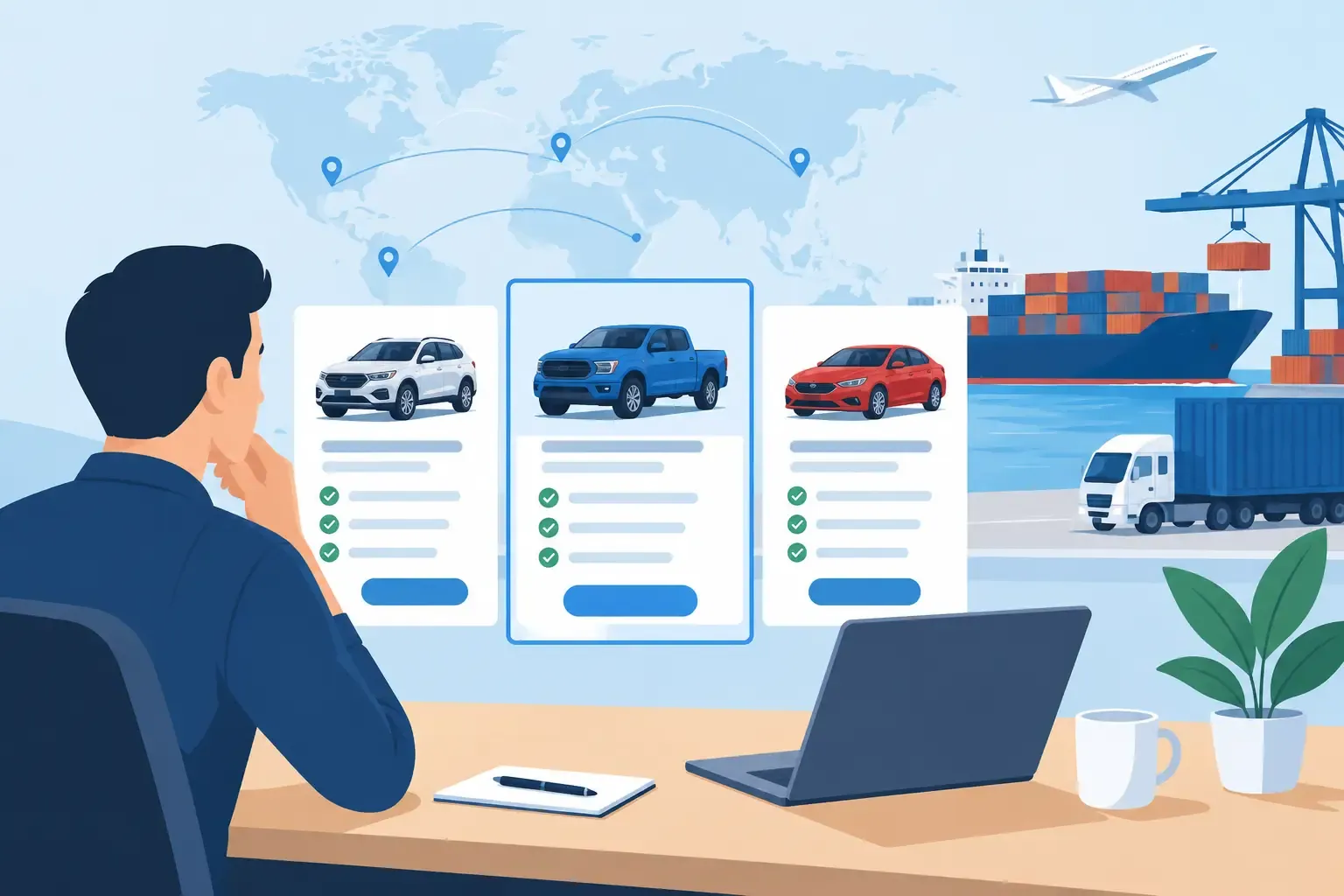
A quotation that appears $2,000 cheaper can become the more expensive purchase once freight scope, battery specification, inspection, and destination charges are reviewed. Knowing how to compare vehicle quotations is not about finding the lowest number on the page. It is about confirming that every supplier is quoting the same vehicle, under the same commercial terms, with the same export responsibilities.
For international buyers, fleet operators, resellers, and procurement teams, a vehicle quotation is a working document. It should provide enough detail to support a purchase decision, calculate landed cost, and prevent avoidable delays after payment. If a detail is missing, treat it as unconfirmed rather than included.
Start With an Apples to Apples Vehicle Comparison
Before comparing prices, compare the vehicle itself. Two quotations may use the same model name while referring to different trims, model years, production months, battery capacities, drivetrains, or market specifications. This is especially common with EVs, PHEVs, EREVs, commercial vehicles, and vehicles sourced from multiple international markets.
Confirm the make, model, trim, model year, exterior and interior color, VIN or chassis number when available, and odometer reading. For new inventory, ask whether the vehicle is physically in stock, allocated, or subject to factory production. A quote for ready stock has a different delivery profile from a quote based on a future allocation.
Technical specification matters just as much. An EV quotation should state battery capacity, charging port standard, driving range test cycle, drivetrain, charging equipment, and whether any adapter is included. A commercial unit should identify body configuration, payload, wheelbase, engine, transmission, and applicable equipment. For armored vehicles, the protection level, armoring scope, added weight, suspension upgrades, tires, glazing, and certification documentation need to be clearly defined.
If one supplier quotes a higher trim with larger batteries or additional equipment, the lower quote is not automatically better. The useful question is: what exactly is different, and does that difference matter in the destination market?
Compare Vehicle Quotations by Price Scope
The price line is only meaningful when its scope is clear. International vehicle quotations commonly use Incoterms such as EXW, FOB, CFR, and CIF. Each term assigns different responsibilities for transport, export handling, freight, and insurance.
An EXW price may cover only collection from the supplier’s premises. It can look attractive, but the buyer may still need to arrange inland transport, port handling, export customs processing, and ocean freight. FOB pricing generally includes delivery to the agreed port and export clearance, but buyers should verify the named port and exactly what terminal charges are covered. CFR includes ocean freight to the destination port, while CIF typically adds marine insurance.
Do not compare an FOB Dubai quotation with a CIF quotation to a U.S. or African destination as if they are equivalent. Convert each offer to the same basis before deciding. A practical approach is to calculate the projected landed cost for every option:
- Vehicle purchase price
- Inland transport and export processing
- Port and documentation charges
- Ocean or air freight
- Marine insurance, where required
- Destination port, customs, duty, tax, and local delivery costs
Some destination charges cannot be controlled by the exporter and may be estimates rather than fixed amounts. That is normal. What matters is that the quotation clearly separates confirmed supplier charges from projected third party charges.
Check What Is Included and What Is Excluded
A professional quote should not leave critical costs to assumption. Review the inclusions and exclusions line by line, particularly when purchasing multiple units or specialized vehicles.
Ask whether the price includes export documentation, certificate of origin where available, bill of lading fees, pre shipment inspection, port storage, and vehicle preparation. For used vehicles, verify whether the quote includes any required inspection certificate for the destination country. For new vehicles, confirm whether protective wrapping, charging cables, spare keys, manuals, and standard accessories are included.
Also look for costs that can arise after a vehicle reaches port. Storage fees, demurrage, customs examination, destination handling, and local transport can increase the final bill if documents are delayed or a shipment is not collected promptly. These may not belong in the supplier’s vehicle price, but they should be discussed before shipment is booked.
A low quotation with broad exclusions can still be a sound offer if the buyer has established logistics partners and understands the downstream costs. For a buyer seeking end to end export coordination, a clearer and more comprehensive quote often offers better operational value.
Verify Stock Status, Condition, and Inspection
Price should never replace verification. A quotation should identify whether the vehicle is ready for immediate delivery, in transit to a holding location, reserved, or dependent on supplier confirmation. Inventory can change quickly, particularly for high demand EVs, limited Dubai stock, and commercial units configured for a specific application.
For a vehicle already in stock, request current photographs, chassis or VIN confirmation where appropriate, and a condition report. For used vehicles, the report should address exterior condition, interior wear, tires, warning lights, service history if available, and known repairs or damage. For new vehicles, confirm production date and storage condition, especially if the unit has been held for an extended period.
Pre shipment inspection is one of the most valuable items to compare. Determine who performs it, what is checked, whether photographs or video are provided, and whether the buyer receives the report before final shipment. A basic visual check is not the same as a documented inspection covering specification, condition, key functions, and shipping readiness.
The right inspection level depends on the transaction. A single personal vehicle may need a detailed condition report. A fleet order needs a repeatable inspection process across every unit, with a clear method for resolving exceptions before loading.
Review Payment Terms and Currency Risk
A quotation should state the currency, payment schedule, bank charges, quotation validity period, and conditions for securing the vehicle. If the quote is in U.S. dollars, confirm whether the price is fixed through payment or may be adjusted due to supplier pricing or exchange rate movement.
Payment terms deserve the same scrutiny as vehicle price. A deposit may reserve stock, but ask when it becomes nonrefundable and what happens if the vehicle fails inspection, differs from the confirmed specification, or becomes unavailable. For balance payments, establish whether payment is due before loading, against shipping documents, or at another defined milestone.
For fleet and commercial procurement, clarify whether the supplier can hold pricing across several units and for how long. The lowest per unit price is less useful if it cannot be honored for the required quantity or delivery window.
Assess Shipping Readiness and Delivery Timing
A vehicle can be available for sale without being ready to export. Compare estimated timelines for inspection, document preparation, port delivery, vessel booking, transit, and destination release. Request a realistic range instead of relying on a single optimistic date.
Shipping timelines depend on the origin port, destination, vessel schedules, congestion, customs procedures, and whether the vehicle requires special handling. Battery electric vehicles may be subject to carrier specific requirementswhile oversized commercial or armored vehicles can require specialized loading plans and higher freight costs.
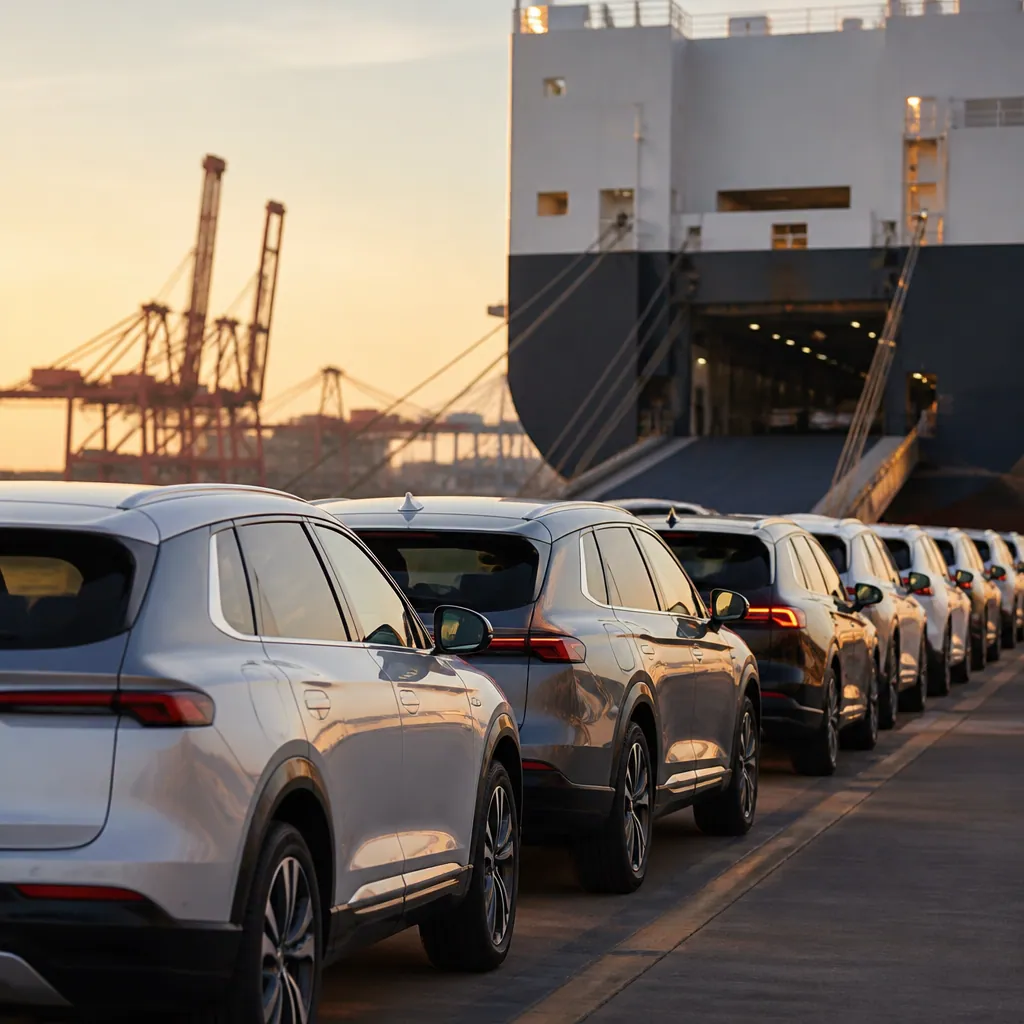
Confirm the shipment method as well. Container shipping may provide greater protection and consolidation flexibility, while roll on/roll off can be efficient for standard vehicles where routes are available. Neither method is universally better. The correct choice depends on destination, unit volume, vehicle type, handling requirements, and budget.
Evaluate the Supplier Behind the Quote
A complete quotation is also evidence of how the supplier operates. Clear specifications, named Incoterms, transparent exclusions, realistic timing, and responsive answers indicate a supplier prepared to manage an international transaction.
Ask who owns the inventory, who handles export documentation, and who remains responsible for communication after payment. Confirm whether the supplier has direct access to the vehicle or is passing through an unverified offer. For high value purchases, especially armored, commercial, or multi unit orders, the ability to coordinate inspection, paperwork, shipping, and post shipment document release is part of the product.
Automotion Global approaches quotations around this operational reality: vehicle availability, verified specifications, export readiness, and shipping coordination must work together. A quote should help a buyer move from inquiry to delivery with fewer unknowns, not create new ones.
Use a Decision Matrix Before You Approve
When several offers are close in price, score them against the factors that affect your actual purchase outcome: confirmed specification, stock status, inspection scope, Incoterms, projected landed cost, payment protection, documentation, and estimated delivery time. Give greater weight to the factors that matter most for the intended use.
A reseller may prioritize fast shipment and margin. A fleet operator may prioritize identical configuration and supply continuity. A private buyer may value transparent condition reporting and a clearly defined delivered cost. There is no single best quotation, only the offer that best matches the vehicle requirement and risk tolerance.
The strongest quotation is the one you can explain line by line, defend against your budget, and approve without relying on assumptions. Ask for clarification before payment, keep every agreed detail in writing, and let operational certainty carry as much weight as the purchase price.