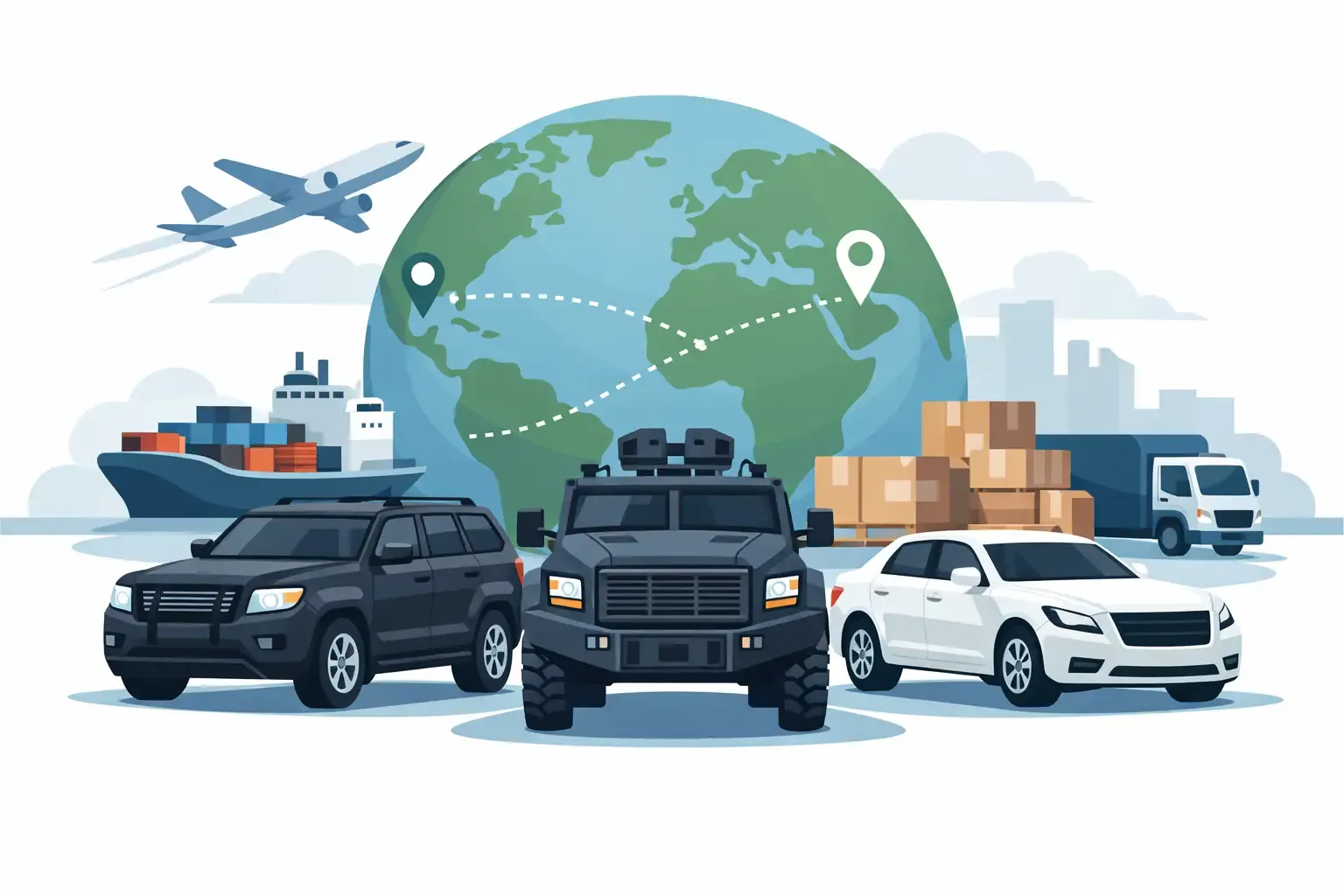

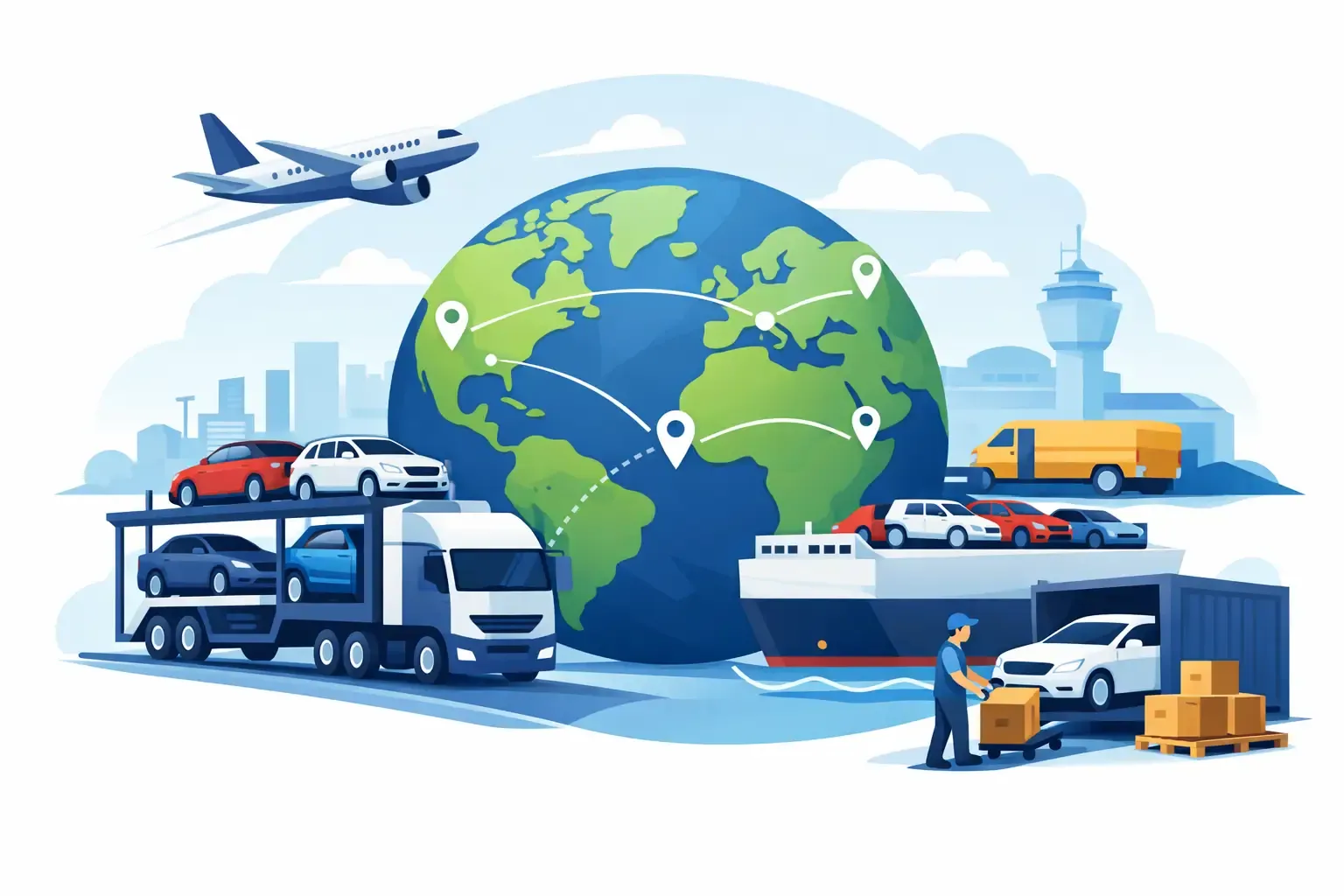
When a buyer in West Africa needs a pickup from Dubai stock, or a fleet operator in the Caribbean is sourcing export ready EVs with tight delivery windows, the vehicle itself is only half the transaction. The other half is the worldwide vehicle delivery service that moves that unit across borders, through compliance checks, onto a vessel, and into the buyer’s market without costly surprises.
That is where many international purchases succeed or fail. A low price on paper means very little if the vehicle is not properly documented, inspected before shipment, or booked through a shipping route that fits the destination port and import timeline. For serious buyers, delivery is not an add on. It is part of the procurement decision.
What a worldwide vehicle delivery service actually includes
A true worldwide vehicle delivery service is more than freight booking. It combines vehicle sourcing coordinationexport documentation, inspection handling, port logistics, and shipment management into one process. Buyers often assume delivery starts when the car reaches the port. In practice, it starts much earlier.
The process usually begins with confirming the vehicle specification, availability, and export eligibility. That matters because not every vehicle in stock is equally ready for every market. Some destinations require specific emissions compliance, model year documentation, chassis verification, or additional security paperwork. In the case of EVs and plug in hybrids, battery related shipping procedures can also shape the route and carrier options.
Once the unit is confirmed, the next stage is operational readiness. This includes pre shipment inspectionverifying condition against the sale agreement, checking VIN and production details, and preparing export documents. After that, the vehicle moves into inland transport or port handling, then onto ocean freight through either container shipping or roll on/roll off service, depending on the cargo profile and destination.
Why delivery capability matters as much as vehicle availability
International buyers often compare sellers by stock list and FOB price first. That makes sense. But when the transaction is cross border, logistics capability has a direct effect on landed cost, lead time, and risk exposure.
A seller with verified inventory but weak export coordination can create delays at the port, errors in shipping paperwork, and missed vessel cutoffs. Those issues increase storage fees, customs complications, and idle time for the buyer. This is especially relevant for commercial vehicles, armored units, and newer energy vehicles, where paperwork accuracy and handling procedures are less forgiving.
The stronger model is a supply partner that treats delivery as part of fulfillment, not as an afterthought. That means clear handoff points, inspection discipline, responsive communication, and realistic transit planning based on the destination market.
Worldwide vehicle delivery service for different buyer types
Not every shipment follows the same logic because not every buyer has the same operational goal. An individual buyer importing one vehicle typically prioritizes condition, visibility, and total landed predictability. A reseller may prioritize stock rotation, margin protection, and repeatable shipping lanes. A fleet operator usually cares about timing, batch coordination, and specification consistency across multiple units.
Security focused procurement teams add another layer. Armored vehicles may involve special declarations, controlled handling, and stricter document checks before export. Commercial buyers moving buses, vans, pickups, or specialty equipment often need dimensional planning and route selection that account for cargo size, destination infrastructure, and local clearance procedures.
This is why a worldwide vehicle delivery service should not be treated as a generic shipping product. It works best when it matches the type of vehicle, the destination market, and the buyer’s commercial objective.
What affects shipping time and total cost
Buyers often ask for a simple answer on timing and price. The honest answer is that both depend on the shipment profile. There is no single global rate card that applies equally to a compact EV going to Europe and an armored SUV heading to East Africa.
The biggest cost factors usually include the origin point, destination port, shipping method, vehicle dimensions, and whether the unit is shipped alone or in a consolidated load. Seasonality can also affect vessel space and port congestion. If the destination has limited direct sailings, transshipment may add time and handling complexity.
Documentation quality also affects cost in a less obvious way. Incorrect invoices, mismatched vehicle details, and incomplete export paperwork can trigger storage charges, rebooking costs, and delays in customs release. In international vehicle trade, administrative errors often become financial problems.
For timing, buyers should think in stages rather than one date. There is vehicle readiness, document preparation, port processing, vessel departure, ocean transit, and destination clearance. A reliable provider gives visibility across those stages instead of offering a vague estimate.
How inspections reduce delivery risk
Pre shipment inspection is one of the most practical controls in the entire transaction. It confirms that the vehicle being exported matches the agreed specification and condition before it leaves the origin market. That sounds basic, but it is where many expensive disputes are avoided.
In case used inventory, inspection helps document cosmetic and mechanical condition. For new or near new stock, it confirms trim level, equipment, battery related details where relevant, and export readiness. In the case commercial and armored vehicles, inspection becomes even more important because configuration differences can materially affect utility, compliance, and value.
A delivery partner that handles inspection as part of the export workflow is usually better positioned than one that only arranges freight after the sale. It creates accountability earlier in the process, when issues are still fixable.
Choosing the right shipping method
RoRo vs container shipping in a worldwide vehicle delivery service
Roll on/roll off shipping is often the most efficient option for standard operable vehicles moving on established routes. It can offer competitive transit economics and simpler loading for many passenger vehicles and some commercial units. The trade off is that route availability depends on destination coverage, and not every vehicle category or shipment type is ideal for RoRo.
Container shipping offers more flexibility for certain markets and can be a better fit for higher control handling, specialty units, or destinations where container frequency is stronger than RoRo access. It may also suit buyers consolidating multiple vehicles or combining vehicles with parts and accessories, subject to shipping rules. The trade off is that container planning can add cost and loading complexity.
The right choice depends on the destination, vehicle type, and delivery priority. The best providers do not force one method across every shipment. They match the method to the operational requirement.
Why EVs and advanced mobility vehicles need extra attention
Electric vehicles, PHEVs, and EREVs are in growing demand across global markets, but they introduce extra delivery considerations. Battery status, carrier requirements, port handling procedures, and destination compliance expectations can all affect movement planning.
This does not make international shipment difficult. It makes proper coordination more important. Buyers sourcing modern mobility inventory should work with exporters who understand how these vehicles are documented, inspected, and prepared for cross border delivery. That is especially relevant when the model is new to the destination market or hard to source locally.
This reason, companies such as Automotion Global are structured around export ready inventory and operational follow through, not just vehicle listings. That approach matters when buyers need confidence that the vehicle can be moved, not merely advertised.
What to ask before committing
Before confirming any order, buyers should get clarity on four areas: whether the vehicle is physically available, whether it is export ready for the target market, what inspection steps are included, and how the shipping process will be managed from origin to destination port. If any of those answers are vague, the transaction may carry more risk than the initial quote suggests.
It is also worth asking who controls each stage. Some sellers source the vehicle but outsource everything after the invoice. Others manage the process through inspection, export documentation, and shipment booking. The more integrated the workflow, the easier it is to maintain speed and accountability.
A strong worldwide vehicle delivery service is not defined by marketing language. It is defined by execution, accurate stock status, clean paperwork, realistic transit planning, and responsive support when timing matters.
The practical standard buyers should expect
International vehicle delivery should feel controlled, not improvised. Buyers should expect verified inventory, clear export procedures, pre shipment checks, and shipping options based on the destination market rather than generic promises. They should also expect direct answers on timing, documentation, and total process responsibility.
That standard is especially important when sourcing high value or specialized units across borders. Whether the requirement is a single passenger vehicle, a commercial fleet order, or a security oriented shipment, the delivery model should protect the transaction from avoidable delays and mismatched expectations.
If you are evaluating suppliers, look beyond the stock list. The right partner is the one that can move the vehicle with the same level of confidence used to sell it.