
A buyer in one market asks for full electric because demand is rising. Another wants plug in hybrid because charging access is still limited. That is where the real EV vs PHEV export decision starts, not with trend headlines, but with how the vehicle will perform after arrival, how easily it can be registered, and how quickly it can be sold or deployed.
For international buyers, the right choice is rarely about technology alone. It is about infrastructure, import rules, battery handling, resale timing, and use case. A vehicle that looks ideal on paper can become difficult inventory if the destination market is not ready for it. The strongest export decisions match the powertrain to the country, the customer, and the operating environment.
EV vs PHEV export: the difference that matters
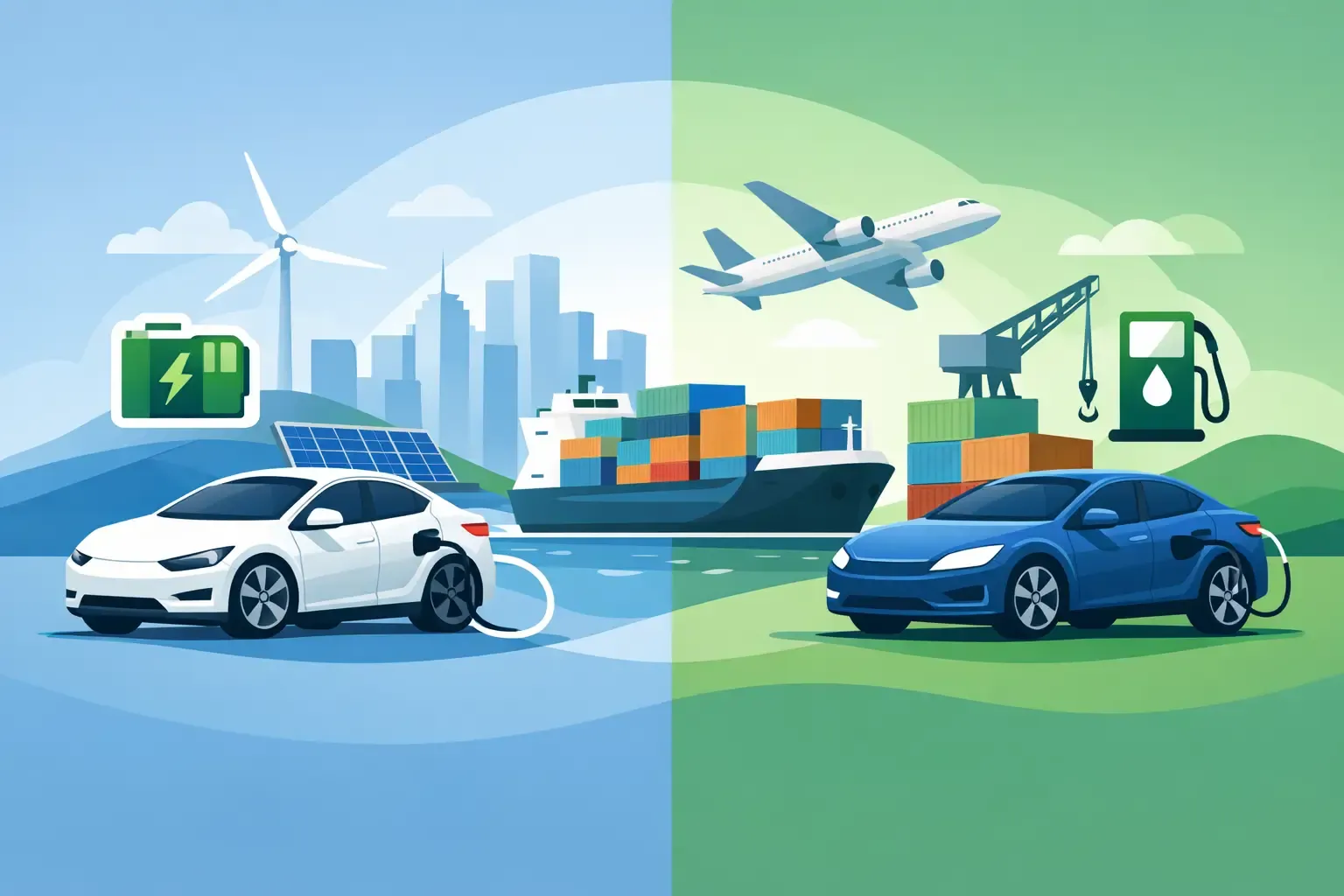
In simple terms, an EV runs entirely on battery power and needs external charging. A PHEV combines a battery and electric motor with a fuel engine, allowing short electric driving with gasoline backup. Both can be strong export options, but they solve different problems.
For export buyers, this difference changes more than fuel economy. It affects shipping procedures, maintenance expectations, local service support, and end user confidence. In markets with mature charging networks and favorable EV registration policies, full electric vehicles often make commercial sense. In markets where charging is inconsistent or long distance driving is common, PHEVs can be the more practical unit to import.
Start with the destination market, not the vehicle
The most common mistake in cross border sourcing is choosing the vehicle first and figuring out the market fit later. That approach creates friction at customs, registration delays, and slow moving stock. A better process begins with local conditions.
If the destination country has growing urban charging access, tax incentives for zero emission vehicles, and customers already familiar with battery electric ownership, EVs are often easier to position. They appeal to buyers looking for lower operating costs, modern technology, and city friendly use.
If the market has patchy charging coverage, unstable power supply, or buyers who regularly travel long distances outside major cities, PHEVs often carry less operational risk. The fuel engine reduces range anxiety and makes the vehicle easier to accept for first time electrified buyers.
This is especially relevant for resellers and fleet operators. A unit that satisfies end users immediately is usually better business than one that needs market education before it can move.
Where EV export has the edge
EV export works best when the destination market is ready to support full battery electric ownership. That usually means reliable public or private charging, service familiarity, and regulations that do not create uncertainty around battery certification or homologation.
For commercial buyers, EVs can offer a cleaner cost structure over time. Electricity is often cheaper than fuel on a per mile basis, and EVs generally have fewer moving parts than combustion based vehicles. That can reduce maintenance downtime, which matters for fleets, executive transport, and urban delivery operations.
There is also a strong demand side in some regions. Buyers increasingly want newer EV models with better range, stronger software features, and lower operating costs than older fuel vehicles. For exporters, that demand can create an attractive path for fast turnover when inventory is selected correctly.
The trade off is operational readiness. Battery condition must be verified carefully. Shipping documentation and handling standards must be followed closely. The importer also needs confidence that charging and after sales support exist on the ground. Without those pieces in place, an EV can arrive as a high interest product but become a slow use asset.
Where PHEV export makes more sense
PHEVs sit in the middle of the market for a reason. They offer electric driving for shorter daily use while keeping a fuel engine for flexibility. In export terms, that makes them easier to place in countries where EV adoption is growing but infrastructure still lags.
For many buyers, a PHEV feels like a lower risk transition vehicle. It allows access to electric efficiency in city traffic without making charging the only option. This matters for households with one vehicle, for business users covering mixed routes, and for markets where public charging is concentrated in a few urban zones.
PHEVs can also widen your buyer pool. A full EV may appeal to a specific customer segment, while a PHEV often reaches both efficiency focused buyers and those who still want conventional fueling convenience. For traders and resellers, that broader appeal can improve resale speed.
The trade off is complexity. A PHEV contains both electric and combustion systemswhich can increase maintenance considerations over time. It also depends on user behavior. If the owner rarely charges it, the expected fuel savings may not fully materialize. So while PHEVs are flexible, they are not automatically the better financial option in every market.
EV vs PHEV export for fleets and commercial buyers
Fleet procurement requires a stricter view. The question is not just what the vehicle can do, but how consistently it can do it across routes, drivers, and service schedules.
EVs are often the stronger choice for predictable urban routes. If charging can be built into daily operations, they offer simpler energy management and potentially lower running costs. Delivery fleets, executive shuttles, and city based service vehicles can benefit from that structure.
PHEVs are often better suited to mixed use operations where route length changes daily or charging access cannot be guaranteed. They are also useful for organizations that want to begin electrifying without fully redesigning fueling and dispatch workflows.
For export buyers managing multiple vehicles, infrastructure should be treated as part of the vehicle decision. A lower FOB price on one model means less if local operations cannot support it effectively after import.
Compliance, inspection, and shipping are part of the decision
Powertrain choice should never be separated from export execution. Both EVs and PHEVs require attention to documentation, battery condition, vehicle specification, and destination country compliance.
Battery state, charging compatibility, software language, connector standards, and vehicle certification all matter. So do model year restrictions, emissions related rules for hybrids, and any import controls tied to high voltage systems. A buyer may prefer one category, but regulatory fit decides whether the transaction stays efficient.
Pre shipment inspection becomes especially valuable here. It helps confirm that the vehicle matches the expected specification and reduces surprises after arrival. For electrified vehicles, this is not a minor checkpoint. It is part of protecting the deal.
Shipping also deserves practical review. EVs and PHEVs can involve specific handling and carrier requirements depending on battery status and shipping method. That is why experienced export coordination matters. The vehicle must not only be available, it must be export ready in a way that aligns with carrier, port, and destination procedures.
Which one is easier to resell?
There is no universal answer. Resale depends on local demand maturity.
In EV-friendly markets, full electric models can move quickly, especially when buyers understand charging and actively seek lower operating costs. In transitional markets, PHEVs may sell faster because they reduce buyer hesitation. They feel familiar while still offering some electric benefit.
For traders, this means inventory strategy should be local, not generic. Stocking EVs simply because global demand is rising can be a mistake if your destination market still lacks charging confidence. The same applies in reverse. Relying on PHEVs in a market rapidly shifting to zero emission incentives may leave margin on the table.
The better export position is usually the one backed by real destination insight, not assumptions.
How to make the right EV vs PHEV export choice
A practical decision usually comes down to five points: the destination country’s charging readiness, import and registration rules, the end user’s driving pattern, expected resale demand, and the support available for inspection and export handling.
If the vehicle is going into a city market with strong charging growth and clear EV adoption, a full EV often offers the cleaner long term case. If the vehicle is headed to a mixed use environment where charging is still inconsistent, a PHEV may deliver better day one usability.
This is where working with an export focused supply partner changes the process. Buyers do not just need access to stock. They need accurate vehicle information, pre shipment verification, and logistics support built around cross border delivery. For companies sourcing internationally through Automotion Global, that alignment between inventory, inspection, and shipping is what turns a good vehicle choice into a workable import transaction.
The strongest move is the one that fits the market after the vehicle arrives. When EV or PHEV selection is made with infrastructure, compliance, and buyer demand in mind, export becomes less speculative and more profitable.