
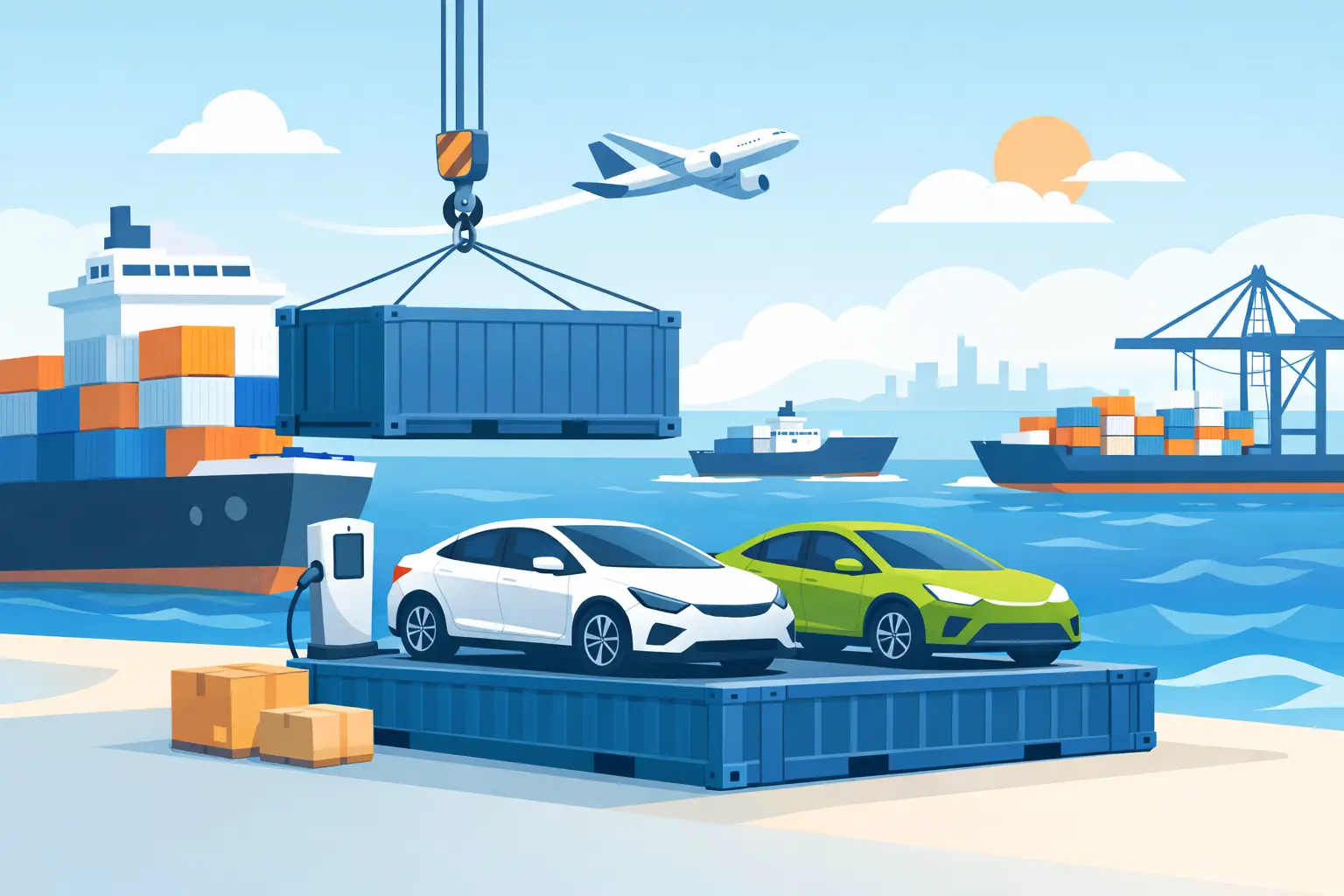
A buyer finds the right EV at the right price, confirms the spec, and then hits the real question: can EVs be shipped overseas without creating delays, compliance issues, or battery-related problems at the port? The short answer is yes. EVs can be exported internationally every day, but they do not move exactly like gasoline vehicles, and that difference matters.
For overseas buyers, fleet managers, and resellers, the issue is rarely whether shipment is possible. The issue is whether the vehicle is export-ready, the battery documentation is complete, and the shipping route is approved by the carrier and the destination country. When those pieces are handled correctly, EV shipping is a practical and reliable part of global vehicle trade.
Can EVs Be Shipped Overseas Without Special Restrictions?
Yes, but not without additional checks. An electric vehicle contains a high-voltage lithium-ion battery, and that changes how shipping lines, freight handlers, and customs authorities assess risk. The vehicle itself is not prohibited from ocean freight in most markets. What changes is the level of documentation, inspection, and operational control required before loading.
In practice, many EVs are shipped by container or roll-on/roll-off service, depending on the route, the carrier, and the vehicle condition. Some carriers apply stricter acceptance standards for electric vehicles than they do for internal combustion vehicles. That can include limits on battery state of charge, inspection requirements, or specific declarations confirming that the battery is undamaged and factory-installed.
This is why export readiness matters more with EVs than with conventional cars. If the paperwork is incomplete or the vehicle condition is unclear, the shipment can stall before departure.
What Makes EV Shipping Different From Shipping a Gasoline Vehicle?
The main difference is battery compliance. A gasoline vehicle presents one set of transport risks. An EV introduces a different set tied to lithium battery safety, emergency handling procedures, and line-specific acceptance rules. That does not make EV export unusually difficult, but it does make it less forgiving.
Battery condition is central. If the battery has visible damage, unresolved fault warnings, or signs of impact, many carriers will reject the booking. The same applies if the vehicle has been modified in ways that affect the battery system or charging architecture. Buyers sourcing used EVs should pay close attention here, especially when purchasing from secondary channels where service history may be incomplete.
Charging level can also matter. Certain carriers prefer EV batteries to be shipped at a reduced state of charge rather than fully charged. That requirement can vary, so it should be confirmed before inland delivery to port. If this is missed, the vehicle may need additional handling before loading, which adds cost and time.
There is also a market-specific issue that many buyers overlook: compatibility after arrival. Shipping the EV is one part of the transaction. Using it legally and practically in the destination country is another. Charging connector type, local voltage standards, software region settings, and spare parts support should all be reviewed before purchase, not after the vessel sails.
Documentation Required to Ship an EV Overseas
The exact document set depends on origin, destination, and vehicle status, but EV exports usually require more technical support documents than standard vehicle shipments. The core set typically includes the commercial invoice, title or ownership record, bill of lading instructions, export customs documentation, and identification details for the buyer and consignee.
For the EV itself, battery-related declarations may be required by the shipping line or freight forwarder. In some cases, carriers ask for confirmation that the lithium-ion battery is installed by the manufacturer and has not been altered. They may also request inspection records or photographs showing the vehicle’s condition before shipment.
If the destination market has homologation, emissions-equivalent compliance, or registration rules specific to EVs, those should be checked in advance. An electric vehicle may clear the shipping process and still face delays at import if local authorities require model approvals, charging compliance certification, or tax classification documents tied to battery capacity or powertrain type.
For commercial buyers importing multiple units, consistency in paperwork is critical. Small documentation mismatches across VIN records, invoices, and shipping instructions can create unnecessary customs review, especially when vehicles are battery-powered and already under closer scrutiny.
Container vs. RoRo for EV Exports
Both methods are used, but the right option depends on route availability, vehicle value, destination infrastructure, and carrier policy.
Container shipping offers more control. It is often preferred for higher-value EVs, specialized models, and shipments to ports where roll-on/roll-off frequency is limited. A container can also be a practical choice when shipping parts, accessories, or multiple support items with the vehicle. For some buyers, that added control helps reduce handling risk.
RoRo can be efficient and cost-effective when the route is active and the carrier accepts the vehicle type. The process is straightforward because the vehicle is driven onto the vessel and secured for transport. However, not every RoRo operator handles EVs under the same terms, and acceptance can depend on the battery status, vehicle age, or country pair.
There is no universal best method. A premium EV heading to a market with complex inland handling may be better in a container. A standard, export-ready unit on a common lane may move perfectly well by RoRo. The correct decision comes down to carrier approval, timing, and total landed cost rather than a one-size-fits-all rule.
Can Used EVs Be Shipped Overseas?
Yes, used EVs can be shipped overseas, and demand is growing in many markets where buyers want access to newer electric models without paying local retail premiums. But used EVs require closer screening than used gasoline vehicles.
Battery health is the first checkpoint. A used EV with poor battery performance may still ship, but it can be a weak purchase if range degradation is severe or replacement support is limited in the destination market. A pre-shipment inspection is especially valuable here because cosmetic condition alone does not reveal battery condition, charging behavior, or system faults.
Import rules are the second checkpoint. Some countries limit the age of imported vehicles, apply tax treatment based on model year, or require right-hand-drive or left-hand-drive conformity. Others have special treatment for electrified vehicles, which can be favorable or restrictive depending on local policy. Buyers should verify these rules before paying, not after export documentation has started.
Common Delays When Shipping EVs Overseas
Most EV shipping delays are preventable. They usually come from mismatched documents, missed carrier requirements, or assumptions about destination-country acceptance.
One common issue is late discovery of battery-related restrictions. If the shipping line asks for an inspection certificate, battery declaration, or reduced state of charge after the vehicle has already reached the port, storage charges can start building quickly. Another issue is incomplete model verification for import. A vehicle may be commercially attractive, but if local registration is difficult, the savings can disappear.
There is also a simple operational problem that affects many cross-border purchases: buyers focus on the vehicle price but not the logistics sequence. Ocean freight, port handling, customs clearance, local duties, and last-mile delivery all affect the final transaction. With EVs, those steps need tighter coordination because compliance gaps are less likely to be overlooked.
How to Make EV Export Smoother
The best approach is to qualify the vehicle before committing to shipment. That means confirming the VIN details, battery condition, ownership documents, and destination import eligibility early. It also means working with a supplier that understands export handling rather than treating international shipping as an afterthought.
For professional buyers, speed comes from preparation, not guesswork. Confirm the shipping method, ask whether the carrier has EV-specific conditions, and verify whether the destination country has registration or charging-standard issues that could affect resale or use. If the unit is used, ask for inspection evidence that goes beyond body panels and mileage.
This is where an experienced export partner can reduce friction. Companies handling cross-border vehicle fulfillment every day are better positioned to coordinate inspection, carrier acceptance, port processing, and final delivery timing. For buyers sourcing EVs across multiple markets, that operational consistency is often more valuable than chasing the lowest sticker price.
Automotion Global supports this kind of transaction by focusing on export-ready inventory, pre-shipment checks, and international delivery coordination across a wide range of vehicle categories, including EVs and other advanced mobility models.
EVs are no longer a niche export category. They are part of mainstream international vehicle trade, but they reward careful planning more than rushed buying. If the battery status is verified, the paperwork is complete, and the destination market is properly checked, overseas EV shipping is not only possible – it is commercially practical.