
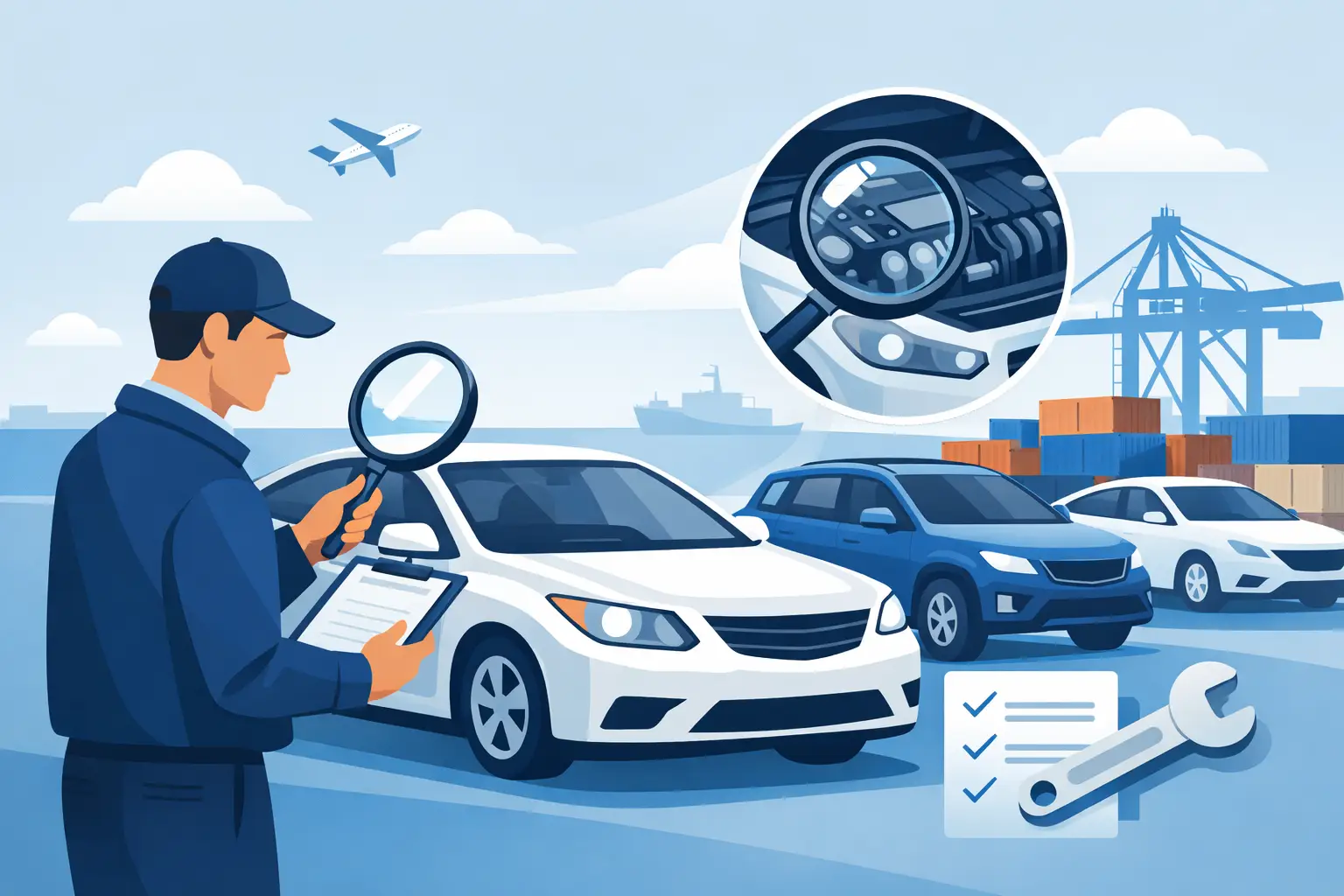
A vehicle can look clean in photos, show low mileage on paper, and still become an expensive problem once it reaches port. That is why knowing how to inspect export cars is not just a buying step – it is a risk-control process that protects your budget, timeline, and resale value.
For international buyers, inspection means more than checking paint and tires. You are confirming that the vehicle matches its listing, meets destination-market requirements, and is ready for shipping without hidden mechanical, cosmetic, or documentation issues. If you are sourcing passenger vehicles, EVs, commercial units, or specialized stock such as armored vehicles, the inspection standard needs to be consistent and export-focused.
How to inspect export cars with the right priorities
The biggest mistake buyers make is treating an export inspection like a local test drive. In cross-border transactions, you may not see the vehicle in person before purchase, and even if you do, the inspection still needs to account for shipping, customs, homologation, and handover risk.
Start with the basics: identity, condition, functionality, and paperwork. Those four areas tell you whether the unit is genuine, usable, compliant, and commercially viable. If one of them fails, the vehicle may still be buyable, but only if pricing and repair assumptions are adjusted correctly.
A disciplined inspection should answer several direct questions. Does the VIN match all records and labels? Is the mileage credible? Are there signs of accident repair, water damage, corrosion, or poor refurbishment? Do all key systems operate as expected? Is the vehicle configured for the destination market? And just as important, are the export documents complete and accurate?
Confirm the vehicle identity first
Before looking at body panels or interior trim, confirm the unit itself. The VIN should match the title, invoice, auction record if applicable, manufacturer plate, and any export documents. A mismatch here is not a minor issue. It can delay customs clearance, affect registration, or stop a shipment entirely.
Check the model year, trim, drivetrain, engine or battery specification, and market configuration against the seller’s description. This matters even more with EVs and hybrids, where battery size, charging standard, software region, and equipment level can materially affect value and usability.
If the car is represented as export-ready, the documentation should support that claim. Ask for a clear copy of the title or ownership document, any service history available, inspection reports, and confirmation that there are no liens, salvage branding, or registration restrictions that could affect export or import.
Inspect the body, frame, and structural condition
Cosmetic flaws are one thing. Structural issues are another. A proper export inspection should distinguish between normal wear and damage that changes safety, long-term durability, or resale value.
Panel gaps, paint inconsistency, overspray, and uneven reflections can indicate prior repairs. That does not always mean the car should be rejected, but it does mean the repair quality should be assessed carefully. A repainted bumper is common. Evidence of frame work, poorly aligned doors, or welding in structural areas deserves closer review.
Look underneath the vehicle as well. Corrosion, underbody impact damage, suspension leaks, and bent components can be missed in standard photo sets. For buyers importing into humid, coastal, or rough-road environments, underbody condition matters more than surface scratches. Export vehicles often spend time in holding yards and transit channels, so rust prevention and existing corrosion should be documented clearly.
For armored or commercial vehicles, inspection standards should go further. Added weight, suspension load, chassis integrity, and modifications all need verification. These are not categories where appearance alone tells you much.
Check the mechanical systems, not just whether it starts
A running engine is not the same as a healthy vehicle. During inspection, the powertrain should be assessed for leaks, noises, warning lights, startup behavior, and operating smoothness. Transmission response, braking, steering feel, cooling performance, and suspension condition all affect whether the car can be delivered and used without immediate corrective work.
If a road test is possible, it adds value. If it is not, a stationary operational check becomes even more important. The inspector should verify cold start behavior, idle quality, dashboard warnings, AC performance, lighting, power accessories, and onboard electronics. In modern vehicles, especially premium exports, electrical faults can be costly and difficult to diagnose remotely.
For diesel, commercial, and heavy-use vehicles, pay close attention to smoke, drivetrain vibration, and service evidence. For low-mileage units, do not assume condition is automatically excellent. Long storage periods can create battery issues, tire flat spots, fluid degradation, and seal problems.
How to inspect export cars with EV and hybrid considerations
If you are sourcing EVs, PHEVs, or EREVs, the inspection process changes. Battery condition becomes one of the most important value drivers, and standard cosmetic inspection is not enough.
Ask for battery state of health where available, charging performance data, range estimate consistency, and confirmation of charging port type. You also need to verify whether the charging standard fits the destination market or if an adapter or infrastructure adjustment will be required. A good export deal can become less attractive if local charging compatibility is poor.
Software region and connected services also matter. Some imported EVs arrive with features that are restricted, unsupported, or limited in another market. Navigation, language settings, over-the-air updates, telematics, and app connectivity should be checked before shipment. It depends on the brand and destination, but these details can influence both usability and resale.
Hybrid and range-extended vehicles need both battery and engine-related inspection. Buyers sometimes focus on one side and miss the other. The right approach is to assess the full propulsion system as an integrated package.
Review the interior and equipment with resale in mind
Interior condition tells you how the vehicle was actually used. Excessive seat wear, steering wheel shine, switchgear damage, or inconsistent trim condition can raise mileage credibility concerns. Water staining, mildew odor, or corrosion around seat rails and electrical connectors may point to flood exposure or poor storage.
Check that all listed equipment is present and working. Infotainment systems, cameras, parking sensors, power seats, climate controls, and safety features should be tested, not assumed. Missing keys, damaged screens, or inactive features may seem manageable at purchase stage, but they often become expensive after export.
For fleet buyers and resellers, equipment accuracy affects margin. If a vehicle is advertised with one trim package and delivered with another, the issue is not just inconvenience – it directly affects market value.
Verify export documents and destination compliance
Many cross-border problems come from paperwork, not mechanics. A sound inspection includes a document review to confirm that the vehicle can be exported from the source country and imported into the destination country without avoidable delays.
Check the title status, bill of sale or commercial invoice, VIN consistency, and any required export declarations. Then review destination requirements such as emissions rules, age restrictions, safety standards, left-hand or right-hand drive acceptance, and any model-specific restrictions.
This is where experienced export support matters. A vehicle may be in excellent condition but still be a poor fit for your market due to compliance issues or costly modification requirements. Automotion Global works with this reality every day because sourcing the right unit is only part of the transaction – the unit also has to move efficiently through export and delivery.
Use photos and reports the right way
Photo packs and inspection sheets are useful, but only if they are detailed enough to support decisions. Ask for high-resolution images of all sides, the roof, wheels, tires, windshield, underbody if possible, engine bay, interior surfaces, cargo area, VIN plate, odometer, and dashboard with ignition on.
Video can be even more useful for startup, idle behavior, walkaround condition, and live function checks. If the seller avoids specific angles or refuses updated media, treat that as a signal. Serious export inventory should be easy to document.
A good inspection report does not only say the car is clean. It identifies what is excellent, what is normal for age and mileage, and what needs repair or pricing adjustment. That level of detail helps buyers make commercial decisions instead of relying on assumptions.
When to walk away
Not every flaw is a deal breaker. Minor paintwork, small interior wear, or routine maintenance needs can be acceptable if the vehicle is priced correctly. The real concern is hidden risk – title problems, structural damage, flood exposure, battery uncertainty, compliance mismatch, or documentation gaps.
If the numbers only work when everything goes perfectly after arrival, the deal is usually too tight. Strong export buying depends on margin for inspection findings, shipping variables, local taxes, and post-arrival work. Discipline at inspection stage protects the transaction later.
The best export purchases are not always the cheapest units on paper. They are the vehicles with verified condition, accurate documents, market-fit configuration, and predictable delivery outcomes. Inspect with that standard, and you buy with far more control.