
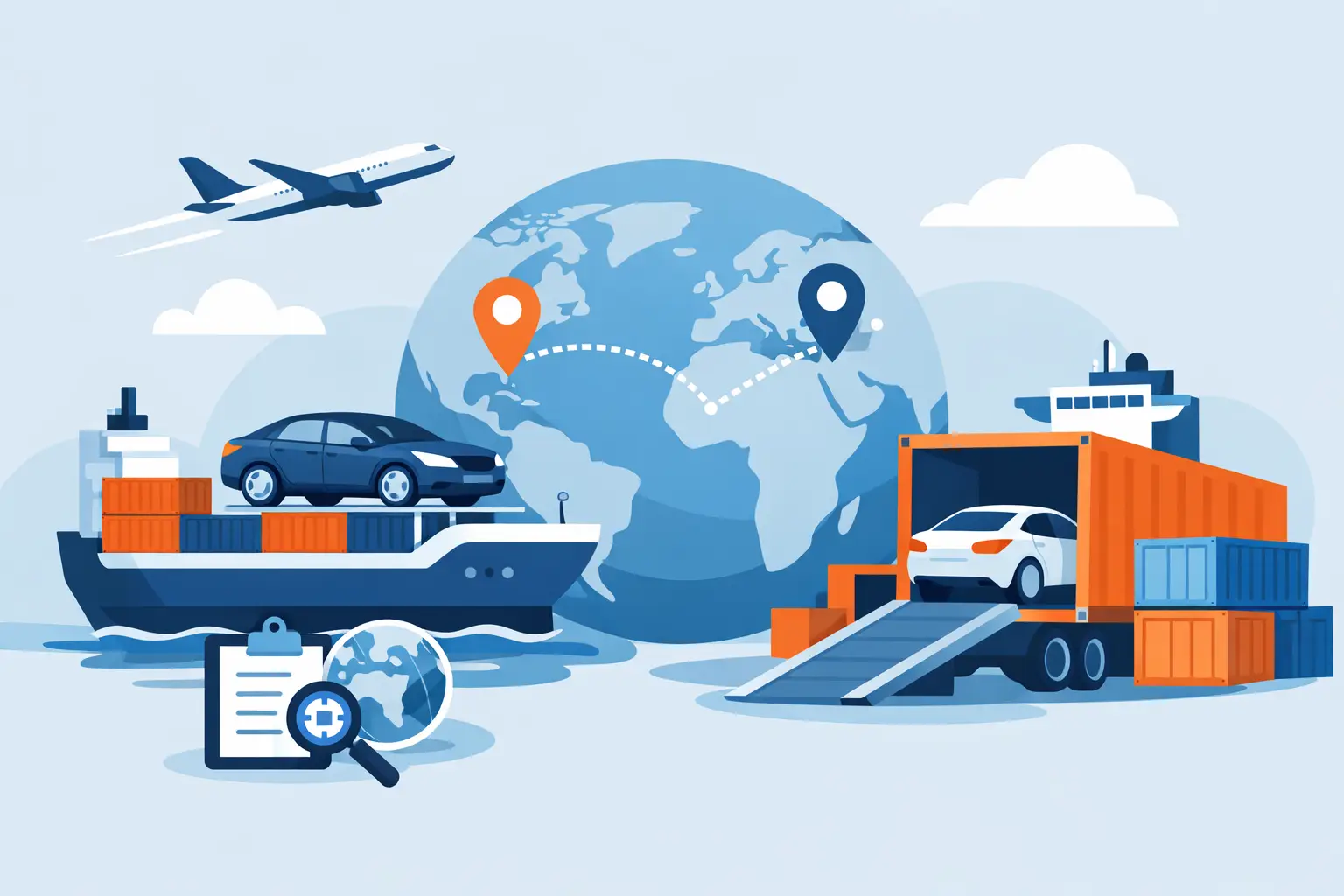
A vehicle can be ready for export within days or delayed for weeks because of one critical factor: paperwork, shipping method, or destination import rules. That is why buyers should understand how to ship cars internationally before finalizing payment and releasing the vehicle to the port.
For private buyers, fleet managers, resellers, and procurement teams, international vehicle shipping involves far more than booking ocean freight. Every decision in the process affects landed cost, delivery schedules, compliance, and risk. A single overlooked detail can delay arrival, create unnecessary charges, or prevent customs clearance. A well-managed process, however, creates a predictable and commercially efficient shipment.
How to ship cars internationally without costly delays
The most effective way to plan an international vehicle shipment is to start with the destination country’s requirements. Many buyers focus first on vehicle price and freight rates, but import eligibility should come before either decision. Before shipping a car, buyers need to confirm whether the destination country permits that specific make, model, year, engine type, and steering configuration.
This step becomes especially important for EVs, plug-in hybrids, commercial vehicles, and armored units. Some markets provide incentives for newer energy vehicles through lower duties or registration benefits. Others enforce stricter requirements for battery documentation, homologation, or charging standards. Commercial and security vehicles may also require additional import approvals.
After confirming import eligibility, buyers should match the shipment strategy with their actual business or personal needs. A private-use sedan, a fleet of commercial vans, and an armored SUV for a security contract each require different documentation, inspection processes, and delivery expectations.
Start with vehicle status and export readiness
Not every vehicle available for purchase can leave the country immediately. Buyers should confirm that the seller can provide essential export documents, a clear ownership record, and evidence of pre-shipment inspection. When sourcing from inventory, buyers should also verify whether the vehicle is physically available, reserved, or still undergoing procurement.
Export readiness also requires a clear understanding of the vehicle’s condition. For used vehicles, buyers should review mileage, service records when available, visible damage, tire condition, battery health for EVs and hybrids, and any modifications that could affect import approval. For new or nearly new vehicles, buyers should confirm the build specification, market configuration, and compatibility with the destination country’s fuel, emissions, and safety requirements.
Experienced export partners provide value by managing these details early. They do more than arrange transportation. They help ensure the vehicle can move smoothly through sourcing, documentation, shipping, and final delivery.
The documents that usually matter most
Document requirements vary between origin and destination countries, but most international vehicle shipments rely on several standard records. These commonly include the commercial invoice, title or ownership certificate, bill of lading, export declaration, buyer or consignee identification, and destination import documents.
Some shipments also require a certificate of conformity, inspection reports, cleaning or fumigation confirmations, or battery documentation for electric vehicles. Company buyers may need to provide corporate registration documents as well.
A missing document may not stop a transaction immediately, but it can create expensive problems later. Delays at ports, storage fees, and customs questions often appear after the vehicle has already arrived.
Choose the right shipping method for the vehicle
When buyers ask how to ship cars internationally, the shipping method usually becomes the first major decision. The two most common options are RoRo and container shipping.
RoRo, or roll-on/roll-off shipping, often provides the most cost-effective solution for standard operational vehicles. The carrier drives the vehicle onto the vessel and secures it for transport. This method works well for many passenger cars, SUVs, and some commercial vehicles. However, it provides less protection from the port environment and may not suit every vehicle category.
Container shipping places the vehicle inside a sealed container, either individually or with other approved cargo. Buyers often choose this option for higher-value vehicles, EVs that require careful handling, specialty vehicles, spare parts shipments, or destinations with stronger container networks. Although container shipping usually costs more than RoRo, the additional control can justify the higher price.
Non-running vehicles, highly specialized units, and certain armored vehicles may require flat rack or breakbulk solutions. These methods involve more detailed planning and specialized handling.
The best shipping method depends on vehicle value, condition, destination infrastructure, route availability, and the buyer’s priorities. The cheapest freight option does not always create the lowest overall cost.
Understand the real cost, not just the freight quote
Ocean freight represents only one part of an international vehicle shipment. Buyers should calculate the full landed cost, including inland transport to the port, export handling, documentation, ocean freight, marine insurance, destination charges, customs duties, taxes, inspections, storage fees, and final delivery.
EVs and hybrids may involve additional costs depending on local compliance rules and port procedures. Fleet operators can benefit from volume planning, but they also need accurate documentation across every unit to avoid clearance delays and accumulated charges.
Another common mistake involves comparing different shipping terms without understanding what they include. An FOB price and a CIF estimate represent different stages of responsibility. Buyers should always confirm what costs the quote covers and where ownership or responsibility transfers.
Insurance is not optional in practical terms
Marine insurance should remain part of the shipment strategy from the beginning. Even reliable routes and experienced carriers face risks from handling, weather conditions, and port delays.
The insurance policy should reflect the vehicle’s actual value and the transaction structure. Buyers should also include accessories, spare batteries, or additional equipment in the insured value when shipping them with the vehicle.
Customs clearance is where planning gets tested
A vehicle can arrive on schedule and still experience delays during customs clearance. Destination-country rules determine whether the vehicle can enter the market, including duties, taxes, age restrictions, emissions standards, registration requirements, and inspection procedures.
Experienced buyers confirm these requirements before shipping. They ask whether the vehicle can be registered as delivered, whether the country permits the steering configuration, whether used EV imports face restrictions, whether pre-export inspections apply, and whether a local clearance agent is necessary.
For multi-unit shipments, consistency becomes even more important. Customs officials may raise questions when model details, VIN records, invoice values, and shipping documents do not match. Accuracy matters more than speed during this stage.
Delivery timing depends on more than vessel transit
Buyers often ask how long international car shipping takes, but ocean transit represents only one part of the timeline. Total delivery time includes booking, export preparation, inland transportation, customs release, vessel schedules, destination processing, import clearance, and final delivery.
A route with a short sailing time may still experience delays because of congestion, limited schedules, or transshipment. A longer route may provide better reliability when it offers consistent sailings and efficient destination handling.
For business buyers, predictable delivery often matters more than the fastest possible route. A delayed commercial vehicle can affect operations. A delayed armored unit can affect contract commitments. A delayed EV shipment can disrupt retail planning.
Work with partners who understand vehicle exports, not just freight
A general freight provider and a dedicated vehicle export partner serve different roles. Freight companies move cargo, while vehicle export specialists also manage sourcing accuracy, inspections, loading requirements, documentation, and destination considerations.
This becomes especially important for modern mobility vehicles, difficult-to-source models, and specialized categories. A global supplier such as Automotion Global can help streamline the process by connecting inventory sourcing, pre-shipment verification, export coordination, and delivery planning through one commercial workflow.
The objective is not simply to place a vehicle on a vessel. The objective is to move the correct vehicle, with complete documentation, through the right route, at a cost and timeline that support the buyer’s goals.
For anyone planning an international vehicle purchase, the first question should not be about the cheapest shipping quote. The better question is whether the vehicle is ready for the destination market, the expected timeline, and the intended purpose.