Most international buyers overpay when sourcing vehicles from China, not because the prices are inflexible, but because they enter negotiations without the right preparation. If you want to negotiate vehicle price China suppliers will actually move on, you need to understand how Chinese exporters structure their quotes, what they expect you to push back on, and where the real savings live beyond the unit price. This guide is written for vehicle dealers, fleet operators, and importers who are serious about buying cars cheaply from China at scale, not one off buyers looking for a bargain. Every tactic here is grounded in how vehicle price negotiation with China suppliers actually works in practice.
Quick Takeaways
| Key Insight | Explanation |
|---|---|
| Suppliers build in a negotiation margin | Chinese vehicle exporters routinely quote above their floor price because they expect buyers to negotiate. First quotes are rarely final quotes. |
| Volume commitment unlocks real discounts | Anchoring on your projected annual order volume, not just the current order, gives suppliers a reason to reduce per unit pricing. |
| Payment terms affect price by several percent | Paying T/T in advance versus requesting extended credit terms can create a cost difference of several percentage points on the total invoice. |
| FOB price is the negotiation baseline | Most China vehicle export prices are quoted FOB. Freight, insurance, and import duties are separate costs you control independently. |
| Competing quotes are your strongest tool | Obtaining at least three comparable quotes from different suppliers gives you a genuine benchmark and real negotiating credibility. |
| Aftersales and warranty terms are negotiable | Spare parts support, OEM warranty activation, and aftersales commitments can all be written into the contract, not just assumed. |
| Grinding on price alone damages the relationship | Pushing only on unit cost signals low long term value to the supplier. Negotiating a full package, including specs and service terms, gets better results. |
How Chinese Exporters Price Vehicles
Before you open any price discussion, you need to understand the mechanics behind the number a supplier sends you. Chinese vehicle exporters, whether they are factory authorized traders or independent export companies, build a negotiation buffer into their opening quotes. This is a standard practice, not a sign that the supplier is being dishonest. It exists because experienced international buyers are expected to push back.
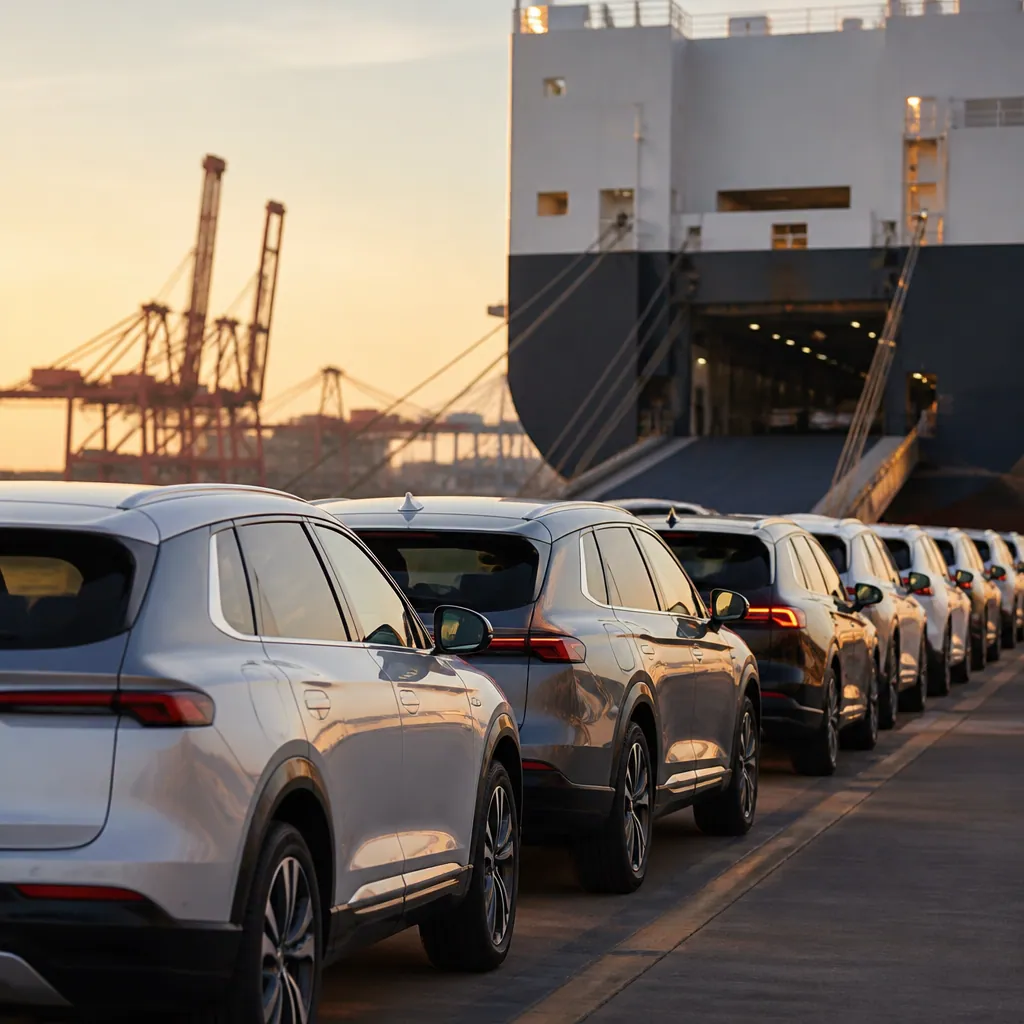
The quote you receive will typically be expressed on FOB (Free On Board) terms, meaning the supplier covers all costs up to the point the vehicle is loaded onto the vessel at the named Chinese port. In China’s export market, most prices are offered on FOB (Free On Board) terms, meaning the seller covers all costs up to loading the car onto the ship, while the buyer pays for international freight, insurance, and import charges. International freight, marine insurance, and destination import duties are all separate costs that sit outside the FOB price and are yours to manage.
Understanding this separation matters because it means the FOB price is the number you negotiate directly with the supplier, while the other costs are controlled by your choice of freight forwarder, shipping route, and local clearance agent. Do not conflate them during negotiation. When you ask a supplier to justify their price, ask for a cost breakdown of the vehicle price itself, not a bundled landed cost estimate.
Pro tip: Chinese manufacturers typically reserve a 10 to 25 percent negotiation margin in their quotes to new buyers. Strategic negotiation, when done correctly, can reduce procurement costs by 15 to 20 percent. The buyers who capture that margin are not the ones who push hardest. They are the ones who ask the smartest questions.

What to Prepare Before You Negotiate
Arriving at a supplier negotiation without preparation is the single most common reason buyers accept poor pricing. The supplier’s sales team negotiates every day. You may only buy vehicles from China a few times a year. That gap in experience is only closed with preparation, not with pressure tactics on a call.
Get at Least Three Comparable Quotes
Too good to be true prices should prompt you to get multiple quotes, as extreme low pricing is a typical bait tactic used by less reputable exporters. But comparing quotes goes beyond spotting low ball traps. Three to five genuine quotes from different suppliers give you a defensible market benchmark. When you tell a supplier that you have a competing offer for the same model at a lower FOB price, that claim only carries weight if it is true and verifiable. Vague references to “other offers” are ignored by experienced exporters.
Request each quote for identical specifications: same model, trim level, color options, RHD or LHD configuration, and compliance requirements for your destination market. A quote for a base trim model is not comparable to a quote for a fully specified export variant. Mixing them leads to false comparisons that a sharp supplier will immediately call out.
Understand the Vehicle’s Cost Structure
Before you negotiate on price, research the approximate ex factory cost of the vehicle category you are buying. Publicly available data on China’s automotive export pricing by vehicle segment gives you a realistic sense of what a genuine floor price looks like. If a supplier’s opening quote is already close to published export averages, there may be less room to move on unit price, and you should shift focus to other negotiable variables such as payment terms, delivery schedule, or aftersales support.
Pro tip: Ask suppliers to break down their quote into the vehicle cost and any add on fees such as domestic transport to port, export customs clearance, and port handling. Payment terms, specifically T/T full advance versus L/C with extended credit, can create a cost difference of 3 to 8 percent on the total transaction. Knowing which component you are negotiating is more productive than attacking the total figure.
Negotiation Tactics That Actually Work
Chinese business culture places genuine value on long term relationships and mutual respect. This is not a platitude. It is a practical negotiating reality. A buyer who enters the conversation looking to extract maximum short term price concessions is read as a low value, high friction partner. Suppliers quietly reprioritize them. Buyers who signal serious, repeat business intentions are given better pricing, faster responses, and more flexibility.
Anchor on Annual Volume, Not Just the Current Order
Fixating solely on unit price during an initial trial order is counterproductive. Grinding a supplier down on a small pilot order signals high friction and low long term value, leading to material and quality cutbacks. The more effective approach is to anchor your negotiation on your total projected 12-month order volume or your anticipated annual replenishment. A supplier who sees a relationship worth USD 500,000 per year will price differently than one looking at a single ten unit order.
For fleet operators and dealers expanding into a new market, this means being specific and credible about your growth plan. If you intend to place regular orders across multiple vehicle categories, say so in writing during early stage communications. This positions you as a strategic partner, which is a fundamentally different conversation from a one time transaction.
Bundle Orders Across Vehicle Types
If you are sourcing multiple vehicle categories, such as passenger EVs, SUVs, and light commercial vans, negotiating them as a bundled order rather than separate transactions gives you combined volume that commands better pricing. Suppliers prefer to consolidate shipments, and combining vehicle types in a single order reduces their administrative overhead. That saving can be passed to you if you make the case explicitly.
The most effective price negotiation is not about who blinks first on a number. It is about showing a supplier that your business is worth protecting for the next three years, not just the next invoice.
Use Silence and Written Counters Strategically
Do not respond to an opening quote the same day it arrives. A measured, written counter proposal sent 24 to 48 hours later signals that you have analyzed the quote carefully and are a serious buyer. State your target price, reference your competing quotes, and specify the exact terms under which you would be ready to proceed. Written communication also creates a paper trail that protects both parties and keeps the discussion factual rather than relational.
Where the Real Savings Are (Beyond the Unit Price)
Most buyers who try to buy cars cheaply from China focus entirely on the FOB unit price and miss the variables that can move total cost just as significantly. In practice, the best deals are not won purely on price. They are won by negotiating the full package.
Freight and Shipping Costs
For large orders, orders above 100 units typically negotiate a further 7 to 12 percent off Ro Ro shipping rates. If you are building toward volume, consolidating shipments rather than sending partial loads also reduces per unit freight costs materially. Your choice of loading port matters too. Different Chinese manufacturing clusters have different proximity to major export ports, which affects domestic transport costs that feed into the overall price.
Compliance and Homologation Costs
These costs are rarely part of the FOB quote but can be significant, particularly for EVs entering markets with specific charging standard requirements or safety compliance rules. Buyers importing EVs from China should check battery health documentation, MSDS and UN38.3 certifications, charging standard compatibility, warranty terms, and homologation requirements for their specific destination country. Negotiating for the supplier to pre arrange or co fund homologation testing in exchange for a volume commitment is a legitimate commercial conversation, particularly with larger, more established exporters.

Spare Parts and Aftersales Support
One of the most important updates in recent Chinese export regulations is the mandatory OEM-stamped after sales service confirmation, which verifies that every exported vehicle comes with guaranteed maintenance support, spare parts availability, and long term service commitments. What this means in practice is that aftersales terms are now a required part of the export contract, which gives you grounds to negotiate their specifics, not just accept a boilerplate clause. Push for confirmed spare parts supply timelines, minimum stockholding commitments, and OEM warranty activation through the supplier’s export system.
The OEM global warranty does not activate automatically on delivery. An agent has to enter the dealer code and overseas sales license into the manufacturer’s export system. Without that step, even with perfect documents, an overseas service station will refuse free maintenance. Confirm in writing that your supplier will complete this registration step, and include it as a contractual deliverable.
Payment Terms and Trade Incoterms
Payment structure is one of the highest leverage variables in any vehicle price negotiation with a China supplier. Most exporters prefer T/T (Telegraphic Transfer) in advance for new buyers because it eliminates their payment risk. If you can pay a larger proportion upfront, you are in a strong position to negotiate a lower unit price, since you are removing the supplier’s credit risk on the transaction.
The standard purchase process requires a deposit of 30 to 50 percent to confirm the order, with the remaining balance paid before shipment. Some exporters also offer financing or pre purchase services, useful for smaller dealers with limited capital flow. For buyers who cannot pay 100 percent upfront, a structured milestone payment tied to inspection results is a reasonable counter proposal. Pay 30 percent on order confirmation, and the remaining 70 percent after a third party pre shipment inspection is completed and the inspection report is delivered to you.
Escrow or staggered payment, with the deposit paid upfront and the balance released at bill of lading, reduces counterparty risk for large transactions. This is a professional, widely used approach that reputable suppliers accept without resistance. Any supplier who refuses staged payments tied to inspection milestones should be treated as a red flag.
On Incoterms, FOB is your default for vehicle exports from China, but some sellers offer CFR (Cost and Freight) or CIF (Cost, Insurance and Freight) options, where they handle ocean freight and insurance on the buyer’s behalf. CIF can appear cheaper at first glance, but it gives the supplier control over your freight and insurance costs. For buyers who have established freight relationships, FOB is almost always more cost effective, because you can negotiate your own shipping rates independently.
Comparing Three Negotiation Approaches
| Approach | How It Works | Best For |
|---|---|---|
| Direct Price Pressure | Buyer submits a competing quote and asks the supplier to match or beat it on unit price alone. No discussion of volume, terms, or long term business. | One off small orders where relationship value is irrelevant. Rarely effective for vehicle purchases above 5 units. Risks triggering quality trade offs. |
| Volume Commitment Anchoring | Buyer presents a 12-month purchase forecast and negotiates a tiered pricing structure based on cumulative volume. The current order is priced as the start of a defined ongoing relationship. | Dealers and importers building a consistent supply pipeline. Creates genuine price movement because the supplier sees total relationship value, not just the current transaction. |
| Full Package Negotiation | Buyer negotiates unit price, payment milestones, Incoterms, inspection rights, spare parts supply commitments, warranty activation, and aftersales support as a combined package. No single variable is conceded without a corresponding gain elsewhere. | Fleet operators, distributors, and importers sourcing multiple vehicle types or entering a new market. Produces the best total cost outcome and the strongest contract protections. |
Mistakes That Kill Your Negotiating Position
Experienced vehicle exporters have seen every buyer tactic in use. The mistakes that most consistently damage a buyer’s negotiating position are not about being too aggressive. They are about signaling inexperience or bad intent.
Accepting the First Quote Without a Counter
This is the most common mistake. A buyer who accepts an opening quote without any pushback leaves the supplier’s buffer margin fully intact. Even a modest, professional counter proposal, framed as an interest in doing business over the long term at a sharper price, will move the number. Not countering signals either that you did not notice the buffer or that you do not care about price, neither of which serves you.
Negotiating Spec Changes as Afterthoughts
Requesting specification changes after price agreement restarts the discussion from a weakened position. Finalize your exact requirements for model variant, trim level, RHD or LHD configuration, color, and any compliance related modifications before you open price talks. Buyers should sign a framework contract covering MOQ, staged deliveries, warranty, and spare parts supply, and consider starting with a trial order of 50 to 200 vehicles to check quality, shipping, and after sales support before scaling. Changing the specification after pricing is agreed almost always results in a revised, higher price.
Ignoring Documentation Until After Payment
Insisting on a written purchase agreement or pro forma invoice that clearly states model, year, specification, price, port of loading, and payment terms is non negotiable. Buyers who skip this step have no recourse if the delivered specification differs from what was discussed. Documentation is not a bureaucratic formality. It is the structure that makes your negotiated price enforceable.
Pro tip: Always verify that the bank account name on the payment instruction matches the company name on the business license. Payments should go to verified corporate bank accounts, and requests for cash like transfers or untraceable payment methods should be treated as serious warning signs. Fraud in international vehicle transactions almost always exploits the payment step, not the negotiation itself.
Frequently Asked Questions
How much can I realistically negotiate off the listed price when buying vehicles from China?
The amount varies by supplier type, order volume, and vehicle category. For new buyers placing smaller orders, a 5 to 10 percent reduction from the opening FOB quote is achievable through professional counter proposals. For committed volume buyers negotiating annual supply agreements, reductions in the 15 to 20 percent range on total procurement cost, including freight and payment term savings, are realistic. The key is knowing what you are negotiating: unit price, payment terms, freight, aftersales, and compliance costs are all separate variables.
Is it better to negotiate directly with a Chinese car factory or through an export agent?
It depends on your volume and expertise. Buying factory direct gives you closer proximity to the manufacturer’s pricing floor and more control over specifications. However, factories often set minimum order quantities that smaller dealers cannot meet, and they expect buyers to manage their own export documentation, shipping, and compliance. A reputable export agent or vehicle sourcing company handles these steps and can consolidate orders across multiple manufacturers, which gives smaller buyers access to better pricing than they could achieve factory direct.
What is FOB pricing and why does it matter for negotiation?
FOB, or Free On Board, means the supplier’s price covers the vehicle and all costs up to loading it onto the vessel at the named Chinese port. Everything after that, ocean freight, marine insurance, destination port handling, import duties, and local registration, is the buyer’s cost. FOB is the baseline for vehicle price negotiation with China suppliers because it isolates the vehicle cost from logistics costs. Negotiating on a CIF quote is more complex because the supplier controls the freight element, making it harder to compare quotes accurately.
How should I structure payment when buying vehicles from China for the first time?
For a first transaction, a staged payment structure is standard and reasonable. A deposit of 30 to 50 percent confirms the order, and the remaining balance is paid after a successful pre shipment inspection by a third party inspection agency. Avoid paying 100 percent upfront on a first order with a new supplier. Once you have established a track record with a supplier over multiple orders, you may find that more favorable payment terms become available, which can also be used as a price negotiation tool in ongoing discussions.
Can I negotiate aftersales and spare parts support into a vehicle purchase contract from China?
Yes, and you should. Aftersales support, spare parts availability, and OEM warranty activation are all legitimate contractual items in a vehicle export agreement. Chinese export regulations now require exporters to provide documented after sales service confirmation. This means reputable suppliers are already expected to offer this, but the specific terms, spare parts lead times, stockholding commitments, and warranty registration procedures, are negotiable. Include them explicitly in your purchase contract rather than relying on verbal assurances.
What is the biggest mistake dealers make when trying to buy cars cheaply from China?
The biggest mistake is optimizing purely for the lowest unit price while ignoring total landed cost. A cheap FOB price means nothing if the freight terms are unfavorable, the compliance costs are unplanned, the aftersales support is absent, or the vehicle specification does not meet your destination market’s requirements. Dealers who win on China vehicle sourcing look at the total cost of getting the vehicle to their lot and onto the road, and they negotiate every component of that, not just the number on the first quote.
If you have negotiated a vehicle purchase from China recently, we would like to hear what worked for you and what caught you off guard.
We would love your feedback and any insights you would share with others. What perspective would you add?
References
- Complete guide to sourcing vehicles from China, including shipping rates and warranty activation
- How to negotiate with Chinese manufacturers, including pricing margins and volume anchoring tactics
- Step by step guide to buying a car from China covering FOB terms, deposits, and payment stages
- How to buy cars from China safely, including inspection checklists and payment protection advice
- Chinese car export policy explained, covering aftersales service requirements and compliance updates