
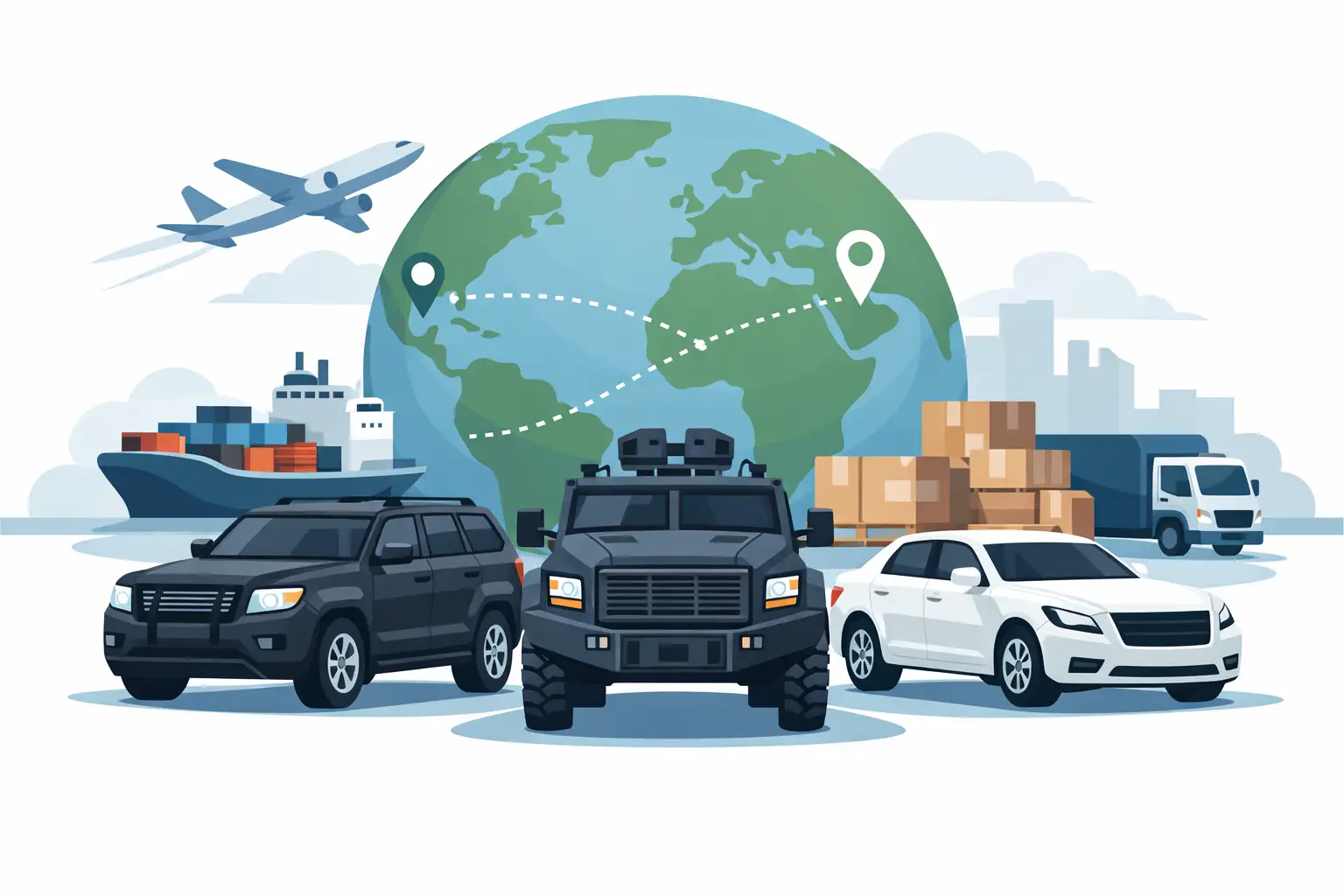
A protected vehicle is not simply a heavier version of a standard SUV or sedan. When learning how to buy armored vehicles, the purchasing decision must connect the threat level, vehicle platform, certification evidence, import rules, and delivery plan. A vehicle that looks right on a stock list may still be the wrong fit if its protection package, payload capacity, or documentation does not match the intended operation.
For international buyers, the strongest transactions begin with a precise requirement. This prevents delays in sourcing, avoids unnecessary armor cost, and gives the supplier a clear basis for confirming an export-ready unit.
Define the mission before selecting the vehicle
Start with the operating environment. Is the vehicle intended for executive transport in urban areas, government fleet movement, cash-in-transit support, remote-site travel, or personal protection? Each use case affects the required protection level, seating configuration, luggage capacity, fuel range, and service expectations.
A discreet armored sedan may suit daily executive movement where appearance and maneuverability matter. A full-size armored SUV can provide greater cabin space, ground clearance, and carrying capacity, but it also brings higher acquisition, shipping, fuel, and maintenance costs. For fleet procurement, consistency across vehicle models can simplify driver training, spare-parts planning, and workshop support.
The threat assessment should be specific. Buyers should identify likely ballistic threats, blast exposure, forced-entry risk, and the routes the vehicle will travel. Do not pay for a protection package based only on a broad label such as “bulletproof.” Request the tested rating and confirm exactly which areas of the vehicle are protected.
How to buy armored vehicles by protection level
Armor ratings are meaningful only when they are supported by clear technical documentation. Depending on the market and vehicle type, suppliers may reference standards such as VPAM, CEN, NIJ, or another recognized ballistic-testing framework. The key question is not which acronym appears in a brochure. It is whether the supplier can show what standard was used, what ammunition or test conditions were covered, and whether the complete vehicle or its components were tested.
Ask for a written armor specification covering the opaque armor, transparent armor, roof, floor, firewall, door overlaps, fuel-tank protection, battery protection where applicable, and run-flat system. Door overlaps are particularly important because weak gaps can undermine otherwise substantial protection.
Protection has trade-offs. Higher ballistic resistance adds weight, which can affect acceleration, braking distance, tire wear, suspension life, and usable payload. A vehicle with five passenger seats on paper may not safely carry five adults plus luggage after armoring. Confirm the final gross vehicle weight, axle loads, payload, and any required upgrades to brakes, suspension, wheels, and cooling systems.
Evaluate the base vehicle, not only the armor
The original platform must be suitable for the added mass and operating conditions. Proven SUVs and sedans with available parts networks are usually easier to maintain than rare models with limited dealer coverage in the destination country. Engine performance, transmission calibration, cooling capacity, and electrical reliability all deserve review.
For EVs, PHEVs, and EREVs, weight management requires additional attention. The battery system, high-voltage safety measures, range impact, charging infrastructure, and local technician capability should be considered before procurement. An electrified armored vehicle can be a practical option for certain urban fleets, but it should be selected around its real operating cycle, not assumed range figures.
Verify the vehicle and conversion quality
A detailed pre-shipment inspection is one of the most valuable controls in an international armored-vehicle purchase. Request current photos, a walk-around video, VIN confirmation, odometer reading, build date, and confirmation of the vehicle’s physical location. If the unit is listed as ready for delivery, verify that it is actually in stock and not dependent on a future production slot.
For the armoring work, ask for the conversion date, conversion company details, armor certificate or test report, and a full equipment list. The inspection should review panel fitment, door operation, glass condition, tire and run-flat condition, warning lights, braking performance, cooling behavior, and underbody workmanship. Heavy armored doors should open and close correctly without sagging, and windows should operate as specified.
A professional inspection also checks whether the finished vehicle remains roadworthy. Armor that is poorly integrated can cause uneven tire wear, suspension strain, water intrusion, electrical faults, and reduced driver control. The lowest initial price is not always the lowest ownership cost.
Confirm legal, export, and import requirements early
Armored vehicles are subject to different rules across jurisdictions. The vehicle may be legal to own in one country but require an import permit, type approval, special registration, or end-user documentation in another. Some destinations regulate specific armor levels, tactical features, communications equipment, or accessories.
Before payment, confirm the import classification, applicable duties and taxes, registration requirements, and local rules on left-hand-drive or right-hand-drive vehicles. Buyers should also establish whether the shipment needs a certificate of origin, commercial invoice, packing details, export declaration, inspection certificate, or other customs documents.
Export compliance matters just as much. The seller, buyer, end user, and destination should be screened against applicable trade restrictions. Be transparent about the vehicle’s intended civilian or commercial use. A reliable supplier will not treat compliance questions as an obstacle. It is part of protecting the transaction, the shipment, and the buyer’s ability to clear the vehicle on arrival.
Structure the commercial terms around delivery risk
International vehicle transactions need more than a vehicle price. Request a clear quotation showing the vehicle specification, included equipment, currency, payment schedule, and delivery term. If pricing is shown as FOB, the buyer should understand that ocean freight, marine insurance, destination handling, customs clearance, and inland delivery may be separate costs.
Select the shipping method based on the vehicle, destination, and level of control required. Container shipping can offer additional protection and flexibility for high-value units, while roll-on/roll-off may be efficient on established routes. Confirm whether the armored vehicle’s weight and dimensions create special handling requirements.
Payment controls should match the value of the transaction. Use documented bank transfers, keep the pro forma invoice and final invoice aligned, and avoid arrangements that leave key specifications outside the written contract. The purchase agreement should identify the VIN where available, armor level, included accessories, inspection condition, documents to be supplied, and the point at which title and shipping risk transfer.
Plan for arrival, service, and operator readiness
Delivery is not the end of the procurement process. Arrange customs brokerage, secure collection from the port, registration, insurance, and a controlled handover at destination. A heavy vehicle may require transport equipment that differs from standard passenger-car delivery.
Service planning is essential. Confirm the availability of tires, run-flat inserts, armored-glass support, brake components, suspension parts, and qualified technicians. Drivers should understand the vehicle’s increased weight, longer braking distances, turning behavior, and emergency features. For a security fleet, establish inspection intervals and a reporting process before the vehicles enter service.
Automotion Global supports buyers who need verified sourcing, pre-shipment coordination, and worldwide delivery planning for specialized export-ready vehicles. The right supplier should provide direct answers on stock status, specification, paperwork, and shipping responsibilities without leaving critical details to assumption.
A well-bought armored vehicle is one that arrives with the right protection, the right documents, and a realistic plan for operation after delivery. Make every decision traceable to the mission, and the vehicle becomes a dependable procurement asset rather than an expensive logistics problem.