
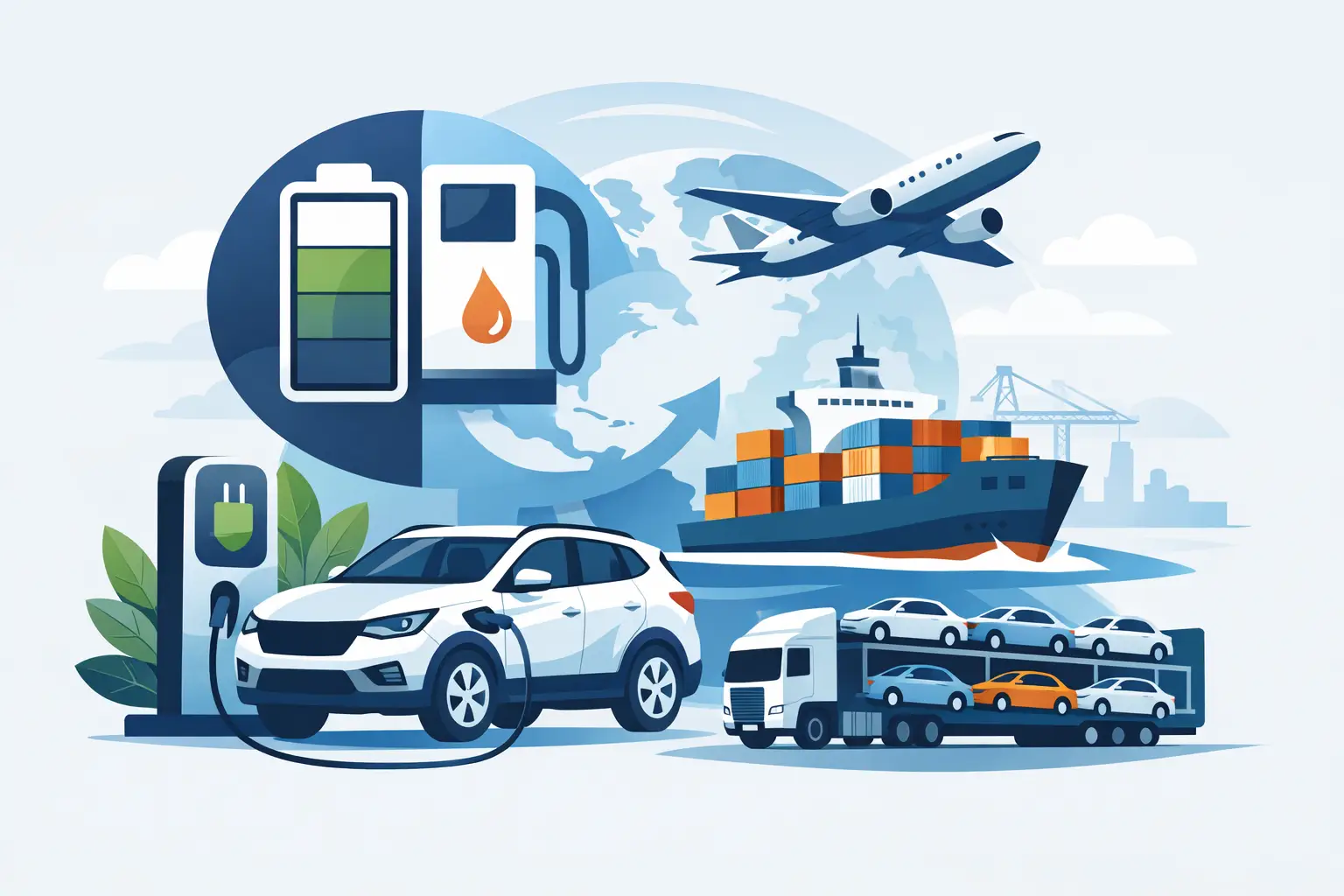
A buyer comparing international vehicle inventory today is usually balancing three things at once: operating cost, charging practicality, and long-term usability. That is exactly why plug in hybrid export vehicles have become an increasingly important category for private buyers, fleet operators, and automotive resellers looking for export-ready inventory with broader market appeal than standard gasoline vehicles and fewer charging limitations than full EVs.
For many international markets, a plug-in hybrid offers a practical middle ground. It can operate on electric power for shorter urban driving, switch to gasoline for longer distances, and reduce fuel costs without forcing owners to rely entirely on public charging infrastructure.
For export buyers, that flexibility matters because the vehicle is not being selected only for specifications on paper. It is being selected for real-world road conditions, fuel prices, charging availability, maintenance capability, and resale demand after arrival.
Why plug in hybrid export vehicles attract global buyers
The strongest advantage of plug in hybrid export vehicles is flexibility across different markets.
In some countries, EV adoption is growing quickly while charging infrastructure still remains inconsistent outside major cities. In others, fuel prices are high enough that buyers want electric driving for daily use but are not ready to depend completely on battery-only transportation.
A plug-in hybrid can satisfy both requirements.
That makes these vehicles especially attractive for importers and resellers who need inventory that appeals to a wider range of customers. A full EV can perform extremely well in the right market, but it remains more sensitive to charging infrastructure, battery concerns, and buyer education. Conventional hybrids are easier for many buyers to understand, but they do not provide the same level of electric-only operation.
Plug-in hybrids occupy a practical middle position, which often translates into stronger retail demand across mixed-use markets.
There is also a commercial advantage behind the growing interest. Buyers sourcing internationally often need inventory that appears modern, efficient, and aligned with changing market expectations. In many regions, a late-model plug-in hybrid positions well because it offers lower fuel consumption and newer technology without creating the same operational concerns some customers still associate with full EV ownership.
What makes a plug-in hybrid export-ready
Not every attractive vehicle listing is suitable for international delivery. Export readiness is an operational issue rather than a simple product feature.
A plug-in hybrid intended for export should be evaluated for battery condition, charging compatibility, documentation quality, shipping suitability, and long-term service practicality before it is offered to a buyer.
Battery condition is one of the most important checks. Unlike a traditional gasoline vehicle, a plug-in hybrid depends heavily on battery performance to deliver the efficiency and electric driving capability buyers expect.
If the battery has degraded significantly, the vehicle may still operate normally, but much of the value proposition disappears. Pre-shipment inspections should confirm charging behavior, battery system status, warning lights, and overall operating condition.
Charging compatibility also deserves careful attention. Different regions use different charging plugs, voltage standards, and charging habits. In some cases the solution is simple and manageable with adapters or equipment changes. In other situations, incompatibility can become a long-term ownership problem after the vehicle arrives.
Documentation matters just as much as mechanical condition. Buyers should receive clear VIN information, accurate specifications, export paperwork, and verified trim-level details before shipment begins.
The real trade-offs buyers should understand
Plug-in hybrids are practical, but they are not automatically the correct answer for every market or buyer profile.
If the owner has reliable access to charging and uses the vehicle mainly for short or medium daily trips, a plug-in hybrid can deliver excellent efficiency and lower fuel costs.
If charging access is inconsistent or rarely used, the owner may carry extra battery weight without fully benefiting from the electric capability. In those situations, a conventional hybrid or efficient gasoline vehicle may provide better long-term economics.
Maintenance also depends heavily on local support capability. Plug-in hybrids combine electric drivetrain systems with gasoline engines, creating more mechanical and software complexity than traditional vehicles.
In regions with strong technical support for electrified vehicles, this is generally manageable. In markets where trained technicians, diagnostics equipment, or replacement parts remain limited, buyers should think carefully about aftersales support before importing inventory.
Resale value can vary significantly as well. In some countries, plug-in hybrids are highly desirable because they balance fuel efficiency with long-distance flexibility. In others, buyers still prefer simpler powertrains or remain cautious about battery replacement costs.
Successful export sourcing depends on matching inventory to market demand rather than simply chasing attractive pricing.
Best use cases for plug in hybrid export vehicles
Private buyers often choose plug-in hybrids because they want lower fuel consumption without sacrificing road-trip range or daily practicality. This creates a strong fit for commuters, families, and professionals who drive both inside and outside urban areas.
Fleet operators usually evaluate the category differently. Their focus is operating cost, downtime, and asset utilization. Plug-in hybrids can work very well for urban or mixed-route fleets where charging can be managed consistently.
For heavy-use operations with unpredictable routing, the decision depends more heavily on charging access, local service support, and whether the electric range will actually be used enough to justify the added complexity.
Automotive resellers are often focused on retail demand after import. In markets gradually moving toward electrification, plug-in hybrids can become highly attractive stock because they offer modern technology while maintaining gasoline backup capability.
How to source the right plug-in hybrid for export
The first step is not choosing a brand. It is understanding the destination market.
Buyers should begin with import eligibility, registration requirements, tax structures, charging standards, fuel quality, and expected resale demand. Once those conditions are understood clearly, selecting the right inventory becomes far easier.
Model year and trim level should be verified carefully. Two similar vehicles may have different battery sizes, charging speeds, software systems, or market-specific equipment packages.
Inspection should go beyond traditional used-vehicle checks. For plug-in hybrids, buyers should verify battery performance, charging functionality, cooling systems, hybrid system behavior, and any signs of unresolved electrical faults.
Shipping preparation also matters. Electrified vehicles may require carrier-specific handling procedures, battery state-of-charge requirements, and additional documentation before export approval.
This is where experienced export coordination becomes valuable. Companies such as Automotion Global operate around verified sourcing, inspections, export preparation, and worldwide delivery coordination for buyers importing modern electrified inventory internationally.
Common mistakes buyers make with plug in hybrid export vehicles
One common mistake is buying for trend rather than actual use case. A plug-in hybrid may seem like the safest modern option, but if the destination owner never charges the vehicle, the efficiency advantage changes significantly.
Another mistake is assuming charging systems are universally compatible. A vehicle may arrive in excellent condition while still creating customer frustration later if charging requirements were not verified correctly beforehand.
Some buyers also underestimate the importance of destination-market perception. A plug-in hybrid with strong demand in one region may perform poorly in another depending on local buyer preferences, charging confidence, and aftersales expectations.
Finally, many buyers focus heavily on purchase price while underestimating landed costs, compliance procedures, shipping methods, and long-term support requirements.
What to prioritize before placing an order
The strongest export purchases usually come from asking a few direct questions.
Is the vehicle suitable for the destination market?
Is the battery system verified?
Will local users realistically benefit from plug-in capability?
Is the export process already structured correctly for shipping and delivery?
When those answers are clear, plug-in hybrids can become one of the most commercially balanced categories in modern automotive trade.
They give buyers access to newer mobility technology while maintaining practical flexibility for markets transitioning toward electrification at different speeds.
The right plug-in hybrid is not simply efficient on paper. It is easier to position, easier to operate across mixed conditions, and easier to justify in international markets that continue evolving toward electrified mobility.