
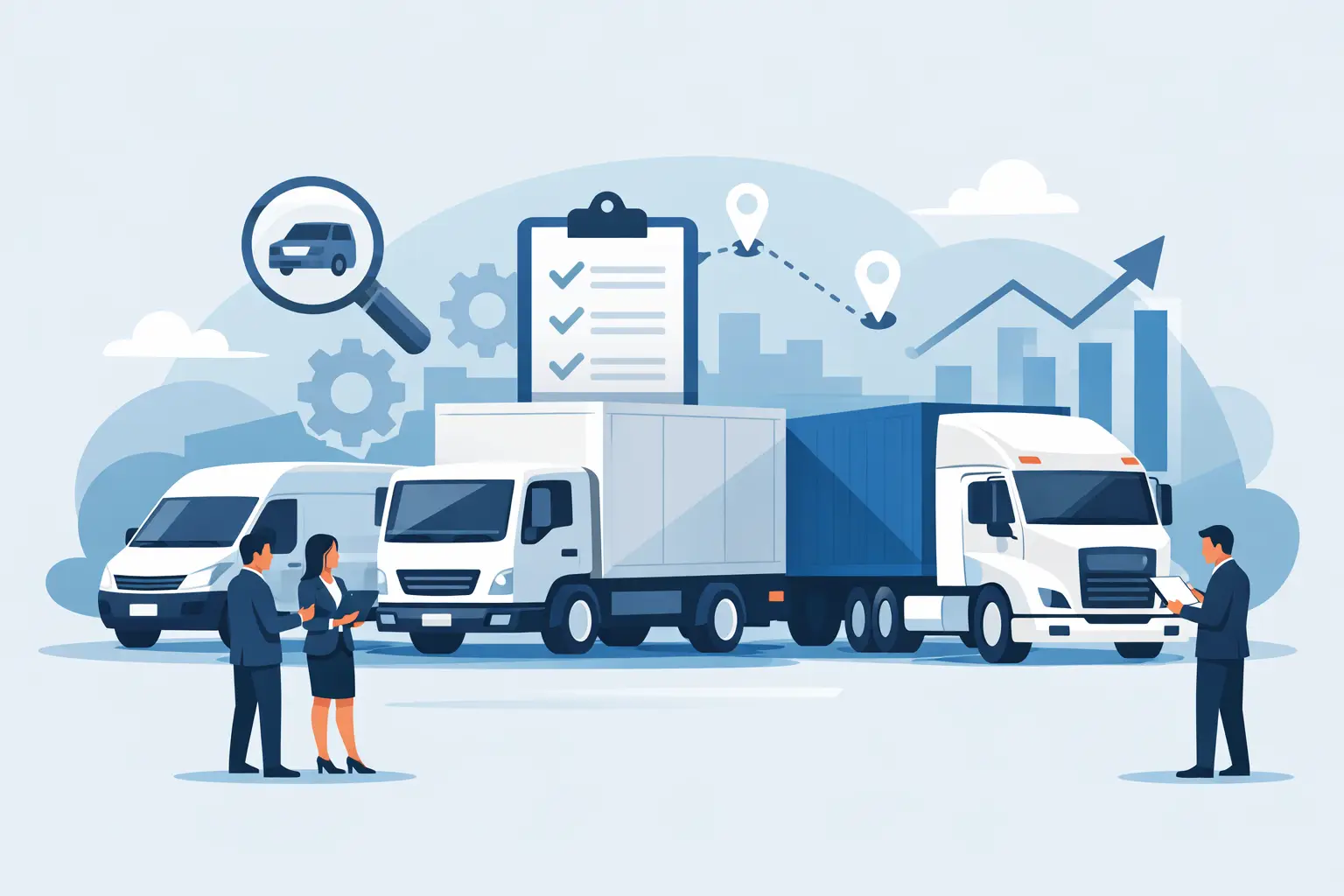
Commercial vehicles are not purchased for display. They are purchased to operate, generate revenue, support projects, and keep businesses moving.
Whether the requirement involves cargo vans, pickup trucks, refrigerated units, logistics vehicles, utility fleets, or electric commercial vehicles, buyers need reliable sourcing, accurate specifications, and smooth international delivery.
For many businesses, sourcing commercial vehicles locally is not always practical. Limited availability, long lead times, and restricted configurations often push buyers toward direct sourcing and export from China.
That is where export coordination and operational verification become critical.
Why businesses source commercial vehicles from China
China has become one of the world’s largest commercial vehicle supply markets.
International buyers often choose China because of:
- Competitive pricing
- Wide model availability
- EV and hybrid commercial vehicle options
- Flexible body configurations
- Faster stock access
- Fleet sourcing capability
For buyers across GCC countries, Africa, and other international markets, direct sourcing can provide access to commercial vehicles that may be difficult to secure through local dealership networks.
This may include:
- Cargo vans
- Utility pickups
- Refrigerated vehicles
- Construction and logistics trucks
- Electric delivery vans
- Fleet-ready commercial units
- Specialized utility vehicles
- Armored commercial vehicles
The biggest challenge is not finding the vehicle
The real challenge is confirming that the vehicle:
- Actually exists
- Matches the required specification
- Is export-ready
- Meets destination market requirements
- Can ship without documentation problems or delays
Many buyers discover too late that the listed vehicle is unavailable, incorrectly specified, or unsuitable for import into their destination market.
That is why verification matters more than listings.
A strong export process starts with confirming real inventory, usable documentation, and shipment readiness before payment and booking begin.
What professional export coordination should include
A commercial vehicle export process involves much more than finding stock.
A proper export operation should support:
- Vehicle sourcing
- Stock verification
- VIN and specification confirmation
- Pre-shipment inspection
- Export documentation
- Shipping coordination
- Customs support preparation
- International delivery planning
The objective is simple:
reduce uncertainty and improve operational control for international buyers.
Commercial vehicle transactions become far smoother when sourcing, inspection, logistics, and export handling are managed as one connected process.
Commercial vehicle categories available for export
Depending on availability and market requirements, sourcing may include:
Diesel commercial vehicles
Often preferred for:
- Long-distance operations
- Heavy-duty logistics
- Construction applications
- Markets with limited EV infrastructure
Electric commercial vehicles (EVs)
Growing rapidly in:
- Urban delivery fleets
- Municipal operations
- Sustainability-focused businesses
- Last-mile logistics
Hybrid commercial vehicles
Useful for:
- Mixed-route operations
- Fuel efficiency goals
- Transitional fleet strategies
Specialized utility vehicles
Including:
- Refrigerated units
- Maintenance vehicles
- Cargo body configurations
- Specialized transport equipment
The right category depends entirely on the operating environment and business objective.
EV commercial vehicle demand is growing rapidly
Many international businesses are now exploring electric commercial vehicles to support:
- Lower operating costs
- Urban delivery programs
- Sustainability targets
- Government fleet modernization
- Municipal transport projects
However, EV commercial vehicle sourcing requires additional technical verification.
Buyers should confirm:
- Battery range
- Charging compatibility
- Vehicle configuration
- Export eligibility
- Destination-market suitability
- Local charging infrastructure support
The correct commercial EV depends heavily on route structure, operating conditions, and charging availability after arrival.
Why inspection and export experience matter
Commercial vehicle sourcing involves much more than pricing discussions.
Inspection and export preparation help reduce risks related to:
- Incorrect specifications
- Mechanical issues
- Cosmetic condition problems
- Export paperwork delays
- Shipping complications
- Customs clearance problems
For commercial operators and fleet buyers, delays directly affect business operations and project timelines.
That is why inspection, verification, and export coordination should never be treated as optional steps.
Pre-shipment verification becomes especially important for:
- Fleet purchases
- EV commercial vehicles
- Refrigerated units
- Construction support vehicles
- Specialized commercial configurations
Shipping commercial vehicles internationally
Commercial vehicle export logistics depend on:
- Vehicle size
- Destination market
- Shipping route
- Cargo volume
- Delivery urgency
Shipping methods may include:
Roll-on / Roll-off (RoRo)
Often suitable for:
- Standard commercial vehicles
- Fleet shipments
- Large-volume movements
Container shipping
Usually preferred for:
- Higher-value units
- Specialized vehicles
- Mixed cargo shipments
- Additional protection requirements
Commercial buyers should also factor in:
- Port handling timelines
- Customs processing
- Inland transportation
- Destination unloading
- Fleet deployment timing
The shipping plan should match the operational requirement, not just the freight quote.
Choosing the right commercial vehicle export partner
A strong sourcing and export partner should provide:
- Clear communication
- Verified inventory
- Accurate specifications
- Inspection support
- Export documentation handling
- International logistics coordination
- Realistic delivery timelines
Commercial vehicle procurement works best when the process is organized from the beginning with clear requirements, accurate vehicle matching, and proper export preparation.
That operational discipline matters as much as the vehicle itself.
Final thoughts
Exporting commercial vehicles from China is no longer limited to large-scale trading companies.
Businesses, fleet operators, municipalities, and resellers are increasingly sourcing directly to access better inventory, faster delivery options, and broader commercial vehicle configurations.
But successful international sourcing depends on more than simply finding stock online.
Reliable execution requires:
- Verified inventory
- Accurate specifications
- Proper inspections
- Export-ready documentation
- Organized logistics coordination
When those elements are handled correctly, commercial vehicle importing becomes a controlled business operation rather than a high-risk transaction.
For international buyers, operational reliability is what ultimately protects both the vehicle investment and the business behind it.